NobelPrize.org makes you click through five separate pages to find out who won in 1947. Here they all are on one page, with the short version of what each person actually did and why anyone cared.
The year matters too. 1947 was the first full year after World War II, and the choices reflect it: a peace prize for the people who fed and clothed the survivors, a medicine prize that quietly handed the first American woman a science Nobel, and a physics prize for the man who explained why radio signals bounce.
Table of Contents
- The Quick List
- Physics: Edward Appleton and the Layer That Bounces Radio
- Chemistry: Robert Robinson and the Chemistry of Plants
- Medicine: The Coris, Houssay, and a Historic First
- Literature: André Gide
- Peace: The Quakers Who Fed Postwar Europe
- Why 1947 Was Different
- FAQ
The Quick List {#the-quick-list}
| Category | Laureate(s) | Country | Awarded For |
|---|---|---|---|
| Physics | Edward V. Appleton | United Kingdom | Discovering the Appleton layer of the ionosphere |
| Chemistry | Sir Robert Robinson | United Kingdom | Research on plant alkaloids and other biologically important compounds |
| Medicine | Carl Cori & Gerty Cori | United States | Discovering how glycogen is catalytically converted |
| Medicine | Bernardo Houssay | Argentina | The role of the pituitary hormone in sugar metabolism |
| Literature | André Gide | France | His writings, for their fearless love of truth and psychological insight |
| Peace | Friends Service Council & American Friends Service Committee | UK / US | Postwar relief and reconciliation work by the Quakers |
The medicine prize was split: half to the Coris jointly, half to Houssay. That’s why there are technically five “prizes” but more than five names.
Physics: Edward Appleton and the Layer That Bounces Radio {#physics}
If you’ve ever wondered how a radio signal travels past the horizon when radio waves move in straight lines and the Earth curves away beneath them, Edward Appleton is the reason you have an answer.
Working in the 1920s, Appleton proved there was a layer in the upper atmosphere that reflects radio waves back down to the ground. Marconi had bounced a signal across the Atlantic decades earlier, and physicists assumed something up there was doing the bouncing, but nobody had measured it. Appleton did. He aimed signals at the sky, watched how they came back, and worked out the height of the reflecting layer.
The layer he found sits roughly 150 to 300 kilometers up and is now called the Appleton layer (the F region of the ionosphere). It’s denser than the lower layers and reflects the higher frequencies the others let slip through. That’s the layer long-distance shortwave radio still leans on. The Nobel Prize physics summary credits him specifically for this discovery and his investigation of the physics of the upper atmosphere.
His measurement technique also fed directly into radar, which Britain relied on heavily during the war that had just ended.
Chemistry: Robert Robinson and the Chemistry of Plants {#chemistry}
Sir Robert Robinson won for figuring out the structure of alkaloids — the complex nitrogen-containing molecules plants make, including morphine, strychnine, and the building blocks of countless drugs.
Alkaloids are notoriously hard to map. They fold and ring in ways that resist easy analysis, and in Robinson’s era you couldn’t just feed a sample into a machine and read out the structure. You reasoned it out through painstaking reactions. Robinson was the master of this. He worked out the structure of morphine and synthesized tropinone — a precursor to atropine — in a single elegant reaction that chemists still teach as a model of how to build a complex ring efficiently.
His work wasn’t abstract. Understanding alkaloid structure is the groundwork for synthesizing painkillers, anesthetics, and the biologically important plant compounds the prize citation points to. He also developed a notation for showing how electrons move in chemical reactions — the curly-arrow conventions organic chemistry students still draw today partly trace back to him.
Medicine: The Coris, Houssay, and a Historic First {#medicine}
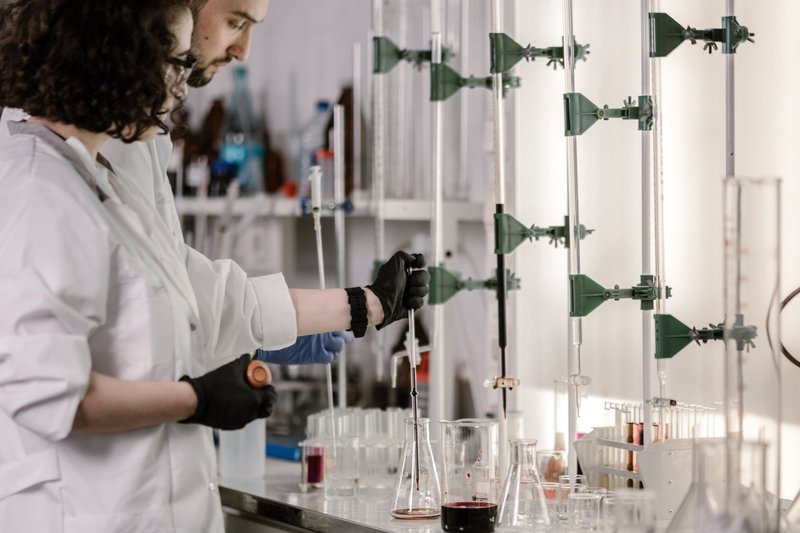
The 1947 medicine prize is the most interesting of the bunch, and not only for the science.
Carl and Gerty Cori, a married couple working in St. Louis, mapped how the body stores and releases sugar. Your muscles and liver stockpile glucose as glycogen, then break it back down when you need energy. The Coris traced the exact enzymatic steps — a loop now called the Cori cycle — showing how lactate produced by working muscles travels to the liver, gets rebuilt into glucose, and cycles back. It’s textbook biochemistry now. It wasn’t then.
Gerty Cori became the first American woman to win a Nobel Prize in a science category, and the third woman ever after Marie Curie and Irène Joliot-Curie. She’d spent years being treated as her husband’s assistant by institutions that wouldn’t hire her at his rank, despite the two doing the work as genuine equals. The prize settled the question. The American Chemical Society later named the Cori cycle a National Historic Chemical Landmark, crediting both names.
The other half went to Bernardo Houssay of Argentina, who showed the pituitary gland — a pea-sized organ at the base of the brain — plays a central role in how the body handles sugar. Remove it from an animal and the animal becomes hypersensitive to insulin; the hormones it releases counteract insulin’s sugar-lowering effect. That insight reshaped how scientists understood diabetes. Houssay was the first Argentine and first Latin American to win a Nobel in the sciences.
Literature: André Gide {#literature}
André Gide won the literature prize at 77, near the end of a long and frequently scandalous career. The French author wrote novels, essays, and an unflinching journal that ran for decades, and he made a habit of writing about things polite literary society preferred to ignore — his own homosexuality among them, openly, in an era when that was a genuine risk. He joined a long line of French Nobel laureates across every category, a tradition that runs deep in literature in particular.
The Swedish Academy honored his work “for their comprehensive and artistically significant writings, in which human problems and conditions have been presented with a fearless love of truth and keen psychological insight.” Books like The Immoralist and The Counterfeiters dig into the gap between the self people perform and the self they actually are. The Catholic Church put his work on its index of banned books the year after he died. He’d have taken that as confirmation he’d done something right.
Peace: The Quakers Who Fed Postwar Europe {#peace}
The 1947 Peace Prize didn’t go to a diplomat or a statesman. It went to two Quaker organizations: the Friends Service Council in Britain and the American Friends Service Committee in the United States.
The Quakers had spent the years during and after both world wars doing unglamorous, essential work — feeding starving civilians, resettling refugees, providing medical relief — without regard to which side of a border people had been on. They fed German children after WWI and did it again after WWII, the same children’s grandchildren, in a country much of the world wanted nothing to do with. The Nobel Committee honored them not for a treaty but for the principle behind the work: that you help suffering people because they’re suffering, full stop.
In his presentation speech, committee chair Gunnar Jahn pointed to the Quakers’ “silent help from the nameless to the nameless.” It’s one of the few peace prizes given to a method of acting in the world rather than a specific political achievement. The American Friends Service Committee still operates today on the same Quaker principles.
Why 1947 Was Different {#why-1947}
Read the six prizes together and a theme emerges. This was a world climbing out of catastrophe.
The peace prize fed the survivors. The physics prize honored atmospheric science that had just proven decisive in radar-driven warfare. The medicine prize advanced the understanding of diabetes, a disease insulin had only recently made survivable. And it handed a long-overdue recognition to a woman the scientific establishment had spent decades sidelining. Even the literature prize went to a writer whose whole project was telling uncomfortable truths.
The Nobel Committees had paused some prizes during the war years — no peace prize was awarded in 1939 through 1943, for instance. By 1947 the machinery was running again, and the choices read like a world taking stock of what mattered.
FAQ {#faq}
Who won the 1947 Nobel Prize in Physics? Edward V. Appleton of the United Kingdom, for discovering the Appleton layer of the ionosphere, which reflects radio waves and enables long-distance radio communication.
Was Gerty Cori the first woman to win a science Nobel? She was the first American woman and the third woman overall to win a Nobel Prize in a science category, after Marie Curie (physics 1903, chemistry 1911) and Irène Joliot-Curie (chemistry 1935). She shared the 1947 medicine prize with her husband Carl Cori.
Why did the Quakers win the 1947 Peace Prize? The Friends Service Council and the American Friends Service Committee won for their relief work during and after both world wars — feeding civilians, aiding refugees, and providing medical care regardless of nationality or which side people had been on.
How many people won Nobel Prizes in 1947? Six individuals plus two organizations. The medicine prize was split among three people (Carl Cori, Gerty Cori, and Bernardo Houssay), and the peace prize went to two organizations rather than an individual.
What did André Gide win the Nobel Prize for? The French author won the 1947 literature prize for his body of work, cited for its fearless love of truth and psychological insight into human nature.