The Comoros has a reputation problem. It shows up on lists of the world’s poorest countries, yet it sits on top of one of the most lucrative spice trades on the planet, governs an ocean territory bigger than Germany, and may be parked over offshore gas. That gap between what the islands have and what they earn is the real story here.
This archipelago of three main islands – Grande Comore, Anjouan, and Mohéli – sits in the Mozambique Channel between Madagascar and the African mainland. Volcanic origin, tropical climate, deep surrounding waters. Those three facts explain almost everything the Comoros can pull from its land and sea.
Table of Contents
- Quick-Scan Resource Summary
- Agriculture: The Spice Trio
- Fisheries and the Massive EEZ
- Volcanic Soils and Forests
- Untapped Minerals and Offshore Energy
- Renewable Energy Potential
- Biodiversity as a Resource
- The Resource Paradox
Quick-Scan Resource Summary
| Resource | Location / Island | Economic Role | Notes |
|---|---|---|---|
| Vanilla, cloves, ylang-ylang | All three islands; ylang-ylang heaviest on Anjouan & Mohéli | ~75% of export earnings | Cash crops, smallholder-grown |
| Fisheries (tuna, mackerel, swordfish) | 390,000 km² EEZ | Food security + licensing fees | Largely industrially under-exploited by locals |
| Volcanic soil | Grande Comore (Karthala), all islands | Underpins all agriculture | Highly fertile but erosion-prone |
| Forests / timber | Anjouan, Mohéli highlands | Local fuel, construction | Severely deforested on Anjouan |
| Offshore gas / oil | Territorial waters, esp. near Grande Comore | Speculative, untapped | Exploration licenses issued |
| Nickel, cobalt, rare earths, gold | Grande Comore, Mohéli (inferred) | Unproven, undeveloped | Geological potential only |
| Solar / hydro / geothermal | Karthala volcano (geothermal) | Mostly unbuilt | Strong solar irradiation year-round |
Agriculture: The Spice Trio
Three crops carry the Comorian export economy, and they’re worth more by weight than almost anything else the islands could grow.
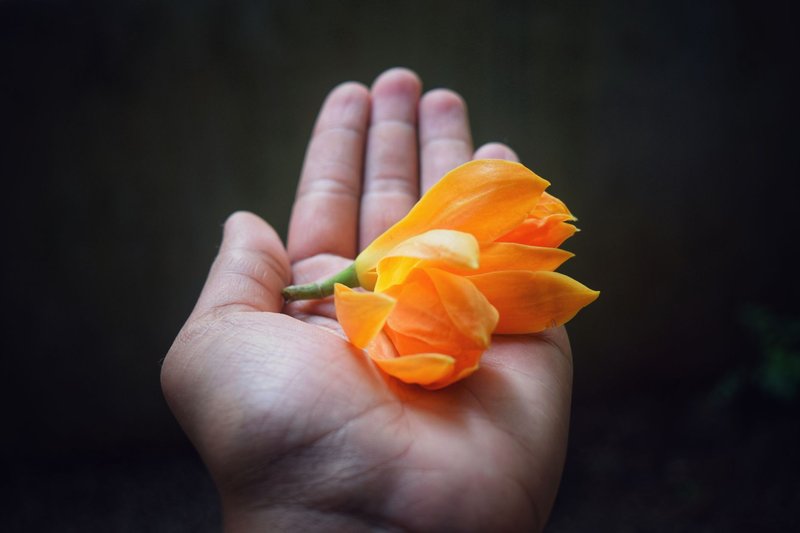
Ylang-ylang is the headline act. The Comoros is one of the world’s top producers of ylang-ylang essential oil, distilled from the flowers of the Cananga odorata tree. That oil is a base note in high-end perfumery, and Comorian growers supply a meaningful share of global demand. The flowers are picked by hand at dawn, then steam-distilled in small alembic stills you’ll see dotted across Anjouan and Mohéli. It’s labor-intensive, smallholder work, and it ties a huge chunk of the rural population to the fragrance industry of Grasse and beyond.
Cloves come next. Grown mostly on Anjouan, they’re an export crop sensitive to world price swings – good years lift the whole island economy, bad years hurt.
Vanilla rounds out the trio. The Comoros grows the prized Vanilla planifolia, the same species that made neighboring Madagascar famous. It’s hand-pollinated, cured over weeks, and commands premium prices when quality is high.
Together these three account for roughly 75% of the country’s export earnings, according to World Bank country data. That concentration is a strength and a vulnerability at once – when global vanilla prices spike, the islands win; when they crash, there’s little to fall back on.
Fisheries and the Massive EEZ
Here’s the number that reframes everything: the Comoros controls an Exclusive Economic Zone of roughly 390,000 square kilometers. The land area of the country is about 1,860 km². The ocean territory is more than 200 times the size of the land.
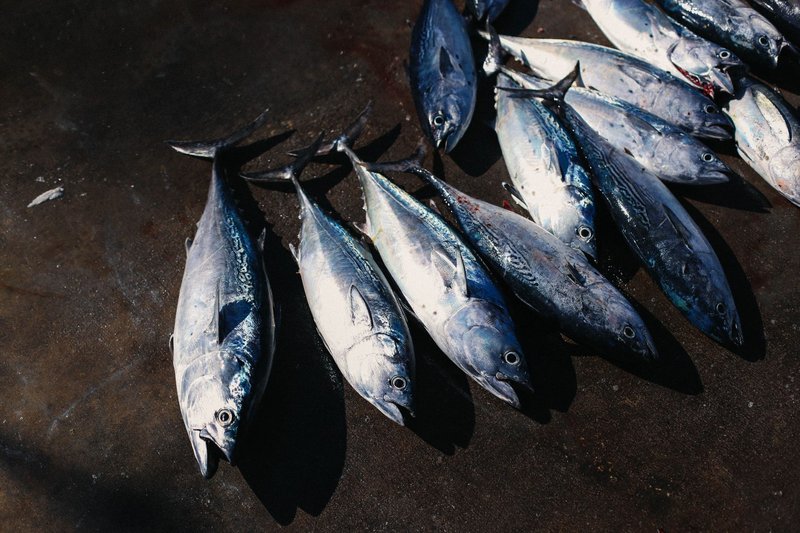
Those waters are part of the western Indian Ocean tuna grounds. Yellowfin tuna, skipjack, mackerel, and swordfish move through the EEZ in commercially significant volumes. Fishing employs a large share of Comorians, but most of it is artisanal – small outrigger canoes and fiberglass boats working close to shore. The deep-water industrial catch is dominated by foreign fleets operating under licensing agreements, which means a lot of the value swims away.
The European Union has held fisheries partnership agreements with the Comoros that pay access fees for tuna licenses. That’s real income, but it underlines the core problem: the resource is enormous, and the country captures only a sliver of its potential value. Building domestic cold-chain, processing, and a deep-water fleet is the obvious unlock that decades of plans have struggled to deliver.
Volcanic Soils and Forests
Every crop in the previous sections grows because of geology. The Comoros is volcanic, and Mount Karthala on Grande Comore is one of the world’s largest and most active shield volcanoes, last erupting in the mid-2000s. Volcanic ash breaks down into deep, mineral-rich soil – the reason a small archipelago can support such intensive cash-crop agriculture.
But the same soil is a liability when the forest cover that holds it disappears. Anjouan, the most densely populated island, has been heavily deforested. Clearing for farmland and fuelwood has stripped slopes, accelerated erosion, and dried up streams that islanders depend on. The remaining highland forests on Mohéli and parts of Anjouan are both a timber and fuel resource and an ecological backstop the country can’t afford to lose.
Forests here aren’t a major export. Their value is local and ecological: watershed protection, firewood, construction timber, and habitat for the endemic species that make the islands biologically distinct.
Untapped Minerals and Offshore Energy
This is where the Comoros story splits from the thin reference lists that just say “fish.” Below the islands and under the seabed sits a category of resources that are real on paper and barely touched in practice.
Offshore hydrocarbons. The Comoros lies in the same broad geological neighborhood as Mozambique and Tanzania, where major offshore natural gas discoveries reshaped national economies in the 2010s. The Comorian government has issued offshore exploration licenses for blocks in its territorial waters, betting that the deep basins around the islands hold recoverable gas or oil. Nothing is proven, and no commercial production exists. But the geological case is strong enough that international exploration interest is genuine rather than fanciful.
Hard-rock minerals. Volcanic islands can host nickel, cobalt, and other metals, and there are inferred deposits associated with Grande Comore and Mohéli. Talk of rare earth elements and gold also circulates. The honest assessment: these are geological possibilities, not mapped, drilled, and economically confirmed reserves. For a closer look at what’s actually been catalogued, this breakdown of minerals found in the Comoros sorts each one by category, location, and economic status. No mining industry of scale exists in the Comoros today.
The pattern across this whole category is “potential, untapped.” For a country looking for an economic lever, that’s both the hope and the frustration.
Renewable Energy Potential
The Comoros imports nearly all its fossil fuel, which makes its own renewable endowment a strategic resource rather than just an environmental nice-to-have.
Sitting near the equator, the islands get strong, consistent solar irradiation year-round – a natural fit for distributed solar that several development programs have started to build out. The active Karthala volcano gives Grande Comore a credible geothermal prospect, the kind of baseload clean power that could displace expensive diesel generation. Small hydro potential exists on the wetter islands where streams still run.
None of this is fully developed. But energy independence is arguably the resource with the clearest path from potential to payoff, because the country already pays a premium for imported fuel it could generate at home.
Biodiversity as a Resource
Treat biodiversity as natural capital and the Comoros is unexpectedly rich. Isolation in the Mozambique Channel produced species found nowhere else.
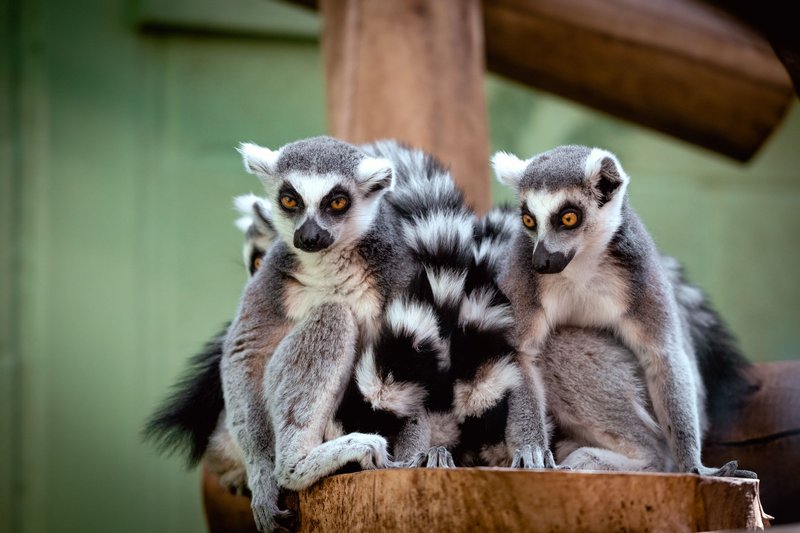
Mohéli is the standout. Mohéli Marine Park, the country’s first protected marine area, shelters dugongs, nesting green sea turtles, and humpback whales that pass through on migration. The surrounding reefs host more than 800 marine species. On land, the islands are home to the endemic Livingstone’s fruit bat, one of the largest bats in the world with a wingspan stretching past 1.4 meters, now critically endangered. Mongoose lemurs, introduced long ago from Madagascar, persist on Mohéli and Anjouan, and the islands have their own endemic birds.
The IUCN Red List flags several of these species as threatened, which is exactly why organizations like the World Bank and UNDP increasingly frame the Comoros around natural capital and sustainability rather than a raw extraction inventory. Reefs, forests, and endemic wildlife underpin fisheries, water security, and a still-small ecotourism sector. Lose them and you lose resources that don’t show up on a minerals map.
The Resource Paradox
So you have spice crops that feed luxury perfume houses, an ocean territory the size of a mid-sized European country, fertile volcanic soil, possible offshore gas, and biodiversity that conservation bodies fight to protect. And the Comoros remains one of the poorest nations on Earth.
The reasons are structural, not geological. Export earnings ride on a handful of price-volatile crops. The fisheries value is captured mostly by foreign fleets. The mineral and energy potential is real but undeveloped, needing capital and stability the islands have struggled to assemble. Political instability through much of the country’s post-independence history slowed every kind of long-term investment.
The natural resources of the Comoros aren’t the constraint. The constraint is converting natural wealth into national income – building the processing, infrastructure, and governance that turn a vanilla pod, a tuna stock, or a gas block into broad-based prosperity. The endowment is there. The machine to use it is what’s still being built.