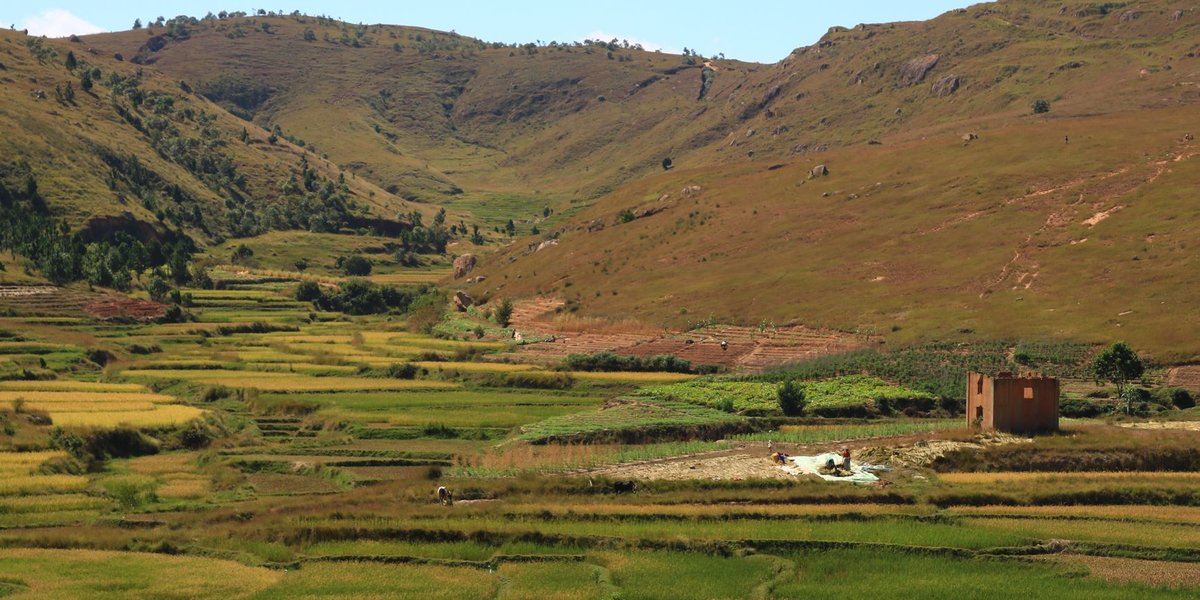
Madagascar makes about 80% of the world’s vanilla, sits on one of the planet’s largest graphite reserves, and holds nickel and cobalt deposits that feed global battery supply chains. It also ranks among the poorest countries on Earth, with most of its 30 million people living on less than $2.15 a day. Those two facts belong in the same sentence, and the gap between them is the most interesting thing about Madagascar’s natural resources.
This is the resource paradox in its sharpest form. The island has the geology, the climate, and the biology to be wealthy. What it doesn’t have is the roads, the institutions, and the governance to turn what’s in the ground and the soil into broad prosperity. So before the inventory of graphite tonnages and tuna stocks, hold that tension. It explains everything downstream.
Table of Contents
- The quick inventory
- Mineral resources
- Agriculture: vanilla and the spice economy
- Fisheries
- Forests and biodiversity
- Energy resources
- The resource paradox
- The bottom line on Madagascar’s resources
The quick inventory
Madagascar’s resource base breaks into five categories. Here’s the shape of it before we get into the detail.
| Resource type | Key resources | Notable scale |
|---|---|---|
| Minerals | Graphite, nickel, cobalt, ilmenite, chromite, mica, rare earths, sapphires | Top-tier graphite reserves; major ilmenite and nickel producer |
| Agriculture | Vanilla, cloves, coffee, cocoa, lychee | ~80% of global vanilla supply |
| Fisheries | Yellowfin tuna, marlin, shrimp | Major Indian Ocean tuna grounds |
| Forests & biodiversity | Endemic forests, hardwoods, wildlife | Over 90% of species found nowhere else |
| Energy | Hydropower, oil, oil shale | Large untapped hydro and heavy-oil potential |
That’s the menu. Now the substance.
Mineral resources
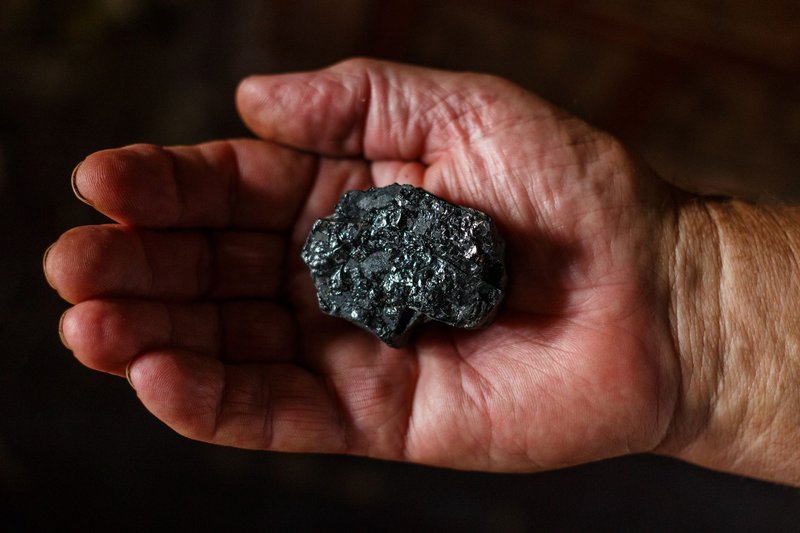
Madagascar’s mineral wealth is genuinely first-rate, and the most strategically important piece of it is graphite. The island holds some of the world’s largest natural flake graphite reserves, the kind that matters because graphite is the dominant material in lithium-ion battery anodes. Every electric vehicle on the road runs on graphite, and a meaningful share of the high-quality flake variety can come out of Madagascar. The Molo and Vohitsara deposits in the south have drawn serious international investment precisely because the battery supply chain needs more of exactly this. That demand is reshaping the whole field of graphite-producing countries, and Madagascar has been climbing the ranks as new flake projects come online.
Then there’s nickel and cobalt. The Ambatovy mine near Moramanga is one of the largest nickel-cobalt operations in the world, a multi-billion-dollar project that processes laterite ore into refined metal for stainless steel and batteries. When it runs at capacity, it’s one of the single biggest contributors to the country’s export earnings.
Ilmenite is the third pillar. Rio Tinto’s QMM operation near Fort Dauphin mines mineral sands for titanium dioxide, the white pigment in everything from paint to sunscreen. Madagascar is among the more significant ilmenite suppliers globally, according to the USGS mineral commodity data.
Beyond the big three, the list runs long: chromite (Madagascar has been a notable African producer), mica, and a scattering of rare earth elements that have attracted exploration as the world hunts for non-Chinese REE sources. And then the gemstones. Madagascar is one of the planet’s premier sources of sapphires — the Ilakaka region sparked a rush in the late 1990s that turned a roadside village into one of the world’s largest informal sapphire-trading hubs almost overnight. The trade is largely artisanal and barely taxed, which is its own small version of the paradox.
Agriculture: vanilla and the spice economy
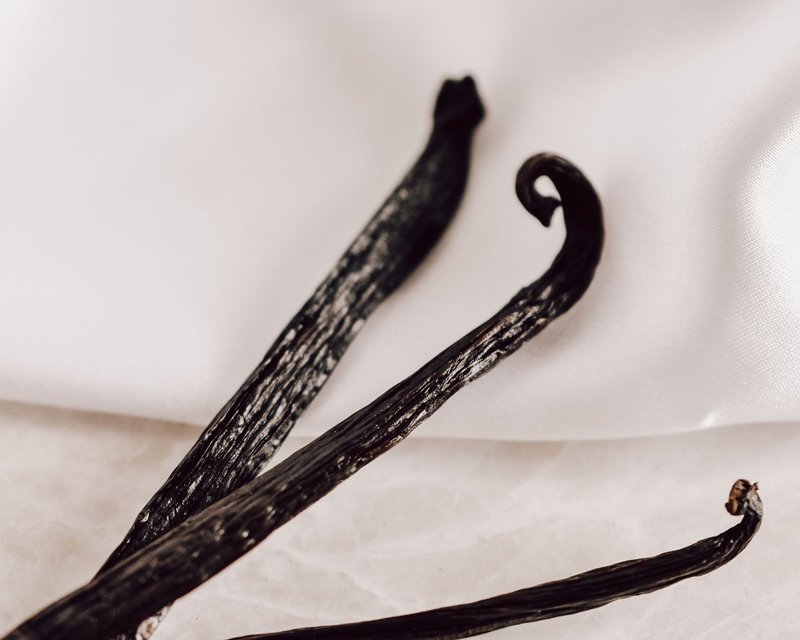
If minerals are Madagascar’s future bet, vanilla is its present-day signature. The island produces roughly 80% of the world’s natural vanilla, almost all of it the prized Bourbon variety grown in the humid northeast around the SAVA region. This is real vanilla — hand-pollinated flower by flower, cured over months — not the synthetic vanillin that flavors most cheap ice cream.
Vanilla’s economics are wild. Prices have swung from a few dollars a kilogram to over $600 per kilogram during shortage years, briefly making vanilla more valuable by weight than silver. Those spikes are great for nobody’s stability: when prices soar, theft of curing pods becomes a real problem, and growers harvest beans early and immature, which degrades quality. When prices crash, farmers who planted in the boom go bust. The crop concentrates the island’s resource paradox into a single pod — extraordinary value, brutal volatility, and most of the margin captured downstream by traders and food companies rather than the farmers doing the painstaking pollination.
Vanilla isn’t alone. Madagascar is a major exporter of cloves and a significant grower of coffee, cocoa, and lychee — the lychee harvest in particular floods European markets every December. The agricultural base is broad, fed by varied climates from tropical lowlands to highland plateaus, but it remains heavily smallholder and export-commodity driven, which leaves it exposed to world price swings the country can’t control.
Fisheries
Madagascar’s 5,000-plus kilometers of coastline open onto some of the richest tuna grounds in the western Indian Ocean. Yellowfin and bigeye tuna migrate through its waters, along with marlin and a valuable shrimp fishery along the west coast. Fishing licenses sold to foreign fleets — particularly European and Asian distant-water vessels — generate government revenue, and seafood is a steady export earner.
The catch, so to speak, is that much of the value swims away. Foreign industrial fleets take a large share of the offshore tuna under access agreements, while local artisanal fishers work the inshore waters with limited reach. Overfishing pressure and weak enforcement of those access deals mean the resource generates far less domestic benefit than the raw abundance would suggest. It’s a recurring theme: the resource is there, the institutional capacity to capture its full value isn’t.
Forests and biodiversity
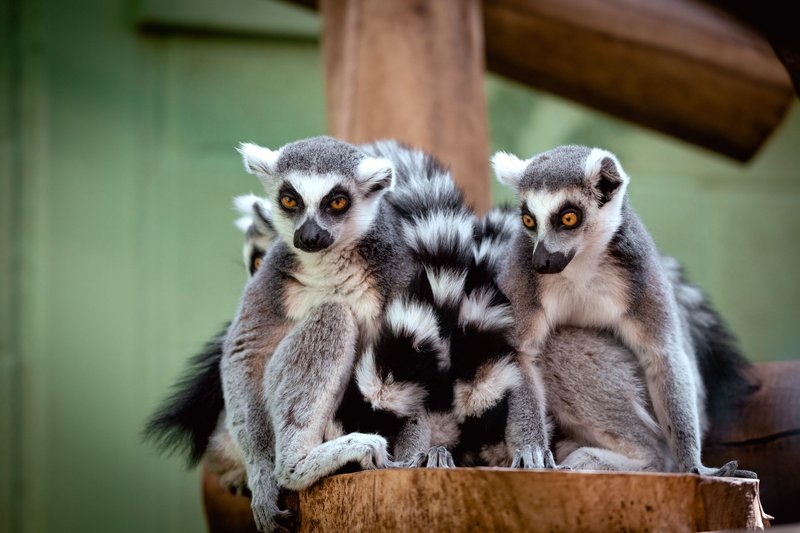
Here’s where Madagascar stops being like anywhere else. The island split from the African mainland and then from India tens of millions of years ago, and its plants and animals evolved in isolation. The result: more than 90% of its wildlife exists nowhere else on the planet. All of the world’s lemur species are native to Madagascar. The baobab trees, the chameleons (about half the world’s species), the carnivorous fossa — this is one of the most concentrated pools of endemic biodiversity anywhere.
That biodiversity is a resource in the literal economic sense. It anchors ecotourism, the country’s most sustainable potential industry, and the forests themselves hold valuable hardwoods like rosewood and ebony. But this is also where the resource story turns darkest. Madagascar has lost a staggering share of its original forest cover, and deforestation continues through slash-and-burn agriculture (locally called tavy) and illegal logging. The illegal rosewood trade, much of it bound for furniture markets in Asia, has stripped protected areas despite international bans tracked by CITES. The IUCN lists a large and growing number of Malagasy species as threatened. The resource that makes Madagascar unique is the one it’s losing fastest.
Energy resources
Energy is Madagascar’s most underdeveloped resource category, which is exactly why it’s interesting. The island’s rivers and highlands give it substantial hydropower potential, and hydro already supplies a chunk of the limited national grid. But generating capacity is small relative to the geography, and most of the rural population has no grid access at all — electrification rates remain among the lowest in the world.
There’s fossil potential too. The Tsimiroro field in the west holds a large heavy-oil deposit, and the nearby Bemolanga site contains one of the bigger oil-shale resources anywhere. Neither is in meaningful production. They sit in remote areas with no infrastructure to move the product, and heavy oil and shale are expensive to develop. So the energy resources stay mostly theoretical: real geology, no roads, no investment at scale. The same sentence again, in a different category.
The resource paradox
Step back and the pattern is impossible to miss. Madagascar has world-class graphite, a near-monopoly on natural vanilla, major nickel and tuna, and biodiversity found nowhere else — and it remains, by most measures, one of the poorest nations on Earth. Why?
A few reasons stack up:
- Infrastructure. Roads are sparse and often impassable in the rainy season. A deposit or a fishery is only worth what you can get to market, and in much of Madagascar you can’t get much anywhere.
- Governance and corruption. Resource rents leak. Mining and fishing deals have repeatedly been structured to benefit foreign operators and a narrow elite rather than the public, and the country ranks poorly on global corruption indices.
- Value capture happens elsewhere. Vanilla farmers see a sliver of the retail price. Tuna is caught by foreign fleets. Raw ore and unprocessed sapphires leave the island, and the profitable refining and cutting happen abroad.
- Environmental cost. The deforestation driving short-term survival farming is destroying the long-term resource — the forests, soils, and biodiversity that could anchor a durable economy.
None of this is inevitable. The resources are real and, in the case of battery minerals, increasingly demanded by a world racing to electrify. The constraint has never been geology. It’s been the machinery — physical and institutional — needed to turn what the island has into what its people get.
The bottom line on Madagascar’s resources
The natural resources of Madagascar read like a wishlist: strategic battery minerals, a global spice monopoly, premium gemstones, rich tuna grounds, and irreplaceable biodiversity. By the raw inventory, this should be a wealthy island.
The reason it isn’t comes down to everything that sits between a resource and a livelihood — roads, institutions, fair contracts, and the restraint not to burn the forest you depend on. Madagascar’s story isn’t a shortage of resources. It’s a master class in how much else has to go right for resources to matter. Watch the graphite and nickel projects over the next decade: whether their value stays on the island or flows offshore like the vanilla margin and the tuna will tell you whether the paradox is finally cracking, or just repeating.