In labs, industrial plants and the atmosphere, gases rarely follow the simple rules of the ideal model — intermolecular forces and finite molecular size shift behavior in ways that matter for measurements and designs. Understanding those differences helps you predict condensation, pressure drops and heat transfer more accurately.
There are 20 Examples of Real Gases, ranging from Air to n-Butane; for each entry you’ll find below Formula,Critical temp (K) & pressure (bar),Main cause (≤15 words) to show why they deviate from ideality and where that matters — you’ll find below.
How do real gases differ from ideal gases in practical calculations?
Real gases deviate because molecules occupy space and attract or repel each other; at high pressures or low temperatures these effects change pressure–volume relationships. Engineers use corrections like the compressibility factor (Z) or equations of state (e.g., van der Waals, Redlich–Kwong) when ideal-gas errors would affect safety, sizing or performance.
When should I consult the critical temperature and pressure values?
Critical properties tell you the limits where a gas can no longer be liquefied by pressure alone; consult them when designing refrigeration, storage and high-pressure processes or when operating near condensation conditions so you can choose the right equations and safety margins.
Examples of Real Gases
| Name | Formula | Critical temp (K) & pressure (bar) | Main cause (≤15 words) |
|---|---|---|---|
| Carbon dioxide | CO2 | 304 K & 73.8 bar | Strong attraction and condensation near Tc |
| Water vapor (steam) | H2O | 647 K & 220.6 bar | Hydrogen bonding and condensation near saturation |
| Ammonia | NH3 | 405 K & 112.8 bar | Strong hydrogen bonding and polarity |
| Sulfur dioxide | SO2 | 431 K & 78.8 bar | Strong polarity and condensation tendency |
| Hydrogen chloride | HCl | 189 K & 48.7 bar | Strong polarity and acid–base interactions |
| Hydrogen sulfide | H2S | 373 K & 89.4 bar | Polarity and association near condensation |
| Methane | CH4 | 191 K & 46.0 bar | High-pressure compressibility effects |
| Nitrogen | N2 | 126 K & 33.5 bar | High-pressure deviations in compressed gas systems |
| Oxygen | O2 | 155 K & 50.4 bar | Compressibility and intermolecular attractions at high pressure |
| Nitrous oxide | N2O | 310 K & 71.4 bar | Polarity and proximity to Tc in storage |
| Carbon monoxide | CO | 133 K & 34.5 bar | High-pressure non-ideal compressibility |
| Propane | C3H8 | 370 K & 42.5 bar | Van der Waals attraction near liquefaction |
| n-Butane | C4H10 | 425 K & 38.0 bar | Pronounced condensation and intermolecular attractions |
| Ethylene | C2H4 | 282 K & 50.3 bar | Association and condensation under pressure |
| Sulfur hexafluoride | SF6 | 319 K & 37.6 bar | High polarizability and strong dispersion forces |
| R-134a (tetrafluoroethane) | C2H2F4 | 374 K & 40.6 bar | Strong intermolecular forces in refrigerants |
| Chlorine | Cl2 | 417 K & 76.9 bar | Strong dispersion and polarizability effects |
| Air | N2/O2/Ar (typical) | Varies; pseudo-critical ~126–155 K & 33–50 bar | Mixture behavior and component non-ideality |
| Natural gas (typical) | Mainly CH4 with C2–C4 and impurities | Varies with composition; pseudo-critical ~191–370 K & 46–43 bar | Composition variability and condensation of heavier components |
| Flue gas | CO2,N2,H2O,O2,SO2 (typical) | Varies; dependent on combustion products and moisture | Multicomponent condensation and strong polar components |
Images and Descriptions
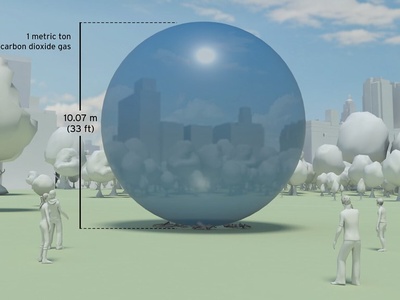
Carbon dioxide
Carbon dioxide is a common atmospheric and industrial gas from combustion. Near its critical point or at elevated pressures it departs from ideality due to strong intermolecular attraction and proximity to liquefaction, relevant for supercritical CO2 and sequestration.

Water vapor (steam)
Water vapor shows strong non-ideal behavior because hydrogen bonds drive clustering and condensation. In boilers, steam cycles and humid air, deviations matter for heat engines, psychrometrics and accurate thermodynamic calculations.
Ammonia
Ammonia is a polar, hydrogen-bonding gas used in refrigeration and fertilizers. Its polarity and association make it non-ideal near condensation and at moderate pressures, affecting storage, refrigeration cycle calculations and safety assessments.
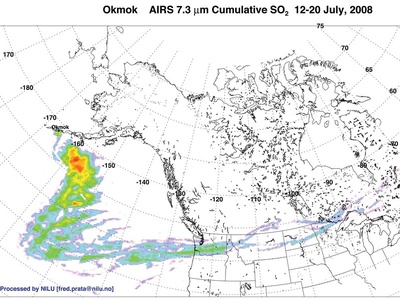
Sulfur dioxide
Sulfur dioxide, produced by combustion and industrial processes, is polar and easily liquefies. It shows measurable non-ideal behavior near saturation and in flue-gas conditions, important for scrubbing, emissions control and environmental chemistry.
Hydrogen chloride
Hydrogen chloride gas is highly polar and reactive, forming strong interactions with water and surfaces. Near condensation and in humid systems it deviates from ideality, influencing acid gas handling, scrubbers and atmospheric chemistry.
Hydrogen sulfide
Hydrogen sulfide is a toxic, polar gas found in natural gas and petroleum. Its intermolecular attractions and tendency to liquefy at modest pressures produce non-ideal behavior relevant for pipeline corrosion and gas processing.
Methane
Methane, the main component of natural gas, is nearly ideal at STP but shows measurable non-ideal behavior under pipeline and reservoir pressures. Compressibility and real-gas corrections matter for flow calculations and custody transfer.
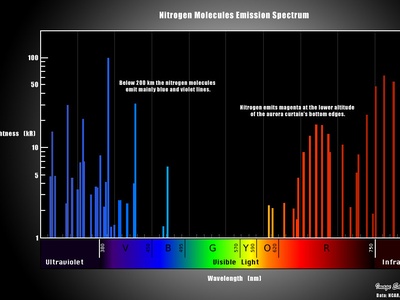
Nitrogen
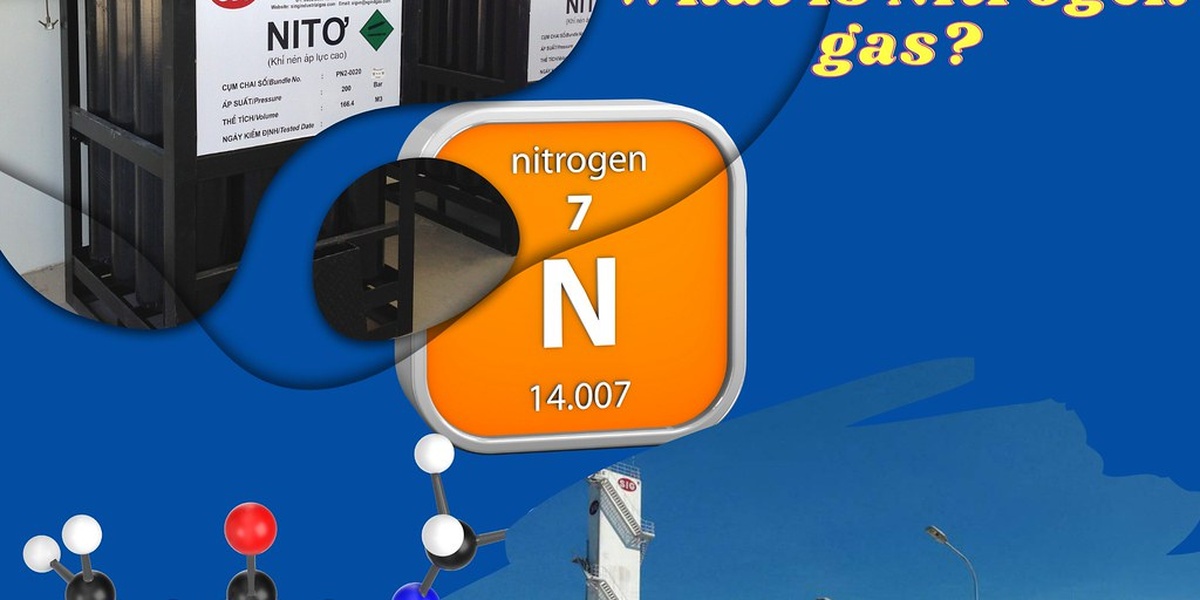
Nitrogen behaves nearly ideally at ambient conditions but departs from ideality in compressed cylinders and high-pressure processes. Corrections matter in cryogenics, high-pressure reactors and gas storage calculations.
Oxygen
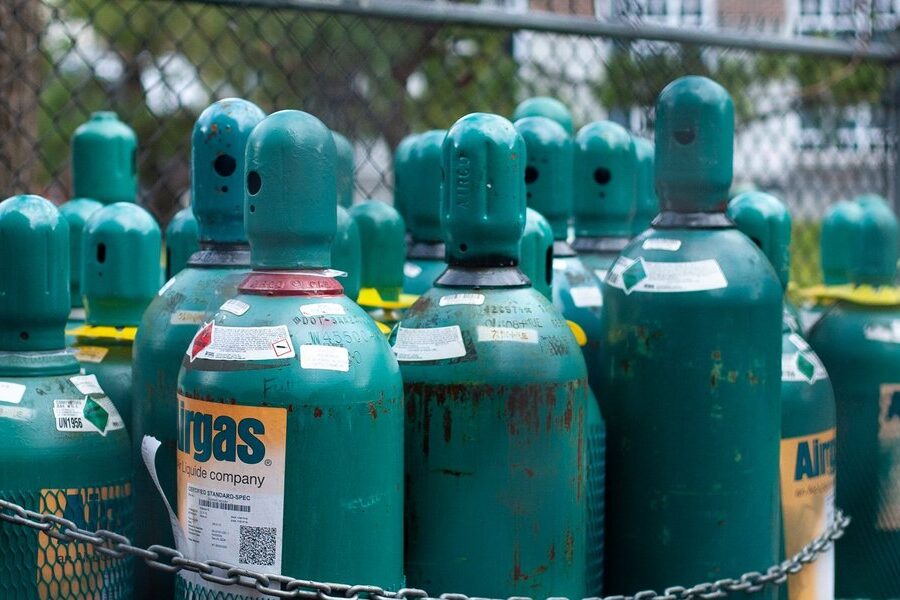
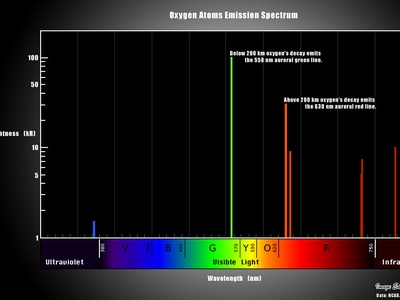
Oxygen is close to ideal at room conditions but non-ideal in compressed gas cylinders and high-pressure oxidation processes. Real-gas behavior affects safety calculations, liquefaction and respirator system design.
Nitrous oxide
Nitrous oxide (laughing gas) is used in medicine and industry; its relatively high critical temperature means it deviates from ideality in storage cylinders and compressors, affecting pressure–temperature relations and vapor handling.
Carbon monoxide
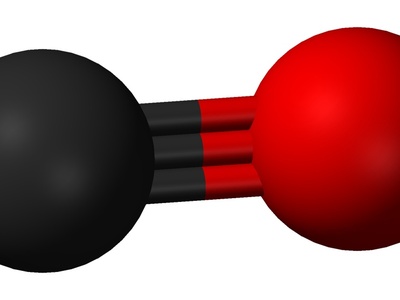
Carbon monoxide, an industrial gas and pollutant, is nearly ideal at STP but shows non-ideal compressibility at elevated pressures used in synthesis and gas treating; real-gas corrections matter for process design and safety.
Propane
Propane is a common fuel and refrigerant that liquefies at modest pressures. Strong van der Waals attractions near its Tc produce measurable non-ideal behavior, important for storage, LPG handling and phase-equilibrium calculations.
n-Butane
n-Butane readily liquefies under moderate pressure and shows strong non-ideal behavior due to dispersion forces. This affects LPG mixtures, fuel vapor pressures and refinery separations.
Ethylene
Ethylene is a key petrochemical feedstock; near its critical region and in compressed reactors it departs from ideality. Non-ideal behavior influences polymerization reactor design and gas-phase equilibrium calculations.
Sulfur hexafluoride
SF6 is a heavy, highly polarizable gas used as an electrical insulator. Its large electron cloud creates strong van der Waals attractions, causing non-ideal behavior even near ambient temperatures in confined, high-pressure equipment.
R-134a (tetrafluoroethane)
R-134a is a common refrigerant with significant non-ideal behavior near condensation and in refrigeration cycles. Accurate property data are essential for heat pump and HVAC system performance calculations.
Chlorine
Chlorine gas, used industrially for bleaching and synthesis, is highly polarizable and shows measurable non-ideal behavior near liquefaction. This impacts storage, transport and chemical reactor design where pressure and temperature vary.

Air
Air is a mixture of N2, O2 and noble gases; its real-gas behavior depends on composition and conditions. At high pressure or low temperature (cylinders, cryogenics) mixture non-idealities and pseudocritical properties become important.
Natural gas (typical)
Natural gas is a variable mixture dominated by methane with heavier hydrocarbons. Heavier components condense and cause non-ideal behavior in pipelines and reservoirs, so compositional corrections and multiphase models are routinely used.
Flue gas
Flue gas from combustion is a complex mixture including CO2 and H2O; condensation, acid gas interactions and multicomponent non-ideal behavior matter for capture technology, emissions control and corrosion management.