Whether you’re in a workshop, on a renovation site, or sorting supplies at home, knowing which bonding solution to reach for makes projects faster and more reliable. Small differences in chemistry or cure time can mean the difference between a lasting repair and a redo.
There are 35 Adhesives, ranging from Aliphatic resin (carpenter’s glue) to Water-based construction adhesive; for each product you’ll find concise entries organized by Chemistry, Typical substrates / uses, and Cure time (min–h) — all of which you’ll find below.
How do I choose the right adhesive for different materials?
Match the adhesive chemistry to the substrate and the job: wood glues like aliphatic resins for furniture, solvent- or polymer-based construction adhesives for porous and nonporous building materials, and specialty formulas (epoxies, cyanoacrylates, silicones) for high strength, gap-filling, or flexible bonds. Use the list below to compare Chemistry and Typical substrates / uses, and consider working time, cleanup, and environmental exposure.
How long should I wait before stressing a bonded joint?
Check the Cure time (min–h) column for each product—initial handling strength can arrive in minutes to hours, but full cure often takes 24–72 hours and depends on temperature, humidity, and joint design. When in doubt, allow longer cure and follow manufacturer guidance for best results.
Adhesives
| Name | Chemistry | Typical substrates / uses | Cure time (min–h) |
|---|---|---|---|
| Two-part epoxy | Epoxy (two-part resin + hardener) | Metals, wood, composites; structural repairs and bonding | 5 min–24 h |
| Cyanoacrylate (superglue) | Cyanoacrylate monomer adhesive | Plastics, rubber, metal, ceramics, small parts; quick repairs | 1 min–24 h |
| Thickened/gap-filling cyanoacrylate | Cyanoacrylate with fillers/viscosity modifiers | Porous or gap joints in wood, ceramics, composites | 1 min–24 h |
| One-part moisture-cure polyurethane (construction PU) | Polyurethane one-part, moisture-cure | Wood, concrete, plastics, construction substrates; flexible bonds | 30 min–48 h |
| Two-part polyurethane structural adhesive | Polyurethane (two-part reactive) | Metals, composites, plastics; structural bonding in transport/auto | 15 min–48 h |
| Structural acrylic (MMA) | Methyl methacrylate structural adhesive | Metals, composites, plastics; fast structural bonding | 5 min–24 h |
| UV-curing acrylic/adhesive | Acrylic/epoxy that cures with UV light | Glass, clear plastics, medical devices, electronics assembly | 1 min–2 h |
| Anaerobic adhesives (threadlocker/retaining) | Anaerobic methacrylate-like chemistry | Threadlocking, retaining bearings, sealing close metal fits | 5 min–24 h |
| Hot-melt adhesive (EVA) | Ethylene-vinyl acetate (hot melt) | Packaging, crafts, woodworking, assembly lines | 1 min–24 h |
| Polyamide hot-melt adhesive | Polyamide hot-melt polymer | Electronics, textiles, footwear, high-temp packaging | 1 min–24 h |
| Polyurethane reactive hot-melt (PUR) | Reactive hot-melt polyurethane (moisture cure) | Wood lamination, furniture, flooring, composites | 1 min–24 h |
| Contact cement (neoprene/contact) | Solvent-based polychloroprene or similar | Laminates, veneers, rubber, leather, decorative surfaces | 5 min–2 h |
| PVA (white glue, school glue) | Polyvinyl acetate emulsion | Paper, wood, porous materials, crafts | 10 min–24 h |
| Aliphatic resin (carpenter’s glue) | Aliphatic resins (modified PVA) | Woodworking, furniture joints, cabinetry | 10 min–24 h |
| Hide glue (animal glue) | Protein-based (animal hide glue) | Antique repair, musical instruments, wood joinery | 10 min–24 h |
| Casein glue | Protein-based (milk-derived) | Furniture, plywood, woodworking, historical restoration | 30 min–24 h |
| Urea-formaldehyde (UF) adhesive | Urea-formaldehyde resin adhesive | Plywood, particleboard, MDF manufacture | 30 min–24 h |
| Phenol-formaldehyde (PF) adhesive | Phenolic resin (thermosetting) | Exterior plywood, marine applications, high-temp panels | 1 h–24 h |
| Melamine-formaldehyde adhesive | Melamine-modified thermosetting resin | Decorative laminates, furniture, wood panels | 30 min–24 h |
| Silicone RTV adhesive | Silicone elastomer (RTV acetoxy/neutral) | Glass, ceramics, metal, seals needing flexibility | 30 min–24 h |
| Structural silicone (glazing) adhesive | High-strength neutral-cure silicone | Glass facades, curtain walls, structural glazing | 1 h–72 h |
| MS polymer / silyl-modified polymer (SMP) | Silyl-terminated polymer (MS) adhesive | Construction joints, cladding, automotive trim | 30 min–48 h |
| Tile adhesive (polymer-modified thinset) | Cementitious mortar with polymer additives | Ceramic/porcelain tile to concrete, drywall, floors | 30 min–72 h |
| Conductive adhesive (silver-filled epoxy) | Epoxy loaded with conductive fillers | Electronics, sensor assembly, circuit repair, grounding | 1 h–72 h |
| Anaerobic gasket/pipe sealants | Anaerobic polymer chemistry | Threaded metal fittings, pipe sealants, flanged joints | 5 min–24 h |
| Rubber cement | Solvent-based rubber adhesive | Paper, photos, light crafts, temporary bonds | 5 min–2 h |
| Bituminous adhesive (roofing mastic) | Asphalt/bitumen-based adhesive | Roof membranes, flashing, waterproofing assemblies | 30 min–24 h |
| Pressure-sensitive adhesive (PSA) | Acrylic or rubber-based tacky adhesive | Labels, stickers, films, removable bonds | Instant–24 h |
| Solvent-based contact adhesive (rubber glue) | Solvent-borne polymers (rubber/solvent) | Leather, rubber, footwear, flexible substrates | 5 min–2 h |
| Water-based construction adhesive | Polyurethane/PVA dispersions | Drywall, trim, molding, panel bonding indoors | 30 min–24 h |
| Epoxy paste/filler adhesives | Thixotropic epoxy formulation | Gap filling, fillets, structural repair, laminating | 10 min–24 h |
| Structural methacrylate adhesive (industrial MMA) | Methacrylate chemistry with accelerators | Bonding metals, composites, plastics in industrial assembly | 5 min–24 h |
| Fabric/textile adhesive (fabric glue) | PVA or neoprene-based textile adhesive | Fabric, trims, hems, clothing repair | 5 min–24 h |
| Cold-applied structural adhesive (epoxy paste for composites) | Modified epoxy or acrylic for composites | Composite bonding, panel assembly, laminate repairs | 10 min–24 h |
| UV/visible light-cure epoxy hybrid | Epoxy/acrylate hybrid cured by light | Micro-assembly, optics, medical device assembly | 1 min–24 h |
Images and Descriptions
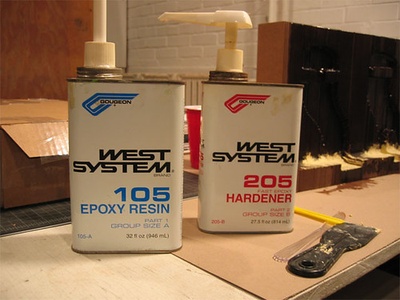
Two-part epoxy
Two-part epoxy cures when resin and hardener react to form a very strong, rigid bond. Excellent for metal, wood and composite structural repairs. Advantages: high strength, chemical resistance. Limitations: brittle unless modified, requires mixing, longer cure and surface prep.

Cyanoacrylate (superglue)
Cyanoacrylate bonds almost instantly to many substrates with thin, brittle joints. Great for fast fixes and tiny parts. Limitations: poor gap-filling, brittle under shock, limited heat resistance and some plastics require primer for good adhesion.
Thickened/gap-filling cyanoacrylate
Formulated to bridge gaps and build small fillets, filled CAs retain fast setting while adding bulk. Useful for repairs needing body. They remain brittle and often need secondary reinforcement for structural loads.
One-part moisture-cure polyurethane (construction PU)
Moisture-curing PU adhesives provide strong, flexible bonds and good gap-filling for building and exterior uses. They resist impact and vibration but can foam slightly, need moisture to cure and may smell during application.
Two-part polyurethane structural adhesive
Two-part PU adhesives offer strong, durable, slightly flexible bonds for structural assemblies. They combine toughness and peel resistance, handle differential thermal movement, and require careful mixing and clamping during cure.
Structural acrylic (MMA)
MMA structural adhesives cure quickly and produce tough, impact-resistant joints with excellent adhesion to dirty or oily metals. They tolerate movement and vibration but emit strong odor and often require ventilation and abrasion for best bonding.
UV-curing acrylic/adhesive
UV-curing adhesives polymerize rapidly when exposed to light, enabling instant handling for transparent parts and micro-assemblies. They require light access to the joint and may not cure in shadowed gaps without secondary cure mechanisms.
Anaerobic adhesives (threadlocker/retaining)
Anaerobic adhesives cure in the absence of air between metal surfaces, preventing loosening of fasteners and filling small shaft/hole voids. They are strong and corrosion-resistant but require close metal contact and can be difficult to remove.
Hot-melt adhesive (EVA)
EVA hot-melts melt for application and set quickly on cooling, making rapid bonding for porous substrates and assembly lines. They offer fast set and easy processing but limited high-temperature performance and lower solvent resistance.
Polyamide hot-melt adhesive
Polyamide hot-melts resist higher temperatures and offer better chemical resistance than EVA variants. They bond fabrics, films and some plastics well. Downsides include higher melt temperatures and longer equipment warm-up.
Polyurethane reactive hot-melt (PUR)
PUR hot-melts provide fast setting and develop robust, moisture-resistant bonds after reacting with ambient humidity. Common for woodworking and laminates, they need controlled storage and often special dispensing equipment.
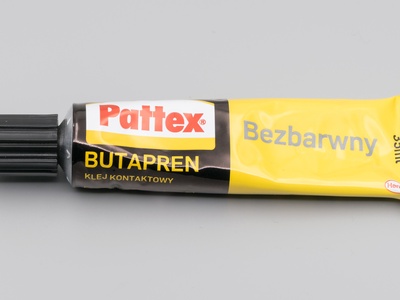
Contact cement (neoprene/contact)
Contact cements bond on contact after solvent evaporation, enabling instant bonding of large surfaces like laminates. They offer strong peel resistance but require precise alignment and proper ventilation due to solvents and VOCs.
PVA (white glue, school glue)
PVA is easy-to-use, water-based, non-toxic and ideal for woodworking, paper and craft projects. It dries clear but is not waterproof unless crosslinked variants are used. Generally affordable with modest strength for porous substrates.
Aliphatic resin (carpenter’s glue)
Aliphatic resin glues are woodworker favorites for strong, sandable joints and good open time. They dry harder than regular PVA and resist sanding gumminess, but are not suitable for permanent outdoor exposure without waterproof variants.
Hide glue (animal glue)
Hide glue has a reversible bond with heat and moisture, prized for restoration and instrument making. It allows disassembly for repairs. Limitations: sensitivity to humidity, relatively low moisture resistance and shorter shelf life for liquid forms.
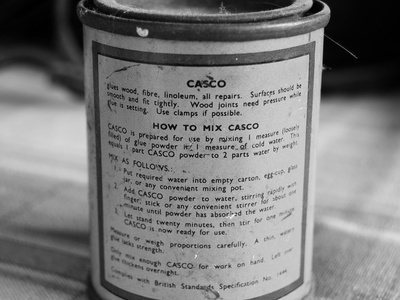
Casein glue
Casein adhesives are traditional, water-resistant when set and used historically in wood products. They bond porous substrates reasonably well and are valued for low toxicity. Modern alternatives often surpass them in strength and weathering.
Urea-formaldehyde (UF) adhesive
UF adhesives provide strong, rigid bonds used extensively in engineered wood panels and furniture. They cure quickly under heat and pressure but can emit formaldehyde and are brittle; not suited for exterior exposure without modification.
Phenol-formaldehyde (PF) adhesive
Phenolic adhesives are durable, waterproof and heat-resistant, ideal for exterior-grade plywood and structural panels. They require heat and pressure for optimal cure, are dark in color, and have strong chemical resistance.
Melamine-formaldehyde adhesive
Melamine-formaldehyde resins offer water and heat resistance for laminate bonding and furniture. They cure to hard, durable bonds but can be brittle and are generally processed under heat in panel manufacture.
Silicone RTV adhesive
Silicone RTV adhesives create flexible, weatherproof joints with excellent UV and temperature resistance. Good for sealing and non-structural bonding. They have limited load-bearing strength and poor adhesion to some plastics without priming.
Structural silicone (glazing) adhesive
Structural glazing silicones are formulated for high peel and tensile strength to support glass in facades. They remain flexible and UV resistant but require meticulous surface prep and are specialized for structural glazing systems.
MS polymer / silyl-modified polymer (SMP)
MS polymers combine silicone-like flexibility with paintability and good adhesion to many substrates. They cure moisture-actively, offer low odor, and are often used as durable construction adhesives and sealants with decent mechanical strength.
Tile adhesive (polymer-modified thinset)
Polymer-modified thinset provides strong bonding and flexibility for tile installations. It improves adhesion and reduces cracking under movement. Requires proper troweling and grout; not a general-purpose household adhesive.
Conductive adhesive (silver-filled epoxy)
Conductive epoxies bond components while providing electrical conductivity between surfaces. Ideal for electronics where soldering is unsuitable. They cure rigidly, may be brittle, and are more expensive than non-conductive adhesives.
Anaerobic gasket/pipe sealants
Anaerobic sealants cure between metal surfaces to prevent leaks and corrosion while allowing mechanical disassembly. They are great for metal threads and closefitting parts but won’t cure when exposed to air or on non-metal substrates.
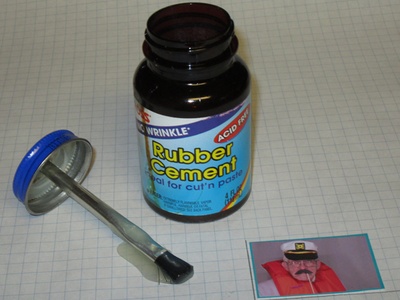
Rubber cement
Rubber cement provides repositionable bonds for paper and crafts and dries to a flexible tacky layer. It is easy to remove but not suitable for structural loads, can have strong solvent fumes, and may degrade plastics.
Bituminous adhesive (roofing mastic)
Bituminous adhesives are tacky, waterproof and used for roofing and membrane bonding. They tolerate outdoor exposure and conform well to irregular surfaces. They are messy, often solvent-based, and not for precision structural bonding of rigid parts.
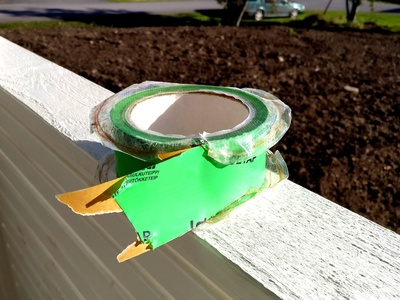
Pressure-sensitive adhesive (PSA)
PSAs form bonds with light pressure without heat or solvent. Used for labels, decals and removable fastening. Their performance depends on substrate surface energy; not intended for heavy structural loads and can age or creep under stress.
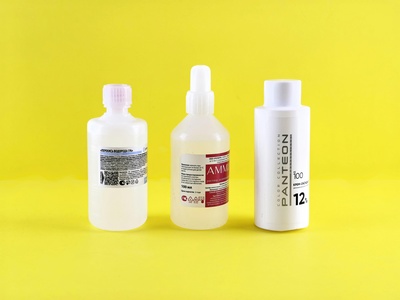
Solvent-based contact adhesive (rubber glue)
Solvent-based rubber adhesives provide flexible, fast-bonding joints used in footwear and leatherwork. They offer good immediate tack and peel resistance but emit strong fumes and require ventilation and careful handling.
Water-based construction adhesive
Water-based construction adhesives provide convenient, lower-VOC bonding for interior building assemblies. They offer good grab and long-term strength for porous materials but may have limited exterior durability compared with solvent-based or reactive systems.
Epoxy paste/filler adhesives
Epoxy pastes combine adhesive bonding with body to fill voids and shape joints. Useful for repair, fairing and structural fillets. They deliver strong cured material but require mixing and longer cure compared with thin epoxies.
Structural methacrylate adhesive (industrial MMA)
Industrial MMAs create tough, durable bonds that tolerate dirty surfaces and dynamic loads. Fast cure and high peel resistance make them common in transportation and marine industries. They can odor and often require PPE and surface prep.
Fabric/textile adhesive (fabric glue)
Fabric glues are formulated to remain flexible and washable on textiles, handy for quick repairs and crafts. Performance varies by formulation; many are not as durable as sewing and may stiffen some fabrics after drying.
Cold-applied structural adhesive (epoxy paste for composites)
Cold-applied structural adhesives bond composite parts without heat, often used in field repairs and assembly. They provide high strength and fatigue resistance but require correct surface prep and may need clamping or fixturing during cure.
UV/visible light-cure epoxy hybrid
Light-activated epoxy hybrids cure rapidly where light reaches the joint and later develop full properties with thermal cure. They offer controlled handling and precision, but shadowed areas may rely on secondary cure mechanisms.