The year 1913 sits at an interesting crossroads in modern history, when scientific advances and literary voices both drew international attention. Looking back at that year gives a compact view of achievements that influenced later decades.
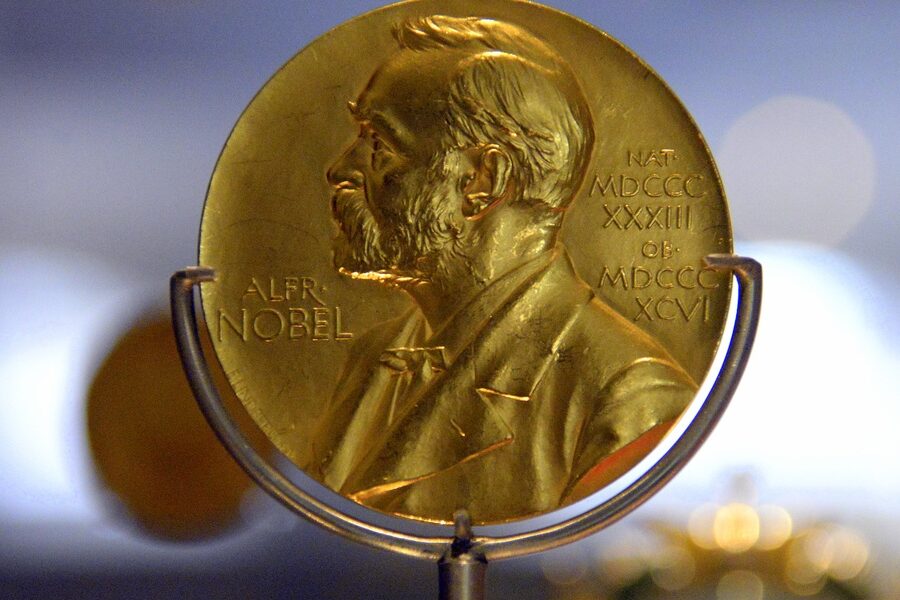
There are 5 1913 Nobel Prize Winners, ranging from Alfred Werner to Rabindranath Tagore; for each you’ll find below Category,Nationality,Citation (max 15 words) to make the entries quick to scan and compare with one another—you’ll find below the full list and details.
How is the list organized and what do the columns mean?
Each entry is arranged as Category,Nationality,Citation (max 15 words): the category names the prize, nationality gives the laureate’s country, and the short citation summarizes the reason for the award.
Where do the citations and basic details come from?
The names and citations are drawn from authoritative historical records, primarily the Nobel Foundation’s official documentation and verified archival sources, so you can follow links in the list below for original citations and further reading.
1913 Nobel Prize Winners
| Name | Category | Nationality | Citation (max 15 words) |
|---|---|---|---|
| Heike Kamerlingh Onnes | Physics | Netherlands | For investigations into the properties of matter at low temperatures. |
| Alfred Werner | Chemistry | Switzerland | For his work on the linkage of atoms in molecules, especially coordination compounds. |
| Charles Richet | Physiology or Medicine | France | For his work on anaphylaxis. |
| Rabindranath Tagore | Literature | India (British India) | For his profoundly sensitive, fresh and beautiful verse. |
| Henri La Fontaine | Peace | Belgium | For his work as an internationalist and in the International Peace Bureau. |
Images and Descriptions

Heike Kamerlingh Onnes
Dutch physicist who pioneered low-temperature physics; he liquefied helium and studied superconductivity and properties of matter near absolute zero, establishing cryogenics as a field. Awarded for groundbreaking experiments revealing quantum effects and new states of matter.
Alfred Werner
Swiss chemist who founded coordination chemistry, explaining how atoms bond in complex compounds and introducing stereochemical concepts. His theory clarified inorganic structures and chemical bonding, transforming understanding of transition metal complexes and influencing later inorganic and organometallic chemistry.
Charles Richet
French physiologist who discovered and named anaphylaxis, revealing immune system hypersensitivity reactions. His controlled experiments and clinical observations established mechanisms of allergic shock and immune responses, providing foundations for allergy research and influencing immunology and clinical treatments.
Rabindranath Tagore
Indian poet, writer, and philosopher whose lyrical works blended Bengali tradition with universal themes; first non-European Nobel laureate in literature. Awarded for his poetic expression, humanism, and cultural influence, including Gitanjali’s translations that reached an international audience.
Henri La Fontaine
Belgian lawyer and internationalist who promoted peace, arbitration, and international law; long-time president of the International Peace Bureau. He advanced institutional cooperation, legal frameworks, and peace movements across Europe, helping professionalize organized efforts for arbitration and conflict resolution.