Glaciology is the study of ice that moves, melts and remembers. That covers a mountain glacier shrinking above an Alpine village, a two-mile-thick ice sheet over Antarctica, and a nitrogen glacier on Pluto. The field is broader than most people expect, and the branches use very different tools: drills, satellites, radar sleds and supercomputers.
This guide splits glaciology topics into eight branches. Each one gets a plain definition, the question researchers are chasing, and a real example. After that, a comparison table and a section on picking a topic for a paper or project.
Table of Contents
- 1. Ice physics and glacier flow
- 2. Glacier mass balance
- 3. Ice cores and paleoclimate
- 4. Ice sheets and sea-level rise
- 5. Glacial geology and landforms
- 6. Glacier hydrology and meltwater
- 7. Cryosphere and permafrost
- 8. Astroglaciology
- Comparing glaciology research topics
- How to choose a glaciology topic
- FAQ
1. Ice physics and glacier flow
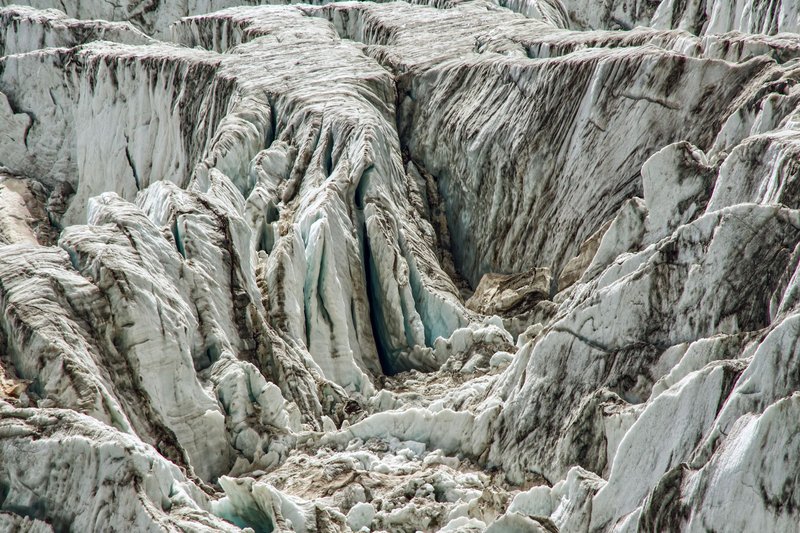
Ice looks solid, but over years it behaves like a very slow fluid. Glacier dynamics is the study of how that flow works: how ice deforms under its own weight, how it slides over bedrock, and why some glaciers surge.
What researchers ask: What controls speed? Why does a glacier suddenly accelerate?
Example: Greenland’s Jakobshavn Isbræ has been clocked at more than 40 meters per day during its fastest years. Most glaciers move a few meters a year. Explaining that gap means studying the ice, the water beneath it, and the shape of the bed.
Ice temperature matters enormously. Cold-based glaciers are frozen to their beds and creep. Warm-based glaciers slide on a film of meltwater, which is why a small change in water supply can change flow speed.
2. Glacier mass balance
Mass balance is the bookkeeping of a glacier: snow gained (accumulation) minus ice lost (ablation, mostly melt) over a year. Positive balance and the glacier grows. Negative and it shrinks.
What researchers ask: Is this glacier gaining or losing mass, and how fast?
Example: Sweden’s Storglaciären has one of the longest continuous mass balance records in the world, running since 1946. The World Glacier Monitoring Service compiles measurements from reference glaciers around the globe, and it’s the standard source for global glacier change data.
Methods are hands-on. Teams drill stakes into the ice, dig snow pits to measure density, and weigh what’s there. Satellites now fill in the glaciers nobody can reach.
3. Ice cores and paleoclimate
Snow that falls on an ice sheet gets buried, compressed and sealed. Air bubbles trapped in it are samples of the ancient atmosphere. Drill a core out and you can read temperature, carbon dioxide, methane, volcanic ash and dust layer by layer.
What researchers ask: What was the climate like 100,000 years ago, and how fast did it change?
Example: The EPICA Dome C core in Antarctica reaches back roughly 800,000 years, covering eight glacial cycles. It showed that carbon dioxide and temperature rose and fell together across those cycles. Projects like Beyond EPICA are chasing ice older than a million years.
This branch blends fieldwork with lab chemistry. The drilling takes seasons; the analysis takes years.
4. Ice sheets and sea-level rise
Ice sheets are the continent-sized masses in Greenland and Antarctica. Together they hold enough ice to raise global sea level by roughly 65 meters if both melted completely. That won’t happen soon, but even a small fraction matters for coastlines.
What researchers ask: How quickly will the ice sheets lose mass, and which parts are unstable?
Example: Thwaites Glacier in West Antarctica, about the size of Great Britain, is the most studied unstable glacier on Earth. The International Thwaites Glacier Collaboration has put radar, ocean robots and hot-water drills under and around it to see how warm water is eating at its base.
The key concept is marine ice sheet instability. Where the bed slopes downward inland, retreat can feed itself. This branch leans heavily on numerical modelling and satellite altimetry, so it suits students comfortable with code and data.
5. Glacial geology and landforms
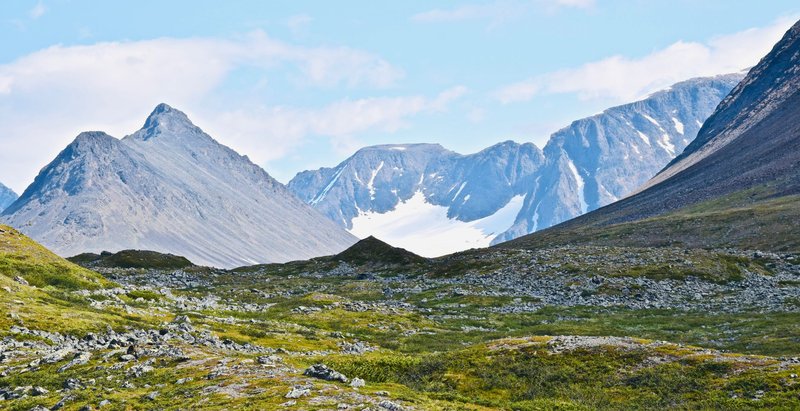
Glaciers leave a signature on the land. U-shaped valleys, fjords, moraines, eskers and drumlins all come from moving ice. Glacial geology reads those features to reconstruct where ice once was.
What researchers ask: How far did ice extend, and when did it retreat?
Example: The Laurentide Ice Sheet once covered much of Canada and the northern United States. Its retreat shaped the Great Lakes and left the boulder fields and ridges across the Midwest. Geologists date those deposits with cosmic-ray exposure dating, which measures how long a rock surface has been exposed to the sky.
This is the most field-driven branch, and the one most accessible to anyone near formerly glaciated terrain.
6. Glacier hydrology and meltwater
Water is the control knob of glaciers. It forms surface streams, plunges down moulins (vertical shafts), and flows in channels beneath the ice. Hydrology studies how that plumbing works and where the water ends up.
What researchers ask: How does meltwater change glacier speed, and what does it do downstream?
Example: Across the Himalaya and the Andes, glacier melt feeds rivers that millions of people rely on in dry seasons. Researchers look at the “peak water” problem: melt rises as glaciers shrink, then drops once they’re too small to supply it. Glacial lake outburst floods, where a moraine-dammed lake bursts, are a related hazard.
Methods mix field gauges, dye tracing, remote sensing and hydrological models.
7. Cryosphere and permafrost
The cryosphere is all of Earth’s frozen water: glaciers, ice sheets, sea ice, snow cover, and frozen ground. Permafrost, ground that stays frozen for at least two years, is a major sub-field. Many glaciologists work on the borders between these.
What researchers ask: What happens to carbon, infrastructure and ecosystems as frozen ground thaws?
Example: Siberian and Alaskan permafrost holds huge stores of organic carbon. The National Snow and Ice Data Center at the University of Colorado Boulder distributes freely available datasets on snow, sea ice, glaciers and frozen ground, which makes this a good area for data-driven student projects.
Rock glaciers, which are debris-covered ice-rich slopes creeping downhill in mountains, sit between glaciology and permafrost science.
8. Astroglaciology
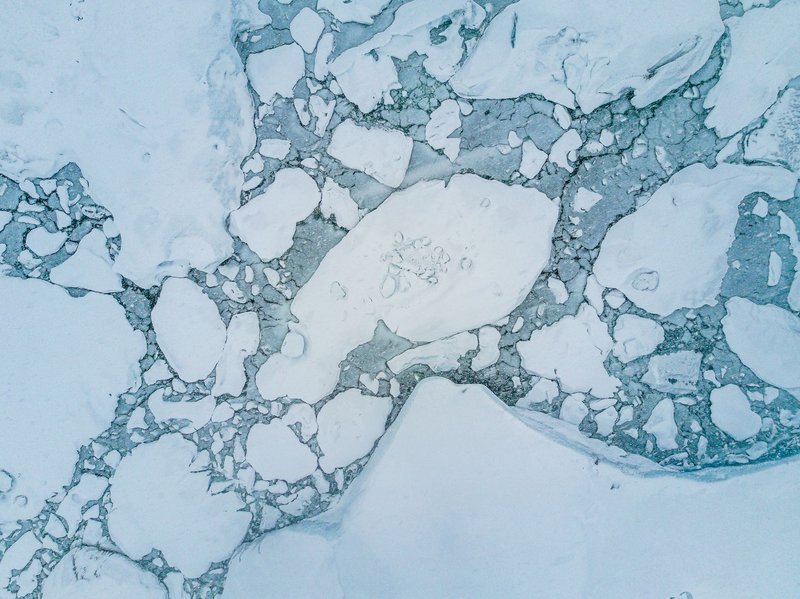
Ice exists across the solar system, and it flows. Astroglaciology applies glacier physics to other worlds.
What researchers ask: Where is there flowing ice, and what does it reveal about a planet’s climate or interior?
Example: Mars has polar caps and mid-latitude features that look like debris-covered glaciers. On Pluto, the bright plain Sputnik Planitia is a sheet of nitrogen ice that appears to be convecting and flowing. Europa’s ice shell sits over an ocean, and its thickness is a central question for habitability.
The data comes from spacecraft imagery and radar, plus lab experiments on how exotic ices deform. It is the newest and smallest branch, which is exactly why a fresh question can be tractable.
Comparing glaciology research topics
Difficulty here means the maths and technical skills needed to do original work, not how interesting the topic is.
| Branch | Main method | Difficulty | Best for |
|---|---|---|---|
| Ice physics and flow | Modelling, lab, radar | High | Physics and maths students |
| Mass balance | Fieldwork, remote sensing | Medium | Hands-on students, data analysis |
| Ice cores | Drilling, lab chemistry | Medium to high | Chemistry and climate interest |
| Ice sheets and sea level | Modelling, satellites | High | Coders, data scientists |
| Glacial geology | Fieldwork, dating | Low to medium | Geology and geography students |
| Hydrology | Field gauges, modelling | Medium | Water resources, hazards |
| Cryosphere and permafrost | Remote sensing, field | Medium | Ecology, carbon cycle |
| Astroglaciology | Imagery, modelling | Medium to high | Planetary science fans |
How to choose a glaciology topic
Start from the method, not the glamour. If you can’t code, a modelling-heavy ice sheet project will be painful. If you hate the cold and dislike fieldwork, mass balance on paper still works with published data.
Then work through these questions:
- What data can you actually get? NSIDC and WGMS publish open datasets. A topic with free data is a topic you can finish.
- Can you narrow it to one glacier or one question? “Himalayan glacier loss” is a book. “Change in debris cover on one named glacier between 2000 and 2020” is a project.
- Is there a live debate? Thwaites stability, glacier lake floods and peak water all have unresolved questions, which gives you something to argue.
- Does it connect to a job you want? Hazard assessment, water management, climate modelling and polar logistics all hire people with glaciology training.
For an essay, pick a branch, then a single named place. Specificity is what separates a good paper from a survey.
FAQ
What is glaciology?
Glaciology is the scientific study of glaciers, ice sheets and other forms of ice, including how they form, move, change and affect climate and sea level.
What are the main branches of glaciology?
The common divisions are ice physics and flow, mass balance, ice cores and paleoclimate, ice sheets, glacial geology, hydrology, cryosphere and permafrost, and astroglaciology. Boundaries overlap.
Is glaciology a good field for students?
Yes. It draws on physics, chemistry, geology, maths and computing, so students from many backgrounds fit. Open datasets make undergraduate-level projects realistic.
What’s the easiest glaciology topic to start with?
Glacial geology and mass balance. Both have accessible methods and plenty of published data, and you can narrow them to one location.
Where can I find glacier data?
The World Glacier Monitoring Service, NSIDC and NASA’s Earth observation portals publish glacier, ice sheet and snow data for free.