A teenager in a Tanzanian cooking class notices that hot ice cream mix freezes faster than cold mix. Adults tell him he’s wrong. He turns out to be right, and a physics puzzle has carried his name ever since. That’s the opening act of this list of scientists born in Tanzania, and the rest of the cast is just as good: a woman who earned the nickname “mama mikoko” for her work on mangroves, a mathematician who was the first Tanzanian woman to earn a doctorate in her field, and a physician who ended up running the World Health Organization’s neglected tropical diseases department.
Two ground rules. “Born in Tanzania” here includes people born in Tanganyika before 1964, when it merged with Zanzibar. And it means born there, not just working there. Fredros Okumu, who leads science at Tanzania’s Ifakara Health Institute and is one of the most cited names in malaria research, was born in Kenya, so he isn’t on this list. Everyone below is.
Contents
- Quick reference table
- Physics, mathematics and engineering
- Medicine and public health
- Agriculture and nutrition
- Marine science and environment
- Earth science
Quick reference
| Scientist | Field | Known for |
|---|---|---|
| Erasto Mpemba | Physics | The Mpemba effect |
| Verdiana Masanja | Mathematics | First Tanzanian woman with a math doctorate |
| Ebrahim Mamdani | Engineering, AI | Mamdani-type fuzzy inference |
| Julie Makani | Haematology | Sickle cell disease research |
| Mwele Malecela | Public health | Neglected tropical diseases |
| Winnie Mpanju-Shumbusho | Pediatrics | Malaria eradication leadership |
| Hulda Swai | Nanomedicine | Nanoparticle drugs for infectious disease |
| Joyce Kinabo | Nutrition | Nutritional physiology |
| Mary Mgonja | Plant breeding | Dryland cereal improvement |
| Adelaida Semesi | Marine biology | Mangrove ecology, seaweed farming |
| Flower Msuya | Phycology | Seaweed aquaculture |
| Irene Tarimo | Environmental science | Wastewater and wetland ecology |
| Grace Gobbo | Ethnobotany | Plant medicine of traditional healers |
| Sospeter Muhongo | Geology | Precambrian geology of Africa |
| Evelyne Mbede | Geology | Volcanoes, seismology, helium |
Physics, mathematics and engineering

1. Erasto Mpemba (born 1950, Tanganyika)
In 1963, at Magamba Secondary School, 13-year-old Erasto Mpemba was making ice cream. Students were told to cool their boiled milk and sugar mixture before freezing it. Mpemba, short on freezer space, put his in hot. It froze first.
His teacher and classmates laughed. When physicist Denis Osborne visited the school, Mpemba asked him the question directly, and Osborne tested it. The two published the results in 1969 in the journal Physics Education under the title “Cool?”. The Mpemba effect, hot water sometimes freezing faster than cooler water, is still argued over today. Mpemba went on to a career in wildlife management at Tanzania’s Ministry of Natural Resources and Tourism.
2. Verdiana Masanja (born 1954, Bukoba)
Masanja is the first Tanzanian woman to earn a doctorate in mathematics, completed in fluid dynamics at the Technical University of Berlin. She taught at the University of Dar es Salaam, then at the National University of Rwanda, where she became director of research, and since 2018 she has been a professor at the Nelson Mandela African Institution of Science and Technology in Arusha.
Her models cover heavy-metal transport in water, rabies and lumpy skin disease. She also chairs the African Mathematical Union’s commission on women in mathematics.
3. Ebrahim Mamdani (born 1942, Tanzania)
Mamdani’s name sits inside a piece of control engineering that still runs in machines today. In the mid-1970s, working at Queen Mary College in London, he helped build one of the first fuzzy-logic controllers, a system that steers a machine with rules written in near-human language (“if the pressure is high, reduce the heat a little”) instead of rigid equations. The method is now called Mamdani-type fuzzy inference.
He later joined Imperial College London, became a Fellow of the IEEE and the Royal Academy of Engineering, and died in 2010.
Medicine and public health
4. Julie Makani (born 1970)
Sickle cell disease affects more babies in Tanzania than almost anywhere else, and Makani built the research programme that tracks it. At Muhimbili University of Health and Allied Sciences in Dar es Salaam she set up a sickle cell programme that grew into one of the largest patient cohorts at a single centre in the world, with more than 2,000 patients followed over time.
She won the Royal Society Pfizer Award in 2011 and was named to the BBC’s 100 Women list in 2019.
5. Mwele Malecela (1963-2022, born Dar es Salaam)
Malecela joined Tanzania’s National Institute for Medical Research as a junior scientist in 1987 and left it, in 2018, to run the WHO department that coordinates the global fight against neglected tropical diseases. In between she led the lymphatic filariasis elimination programme across 53 Tanzanian districts and became the first woman to direct the institute.
At WHO she oversaw the 2021-2030 roadmap for neglected tropical diseases. She died of cancer in February 2022, at 58, and WHO paid tribute to her as one of Africa’s most respected public health leaders.
6. Winnie Mpanju-Shumbusho (born Maruku village, Kagera)
Born on the shores of Lake Victoria, Mpanju-Shumbusho trained as a pediatrician at the University of Dar es Salaam and later served as the WHO’s Assistant Director-General for HIV/AIDS, tuberculosis, malaria and neglected tropical diseases. She chaired the RBM Partnership to End Malaria from 2016 to 2019 and co-chaired the Lancet Commission on Malaria Eradication, whose 2019 report argued that eradication was achievable within a generation.
7. Hulda Swai (born 1954, Vudee village, Kilimanjaro)
Swai works at the point where chemistry meets medicine: packaging drugs inside nanoparticles so they reach infected cells more effectively. Her focus is antimalarial and other infectious-disease treatments for Africa. After nine years at Queen Mary University of London and more than a decade at South Africa’s CSIR, she returned to Tanzania in 2015 as a professor at the Nelson Mandela African Institution of Science and Technology.
In 2020 she received the African Union Kwame Nkrumah Award for Scientific Excellence. A malaria project she leads attracted US$6 million in WHO-linked funding for preclinical development.
Agriculture and nutrition
8. Joyce Kinabo (born 1955, Mpwapwa)
Kinabo is a professor of food technology and human nutrition at Sokoine University of Agriculture in Morogoro. She studied food science in Dar es Salaam and Leeds, then earned a doctorate in nutritional physiology at the University of Glasgow in 1990. Her research connects what Tanzanian farmers grow to what Tanzanian children actually get to eat.
9. Mary Mgonja (born in Tanzania)
Mgonja is a plant breeder. She trained at the University of Ibadan and the International Institute of Tropical Agriculture in Nigeria, then spent years as a principal scientist at ICRISAT in India working on sorghum and millet, the dryland cereals that feed people where maize fails. She later led Tanzania operations for the Alliance for a Green Revolution in Africa and was part of the team behind a Gates Foundation-funded biofortified sorghum project.
Marine science and environment
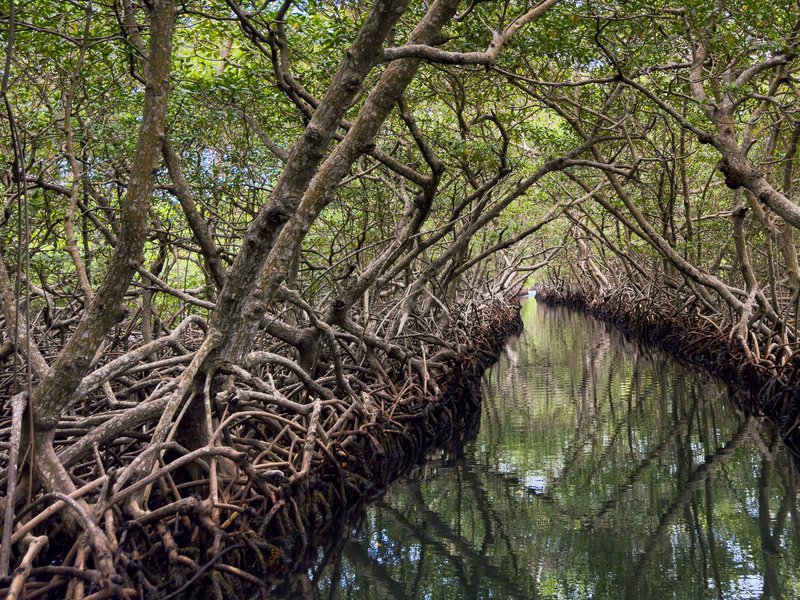
10. Adelaida Semesi (1951-2001, born Haubi, Kondoa)
Semesi was the first woman professor of natural sciences in Tanzania, and the coast knew her as “mama mikoko,” Swahili for mama mangroves. She began seaweed-farming research in Zanzibar in 1982, directed the University of Dar es Salaam’s Institute of Marine Sciences, and from 1990 drove Tanzania’s management plan for its mangrove forests.
She died in February 2001, aged 49 or 50. The mangrove plan outlived her.
11. Flower Msuya (born 1959, Kifula, Kilimanjaro)
If you’ve seen seaweed drying on racks in Zanzibar, Msuya’s research is part of the reason that industry works. A phycologist, she pioneered seaweed farming in southern Tanzania in the mid-1990s and later founded the Zanzibar Seaweed Cluster Initiative, which turns seaweed into powders, cosmetics and foods. Her doctoral work at Tel Aviv University paired seaweed with other marine crops such as sea cucumbers and shellfish, so one farm yields several products.
12. Irene Tarimo (born 1964, Kilimanjaro Region)
Tarimo heads the environmental studies department at the Open University of Tanzania. Her research covers wastewater treatment, wetland ecology and aquaculture, with a practical bent: using constructed wetlands and ecological modelling to clean polluted water in places without big treatment plants. She is a co-founder of the Tanzania Environmental Conservation Society.
13. Grace Gobbo (born 1974, Tabora)
Gobbo is an ethnobotanist, someone who studies how people use plants. She recorded plant knowledge from more than 80 traditional healers in western Tanzania and co-authored a booklet on plant use in Bubango village. She has worked with the Jane Goodall Institute on sustainable agriculture and fire management around Gombe, and the National Geographic Society has backed her field research.
Earth science
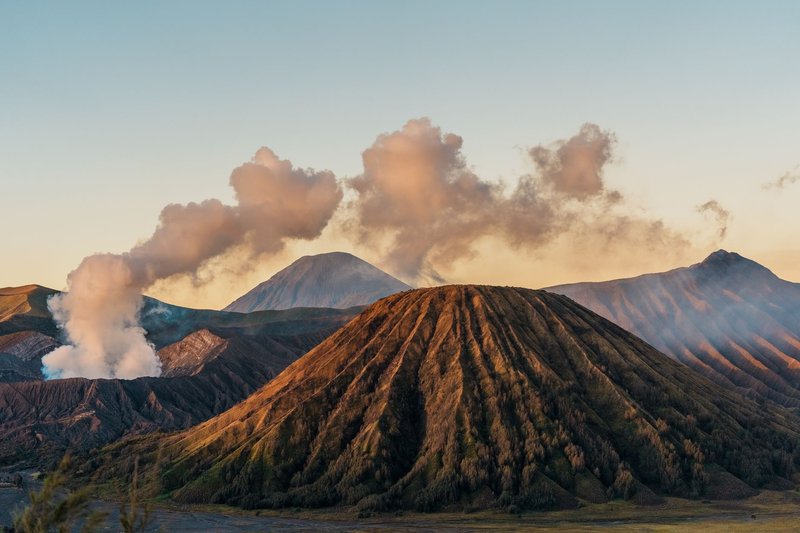
14. Sospeter Muhongo (born 1954, Musoma)
Muhongo is a geologist who studies the oldest rocks in Africa. He edited the Journal of African Earth Sciences, served as president of the Geological Society of Africa from 1995 to 2001, and has co-authored more than 150 scientific papers. In 2004 he received the Robert Shackleton Award for outstanding Precambrian research in Africa. He also served as Tanzania’s Minister of Energy and Minerals, so he has been on both sides of the mining conversation.
15. Evelyne Mbede (born 1957, Njombe)
In 1993, Mbede became the first woman in Tanzania to earn a PhD in the Earth sciences, studying tectonics at the Technical University of Berlin. Her research centers on volcanoes and earthquakes in the East African Rift, work that earned her the 2019 TWAS-C.N.R. Rao Award, and she is a Fellow of The World Academy of Sciences. More recently she has turned to underground helium reservoirs in the Rukwa Rift Basin, a gas the world’s hospitals and chip factories depend on.