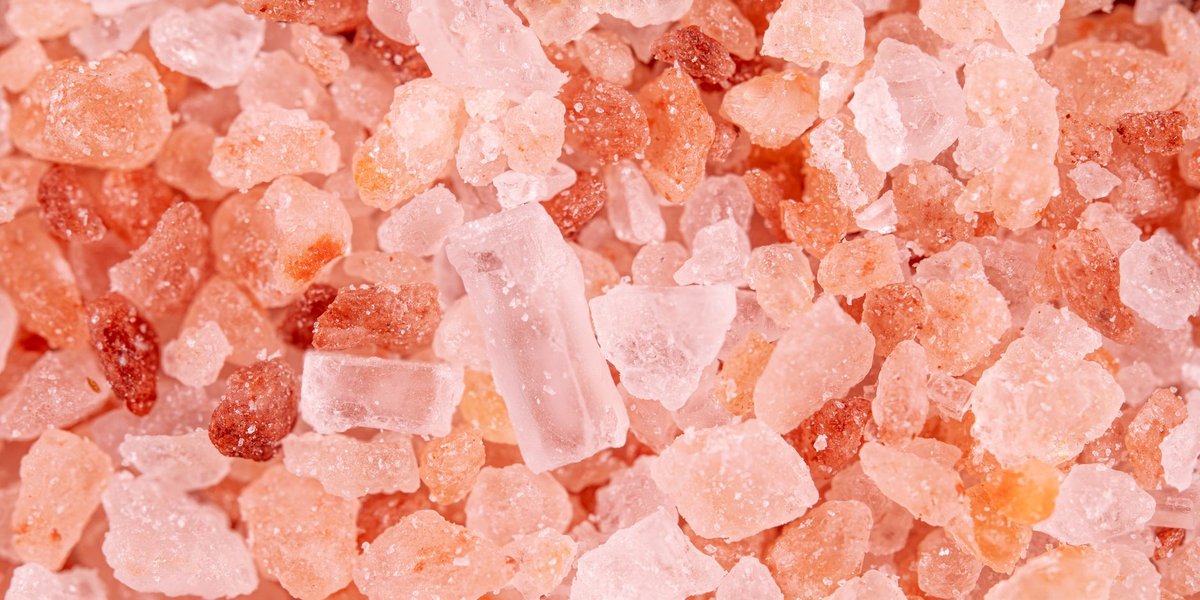
Sodium never shows up alone in nature. It’s too reactive — one electron in its outer shell, itching to leave — so by the time you meet it, it’s already paired off with something else. That pairing is the whole story of this element: table salt, drain cleaner, baking soda, and the fixer that saves a photograph are all just sodium wearing different partners.
Six compounds do almost all the work. Here’s what each one actually is, how it’s made, and where it shows up outside the textbook.
Table of Contents
- The quick comparison
- Sodium Chloride (NaCl)
- Sodium Hydroxide (NaOH)
- Sodium Carbonate (Na₂CO₃)
- Sodium Bicarbonate (NaHCO₃)
- Sodium Nitrate (NaNO₃)
- Sodium Thiosulfate (Na₂S₂O₃)
- Why sodium bonds the way it does
- Handling these safely
- Sodium’s second career: batteries
The quick comparison
| Compound | Formula | Common Name | Primary Use |
|---|---|---|---|
| Sodium chloride | NaCl | Table salt, halite | Food, de-icing, chlor-alkali feedstock |
| Sodium hydroxide | NaOH | Caustic soda, lye | Soap, paper pulp, drain cleaner |
| Sodium carbonate | Na₂CO₃ | Soda ash, washing soda | Glass manufacturing, water softening |
| Sodium bicarbonate | NaHCO₃ | Baking soda | Baking, antacids, fire suppression |
| Sodium nitrate | NaNO₃ | Chile saltpeter | Fertilizer, meat curing |
| Sodium thiosulfate | Na₂S₂O₃ | Hypo | Photographic fixer, dechlorination |
That’s the skim version. The equations and the “why” are below.
Sodium Chloride (NaCl)
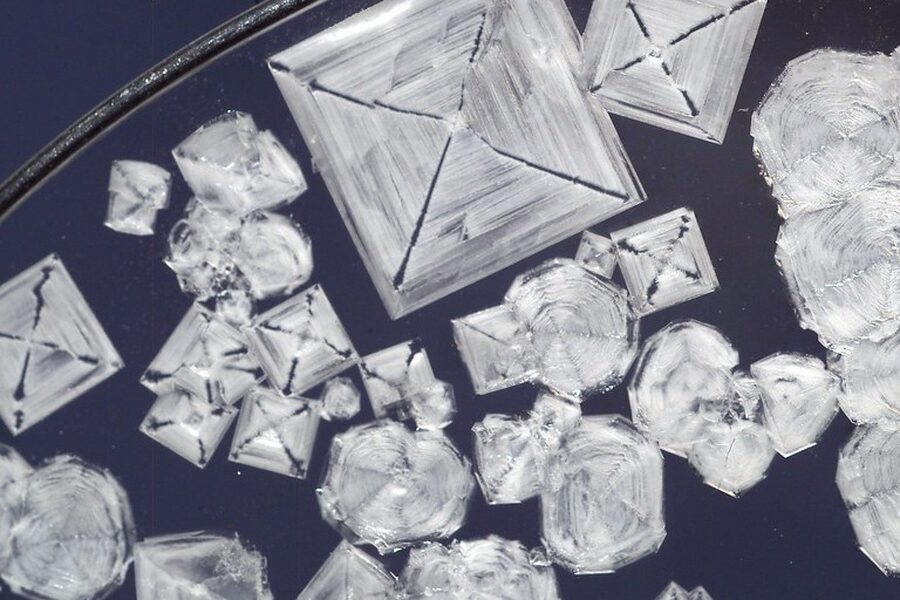
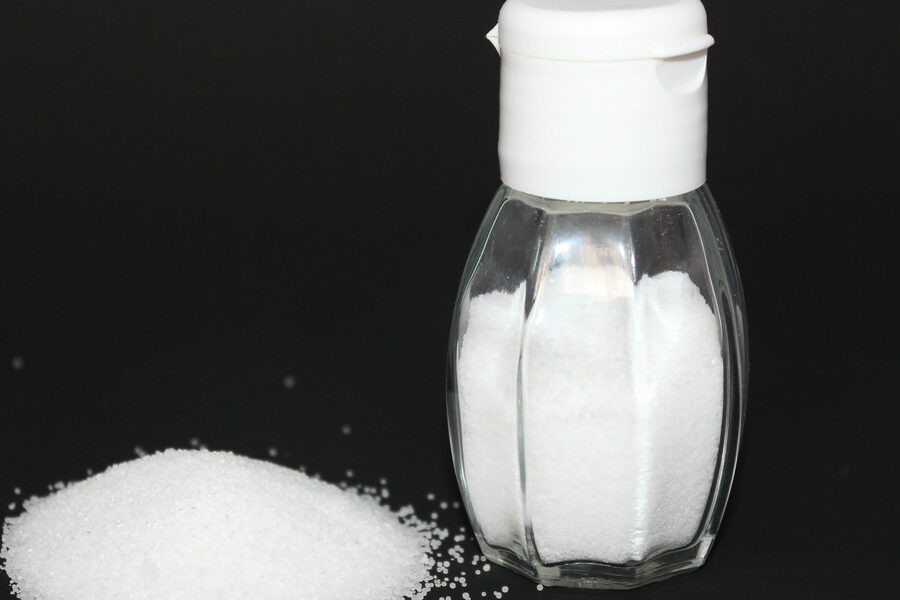
Sodium chloride doesn’t need a lab. It sits in seawater at roughly 3.5% by mass and forms thick underground beds — halite — left behind when ancient seas evaporated. Mining it is mostly a matter of digging (rock salt) or letting the sun do the work (solar evaporation ponds, still the standard method in places like Gujarat and the Atacama coast).
Its real industrial weight comes from what it becomes. Run a saturated NaCl solution through a chlor-alkali cell and you get three products worth more than the salt: chlorine gas, hydrogen gas, and sodium hydroxide.
2NaCl(aq) + 2H₂O(l) → 2NaOH(aq) + Cl₂(g) + H₂(g)
That single reaction is why NaCl counts as a feedstock, not just a seasoning — it’s the starting point for the next compound on this list.
Sodium Hydroxide (NaOH)
Caustic soda is a strong base, meaning it dissociates completely in water and will happily strip fat off a surface — which is exactly what makes it useful. Soap is made by boiling fats or oils with NaOH in a reaction called saponification; the fatty acid breaks apart and recombines as soap plus glycerol.
Paper mills use it in the kraft process to dissolve lignin out of wood pulp. Aluminum refiners use it in the Bayer process to strip alumina from bauxite ore. And yes, it’s the active ingredient in most drain cleaners, for the same reason it works on fat in a soap kettle — it degrades organic gunk on contact.
It’s produced almost entirely as a byproduct of the chlor-alkali electrolysis described above, which means the world’s caustic soda supply is tied directly to demand for chlorine, not the other way around.
Sodium Carbonate (Na₂CO₃)
Soda ash is the compound that made cheap glass possible. Mixed with sand and limestone and melted down, it lowers the sand’s melting point enough to make soda-lime glass — the type in your windows and bottles — commercially viable to produce at scale.
For over a century it’s been made industrially by the Solvay process, which never actually touches the finished carbonate directly. Instead, ammonia and carbon dioxide are bubbled through a saturated brine solution:
NaCl(aq) + NH₃(aq) + CO₂(g) + H₂O(l) → NaHCO₃(s) + NH₄Cl(aq)
The sodium bicarbonate that precipitates out is then heated to drive off water and CO₂, leaving sodium carbonate behind:
2NaHCO₃(s) → Na₂CO₃(s) + H₂O(g) + CO₂(g)
Beyond glass, it’s the workhorse behind laundry detergents and municipal water softening, where it precipitates out the calcium and magnesium ions responsible for hard water.
Sodium Bicarbonate (NaHCO₃)
Baking soda is the mild, edible cousin in this family — a weak base gentle enough to sit in your pantry. In an oven, it undergoes an acid-base reaction with an acidic ingredient (buttermilk, brown sugar, cream of tartar) to release carbon dioxide gas, which is what actually leavens the batter:
NaHCO₃ + H⁺ → Na⁺ + H₂O + CO₂
That same acid-neutralizing reaction is why it works as an antacid — it reacts directly with excess stomach HCl — and why dry-chemical fire extinguishers are loaded with it: the heat of a fire decomposes NaHCO₃ into CO₂ and water vapor, smothering the flame and starving it of oxygen at the same time.
It’s usually harvested from natural trona ore deposits (as in Wyoming’s Green River Basin) or produced as the intermediate step of the Solvay process described above — one compound, two very different origin stories depending on where in the world it’s made.
Sodium Nitrate (NaNO₃)
Sodium nitrate has the strangest geography of any compound on this list. Enormous natural deposits — caliche — sit in the Atacama Desert in Chile, concentrated there because the region is so dry that nothing has ever washed the nitrate away. For most of the 19th century, “Chile saltpeter” mining was a global industry in its own right, shipping fertilizer to farms across Europe before synthetic nitrogen fixation made mining it mostly obsolete.
Synthetically, it’s produced by neutralizing nitric acid with sodium hydroxide or sodium carbonate:
NaOH + HNO₃ → NaNO₃ + H₂O
Its two modern jobs are food preservation and agriculture. As a curing agent (E251 on an ingredient label), it inhibits the growth of Clostridium botulinum in processed meats and gives cured products their characteristic pink color. As a fertilizer, it delivers nitrogen in a form plants take up directly, without needing to be broken down first — unlike ammonium- or urea-based fertilizers.
Sodium Thiosulfate (Na₂S₂O₃)
If you’ve ever developed film, you’ve used sodium thiosulfate without necessarily knowing its name — photographers just call it “hypo,” short for its old name, hyposulfite of soda. After a print or negative is developed, the film still carries unexposed silver halide crystals that would keep darkening if left in light. Hypo dissolves those unused crystals away by forming a soluble silver-thiosulfate complex, which is what actually “fixes” the image permanently.
It’s made by boiling a solution of sodium sulfite with elemental sulfur until the sulfur dissolves in:
Na₂SO₃ + S → Na₂S₂O₃
Outside the darkroom, it’s the go-to reagent for neutralizing residual chlorine in wastewater and swimming pools, it’s a standard titrant in iodometric analysis (it reacts cleanly and stoichiometrically with iodine), and — in a use most people never expect — it’s part of the standard antidote protocol for cyanide poisoning, converting cyanide into the far less toxic thiocyanate.
Why sodium bonds the way it does
All six of these compounds trace back to the same quirk of sodium’s electron configuration: one lone electron sitting in the 3s orbital, held loosely because it’s shielded from the nucleus by ten inner electrons. Losing that electron costs very little energy, and the resulting Na⁺ ion has a stable, noble-gas-like electron shell. So sodium doesn’t share electrons — it gives one up entirely and forms an ionic bond.
That’s why every compound here is an ionic solid at room temperature, dissolves readily in water (ionic lattices break apart easily in a polar solvent), and conducts electricity once dissolved or molten. It’s also why sodium metal itself never turns up loose in nature — the same low ionization energy that makes Na⁺ so stable makes elemental sodium violently reactive with almost anything nearby, water included.
Handling these safely
Table salt and baking soda are kitchen staples for a reason — they’re benign in normal use. Sodium hydroxide is not. Concentrated NaOH solutions and solid pellets are severely corrosive to skin, eyes, and mucous membranes, and CDC guidance on sodium hydroxide exposure recommends eye protection, nitrile gloves, and immediate access to an eyewash station anywhere it’s handled in quantity. The occupational exposure ceiling set by NIOSH is 2 mg/m³ — a ceiling limit, not an average, because even brief spikes cause burns.
Sodium carbonate and sodium nitrate sit in between: not something you’d want in your eyes, but not requiring lab-grade precautions for occasional household use. As a rule of thumb, if a sodium compound is strongly alkaline or a concentrated oxidizer, treat it with the same respect you’d give any industrial chemical — gloves, ventilation, and a rinse plan.
Sodium’s second career: batteries
For most of the 20th century, sodium chemistry meant soap, glass, and food. In the last few years it’s picked up a very different job: replacing lithium in grid-scale and low-cost EV batteries.
Sodium-ion cells work on the same rocking-chair principle as lithium-ion — ions shuttle between electrodes during charge and discharge — but sodium is roughly a thousand times more abundant in the earth’s crust and doesn’t require the same geographically concentrated mining. Three cathode chemistries are driving commercialization: layered transition-metal oxides, Prussian blue analogs (Na₂Fe[Fe(CN)₆] and relatives), and NASICON-type phosphates like Na₃V₂(PO₄)₂F₃. A 2026 roadmap review of the technology notes that Prussian blue analog cathodes have become the most commercially advanced class, partly because their open framework structure barely changes volume — under 2% — as sodium ions move in and out, which is a big part of what gives a battery a long cycle life.
CATL and BYD are both scaling gigawatt-hour production lines, and the appeal is blunt: sodium-ion cells won’t out-perform lithium on energy density, but they’re on track for meaningful cost parity, which matters enormously for stationary grid storage and budget EVs where every kilogram of range matters less than the price per kilowatt-hour.
It’s a strange full-circle moment for an element whose most famous compound sits on every dinner table — the same ionic bonding that makes salt dissolve in water is, in a more engineered form, what lets sodium ions slide in and out of a battery electrode a few thousand times before it wears out.