Florida has exactly two operating nuclear power plants right now: Turkey Point, just south of Miami, and St. Lucie, on Hutchinson Island up the Atlantic coast. Together their four reactors generate roughly 3,600 megawatts of electricity — enough to keep the lights on for a couple million homes. A third plant, Crystal River, hasn’t split an atom since 2013 and is currently being dismantled.
That’s the short version. The longer version is more interesting, because Florida’s nuclear story includes a reactor that was killed by a botched do-it-yourself construction job, a multi-billion-dollar plant that was approved and then quietly cancelled, and a 1970s scheme to float nuclear reactors out into the Atlantic on barges. Here’s the full map.
Table of Contents
- Quick Answer: Florida’s Nuclear Plants at a Glance
- Turkey Point
- St. Lucie
- Crystal River: The Plant Being Torn Down
- The Plants That Never Got Built
- Is Florida Nuclear Power Safe? The Hurricane Question
- Where Florida Goes Next
Quick Answer: Florida’s Nuclear Plants at a Glance
If you just want the numbers, here they are. Florida operates two nuclear stations with four reactors between them.
| Plant | Operator | Location | Reactors | Net Capacity | Status |
|---|---|---|---|---|---|
| Turkey Point (Units 3 & 4) | Florida Power & Light | Homestead, ~25 mi S of Miami | 2 | ~1,600 MW | Operating |
| St. Lucie (Units 1 & 2) | Florida Power & Light | Hutchinson Island, near Port St. Lucie | 2 | ~2,000 MW | Operating |
| Crystal River 3 | Duke Energy | Crystal River, Citrus County | 1 | (860 MW) | Decommissioning, shut down 2013 |
One thing to clear up before we go further, because nearly every other list online muddles it: Turkey Point also has a large gas-fired unit (Unit 5) on the same site, and people sometimes lump its capacity in with the nuclear reactors. When you see Turkey Point quoted at “2,700 MW,” that figure includes the natural gas plant. The nuclear reactors themselves — Units 3 and 4 — produce about 1,600 MW.
Turkey Point
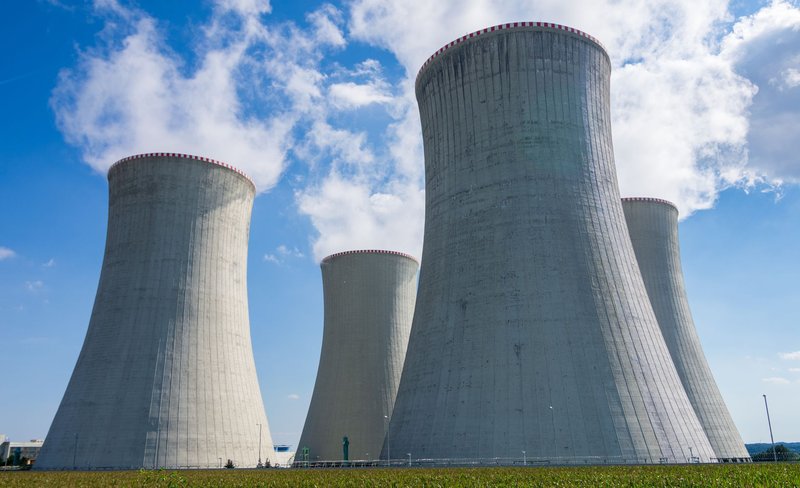
Turkey Point sits on a 3,300-acre site about two miles east of Homestead, roughly 25 miles south of downtown Miami, with Biscayne National Park practically next door. Two pressurized water reactors — Units 3 and 4, each a Westinghouse design rated around 802 MW — came online in 1972 and 1973. They’re operated by Florida Power & Light, the state’s largest utility.
The detail that makes Turkey Point unusual is its cooling system. Instead of cooling towers or an open intake from the ocean, the plant uses a network of cooling canals: 168 miles of them, dug in a grid across the wetlands south of the reactors. From the air it looks like a giant green radiator pressed into the coastline. That canal system has been the source of the plant’s longest-running controversy — over the years the canals turned hypersaline and a plume of salty, slightly tritium-tainted water migrated into the underlying aquifer, prompting a cleanup agreement with Miami-Dade County and ongoing monitoring.
The other thing worth knowing about Turkey Point is its licenses. In 2019, the U.S. Nuclear Regulatory Commission granted Units 3 and 4 a subsequent license renewal that would let them run for 80 years — to 2052 and 2053. That made Turkey Point one of the first plants in the country cleared for an 80-year operating life, a milestone for an industry where the original reactors were designed for 40. The 80-year approval was later vacated and sent back for further environmental review, so the exact end date is still being sorted out, but the reactors keep running in the meantime.
For South Florida residents asking the “is there a nuclear plant near me” question: yes, and Turkey Point is the one you mean. It has its own emergency planning zone, and the surrounding counties run periodic siren tests and evacuation drills.
St. Lucie
St. Lucie is the quieter of Florida’s two plants, partly because it sits on a barrier island — Hutchinson Island, near Port St. Lucie — rather than next to a major metro. It also runs two reactors: Units 1 and 2, Combustion Engineering pressurized water reactors that came online in 1976 and 1983. Like Turkey Point, it’s a Florida Power & Light facility.
A 2012 extended power uprate pushed each reactor’s output up from about 853 MW to just over 1,000 MW, giving the station a combined capacity around 2,000 MW. That makes St. Lucie the larger of Florida’s two nuclear plants by reactor output, even though Turkey Point gets more attention.
St. Lucie pulls its cooling water straight from the Atlantic through intake pipes that run offshore. Those intakes became unexpectedly famous for marine biology: the plant’s canals function as a sea turtle trap of sorts, with thousands of turtles drawn in each year. FPL runs a turtle capture-and-release program that has become one of the longest-running sea turtle monitoring datasets in the country.
The freshest news here is regulatory. The NRC has approved subsequent license renewals for St. Lucie, clearing Unit 1 to operate to 2056 and Unit 2 to 2063 — another pair of reactors headed toward 80-year lifespans. For a plant built in the Carter administration, that’s a long runway.
Crystal River: The Plant Being Torn Down
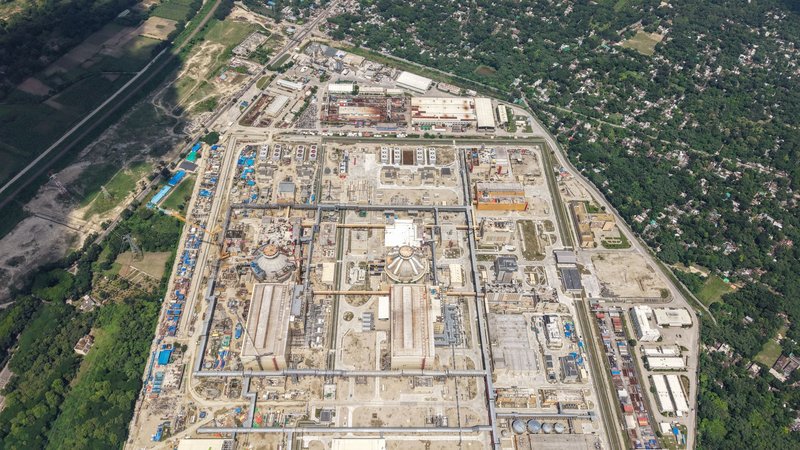
Crystal River 3, in Citrus County on Florida’s Gulf coast, is the cautionary tale. The single 860 MW reactor ran from 1977 until 2009, when it was shut down for what should have been a routine job: replacing the steam generators by cutting an opening in the concrete containment building.
The opening cracked the containment wall. Duke Energy (which inherited the plant through its merger with Progress Energy) attempted repairs, more cracks appeared, and engineers eventually concluded that fixing it would cost more than the plant was worth. In 2013, Duke announced Crystal River 3 would never restart. The containment building that was supposed to be opened and resealed in a few months instead ended the reactor’s life.
What’s notable in 2026 is what happened next. Rather than mothball the plant for decades — the traditional approach, which can stretch out 60 years — Duke handed the whole job to a specialist. Duke Energy contracted Accelerated Decommissioning Partners, a joint venture of NorthStar Group Services and Orano USA, under a fixed-price deal worth about $540 million, to tear the plant down on a compressed schedule. Crews have spent the last several years removing, packaging, and shipping out the radioactive guts — including the reactor vessel itself — to a licensed disposal site, then demolishing the buildings.
The target is to finish active dismantlement in 2027, roughly 50 years ahead of the original timeline. When the work is done, almost nothing will remain except a small dry-cask storage pad — less than two acres — holding the plant’s spent fuel, which will sit there until the federal government finally builds somewhere to put it. That fuel-storage limbo, by the way, is not unique to Crystal River; every nuclear plant in the U.S. is stuck waiting on the same nonexistent national repository.
The Plants That Never Got Built
Florida’s nuclear history has more ghosts than survivors. Two major projects were planned, approved, or seriously pursued — and never produced a watt.
Levy County. In the 2000s, Progress Energy proposed building two new Westinghouse AP1000 reactors in Levy County, north of Crystal River. The project got an NRC combined construction-and-operating license, but its cost estimate ballooned past $20 billion as delays piled up. Duke Energy cancelled it in 2017 after spending billions on the effort — much of it recovered from ratepayers through Florida’s “nuclear cost recovery” law, which let utilities bill customers for plants before a single shovel of concrete was poured. Levy County is the plant Floridians paid for and never received.
Offshore Power Systems. The strangest entry. In the early 1970s, Westinghouse and a partner planned to mass-produce nuclear reactors mounted on floating platforms and tow them out to sea — the first two were destined for a site off the coast near Jacksonville to serve FPL. A factory was actually built on Blount Island in Jacksonville to manufacture the floating plants. The 1973 oil crisis, falling demand growth, regulatory hurdles, and the general weirdness of anchoring reactors in the Atlantic killed it. No floating reactor was ever finished.
So when someone counts “Florida’s nuclear plants,” the honest answer depends on what you mean: two operating, one being demolished, and at least two that exist only in canceled blueprints.
Is Florida Nuclear Power Safe? The Hurricane Question
It’s the reasonable question for anyone living in a state that gets hit by major hurricanes. A nuclear plant on the coast, in the path of Category 5 storms — how does that not end badly?
The short answer is that both operating plants have ridden out direct hits without a radiological incident. Turkey Point took a near-direct strike from Hurricane Andrew in 1992, one of the most intense hurricanes ever to make U.S. landfall. The storm flattened a 400-foot smokestack and did serious damage to non-nuclear structures on site, but the reactors themselves — housed in reinforced concrete containment buildings designed to withstand exactly this kind of force — shut down safely and were undamaged in their critical systems. The Nuclear Regulatory Commission requires plants in hurricane zones to be engineered for wind and flooding well beyond the worst historical storms.
Containment buildings are the key. They’re feet-thick steel-reinforced concrete domes built to contain a reactor accident from the inside and shrug off impacts from the outside. The reactors also sit elevated above projected storm-surge levels, with multiple independent backup power systems to keep cooling water moving even if the grid goes down — the failure mode that turned Fukushima into a disaster.
None of this means zero risk. The cooling-canal saltwater intrusion at Turkey Point is a real environmental problem, spent fuel is piling up onsite with no permanent home, and aging reactors running to 80 years is a bet the industry is still in the early innings of testing. But “hurricane blows up a Florida reactor” is not the realistic failure scenario, and the historical record backs that up.
Where Florida Goes Next
Florida’s nuclear fleet is shrinking even as the reactors that remain are cleared to run longer than anyone originally planned. Crystal River’s demolition will leave the state with four reactors at two sites, all owned by FPL, all licensed deep into the 2050s and 2060s.
Whether Florida builds anything new is an open question. State regulators have held workshops on adding nuclear to the energy mix, and the national conversation has swung toward small modular reactors as a cheaper, faster alternative to the Levy County-style megaprojects that bankrupted the last attempt. But Florida has tried the new-build path before and spent billions for nothing. The next reactor in this state, if there is one, will have a high bar to clear — and a long memory working against it.
For now, the picture is simple: two plants doing the work, one coming down, and a graveyard of projects that never were.