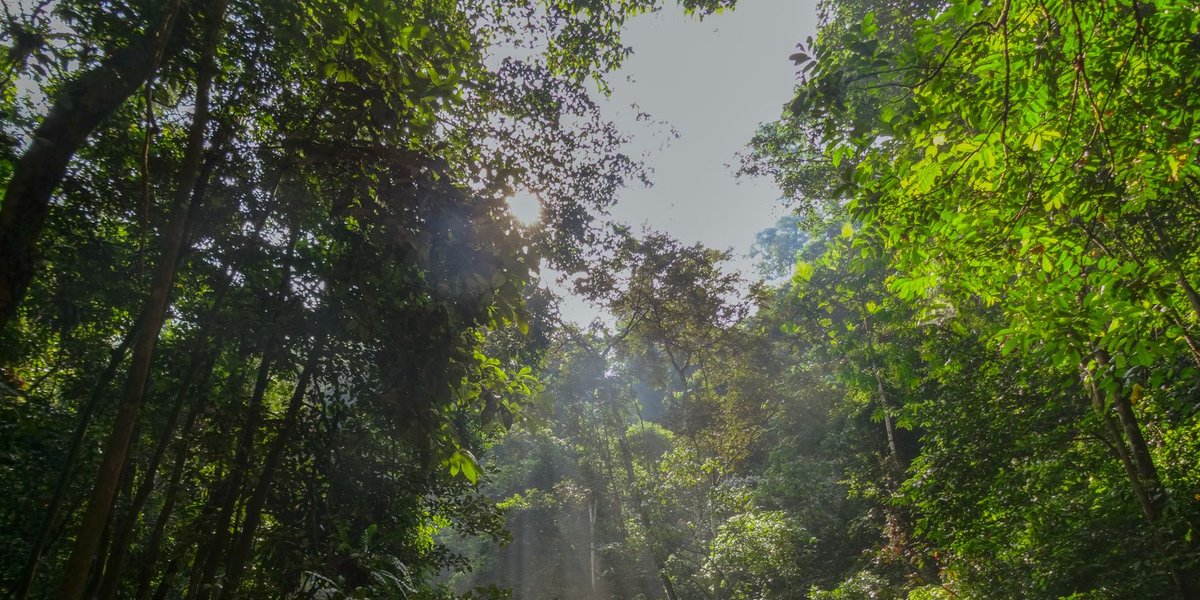
Papua New Guinea covers less than half a percent of the planet’s land area and holds somewhere around 5% of its species. A staggering share of those live there and nowhere else. The country sits at a biogeographic crossroads where Asia and Australia almost touch but never quite merged, and the result is a roster of plants and animals that evolved in isolation — separated by ocean from Australia, then carved into further isolation by some of the steepest, wettest mountains on Earth.
Most lists of these endemics are raw database dumps: a Latin name, a conservation code, nothing to grab onto. Here are 14 of the species that make PNG one of the most extraordinary places in biology, with the detail that makes each one worth knowing.
Table of Contents
- Why Papua New Guinea Is an Endemism Hotspot
- The Birds
- The Mammals
- The Amphibians
- The Insects
- The Plants
- Conservation Status at a Glance
- The Threats
Why Papua New Guinea Is an Endemism Hotspot
Endemism — a species existing in one place and nowhere else — happens when populations get cut off long enough to diverge from their relatives. PNG is a machine for cutting things off.
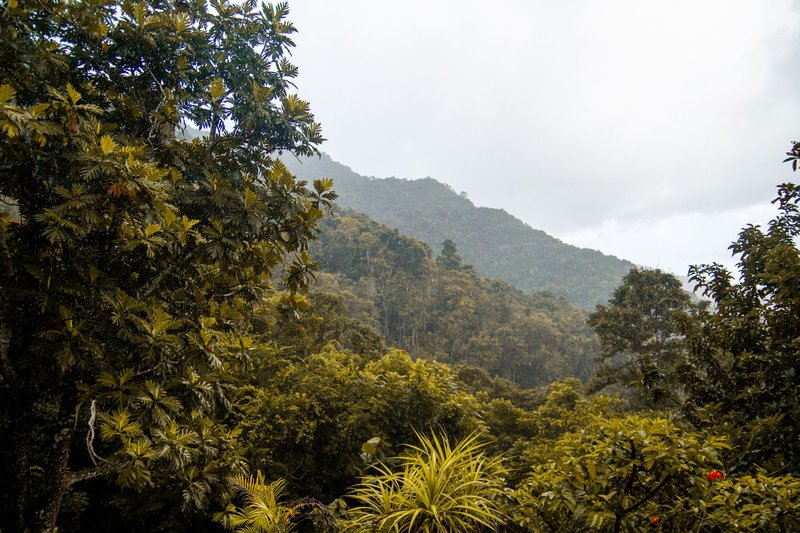
Start with the geography. New Guinea is the world’s largest tropical island, and a spine of mountains runs its full length, topping out above 4,500 meters. Those ranges fracture the lowland rainforest into pockets, each one a separate evolutionary experiment. A frog on one side of a valley may never meet the frog on the other side, and over enough generations they stop being the same frog.
Then there’s the island’s history. New Guinea drifted north on the Australian tectonic plate and brushed up against Southeast Asia without fully connecting. So PNG inherited Australia’s marsupials — kangaroos, possums, the lot — but evolved them into forms that exist nowhere on the Australian mainland. Tree-kangaroos are the headline example: kangaroos that climbed back into the canopy.
The numbers tell the story. The island hosts roughly 320 endemic bird species, well over 100 endemic frogs, and according to a global tree assessment published in the journal of the Botanical Gardens Conservation International, 1,284 tree species found only in PNG — more endemic trees than any other country in tropical Asia-Pacific.
The Birds
PNG is the spiritual home of the birds-of-paradise, and the country put one on its flag for good reason.
1. Raggiana Bird-of-Paradise (Paradisaea raggiana)
The national bird, and the silhouette on the PNG flag. The male grows a cascade of orange-red flank plumes he throws over his back during display, hanging upside-down on a branch in a communal lek while females inspect the show. There are more than 30 species of birds-of-paradise across New Guinea, most of them endemic, and the Raggiana is the one PNG claimed as its own — just a fraction of the country’s avifauna, which runs to hundreds of species cataloged in this complete guide to the birds of Papua New Guinea. The males’ display feathers were prized enough by 19th-century European hat-makers that the trade nearly wiped several species out.
2. King of Saxony Bird-of-Paradise (Pteridophora alberti)
This one looks like a design error. From the back of the male’s head sprout two ornamental head plumes up to twice his body length, each one lined with 40-odd enamel-blue flags. He waves them around during courtship while making a buzzing, static-like call that early naturalists mistook for a machine. The plumes were so improbable that when the first specimens reached Europe, scientists suspected a hoax.
3. Blue Bird-of-Paradise (Paradisornis rudolphi)
The male displays upside down, fanning a curtain of iridescent blue plumes and swinging gently while emitting a low mechanical buzz. It lives in a narrow band of mid-mountain forest in the central highlands and is listed as Vulnerable, hunted for those same plumes and squeezed by habitat clearance.
4. Hooded Pitohui (Pitohui dichrous)
A striking orange-and-black songbird, and one of the very few poisonous birds known to science. Its skin and feathers carry batrachotoxin — the same class of neurotoxin found in Central American poison dart frogs. The bird gets it from eating Choresine beetles, and locals have long called it the “rubbish bird” because the toxin makes it inedible and leaves a tingling burn on the hands of anyone who handles it. The discovery in 1990 was the first documented case of a poisonous bird, and it forced a rethink of how chemical defense spreads through food webs.
The Mammals
PNG’s mammals are mostly marsupials and monotremes — the old Australian lineages, evolved into shapes the mainland never produced.
5. Tenkile (Scott’s Tree-Kangaroo) (Dendrolagus scottae)
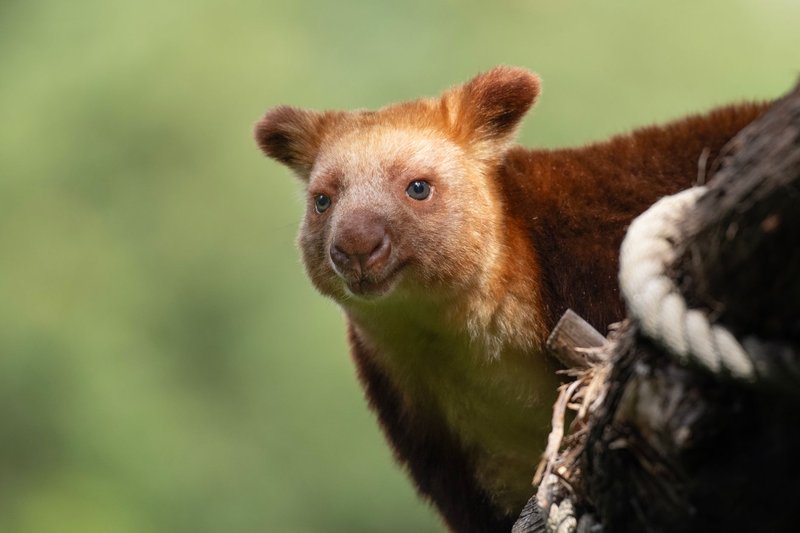
Critically Endangered, and one of the rarest mammals on Earth. The Tenkile lives only in the Torricelli Mountains in the country’s northwest, in a range that may cover no more than 125 square kilometers. By the early 2000s hunting had dropped the population to a few hundred animals. A local conservation program persuaded villages to suspend hunting and the numbers have crept back, but it remains a species you could lose in a single bad decade.
6. Matschie’s Tree-Kangaroo (Dendrolagus matschiei)
Endemic to the Huon Peninsula, this is the tree-kangaroo most people have actually seen, because it breeds reasonably well in zoos. In the wild it’s a different story — restricted to cloud forest above 1,000 meters, hunted for meat, and listed as Endangered. It has a chestnut-and-gold coat and a long tail for balance, and it spends its life in the canopy eating leaves, descending awkwardly to the ground only to move between trees.
7. Long-Beaked Echidna (Zaglossus spp.)
An egg-laying mammal — a monotreme, like the platypus — and one of only a handful left on the planet. The long-beaked echidnas root through forest leaf litter with a downturned snout, eating earthworms they spear on a spiny tongue. All three species are restricted to New Guinea and all are threatened; the western long-beaked echidna is Critically Endangered. These are living relics of a lineage that split from other mammals more than 160 million years ago.
8. Black-Spotted Cuscus (Spilocuscus rufoniger)
A large, slow-moving marsupial of the northern lowland forests, with a rust-and-black coat unlike any other cuscus. It’s Critically Endangered, hit hard by hunting and logging because it’s big, conspicuous, and easy to catch. Few outsiders have ever seen one alive.
The Amphibians
New Guinea’s frogs are a runaway success story — over a hundred endemic species, and new ones described almost every year.
9. Paedophryne amauensis
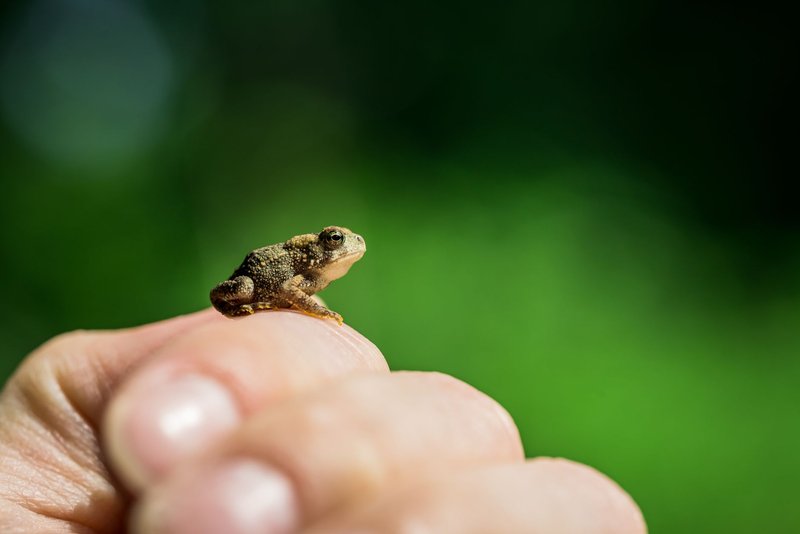
The smallest known vertebrate on Earth. A full-grown adult measures about 7.7 millimeters — small enough to sit on a US dime with room to spare. Described in 2012 from the forests of southeastern PNG, it skips the tadpole stage entirely, hatching from eggs as a fully formed miniature frog. It lives in leaf litter and calls with a high, insect-like chirp that researchers initially mistook for a cricket. It dethroned a tiny Southeast Asian fish for the title of smallest backboned animal.
10. Horned Land Frog (Sphenophryne cornuta)
A leaf-litter frog with small fleshy “horns” over each eye that help it vanish against the forest floor. What makes it remarkable is the parenting: the male carries the froglets on his back and ferries them to new locations, a level of care that’s rare among frogs. It’s endemic to New Guinea’s rainforests and one of the more reliably charismatic members of a very large endemic frog fauna.
The Insects
11. Queen Alexandra’s Birdwing (Ornithoptera alexandrae)
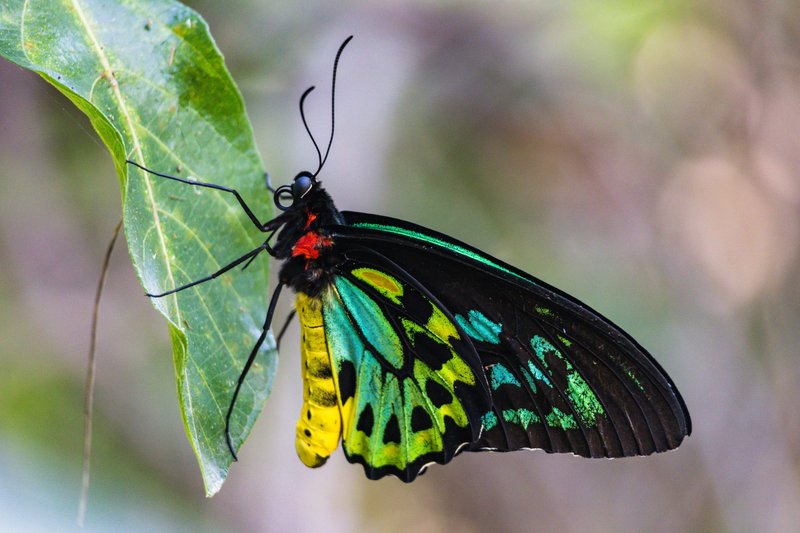
The largest butterfly in the world. Females reach a wingspan of around 25 to 28 centimeters — wider than a human hand spread fully open. The species lives in a single patch of coastal rainforest in Oro Province in eastern PNG, and it lays its eggs on just one genus of pipevine, Pararistolochia, which the caterpillars need to survive. That dependence makes it desperately vulnerable: much of its habitat was buried under volcanic ash from Mount Lamington in 1951, and oil palm has eaten much of the rest. It’s listed as Endangered on the IUCN Red List and is one of the few insects with international trade protection. The butterfly is named after Queen Alexandra, wife of Britain’s King Edward VII.
12. Wallace’s Giant Bee Relatives and the Goliath Birdwing (Ornithoptera goliath)
The second-largest butterfly in the world, after its more famous cousin, and another New Guinea endemic. Males are forest-green and gold; females are larger and browner. Like the Queen Alexandra’s, the Goliath’s caterpillars feed exclusively on pipevines, and the adults patrol the canopy where most observers never see them at eye level.
The Plants
The flora gets ignored next to the birds, which is a shame, because PNG has more endemic trees than almost anywhere.
13. Klinki Pine (Araucaria hunsteinii)
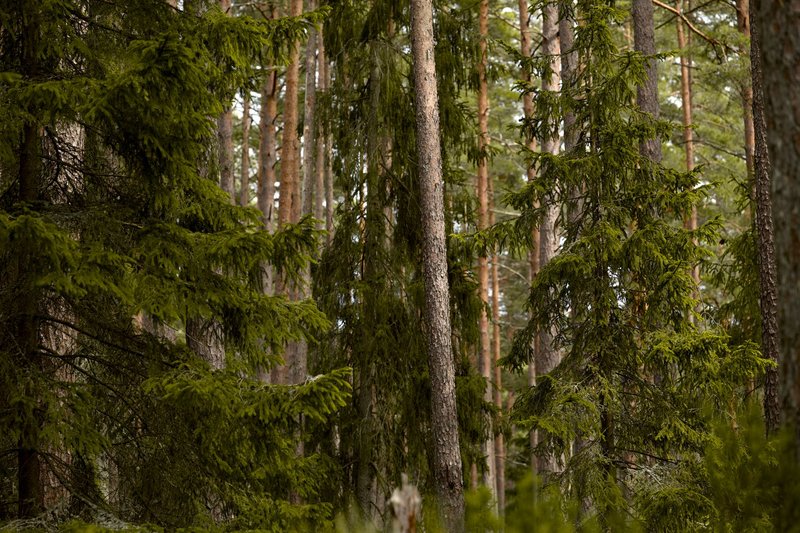
One of the tallest tropical trees on Earth, reaching close to 90 meters in the highland forests where it grows. It belongs to the Araucaria family — the same ancient conifer lineage as the monkey puzzle tree — and it’s a living link to the forests that covered the southern continents in the age of dinosaurs. Heavily logged for its long, clean timber, it’s now a species you mostly find in protected pockets and plantations.
14. New Guinea Highland Rhododendrons (Vireya section)
New Guinea is the world capital of tropical rhododendrons. Hundreds of species grow on the high ridges and in the mossy cloud forest, many of them found on a single mountain and nowhere else. They range from tiny epiphytes clinging to tree branches to shrubs with waxy, trumpet-shaped flowers in oranges and reds, pollinated by birds rather than bees. This single group accounts for a large slice of PNG’s plant endemism, and botanists are still describing new species from ranges that have barely been surveyed.
Conservation Status at a Glance
| Species | Group | IUCN Status |
|---|---|---|
| Raggiana Bird-of-Paradise | Bird | Least Concern |
| King of Saxony Bird-of-Paradise | Bird | Least Concern |
| Blue Bird-of-Paradise | Bird | Vulnerable |
| Hooded Pitohui | Bird | Least Concern |
| Tenkile (Scott’s Tree-Kangaroo) | Mammal | Critically Endangered |
| Matschie’s Tree-Kangaroo | Mammal | Endangered |
| Western Long-Beaked Echidna | Mammal | Critically Endangered |
| Black-Spotted Cuscus | Mammal | Critically Endangered |
| Paedophryne amauensis | Amphibian | Data Deficient |
| Horned Land Frog | Amphibian | Least Concern |
| Queen Alexandra’s Birdwing | Insect | Endangered |
| Goliath Birdwing | Insect | Least Concern |
| Klinki Pine | Plant | Least Concern |
| Highland Rhododendrons (Vireya) | Plant | Varies by species |
The pattern is worth noticing: the mammals are in serious trouble, the birds are mostly holding on, and the insects sit somewhere between. Large-bodied, slow-breeding, easy-to-hunt animals fare worst.
The Threats
The single biggest pressure is forest loss. PNG still has vast intact rainforest, but it’s being cut faster than almost anywhere in the tropics — logging concessions, and increasingly, conversion to oil palm plantation. A species like the Queen Alexandra’s Birdwing, tied to one valley and one food plant, has no room to retreat when its habitat is cleared.
Hunting is the second pressure, and it falls hardest on the mammals. Tree-kangaroos, cuscuses, and echidnas are all hunted for meat, and the rarest of them — the Tenkile, the black-spotted cuscus — live in ranges small enough that subsistence hunting alone can tip them toward extinction.
The encouraging part is that PNG’s remoteness, the same isolation that built all this endemism, has also protected it. Huge areas remain roadless and barely surveyed, which is why biologists keep finding new species there. The work now is making sure the forest stays standing long enough for the rest of them to be found — and to survive being found.