
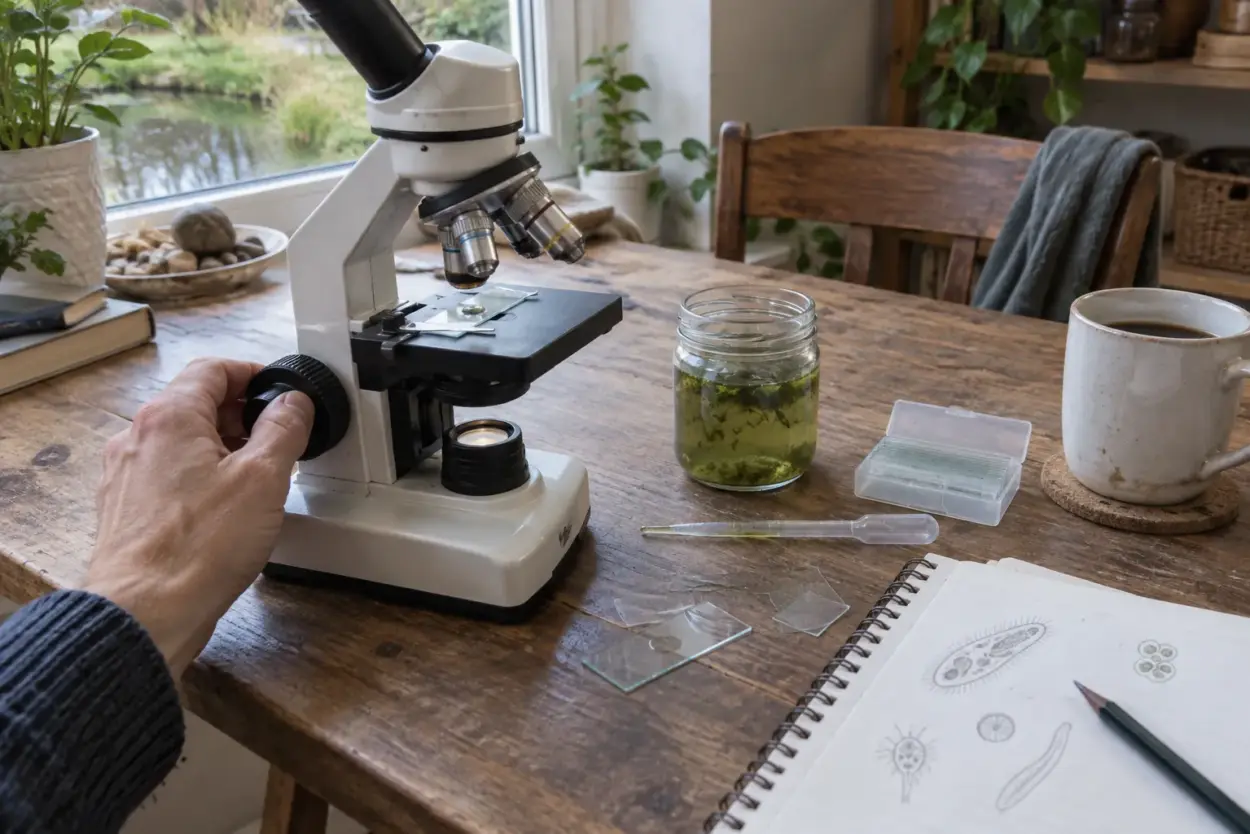
Microscope finder
Find your ideal microscope
7 quick questions. Works for kids, hobbyists and pros.
- Compoundcells and pond life
- Stereobugs, rocks, coins
- Digitalsee it on a screen
As an Amazon Associate we earn from qualifying purchases. Disclosure.
The best microscope is the one built for what you want to see. For cells, blood and pond water you need a compound microscope with glass lenses up to 400x or 1000x, such as the AmScope M150C or Swift SW200DL. For bugs, rocks, coins and plants you need a stereo microscope at 10x to 40x, such as the AmScope SE306R. For soldering and coin details on a screen, a digital microscope such as the Andonstar AD246S-M works better than any eyepiece.
The quiz above sorts that out in seven questions. It weighs who will use the microscope, what they want to look at, how they want to view it and your budget, then picks one microscope from the 41 on our list.
My first microscope taught me what not to buy
My first microscope was a plastic one from a toy store. The box promised 1200x. What I got was a bright white circle with a gray smudge in the middle, and a focus knob that jumped past the sharp point every time I touched it. I decided microscopes were boring.
Years later a friend handed me an old student microscope with a metal body and glass lenses. I put a drop of water from a garden pot on a slide, set it to 100x and saw something shaped like a slipper swimming across the view. That was a paramecium. The difference was not magnification. It was the glass, the light under the slide and a focus knob that moved in small steps.
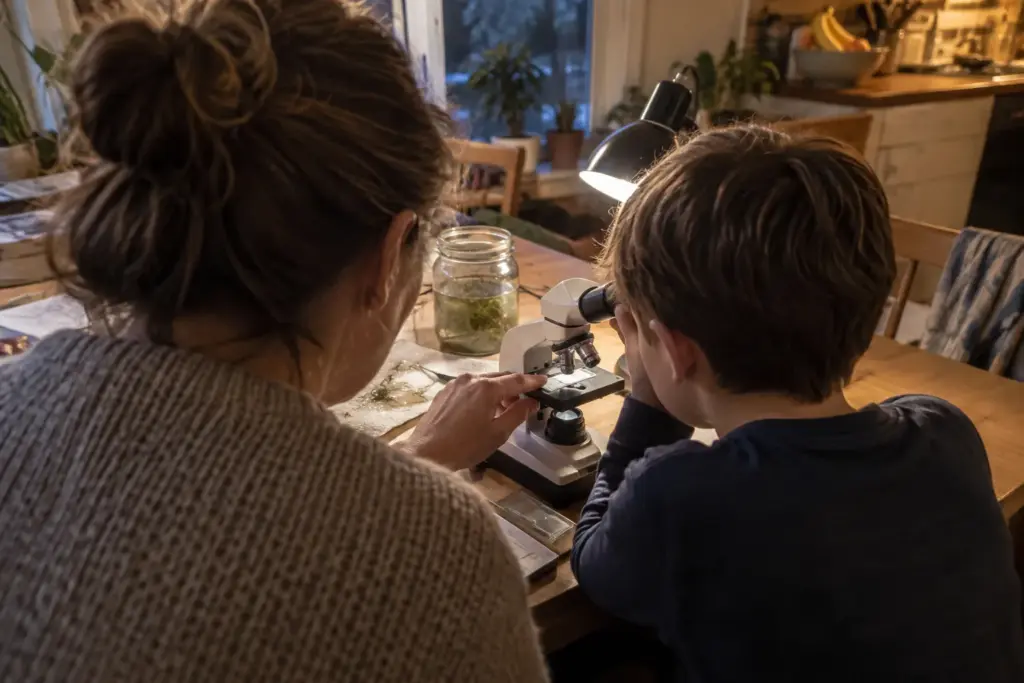
Since then I have used cheap scopes, lab scopes, stereo scopes for bugs and coins, and screen microscopes for repairs. The same pattern holds every time: pick the type first, then the model. A great stereo microscope will never show you a bacterium, and a great compound microscope is the wrong tool for a coin.
Which type of microscope do you need?
There are three types most people buy. If you want the full list, including electron and fluorescence microscopes, see our guide to the types of microscopes.
| Type | Magnification | Light | Best for | Not for |
|---|---|---|---|---|
| Compound | 40x to 1000x | From below, through the slide | Cells, blood, bacteria, pond water | Solid objects like coins or rocks |
| Stereo (dissecting) | 10x to 90x | From above, often also below | Bugs, plants, rocks, coins, repairs | Cells and bacteria |
| Digital or LCD | Varies by screen | LED ring around the lens | Soldering, coins, sharing a view | Fine cell detail |
A compound microscope looks through a thin, flat sample, so the sample has to be on a slide. A stereo microscope uses two separate light paths, one for each eye, so you see solid things in 3D with room to move them under the lens. A digital microscope is a camera with a magnifying lens. It shows the view on a screen instead of an eyepiece.
Best microscope for each need
Best microscope for beginners and home use
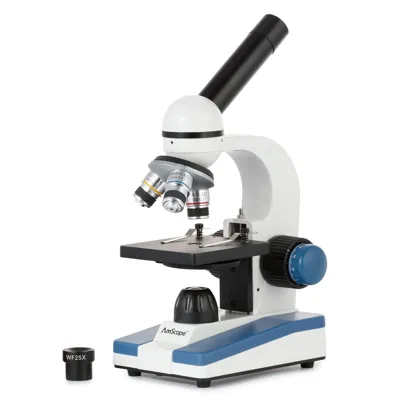
For a first real microscope, I would pick an all-metal student compound scope with glass lenses at 40x, 100x and 400x. The AmScope M150C has been the standard choice for years. It runs on batteries or a plug, so a kid can take it to the kitchen table or the backyard. The Swift SW200DL adds a top light for solid objects.
Best for beginners
AmScope M150C 40X-1000X Student Monocular Compound Microscope
A simple all-metal student scope with glass lenses up to 1000x that holds up to years of use.
40x–1000x · One eyepiece plus a built-in camera · Slides
Check price on Amazon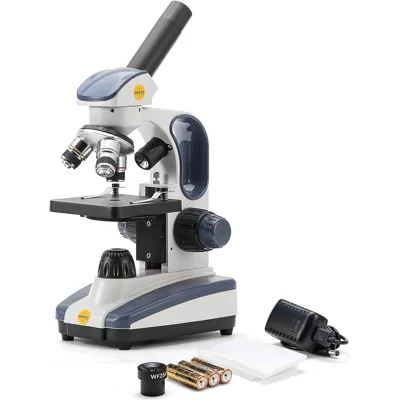
Best with a top light
Swift SW200DL Compound Monocular Microscope 40X-1000X
Glass lenses up to 1000x, light from above and below, and it runs on batteries or a wall plug.
40x–1000x · One eyepiece plus a built-in camera · Slides
Check price on AmazonBest microscope for kids
Under 8, skip slides. A low-power stereo scope with two eyepieces lets a child look at a leaf or a beetle without lining up anything. From about 8, a kid can handle slides and a real compound scope. Always go by the age on the box. If your child likes more than microscopes, our science kit finder covers the rest.
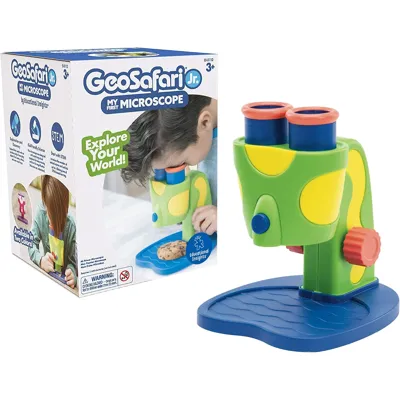
Best for ages 3 to 6
Educational Insights GeoSafari Jr. My First Microscope
Two big eyepieces, low power and a tray for leaves and bugs make it easy for small hands.
2x–8x · Two eyepieces plus a built-in camera · 3 AAA batteries
Check price on Amazon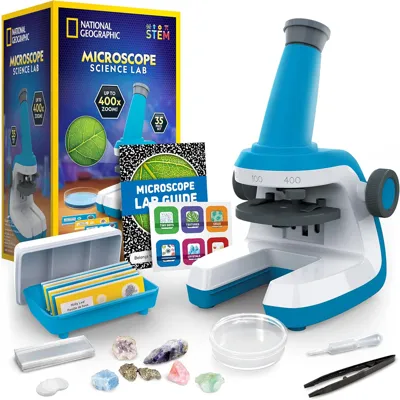
Best for ages 8 and up
National Geographic Explorer Series 400x Kids Microscope Kit
Lights on top and bottom let a child look at slides and solid objects, and plant slides come in the box.
40x–400x · One eyepiece plus a built-in camera · Batteries
Check price on AmazonBest stereo microscope for bugs, rocks and plants
A stereo microscope is what I reach for most at home. Ants, moss, sand grains, feathers and mineral crystals all look better in 3D at 20x than flat at 400x. Look for lights from above and below and a pair of eyepieces, not one.
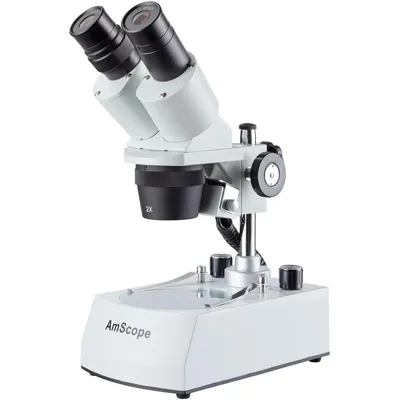
Best stereo microscope
AmScope SE306R-P-LED Binocular Stereo Microscope, 20X-40X
Lights from above and below and two zoom steps make it a good all-round stereo scope.
20x–40x · Two eyepieces plus a built-in camera · Nothing extra
Check price on AmazonBest microscope for coins
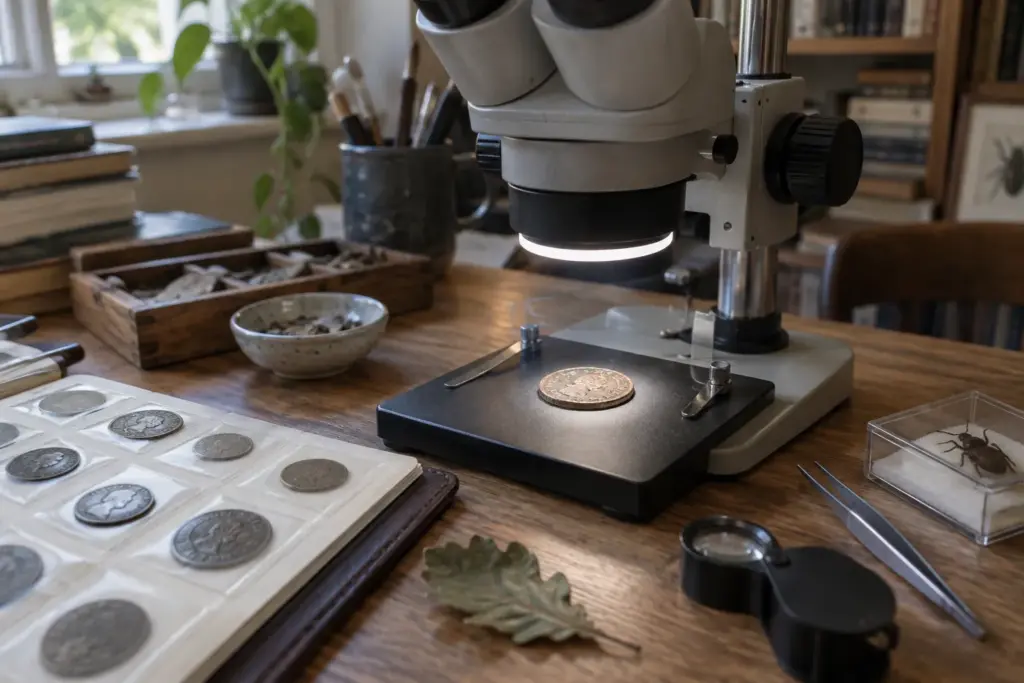
Coin collectors split into two camps. A stereo microscope lets you tilt a coin and watch light move across the surface, which is how you spot cleaning and small die cracks. A screen microscope makes it easy to compare die markers and take photos. Collectors on r/Coins point out that a screen does not replace tilting a coin under a loupe, so many keep both. If you want just one, a 7 inch screen model is the easier start.
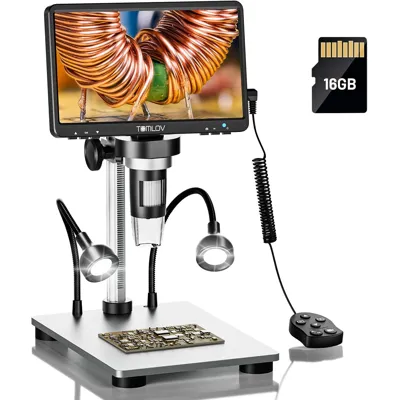
Best for coins
TOMLOV DM9 7 in LCD Digital Microscope 1200X
A 7 inch screen, a metal stand and extra side lights show coin detail without eye strain.
50x–1200x · Built-in screen · A USB wall charger
Check price on AmazonBest microscope for soldering and electronics
For soldering you need two things: space under the lens for your iron and a wide view of the board. A digital microscope on a boom arm gives you both and keeps your head up. Add a desk lamp from the side, because the built-in light often casts glare on shiny solder.
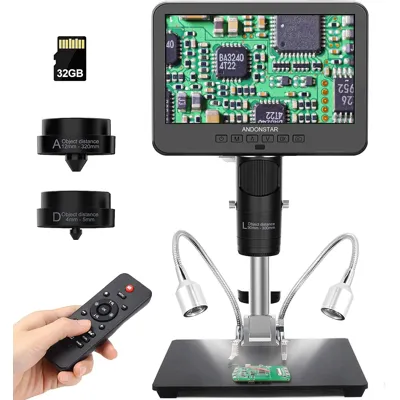
Best for soldering
Andonstar AD246S-M 7 in HDMI Digital Microscope, 3 Lenses
Swappable lenses and a boom arm give room for tools, and a bottom light lets you view slides too.
4x–2040x · Built-in screen · Nothing extra
Check price on AmazonBest digital and USB microscope
A USB microscope is the cheapest way to see small things big. It shows a live view on a laptop or phone, and it is fun for stamps, fabric and skin. Treat the 1000x on the box as a screen size number, not real optical power.
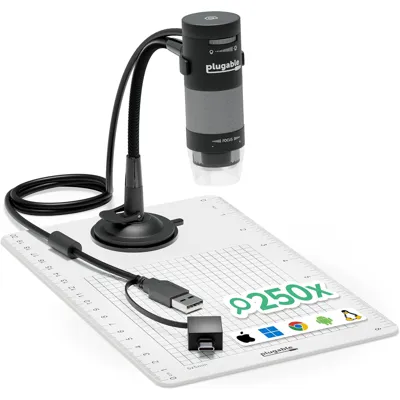
Best USB microscope
Plugable USB2-MICRO-250X USB Digital Microscope 250x
Plugs into a computer or USB-C phone with a flexible stand and no setup.
60x–250x · On your phone or computer · A computer or Android phone (no iPhone)
Check price on AmazonBest microscope for students and serious hobbyists
Once you want bacteria, blood cells or long sessions at 400x, upgrade to two eyepieces, a mechanical stage that moves the slide with knobs, and a 100x oil lens. The Swift SW380 series comes up often on r/microscopy as a first serious scope. The SW380T adds a third port for a camera, so you can record what you see while you keep looking.
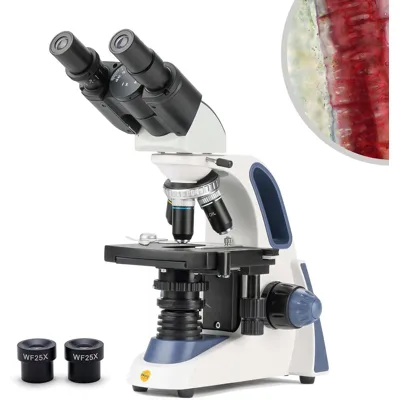
Best for serious study
Swift SW380B 40X-2500X Binocular Compound Microscope
A bright LED, two eyepieces, a mechanical stage and a 100x oil lens give real lab-style views.
40x–2500x · Two eyepieces plus a built-in camera · Slides, immersion oil
Check price on Amazon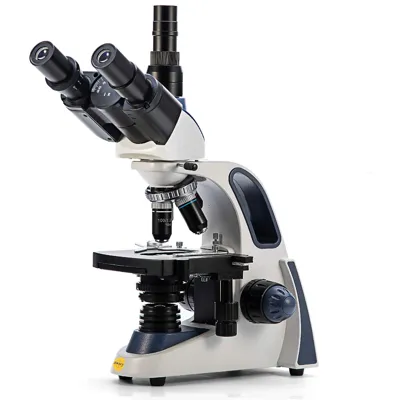
Best with a camera port
Swift SW380T 40X-2500X Trinocular Compound Microscope
A trinocular head, bright LED and solid stage make it a common choice for microscopy hobbyists.
40x–2500x · Two eyepieces plus a camera port · Slides, a microscope camera
Check price on AmazonBest pocket microscope
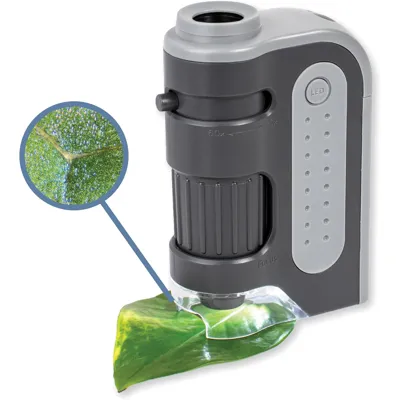
A pocket microscope lives in a backpack and comes out on walks. The Carson MicroBrite Plus has a light and focuses from 60x to 120x, which is plenty for leaves, insects and fabric. It is not for slides.
Best pocket microscope
Carson MicroBrite Plus MM-300 60x-120x LED Pocket Microscope
A lighted pocket scope that costs little and fits in a jacket or backpack.
60x–120x · On your phone or computer · 1 AA battery
Check price on AmazonHow much magnification do you need?
| What you want to see | Magnification | Type |
|---|---|---|
| Insects, flowers, rocks, coins | 10x to 40x | Stereo |
| Pond water creatures | 40x to 100x to find them, 400x for detail | Compound |
| Plant and cheek cells | 100x to 400x | Compound |
| Blood cells | 400x | Compound |
| Bacteria | 1000x with a 100x oil lens, stained | Compound |
Anything past about 1000x on a light microscope adds size but no detail. Light itself limits how small a thing you can see, and the best oil lenses top out near 1250x of useful magnification. When a box says 2000x or 2500x, it means a bigger eyepiece on the same lenses. The picture gets larger and blurrier.
What to check before you buy
- Glass lenses. Plastic lenses are the main reason toy scopes show blur.
- Light from below for slides. Pond water and cells need light shining up through the slide.
- A condenser and fine focus. Without them, 400x is hard to get sharp.
- A mechanical stage. It moves the slide in small, smooth steps. At 400x your fingers cannot.
- One eyepiece or two. Two eyepieces are easier for long sessions. One is fine for kids and short looks.
- Skip the 100x oil lens at first. Most beginners do not need it, and it needs oil every time.
What to buy with your microscope
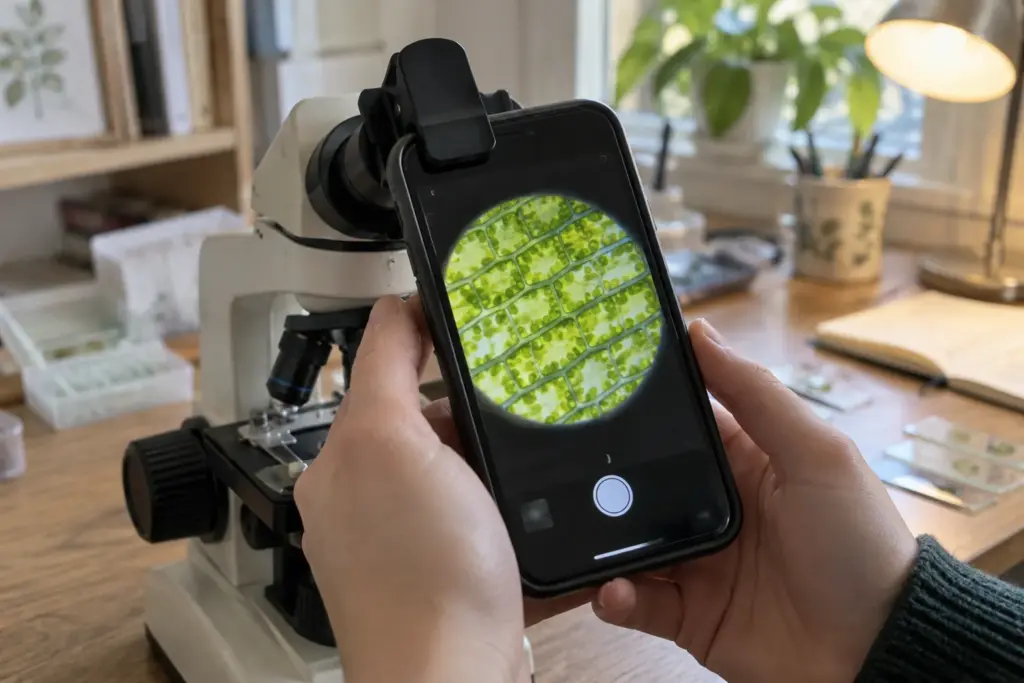
Prepared slides give you something good to look at on day one. Blank slides and cover slips let you make your own from pond water, onion skin or a cheek swab. A phone adapter is the cheapest way to take photos. Check your eyepiece tube size first: most student scopes use 23.2 mm and many stereo scopes use 30 or 30.5 mm.
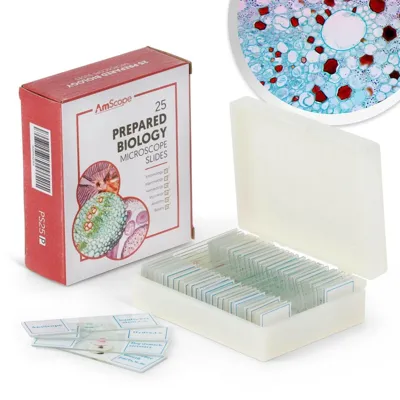
Best first slides
AmScope PS25P Prepared Microscope Slides, 25 Pieces
25 ready slides of plants, insects and animal tissue.
Varies · On your phone or computer · A compound microscope
Check price on Amazon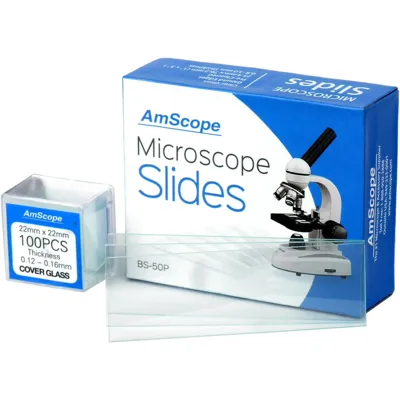
Best for your own samples
AmScope Blank Glass Slides (50) and Cover Slips (100)
50 glass slides and 100 cover slips.
Varies · On your phone or computer · A dropper and tweezers
Check price on Amazon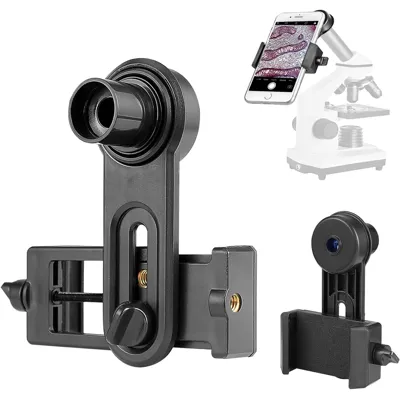
Best phone adapter
Smartphone Adapter for 23.2 mm Microscope Eyepiece Tube, 16x
Replaces the eyepiece and holds your phone in line with the lens.
16x · On your phone or computer · A 23.2 mm eyepiece tube
Check price on AmazonFrequently asked questions
For most homes, a compound student microscope with glass lenses at 40x, 100x and 400x, such as the AmScope M150C or Swift SW200DL. It shows cells and pond water and lasts for years. If you mainly want to look at bugs, rocks or coins, get a stereo microscope instead.
A compound microscope shines light through a thin sample on a slide and magnifies 40x to 1000x, which is what you need for cells. A stereo microscope lights solid objects from above and shows them in 3D at 10x to 90x, which suits bugs, plants, rocks and coins.
A compound microscope with a 100x oil-immersion lens, for a total of 1000x. Stain the sample to make bacteria easier to see. A toy or stereo microscope cannot show bacteria.
Yes, if it is a compound microscope with glass lenses and light from below. At 100x to 400x a child can see onion skin and cheek cells. Plastic toy lenses usually give a blurry view.
No. Light limits useful magnification on any light microscope to about 1000x to 1250x. A 2000x rating comes from a bigger eyepiece, which makes the image larger but not sharper.
For coins, stamps, soldering and sharing a view on a screen, yes. For cells and bacteria, a compound microscope is far sharper. The magnification on a digital microscope depends on the screen size, so compare the field of view, not the number on the box.
Kids from about 3 to 6 do best with a low-power stereo microscope and real objects like leaves and bugs. From about 8, a child can use slides and a compound microscope. Always follow the age printed on the box.
One eyepiece is fine for kids and short looks. Two eyepieces are easier on the eyes for long sessions and are worth it for students and hobbyists.
Yes. A phone adapter holds your phone over the eyepiece. Match the adapter to your eyepiece tube size, usually 23.2 mm on student scopes or 30 to 30.5 mm on many stereo scopes. For video, a microscope with a camera port (a trinocular head) works best.