TLDR
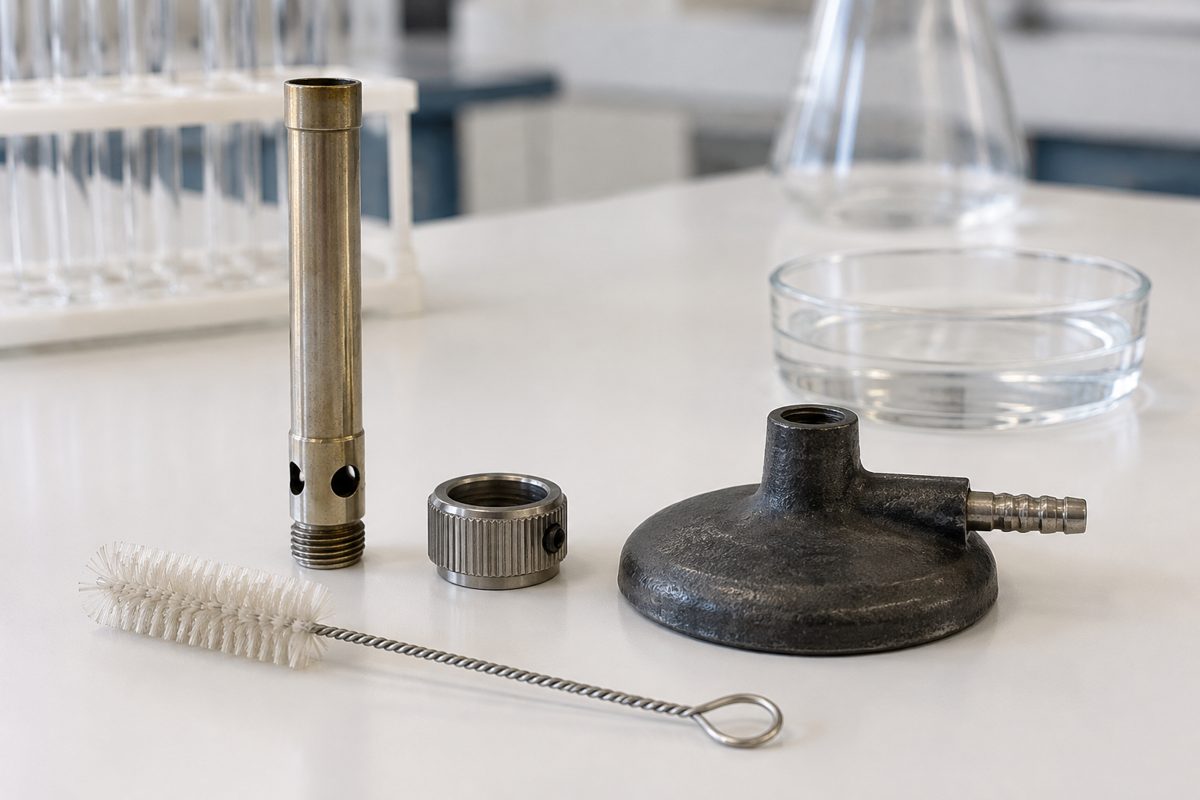
- To clean a Bunsen burner, shut off the gas, let it cool, unscrew the barrel, soak the parts in denatured alcohol, scrub the barrel, clear the jet with a fine wire and reassemble once everything is dry.
- Clean every burner at least once a year, and sooner if the flame stays yellow with the air holes open, weakens or will not light.
- Never widen the jet. Throw out cracked barrels and replace damaged hoses.
What you need
The job takes about 30 minutes per burner, plus drying time. Our laboratory equipment list covers the rest of the bench.
- Denatured alcohol, sold as methylated spirits in the UK and Australia, to loosen residue
- Nylon test tube brushes to scrub inside the barrel
- Torch tip cleaner wires to clear the jet
- Nitrile gloves and safety goggles, because old barrels hold chemical residue
- WD-40 with a straw for a stuck barrel
- Neoprene burner hose if yours fails inspection
You also need warm soapy water, two small glass dishes and a probe or spatula.
As an Amazon Associate, 33Science earns from qualifying purchases. See our affiliate disclosure.
Bunsen burner parts and what fouls them
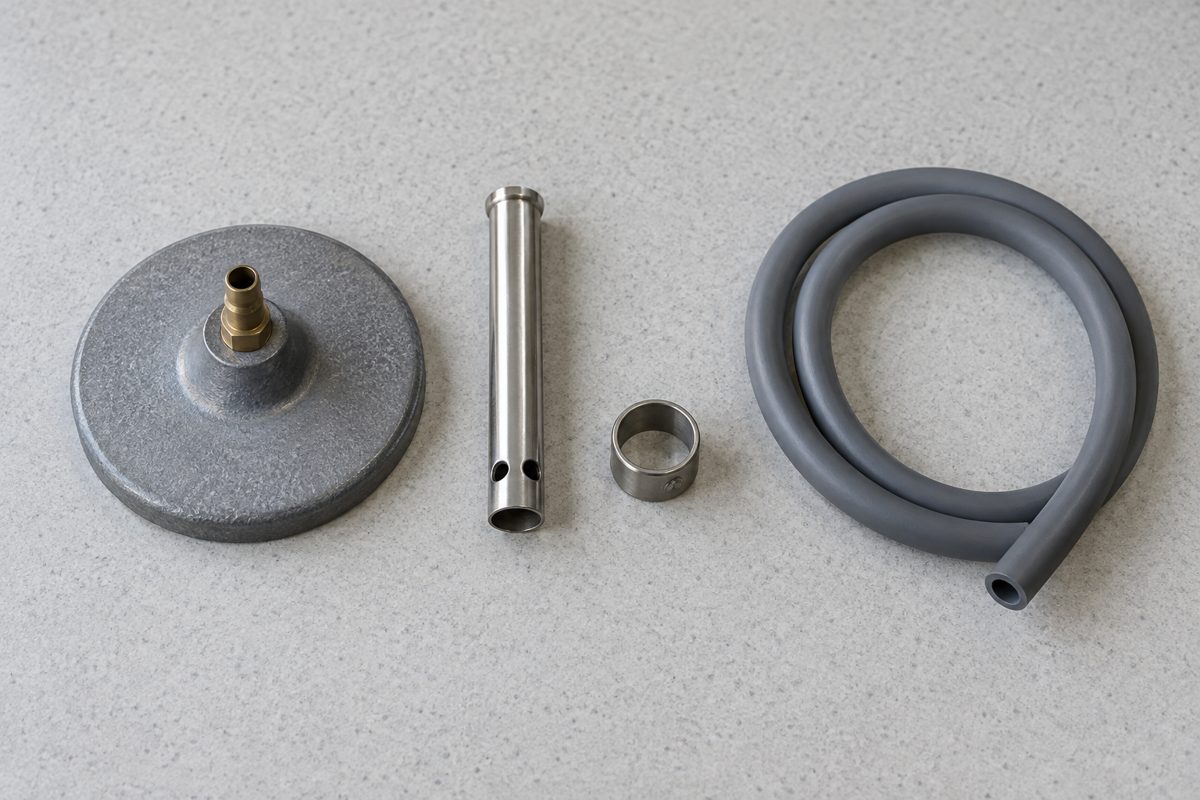
| Part | Job | What to look for |
|---|---|---|
| Base | Holds the burner steady and carries gas to the jet | Spilled chemicals, rust |
| Gas inlet | Connects the hose to the base | Loose fit, hose residue |
| Jet | Feeds gas into the barrel through a tiny hole | Green crust, dirt, melted residue |
| Barrel | Mixes gas and air before the flame | Soot, boiled-over chemicals, cracks |
| Air collar | Opens and closes the air holes | Dust, seized threads, misaligned holes |
| Hose | Brings gas from the tap | Holes, cuts, kinks, melted spots |
How to clean a Bunsen burner
Step 1: Shut off the gas and let it cool
Close the gas tap, disconnect the hose and wait until the barrel is cool to the touch. Put on gloves and goggles.
Step 2: Take the burner apart
Unscrew the barrel from the base and remove the air collar. If the barrel will not turn, slide a long screwdriver through the air holes and use it as a lever. If it still sticks, spray WD-40 on the thread and wait. Keep the parts of each burner together, because parts from different burners may not fit.
Step 3: Scrub and soak
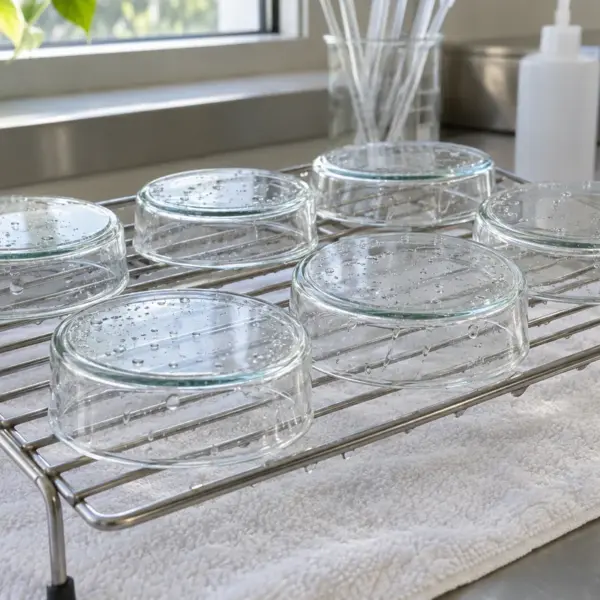
Scrub inside the barrel with a test tube brush in warm soapy water, then soak it in denatured alcohol for a few minutes. Stand the base upside down in a dish of alcohol so the jet sits in the liquid. Denatured alcohol is flammable, so work in a ventilated room with no flames nearby.
Step 4: Clear the jet
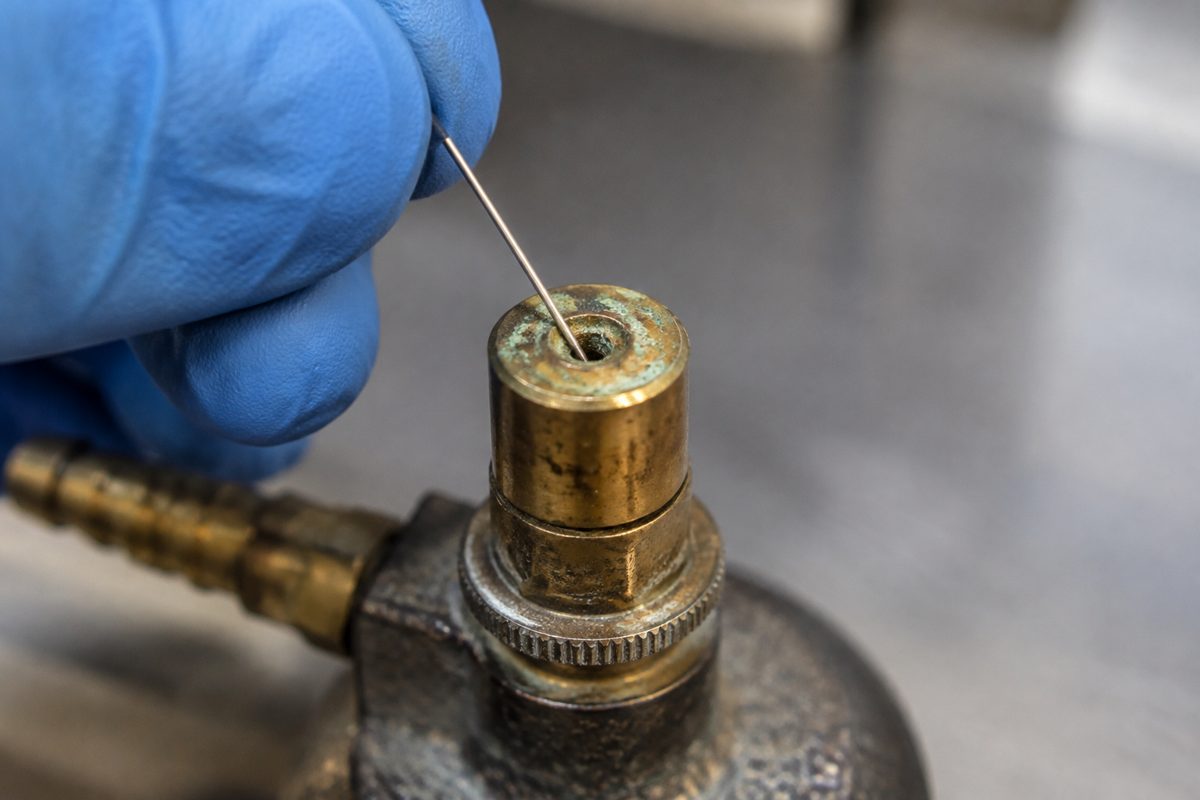
Scrape the crust around the jet with a probe until bare metal shows. Slide a torch tip cleaner wire through the hole, using the thickest wire that enters without force. Tap the base upside down on the bench to knock out debris. Never drill the jet: a wider hole passes more gas and changes the flame.
Step 5: Inspect the barrel and hose
Throw out any barrel with a crack, because gas can escape through it. Bend the hose along its length and check for holes, cuts, pinch points and melted spots. Replace a damaged hose rather than patching it: the University of Calgary traced one flash fire to an oversized hose wrapped in parafilm.
Step 6: Dry, reassemble and test
Let every part dry fully. Refit the collar so its holes line up with the barrel, then screw the barrel in. If you used WD-40 on the thread, wait before lighting. Push the hose onto the inlet, open the gas and brush soapy water over the connections: bubbles mean a leak. If there are none, close the air holes, light the burner and open the collar until you get a blue flame.
Bunsen burner troubleshooting
| Problem | Likely cause | Fix |
|---|---|---|
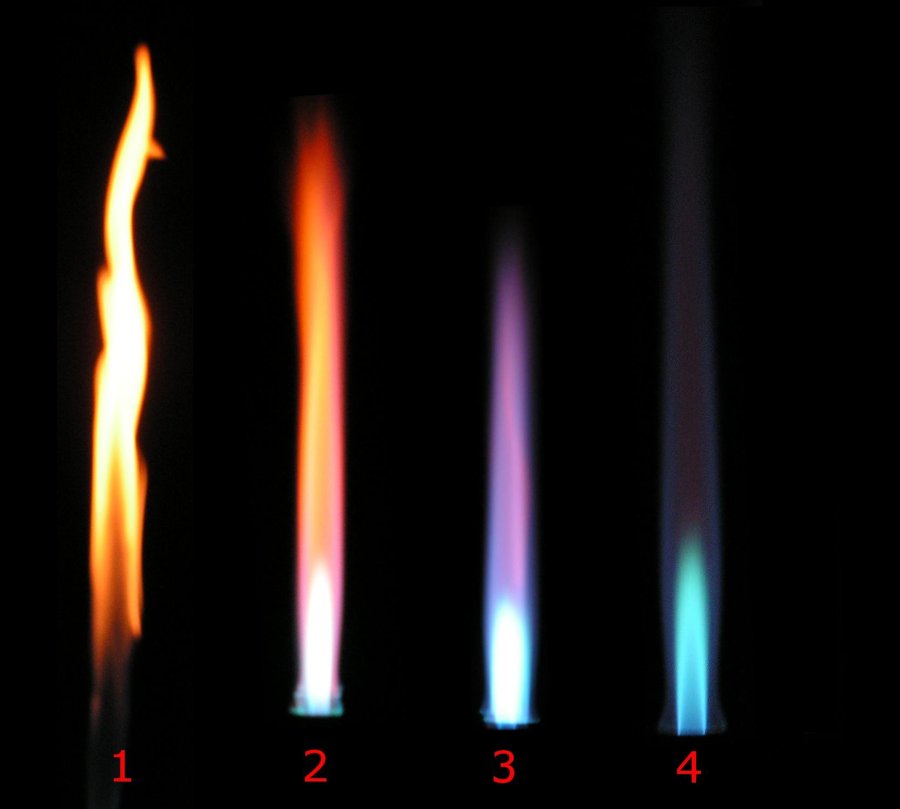
| Yellow flame with air holes open | Blocked holes, misaligned collar or dirty barrel | Clean the barrel and realign the collar |
| Burner will not light | Gas off at the tap or main, kinked hose, blocked jet | Check the supply and hose, then clear the jet |
| Weak or short flame | Partly blocked jet or low gas pressure | Clear the jet and open the tap further |
| Flame burns at the jet (strike back) | Too much air or too little gas | Shut off the gas, let it cool, close the air holes and relight |
| Soot on glassware | Yellow flame | Open the collar until the flame turns blue |
| Gas smell | Leak at the hose, inlet or barrel | Shut off the gas, do not relight and find the leak |
A burner that still fails after a full clean needs replacing. Match the new one to your gas supply, since jets are sized for the fuel. This Eisco Bunsen burner is the natural gas version.
FAQ
At least once a year. Clean it sooner after a spill or boil-over, or when the flame changes.
Denatured alcohol for the base and jet, and warm soapy water for the barrel. Acetone also works but costs more.
Yes. Soapy water suits the barrel, but every part must be fully dry before reassembly.
The flame is getting too little air. Yellow is normal with the collar closed. If it stays yellow with the air holes open, they are blocked or misaligned.
Check that the gas is on at the tap and that the hose is not kinked. Then close the air holes, since too much air makes lighting harder. If nothing changes, the jet is blocked.
Strike back is when the flame drops down the barrel and burns at the jet. It overheats the base. Shut off the gas, let the burner cool, close the air holes and relight.
Yes, if it slides in without force. A torch tip cleaner wire is better because the sets come in graded sizes. Do not ream or drill the hole.