
Robotics engineering is the field that combines mechanical engineering (the body), electrical engineering (the nerves and muscles), and computer science (the brain) to build machines that sense their surroundings and act on them. Most “robot facts” lists stop at “robots are used in many industries.” These 18 go further: real dates, real numbers, and the engineering reasons behind them.
Contents
- Origins and History
- Facts About Robotics Engineering: How Robots Are Built
- Where Robots Actually Work
- The Career Side
- FAQ
Origins and History
1. The word “robot” comes from a 1920 Czech play
Karel Čapek wrote R.U.R. (Rossum’s Universal Robots) in 1920, and it premiered in Prague in 1921. The word comes from the Czech robota, meaning forced labor, and Čapek credited his brother Josef with suggesting it. The robots in the play weren’t metal at all. They were manufactured from synthetic biological material, and the story ends with them rebelling.
Why it matters: From its first use, the word carried a question engineers still argue about: what do we owe the machines we build to work for us?
2. A science fiction writer coined “robotics”
Isaac Asimov used the word “robotics” in his 1941 short story “Liar!”, and the Oxford English Dictionary credits him with the first appearance in print. He introduced the Three Laws of Robotics the following year in “Runaround.” Asimov later said he assumed the word already existed, the way “physics” gives us “physicist.”
Why it matters: The name of an entire engineering discipline came from pulp magazine fiction, and Asimov’s laws still frame how people talk about robot safety, and the myths and misconceptions about robots that follow from that framing often outlast the facts.
3. The first industrial robot started work in 1961
George Devol filed the patent for a programmable transfer arm in 1954. Joseph Engelberger turned it into a company, Unimation, and the first Unimate went to work in 1961 at a General Motors plant in Ewing Township, New Jersey. Its job was lifting hot, freshly die-cast metal parts and dropping them into a cooling bath, work that burned and injured people.
Why it matters: The first commercial robot wasn’t chosen to show off. It took a job that was dangerous, repetitive, and easy to define, and that remains the template for good robot work.
4. Shakey, a wobbling 1960s robot, gave us the algorithm in your map app
Between 1966 and 1972, SRI International built Shakey, the first mobile robot that could reason about its own actions. It carried a camera and a range finder, but its “brain” was a computer too big to fit on board, linked to it by radio. The project produced the A* search algorithm, still used for pathfinding in robots, video games, and navigation software.
Why it matters: Much of what robots do today, from planning a route to avoiding obstacles, traces back to problems a clumsy box on wheels had to solve first.
Facts About Robotics Engineering: How Robots Are Built
5. Six degrees of freedom is the magic number for an arm
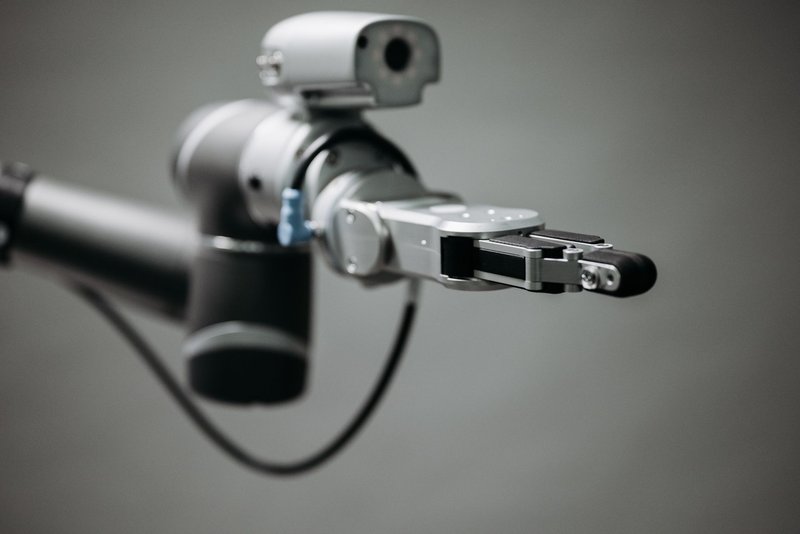
To place an object at any position and any angle in 3D space, you need six independent movements: three for position (x, y, z) and three for orientation (roll, pitch, yaw). That’s why most industrial arms have six axes. Your own arm, from shoulder to wrist, has seven, which is why you can keep your hand still on a desk while swinging your elbow around.
Why it matters: Every extra joint adds cost, weight, and control complexity, so engineers add degrees of freedom only when the task demands them.
6. One hand position can have eight different arm poses
Forward kinematics is the easy math: given the joint angles, where does the hand end up? Inverse kinematics is the hard direction: given where you want the hand, what should the joints do? For a typical six-axis arm with a spherical wrist, there can be up to eight valid joint configurations for the same hand pose. Near certain poses, called singularities, the arm loses the ability to move in some direction, and the required joint speeds shoot toward infinity.
Why it matters: Robot programmers spend real effort picking which of the solutions to use and steering the arm away from singularities.
7. A small gear invented in the 1950s made precise robot joints possible
Motors spin fast and weak. Robot joints need to move slowly and strongly. C. Walton Musser developed the strain wave gear (sold as the Harmonic Drive) in the 1950s, using a flexible metal cup that deforms against a rigid ring. It delivers high gear reduction in a compact package with almost no backlash, the tiny slack that makes cheaper gears imprecise.
Why it matters: Precision at the joint is what lets an arm repeat the same motion within a fraction of a millimeter, and gearing is a big part of it.
8. Robots combine noisy sensors using a 1960 math trick
Wheel encoders drift, GPS jumps, and cameras get fooled by glare. Sensor fusion blends several imperfect readings into one better estimate, and its workhorse is the Kalman filter, published by Rudolf Kálmán in 1960. NASA adopted it for Apollo navigation, and variants still run in drones, self-driving cars, and robot arms.
Why it matters: No single sensor is trustworthy. Robust robots are built on the assumption that every measurement is partly wrong.
9. A robot joint corrects itself about a thousand times per second
The classic control method is the PID controller. It compares where a joint is (read by an encoder) with where it should be, then adjusts the motor using the current error, the accumulated error, and how fast the error is changing. Servo loops at the joint level commonly run at around 1,000 cycles per second, or faster.
Why it matters: Smooth motion isn’t a single command. It’s thousands of tiny corrections every second.
10. Most research robots run on software that started in a garage-sized lab
The Robot Operating System (ROS) began in 2007 at Willow Garage, a robotics company and research lab in California, building on earlier work at Stanford. Despite the name, it’s not an operating system. It’s a set of tools and message-passing conventions that let separate programs for vision, planning, and motor control talk to each other. Its first full release came in 2010, and it is now standard in university labs and many companies.
Why it matters: Before shared software like this, every lab rewrote the same basic code from scratch.
11. What’s hard for humans is easy for robots, and the reverse
Hans Moravec and other researchers noticed in the 1980s that a computer can beat a grandmaster at chess yet struggle to pick up a mug. Robotics keeps proving it. At the 2015 DARPA Robotics Challenge finals, humanoid robots had to drive a car, open a door, turn a valve, and climb stairs. Many of them fell over, often in front of a stunned audience, while KAIST’s DRC-HUBO took first place.
Why it matters: Perception, balance, and touch took evolution hundreds of millions of years. Engineers are rebuilding them in decades.
Where Robots Actually Work
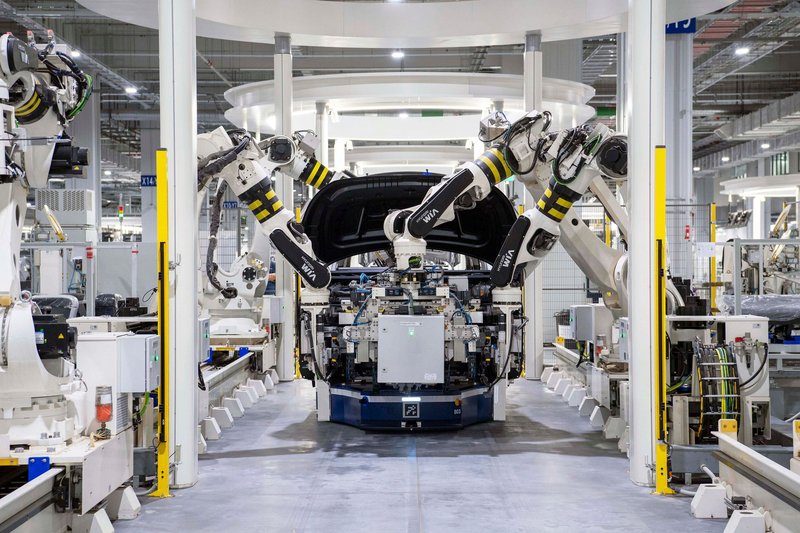
12. Factories installed about 541,000 industrial robots in a single year
The International Federation of Robotics reported roughly 541,000 new industrial robots installed worldwide in 2023, with more than half going to China. Its World Robotics data puts the global operating stock at about 4.3 million machines, led by electronics and automotive manufacturing.
Why it matters: Robots are already a massive industry. They just rarely look like the ones in movies.
13. South Korea has more than 1,000 robots per 10,000 factory workers
The IFR’s robot density measure counts industrial robots per 10,000 manufacturing employees. South Korea tops the chart at over 1,000, while the global average sits near 160. Singapore, China, and Germany follow in the upper ranks.
Why it matters: Robot adoption tracks labor costs, manufacturing strategy, and government policy, not just technology.
14. Mars rovers have to think for themselves because of the speed of light
Radio signals take roughly 3 to 22 minutes to cross between Earth and Mars, depending on where the planets are in their orbits. You can’t joystick a rover in real time. Perseverance uses an autonomous navigation system called AutoNav to map terrain with its cameras and choose its own path between waypoints that NASA’s engineers set. Its predecessor Opportunity was designed for a 90-day mission and kept driving for almost 15 years.
Why it matters: When the delay makes remote control impossible, autonomy stops being a luxury and becomes the whole design.
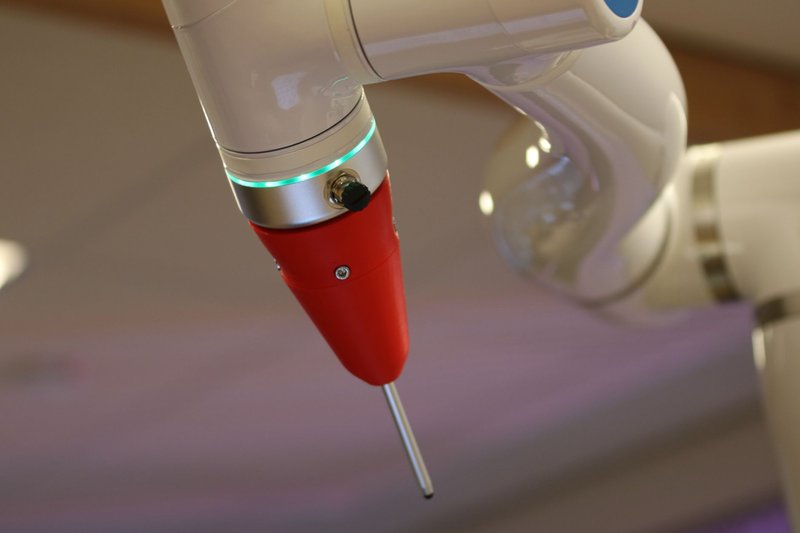
15. Surgical robots don’t operate on their own
The da Vinci system, which received FDA clearance for general laparoscopic surgery in 2000, is a teleoperated machine. The surgeon sits at a console and controls instruments with wristed tips through small incisions. The software scales hand movements down and filters out tremor, but every motion starts with a human.
Why it matters: The most successful medical robot adds precision to a surgeon’s judgment instead of trying to replace it.
16. Collaborative robots work next to people without a cage
Traditional industrial robots are fenced off because they can injure anyone in reach. Collaborative robots, or cobots, limit their force and stop on contact. Universal Robots launched its UR5 in 2008, and the ISO/TS 15066 technical specification, published in 2016, set out the force and pressure limits for robots working near humans.
Why it matters: Cobots opened automation to small shops that never had room for a fenced robot cell.
The Career Side
17. Few universities offer a degree titled “robotics engineering”
Most robotics engineers come through mechanical, electrical, or computer engineering, or computer science, then specialize with projects, labs, and graduate study. Worcester Polytechnic Institute launched the first bachelor’s degree in robotics engineering in the United States in 2007. Carnegie Mellon’s Robotics Institute, founded in 1979, remains one of the best-known research centers.
Why it matters: The degree title matters less than the portfolio. Hiring managers look for working robots, code, and competition results.
18. The pay is solid, though the government doesn’t count robotics engineers separately
The U.S. Bureau of Labor Statistics has no robotics engineer category, so these jobs are counted under mechanical, electrical, or computer hardware engineering. The median pay for mechanical engineers is around $100,000 a year, and the BLS projects faster-than-average employment growth for the occupation. Roles that lean toward software and machine learning often pay more, but the official figures can’t confirm that for robotics specifically.
Why it matters: The career is real, but if you read a single “robotics engineer salary” number, check where it came from.
FAQ
What does a robotics engineer do?
A robotics engineer designs, builds, tests, and maintains robots and robotic systems. Day to day that can mean sketching a gripper in CAD, wiring sensors, writing motion-planning code, tuning a control loop, or figuring out why a prototype fails on the factory floor. Which of these you do depends on the team, since most robots are built by groups where each member covers one slice.
What degree do you need to become a robotics engineer?
A bachelor’s degree in mechanical, electrical, or computer engineering, or computer science, is the usual starting point. A dedicated robotics engineering degree exists at a handful of schools, and many jobs in research or perception and control prefer a master’s or PhD. Programming skills (Python and C++ are the common pair), basic control theory, and hands-on projects count heavily.
Do robotics engineers need to code?
Yes. Even mechanical-leaning roles involve scripting, simulation, or reading control code, and software-leaning roles are mostly code. C++ and Python dominate, and familiarity with ROS helps.
Is robotics engineering hard?
It’s broad rather than uniquely difficult. You need working knowledge of mechanics, electronics, and software, and most people go deep in one area while staying fluent in the other two.