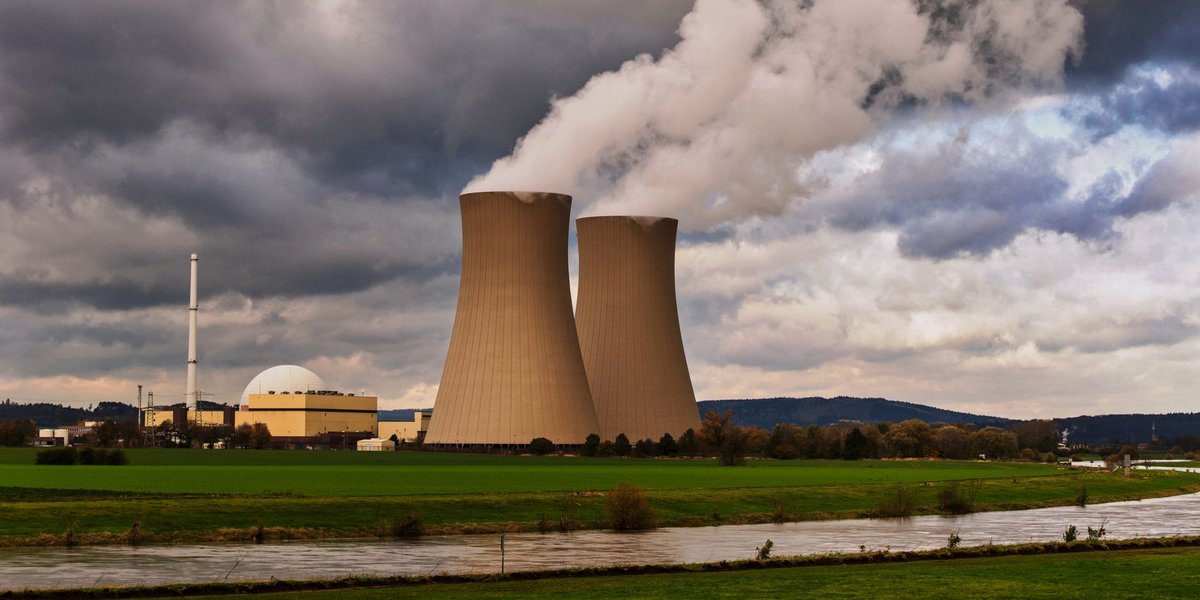
Nuclear power produces almost no carbon while running, yet it’s one of the hardest energy sources to build, pay for and clean up after. The disadvantages of nuclear energy are mostly about money, time and long-lived waste. Accidents get the headlines, but they’re rarer than the budget problems.
Quick answer: the main downsides
- Radioactive waste stays hazardous for thousands of years, and almost no country has a permanent repository yet.
- Construction costs routinely double the original estimate.
- Build times run 10 to 15 years in the West, far longer than solar, wind or gas.
- Accidents are rare, but when one happens (Chernobyl, Fukushima) the damage lasts for decades.
- Uranium is finite, so nuclear isn’t renewable.
- Water use is heavy, and warm discharge can harm rivers and coastal ecosystems.
- Uranium mining leaves contaminated land and tailings.
- Proliferation risk comes from enrichment technology that can serve weapons programs.
- Decommissioning a plant takes decades and costs hundreds of millions to billions.
Contents
- 1. Radioactive waste
- 2. Huge construction costs
- 3. Slow build times
- 4. Accident risk
- 5. Finite uranium supply
- 6. Water use and thermal pollution
- 7. Mining impact
- 8. Weapons proliferation
- 9. Decommissioning
- Nuclear vs solar, wind and gas
- The disadvantages of nuclear energy in context
- FAQ
1. Radioactive waste
Spent fuel is the downside people raise first, and it’s a fair one. A reactor’s used fuel rods stay dangerously radioactive for a very long time. The key term is half-life: the time it takes for half of a radioactive material’s atoms to decay. Plutonium-239, one of the byproducts, has a half-life of about 24,100 years.
The volume is small. According to the U.S. Department of Energy, all the commercial spent fuel the U.S. has produced since the 1950s would fit on a football field stacked less than 10 yards high. The problem is where to put it. The U.S. holds roughly 90,000 metric tons of spent fuel in pools and dry casks at the reactor sites that made it, because the planned repository at Yucca Mountain, Nevada, was defunded after years of political fights and never opened.
The first deep geological repository in the world, Onkalo in Finland, only began trial operations in the mid-2020s. It’s built to hold sealed copper canisters in bedrock for 100,000 years. One country has done it. Dozens are still waiting.
2. Huge construction costs
Nuclear plants are expensive before they produce a single kilowatt-hour. The numbers are not subtle:
- Vogtle units 3 and 4 (Georgia, USA): originally budgeted at about $14 billion, finished in 2023 and 2024 at more than $30 billion.
- Hinkley Point C (England): estimated at £18 billion at the start. EDF now puts it at £31 billion to £35 billion in 2015 prices.
- Flamanville 3 (France): the cost rose from roughly €3.3 billion to well over €13 billion before it connected to the grid in December 2024.
Almost all of that money is spent up front. Fuel is cheap, but the interest on borrowed construction money, safety systems and regulatory work are not. That’s why private investors often won’t touch new reactors without government loan guarantees or guaranteed electricity prices.
3. Slow build times
Money is one problem. Time is the other. A solar farm can be running within a year or two. A new nuclear plant in the U.S. or Europe often takes 10 to 15 years from approval to first power.
Flamanville 3 started construction in 2007 and was meant to open in 2012. It came online 12 years late. Vogtle ran about seven years behind. For a country trying to cut emissions by 2035 or 2040, a reactor that arrives in the 2040s may land too late to matter for that target.
South Korea and China build faster, often in five to seven years, which shows the delays aren’t built into the physics. Still, in most Western countries, long timelines are the norm and not the exception.
4. Accident risk
Three accidents define public fear of nuclear power.
Three Mile Island (USA, 1979). A partial meltdown, meaning the fuel overheated and began to melt, damaged one reactor in Pennsylvania. The U.S. Nuclear Regulatory Commission reports that the release of radiation was small and studies found no detectable health effects. The cleanup took until 1993 and cost around $1 billion.
Chernobyl (Soviet Union, 1986). A reactor exploded during a safety test and burned for days. The accident forced the permanent evacuation of the surrounding area, and an exclusion zone of about 2,600 square kilometers still stands. It remains the worst nuclear accident on record.
Fukushima Daiichi (Japan, 2011). A tsunami disabled the cooling systems, and three reactors melted down. About 154,000 people were evacuated. Cleanup of the site is planned to take 30 to 40 years.
Modern reactor designs add passive safety systems that cool the core without power or human action. But the risk never reaches zero, and the consequences of a severe accident, including land that’s unusable for generations, are far larger than for any other power source.
5. Finite uranium supply
Nuclear energy is low-carbon, but it isn’t renewable. Reactors run on uranium, which is mined from the ground and doesn’t replenish on any human timescale.
Known uranium resources, at today’s mining costs, would last about a century at the current rate of use. More deposits will be found, and prices can rise to make poorer ores worth mining. Breeder reactors, which produce more fissile fuel than they burn, could stretch supplies much further, but they’re expensive and only a few exist. Extracting uranium from seawater works in the lab and remains far from economic.
A century is plenty of time. It’s still a different category from wind and sunlight.
6. Water use and thermal pollution
Reactors generate heat, and heat has to go somewhere. Most plants pull in water from a river, lake or ocean to cool their steam systems. Plants with cooling towers lose a lot of that water to evaporation, roughly 600 to 700 gallons per megawatt-hour by common estimates, which is more than solar panels or wind turbines use.
The U.S. Energy Information Administration notes that plants using once-through cooling return warmer water to the source, which can stress fish and other aquatic life. In summer heat waves, French reactors have cut output or shut down because the rivers were too warm or too low to cool them safely. It’s an odd weakness: the hotter the world gets, the harder some reactors find it to run.
7. Mining impact
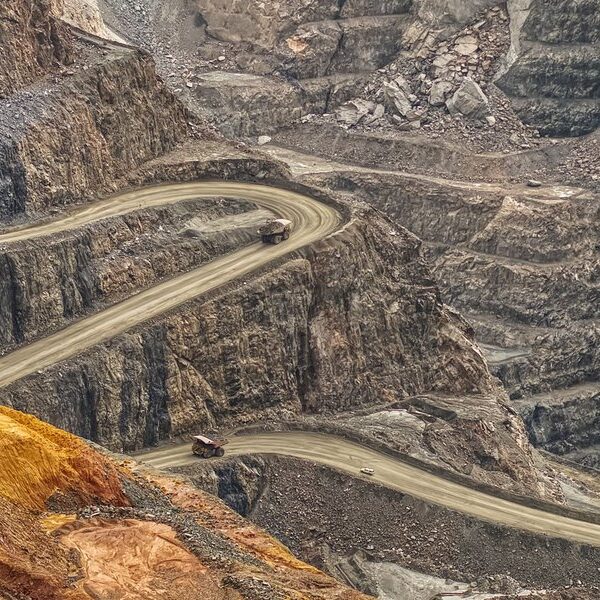
Mining uranium is a messy business. Open-pit and underground mines produce tailings, the radioactive sand-like waste left after the ore is processed. Without careful containment, those tailings can contaminate groundwater and air.
The legacy is visible in the American Southwest. The U.S. Environmental Protection Agency is still working on the more than 500 abandoned uranium mines on the Navajo Nation, left over from Cold War mining. Today most uranium is produced by in-situ leaching, which pumps chemicals through the ore underground and brings the dissolved uranium to the surface. It’s cheaper and disturbs less land, but it brings its own risk of groundwater contamination.
8. Weapons proliferation
The technology that makes reactor fuel can also make bombs. Power plants use uranium enriched to about 3 to 5 percent uranium-235. Weapons need around 90 percent. The same centrifuges can do both jobs, just for different lengths of time.
Spent fuel also contains plutonium, which can be separated and used in weapons. This is why the International Atomic Energy Agency inspects civilian nuclear facilities, and why disputes over enrichment programs in countries like Iran and North Korea become international crises. Every new country that builds a nuclear program adds a bit more to the oversight burden.
9. Decommissioning
A reactor doesn’t just get switched off and demolished. Once it stops producing power, fuel must be removed, radioactive components dismantled, and the site cleaned until it meets safety limits. Operators can pick prompt dismantling (starting within years) or “safe storage,” where the plant sits sealed for up to 60 years to let radiation decline before it’s taken apart.
Costs per reactor typically fall between several hundred million and over a billion dollars, and they’re usually paid from a fund built up while the plant was running. When those funds fall short, taxpayers can end up covering the gap. At damaged sites like Fukushima, the bill is on a different scale altogether: Japan’s government has estimated the total disaster response, including decommissioning and compensation, at roughly ¥21.5 trillion.
Nuclear vs solar, wind and gas
Numbers make the tradeoffs easier to see. The figures below are rounded, typical ranges drawn from recent analyses such as Lazard’s levelized cost of energy report and IPCC lifecycle assessments. They vary by country.
| Nuclear | Solar (utility) | Onshore wind | Natural gas | |
|---|---|---|---|---|
| Cost per MWh (unsubsidized) | about $140 to $220 | about $30 to $90 | about $30 to $70 | about $45 to $110 |
| Typical build time | 7 to 15 years | 1 to 2 years | 1 to 3 years | 2 to 3 years |
| Lifecycle CO2 per kWh | about 12 g | about 40 g | about 11 g | about 490 g |
| Main waste | Spent fuel, small volume, long-lived | Panels at end of life | Blades at end of life | CO2 and air pollutants |
Nuclear loses on cost and speed. It wins on one thing the table doesn’t capture: it runs day and night, in any weather, at a capacity factor above 90 percent in the U.S. Solar and wind don’t, so they need batteries, backup plants or long-distance transmission to fill the gaps. Comparing prices per megawatt-hour alone leaves that cost out.
The disadvantages of nuclear energy in context
A list of downsides can make nuclear power sound like the most dangerous way to boil water. The data says otherwise. Our World in Data estimates deaths per terawatt-hour of electricity, counting accidents and air pollution, at about 24.6 for coal, 2.8 for natural gas and 0.03 for nuclear. That puts nuclear in the same range as wind and solar. Fossil fuel pollution kills millions of people a year; nuclear power has killed a small fraction of that over its entire history.
So the honest summary is this. Nuclear’s biggest drawbacks are economic and logistical: cost, delay and waste with no finished long-term plan. Its safety record per unit of energy is among the best. Whether the tradeoffs are worth it depends on what you’re comparing against, and on how much a country values steady carbon-free power over cheaper, faster options.
FAQ
What is the biggest disadvantage of nuclear energy?
Cost and time are the biggest practical ones. Plants like Vogtle and Hinkley Point C cost well over double their first estimates and took a decade or more to build. Radioactive waste is the biggest environmental concern.
Is nuclear energy renewable?
No. Reactors burn uranium, a finite mined resource. Known supplies would last about a century at current use, and breeder reactors or seawater extraction could extend that, but neither is in wide use.
How long does nuclear waste stay dangerous?
It depends on the isotope. Some fission products decay within decades. Others, like plutonium-239 with its 24,100-year half-life, stay hazardous for tens of thousands of years, which is why repositories are designed to last 100,000 years.
Is nuclear energy dangerous?
Serious accidents are rare, and per unit of electricity nuclear causes far fewer deaths than coal or gas. The risk is low-probability, high-consequence: when a major accident happens, as at Chernobyl and Fukushima, evacuation zones can last for decades.
Why does it cost so much to build a nuclear power plant?
Reactors need massive containment structures, redundant safety systems, specialized parts and heavy regulatory oversight. Long timelines add years of interest on borrowed money, and one-off designs mean builders rarely get the cost savings that come from repeating the same project.