Iran has one of the richest mineral endowments on Earth and one of the least developed mining sectors. Depending on whose survey you trust, the country holds somewhere between 68 and 81 types of minerals, with an estimated in-ground value of about $770 billion. Mining still contributes only around 0.6% of GDP.
That gap between what’s underground and what gets dug up is the real story. This guide goes mineral by mineral, with reserve sizes, rough world rankings and the regions that matter, then explains why the numbers don’t line up.
Contents
- The short version
- Why the numbers disagree
- Iron ore
- Copper
- Zinc and lead
- Coal
- Bauxite
- Gold
- Uranium
- Gypsum, barite and fluorite
- Where the mining happens
- Why Iran mines so little of what it has
The short version
Iran’s strengths are iron ore, copper, zinc and lead, and industrial minerals like gypsum. Coal and bauxite are solid but secondary. Gold and uranium get headlines, though neither is a major world-scale resource. Rankings below are approximate and vary by source and year.
| Mineral | Main areas | Where Iran stands | Notes |
|---|---|---|---|
| Iron ore | Kerman (Sirjan, Gol-e-Gohar), Yazd (Bafq, Chadormalu) | Roughly top 10 in reserves | Biggest mining sector by tonnage |
| Copper | Kerman (Sarcheshmeh, Meiduk), East Azerbaijan (Sungun) | Roughly top 10 in reserves | Heavily tied to state-owned smelters |
| Zinc and lead | Zanjan (Angouran), Yazd (Mehdiabad) | Among the larger reserve holders | Mehdiabad is one of the biggest known deposits |
| Coal | Kerman, Tabas (South Khorasan), Mazandaran | Modest at world scale | Coking coal feeds the steel industry |
| Bauxite | Jajarm (North Khorasan) | Mid-sized | Supports a domestic alumina plant |
| Gold | Zarshuran (West Azerbaijan), Muteh (Isfahan) | Minor | Output small, reported reserves inconsistent |
| Uranium | Saghand (Yazd), Gachin (Hormozgan) | Minor | Low-grade ore, sensitive politically |
| Gypsum | Many provinces | Top-tier producer | Cheap, bulky, mostly for cement and plaster |
| Barite and fluorite | Scattered deposits | Barite notable, fluorite small | Used in drilling mud and steel flux |
Why the numbers disagree
Before any figure, a warning. Mineral statistics for Iran are messy. Wikipedia’s page on mining in Iran ranks the country’s iron ore reserves 7th, 8th, 9th and 11th in different passages. One industry news item put a new gold find at a figure that looks like a unit error.
Three things cause this. “Reserves” (economically mineable today) and “resources” (known to exist) get used interchangeably. Iranian agencies often quote geological potential, while the USGS National Minerals Information Center uses stricter reserve definitions. And exploration is thin: less than a fifth of the country has been explored on the ground, so totals keep moving.
When you see a ranking in this article, read it as “around this position,” and check the year attached to any single number you plan to reuse.
Iron ore
Iron ore is the backbone of Iranian mining. Reserves are usually put in the range of several billion tonnes, which lands Iran in the global top 10, though the exact position depends on the source. Output runs in the tens of millions of tonnes a year, and most of it never leaves the country as ore. It goes into domestic steel mills or gets pelletized first.
The center of gravity is central Iran. Gol-e-Gohar near Sirjan in Kerman province is the largest single operation. Chadormalu and Chogart sit in the Bafq district of Yazd province, and Sangan in the east near the Afghan border has a distinct skarn-type ore body. Iran is among the top steel producers in the world, and that steel industry is why iron ore gets mined at scale while almost everything else lags.
Copper
Iran holds billions of tonnes of copper ore at modest grades, which is typical for porphyry deposits. Reported reserves put the country somewhere near the top 10 globally, again with caveats about source.
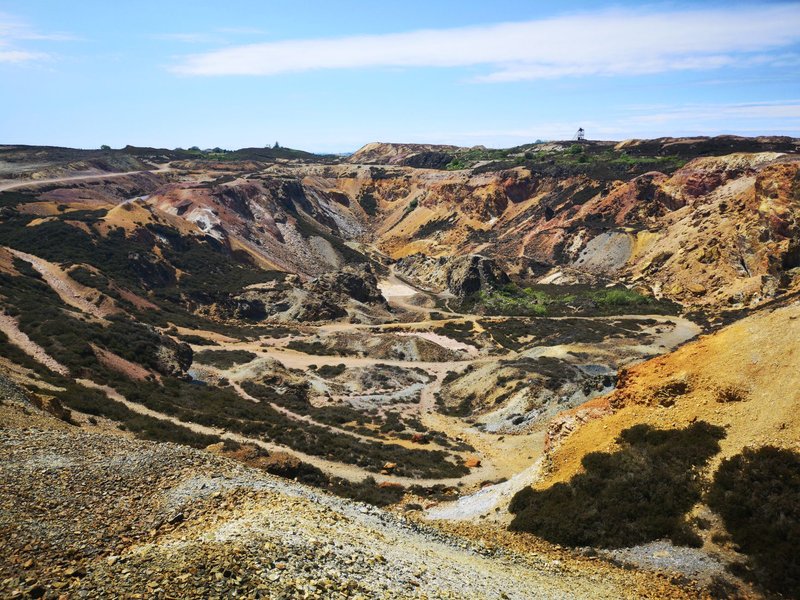
Three mines carry the industry. Sarcheshmeh in Kerman is the oldest and best known, a porphyry operation with its own smelter and refinery. Meiduk, also in Kerman, is a newer open pit. Sungun in East Azerbaijan, close to the Armenian border, is one of the larger open-pit copper mines in the Middle East. Iran exports copper mostly as concentrate and cathode, and copper has been among its top non-oil exports.
Zinc and lead
Zinc and lead usually occur together, and Iran has several large deposits. Angouran in Zanjan province is a high-grade zinc mine that has run for decades. Mehdiabad, southeast of Yazd, is the one to know. It’s counted among the largest zinc-lead deposits discovered anywhere, though development there has been slow and its size estimates vary widely between reports.
Iran is a significant zinc producer on paper and a meaningful regional exporter of zinc concentrate. Lead plays a smaller role, mostly as a co-product.
Coal
Iran is oil and gas first, and coal is an afterthought in the energy mix. But coal matters for steel. The country has proven reserves in the order of one to two billion tonnes, with much larger estimates for total resources.
The key fields are in Kerman province around Zarand and Kerman city, in Tabas in South Khorasan, and in the northern Alborz range in Mazandaran. Tabas and Kerman supply the coking coal that steelmakers need, and Iran has historically had to import coking coal to fill the gap.
Bauxite
Iran’s bauxite is concentrated at Jajarm in North Khorasan province, which feeds the Jajarm alumina plant. A 2025 announcement by the state mining agency IMIDRO claimed the discovery of about 17 million tonnes of additional bauxite as part of a package of reserve additions. Treat announcements like that as targets rather than audited reserves.
Bauxite is a good example of how mining and industrial policy interlock. Iran wants an aluminum chain from mine to ingot, so bauxite output is driven by smelter demand rather than export markets.
Gold
Gold gets attention that its tonnage doesn’t justify. Zarshuran in West Azerbaijan is the best-known producer, with Muteh in Isfahan province running for decades before it. Other prospects are spread across the northwest and east.
Reported reserves are small by world standards. Iranian gold production is measured in single-digit tonnes a year at best, compared to hundreds from the top producers. If you see a headline claiming a gold figure that would put Iran among the leaders, check the unit before trusting it.
Uranium
Iran’s uranium deposits are real but modest. Saghand in Yazd province is the main mine, and Gachin near Bandar Abbas is the other. The ore is low-grade, and Iran has long said it needs more domestic uranium to supply its nuclear programme. Because of that, uranium output figures come mainly from Iranian government statements and International Atomic Energy Agency reporting rather than commercial market data. Its significance is political, not as a mining commodity.
Gypsum, barite and fluorite
The industrial minerals are where Iran’s rankings look best, even though the market values are lower.
Gypsum. Iran is among the world’s top gypsum producers, with output in the low-to-mid teens of millions of tonnes. Deposits are widespread, and the mineral feeds cement and plasterboard in a country with a lot of construction.
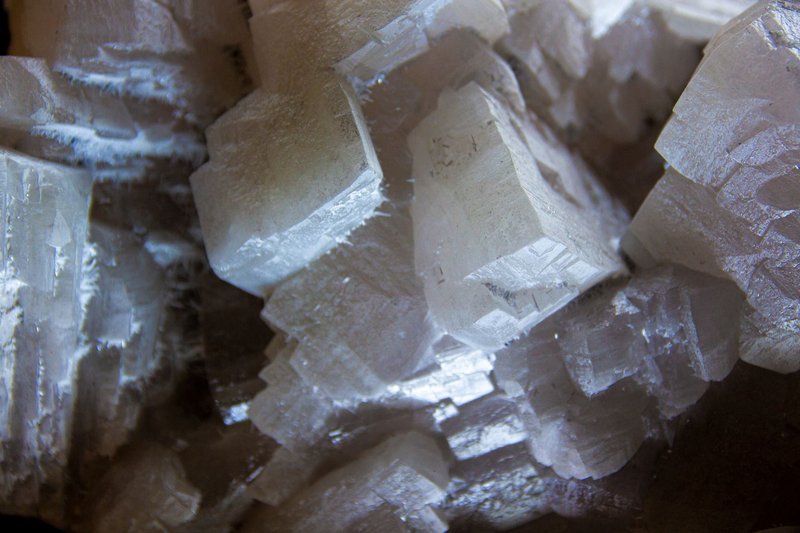
Barite. Iran is one of the more notable barite producers. Barite’s main job is weighting drilling mud, which fits a country with a big oil and gas sector.
Fluorite. Smaller deposits exist, but fluorite is a minor player globally for Iran.
Beyond these, Iran produces large volumes of salt, limestone, marble and travertine, and some famous gems. The turquoise from the Neyshabur area in Khorasan has been mined for over two thousand years.
Where the mining happens
Four clusters dominate:
- Kerman province (Sirjan, Zarand, Sarcheshmeh): iron ore, copper and coal. The densest mining region in the country.
- Yazd province (Bafq, Saghand, Mehdiabad): iron ore, uranium and zinc-lead. The Bafq district is a major iron ore belt.
- Northwest (Zanjan, East and West Azerbaijan): zinc at Angouran, copper at Sungun, gold at Zarshuran.
- Mazandaran and the Alborz: coal and building stone on the Caspian side.
Most are in the dry central plateau, far from the coast. That makes rail and road access a constant constraint.
Why Iran mines so little of what it has
Mining adds about 0.6% to GDP while the mineral wealth is valued at hundreds of billions of dollars. Several things hold it back.
Sanctions. International restrictions limit foreign investment, equipment imports and access to payment systems. Mining needs heavy capital, and foreign firms have mostly stayed away.
Old equipment. Mines and smelters rely on aging machinery, and spare parts are hard to source under sanctions.
State control. The state mining and industrial agency IMIDRO and affiliated holding companies control much of the sector. Large parts of the industry sit under government-linked entities, which can slow decisions and discourage private capital.
Thin exploration. With under a fifth of the country explored on the ground, reserve numbers stay uncertain, and uncertainty makes financing harder.
Geography. Mineral belts lie far from ports, and desert operations face water shortages.
The picture could shift. IMIDRO regularly announces new discoveries and investment plans, and the domestic steel, copper and aluminum industries give Iranian ore a guaranteed local buyer. But until sanctions ease and exploration widens, Iran’s mineral reserves will stay far larger than what comes out of the ground, and the figures in this article will keep moving with them.