A non-electrolyte is a substance that dissolves in water without forming ions, so the solution doesn’t conduct electricity. Dissolve sugar in water and you get sweet water that leaves a light bulb dark. Dissolve table salt and the bulb lights up. That difference is the whole concept.
Below: why it happens, which common substances belong on the list (and which ones people get wrong), and how non-electrolytes behave in freezing and boiling point calculations.
Table of contents
- Why non-electrolytes don’t conduct
- Examples of non-electrolytes
- Electrolytes vs non-electrolytes
- The edge cases: weak electrolytes
- The conductivity test
- Non-electrolytes and the van’t Hoff factor
- Worked example
- Quick quiz
- FAQ
Why non-electrolytes don’t conduct
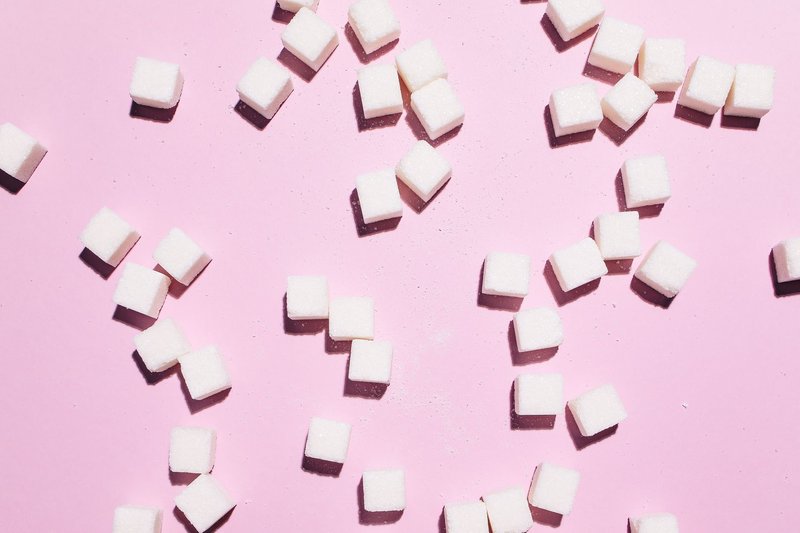
A solution conducts electricity only if it contains charged particles that are free to move. In salt water those particles are Na⁺ and Cl⁻ ions, released when the ionic crystal falls apart.
Sugar works differently. Sucrose is made of molecules held together by covalent bonds, and the molecules themselves carry no net charge. When sucrose dissolves, water molecules pull individual sucrose molecules out of the crystal and surround them. The molecules spread through the liquid, but they stay whole. Each one is still electrically neutral, so nothing carries current.
Sugar dissolves well because it has many -OH groups that form hydrogen bonds with water. Dissolving and ionizing are separate events. Glucose is extremely soluble, and it’s still a non-electrolyte. Plenty of text sources blur this by implying non-electrolytes are poorly soluble. Some are (oils barely mix with water), but solubility tells you nothing about whether a substance forms ions.
Examples of non-electrolytes
Most of these are small covalent molecules with no ionizable group:
- Glucose (C₆H₁₂O₆). See the PubChem entry on glucose for its structure and properties.
- Sucrose (C₁₂H₂₂O₁₁), ordinary table sugar.
- Ethanol (C₂H₅OH). It mixes with water in any proportion and never ionizes appreciably.
- Urea (CH₄N₂O). Dissolves readily, stays as neutral molecules.
- Glycerol (C₃H₈O₃).
- Acetone (C₃H₆O).
- Methanol, ethylene glycol and benzene (the last barely dissolves, but what does dissolve stays molecular).
Electrolytes vs non-electrolytes
Chemists sort solutes into three groups by how much they ionize in water.
| Property | Strong electrolyte | Weak electrolyte | Non-electrolyte |
|---|---|---|---|
| Ionization in water | Essentially complete | Partial (often a few percent or less) | None |
| Conductivity | High | Low | Negligible (about the same as pure water) |
| Particles in solution | Ions only | Mostly molecules, a few ions | Molecules only |
| Typical bond type | Ionic, or strongly acidic/basic covalent | Covalent, weakly acidic or basic | Covalent, no ionizable group |
| Examples | NaCl, KNO₃, HCl, NaOH | Acetic acid, ammonia, HF | Glucose, sucrose, ethanol, urea |
The pattern “ionic compounds are electrolytes, covalent compounds are non-electrolytes” is a decent first guess, and it fails at the edges. Hydrogen chloride is a covalent compound. In water it reacts with the solvent and ionizes almost completely, so it’s a strong electrolyte. The real test is what happens in solution, not what bond type the pure substance has.
The edge cases: weak electrolytes
Two substances show up wrongly on non-electrolyte lists more than any others.
Acetic acid. It’s covalent and it’s the main component of vinegar, so people assume it’s a non-electrolyte. It isn’t. Its pKa is about 4.76 (see the PubChem acetic acid record), meaning a small fraction of molecules do donate a proton to water, forming acetate ions and hydronium. Vinegar conducts a measurable current, just far less than salt water of similar concentration.
Ammonia. In water, NH₃ picks up a proton from water to form NH₄⁺ and OH⁻. In a 0.1 M solution only about 1% of the ammonia reacts this way. Small percentage, nonzero ions, so it’s a weak electrolyte.
Both give a dim glow in a conductivity test, not darkness. A true non-electrolyte like glucose gives nothing beyond what the water itself does.
The conductivity test
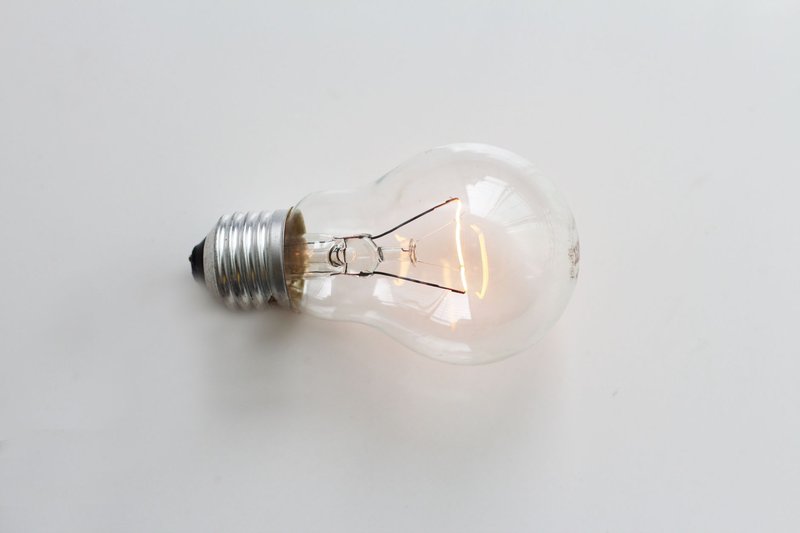
The classroom version is a battery, a bulb and two electrodes dipped into the solution. Close the circuit and watch.
- Bright bulb: strong electrolyte.
- Dim bulb: weak electrolyte.
- No light: non-electrolyte (or plain distilled water).
A conductivity meter does the same job with numbers instead of brightness. Pure water reads very low, since a tiny fraction of its molecules self-ionize. A sugar solution reads almost the same. Add salt and the reading jumps by orders of magnitude.
Non-electrolytes and the van’t Hoff factor
Dissolved particles change a solvent’s freezing and boiling points. These are colligative properties, and they depend on the number of dissolved particles, not on what the particles are.
The van’t Hoff factor, i, counts how many particles one formula unit produces in solution:
- Non-electrolyte: i = 1 (the molecule stays whole)
- NaCl: i ≈ 2 (Na⁺ and Cl⁻), slightly lower in real solutions because of ion pairing
- CaCl₂: i ≈ 3
The equations are:
- Freezing point depression: ΔT_f = i · K_f · m
- Boiling point elevation: ΔT_b = i · K_b · m
For water, K_f = 1.86 °C·kg/mol and K_b = 0.512 °C·kg/mol. At the same molality, a non-electrolyte (i = 1) lowers the freezing point and raises the boiling point less than a strong electrolyte, because it supplies fewer particles. One mole of glucose contributes one mole of particles. One mole of NaCl contributes close to two.
Worked example
Problem: You dissolve 18.0 g of glucose (molar mass 180 g/mol) in 500 g of water. What are the new freezing and boiling points?
- Moles of glucose: 18.0 g ÷ 180 g/mol = 0.100 mol
- Molality: 0.100 mol ÷ 0.500 kg = 0.200 mol/kg
- Glucose is a non-electrolyte, so i = 1
- Freezing point depression: ΔT_f = 1 × 1.86 × 0.200 = 0.372 °C, so the solution freezes at about −0.37 °C
- Boiling point elevation: ΔT_b = 1 × 0.512 × 0.200 = 0.102 °C, so it boils at about 100.10 °C
Now replace the glucose with the same 0.100 mol of NaCl (5.84 g). With i ≈ 2, ΔT_f ≈ 0.744 °C, double the glucose result. Same moles, twice the effect.
Quick quiz
Sort each into strong electrolyte, weak electrolyte or non-electrolyte:
- Urea
- Hydrochloric acid
- Ammonia
- Ethanol
- Potassium nitrate
Answers: 1 non-electrolyte, 2 strong electrolyte, 3 weak electrolyte, 4 non-electrolyte, 5 strong electrolyte.
FAQ
Are covalent compounds non-electrolytes? Many are, but not all. Covalent compounds that react with water to form ions, such as HCl (strong) or acetic acid (weak), are electrolytes. Check what happens in solution.
Is pure water an electrolyte? Barely. Water self-ionizes to a tiny degree (about 10⁻⁷ mol/L each of H⁺ and OH⁻ at 25 °C), so it conducts very poorly. It’s treated as a non-electrolyte for practical purposes.
Can a non-electrolyte be soluble in water? Yes. Glucose, sucrose, ethanol and urea all dissolve readily. Solubility and ionization are unrelated.
What is the van’t Hoff factor of a non-electrolyte? Exactly 1, since each molecule stays as one particle.
Why do non-electrolytes change freezing points less than electrolytes? They release fewer particles per mole. Colligative effects scale with particle count, so a strong electrolyte that splits into two or three ions has two or three times the effect at the same molality.