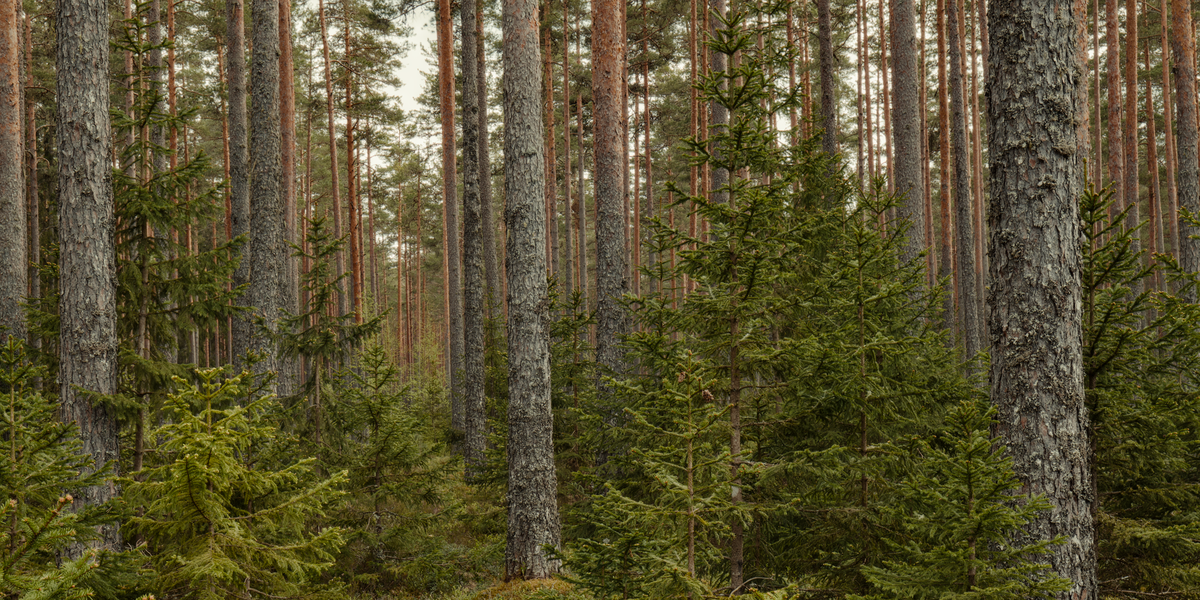
Evergreen trees keep living foliage on their branches all year, so they never go fully bare the way maples and oaks do. The group is bigger than most people assume: it includes conifers like pines and spruces, but also broadleaf trees such as holly, southern magnolia and eucalyptus.
“Evergreen” doesn’t mean “never sheds.” Every evergreen drops old needles or leaves; it just does it a little at a time instead of all at once. And “conifer” doesn’t mean “evergreen” either. Larch and bald cypress are cone-bearing trees that lose every needle each autumn.
This guide splits evergreens into the two camps, then walks through 14 species with the numbers that decide whether a tree will work in your yard: hardiness zone, mature size, growth rate, best use and one real drawback.
Contents
- TLDR
- What counts as an evergreen tree
- Conifer vs broadleaf evergreens
- 14 types of evergreen trees
- Evergreen tree comparison table
- How to choose an evergreen tree
- FAQ
TLDR
- Fast privacy screen: Green Giant arborvitae (zones 5-9) or eastern white pine (zones 3-8).
- Small yard: dwarf Alberta spruce (zones 2-6) or wax myrtle (zones 7-10).
- Windbreak in cold country: Norway spruce (zones 3-7).
- Christmas tree: Fraser fir (zones 4-7).
- Shade, where nothing else works: Canadian hemlock (zones 3-7).
- Wet or clay soil: wax myrtle, and with some tolerance, eastern red cedar.
- Check your zone first on the USDA Plant Hardiness Zone Map. A tree rated one zone too warm will look fine until the first hard winter.
What counts as an evergreen tree
A tree is evergreen when it carries green foliage through every season and replaces it gradually. A pine needle lasts two to four years, depending on the species. A southern magnolia leaf lasts about two years. When the oldest foliage finally turns, you get a brief burst of yellow or brown on the inside of the canopy. Eastern white pine does this every fall, and people regularly mistake it for disease.
Deciduous trees run the opposite program. They drop everything on a single schedule, usually triggered by shorter days and cold, and regrow in spring. The trade-off is simple: evergreen foliage is tough, waxy and expensive to build, but it keeps photosynthesizing on warm winter days. Deciduous leaves are cheap and efficient, but only work for part of the year.
Conifer vs broadleaf evergreens
Conifers have needles or scales and reproduce with cones. Pines, spruces, firs, hemlocks, cedars, junipers and cypresses all belong here. They dominate cold climates because narrow needles shed snow and lose little water.
Broadleaf evergreens have flat leaves like any oak or maple, but they keep them. Holly, southern magnolia, live oak and eucalyptus fall in this group. They skew toward warmer regions, since wide leaves are vulnerable to freezing and winter desiccation.
The practical difference: conifers give you dense, uniform screening and a classic silhouette. Broadleaf evergreens give you glossy leaves, flowers or berries, and heavier leaf litter.
14 types of evergreen trees
Sizes below are typical landscape ranges. Trees in the wild or in ideal soil can run taller, and “growth rate” means average annual height gain in a healthy, established tree.
Conifers
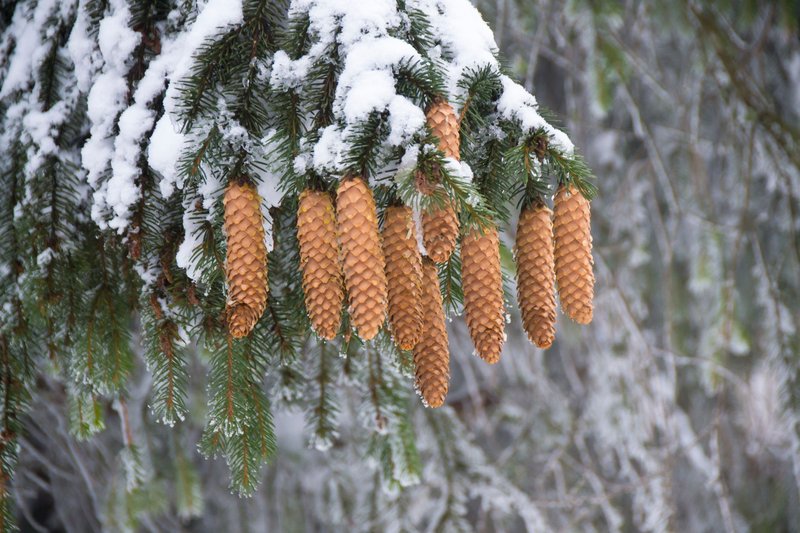
1. Eastern white pine (Pinus strobus)
- Zones: 3-8
- Mature size: 50-80 ft tall, 20-40 ft wide
- Growth rate: Fast, 2 ft or more per year
- Best use: Large-property screen, windbreak, wildlife cover
- Drawback: Soft wood that snaps under heavy ice, and little tolerance for road salt or polluted air
White pine has long, soft, bundled needles that feel like a paintbrush instead of a pincushion. It’s the quickest way to turn an empty field into a woodland edge, and it grows well in ordinary soil. Don’t plant it within falling distance of a roof.
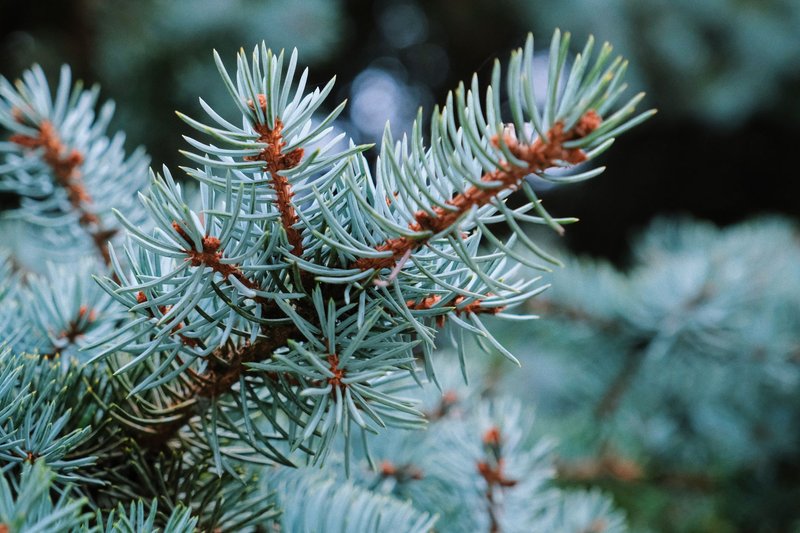
2. Colorado blue spruce (Picea pungens)
- Zones: 2-7
- Mature size: 30-60 ft tall, 10-20 ft wide
- Growth rate: Slow to medium, about 12 in per year
- Best use: Specimen tree, cold-climate yard focal point
- Drawback: Needle cast and canker diseases in humid climates, and lower branches that die back with age
The silver-blue color comes from a wax coating on the needles. It’s best in dry, cold, sunny places that resemble its home in the Rocky Mountains. In humid eastern or southern yards, expect bare lower limbs within a couple of decades.
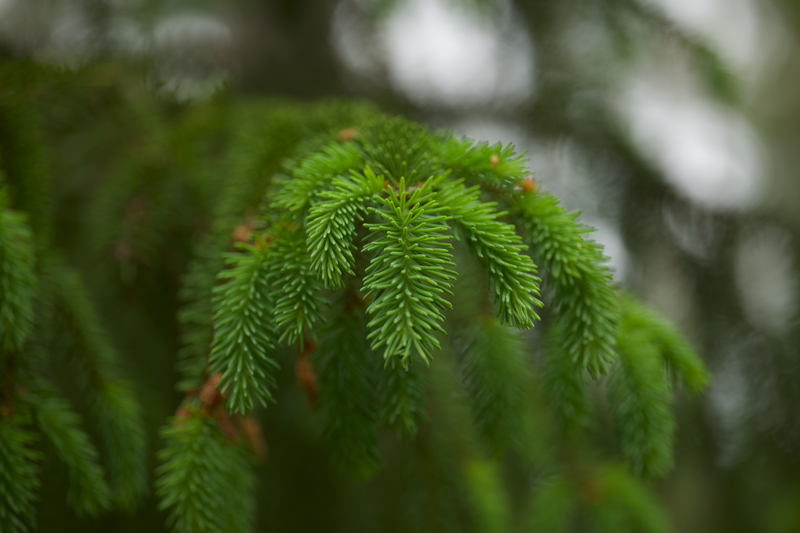
3. Norway spruce (Picea abies)
- Zones: 3-7
- Mature size: 40-60 ft tall, 25-30 ft wide
- Growth rate: Fast, 1-2 ft per year when young
- Best use: Windbreak, farmstead shelterbelt
- Drawback: Too large for a typical lot, and it can shed lower branches as it ages
Norway spruce is the standard windbreak tree across the northern U.S. and Canada. Plant it in rows and the dense, drooping branches cut wind speed dramatically. Branchlets hang from the main limbs like curtains, which makes it easy to spot.
4. Fraser fir (Abies fraseri)
- Zones: 4-7
- Mature size: 30-40 ft tall, 15-25 ft wide
- Growth rate: Slow to medium, around 12 in per year
- Best use: Christmas tree, cool-climate ornamental
- Drawback: Struggles in heat and humidity, and sulks in poorly drained soil
Fraser fir is native to a handful of high Appalachian peaks, and it’s the reason Christmas tree farms in North Carolina exist. The needles are soft, silver-backed and hold on well after cutting. Planted in a hot, low-elevation yard, it usually declines.
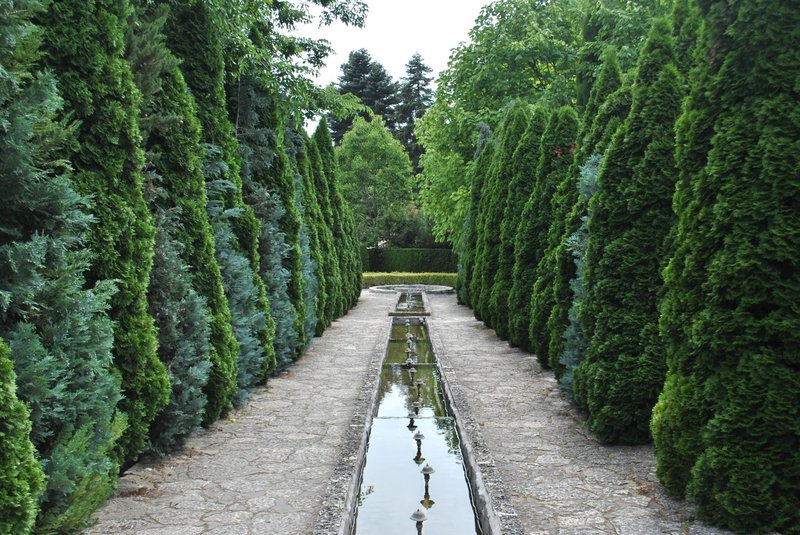
5. Green Giant arborvitae (Thuja standishii × plicata)
- Zones: 5-9
- Mature size: 40-60 ft tall, 12-20 ft wide
- Growth rate: Very fast, 3-5 ft per year
- Best use: Privacy screen, noise buffer
- Drawback: Deer browse it heavily, and it outgrows small lots quickly
The most common answer to “fast growing evergreen trees for privacy.” A row planted about 5-8 ft apart closes into a solid wall in a few years. Buyers often underestimate the mature height: a “hedge” can reach 50 ft.
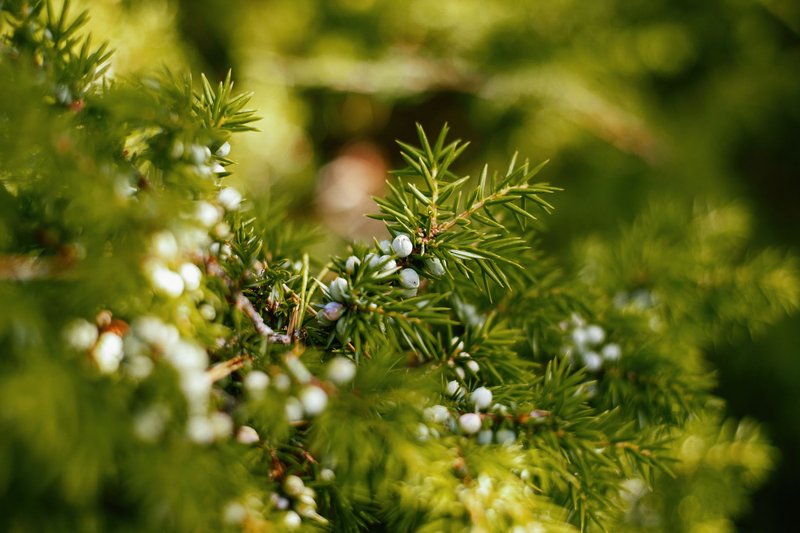
6. Eastern red cedar (Juniperus virginiana)
- Zones: 2-9
- Mature size: 30-65 ft tall, 8-25 ft wide
- Growth rate: Medium, 1-2 ft per year
- Best use: Tough screen for poor, dry or alkaline soil; windbreak
- Drawback: Alternate host of cedar-apple rust, which damages nearby apple and crabapple trees
It’s technically a juniper, not a true cedar. It has one of the widest ranges of any North American conifer, and tolerates drought, clay and rocky ground that would kill most other evergreens. Foliage turns bronze in winter in many places and recovers in spring.
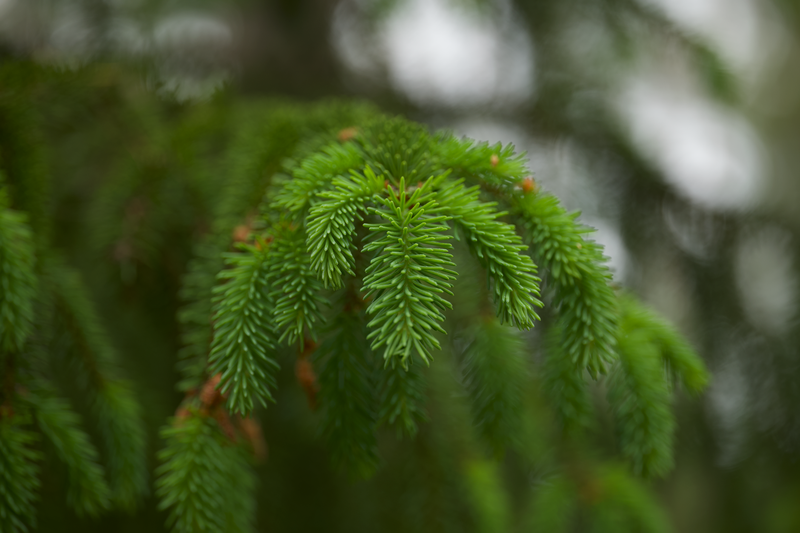
7. Dwarf Alberta spruce (Picea glauca ‘Conica’)
- Zones: 2-6
- Mature size: 10-12 ft tall, 7-10 ft wide, after several decades
- Growth rate: Slow, 2-4 in per year
- Best use: Small yard, entryway, large container
- Drawback: Spider mites, especially in hot, dry, reflective spots against a wall
A natural mutation of white spruce that forms a tight, perfect cone with no pruning. It’s the small-space evergreen tree most people recognize from front steps and holiday planters. Shake the branches over white paper; if tiny specks move, you have mites.
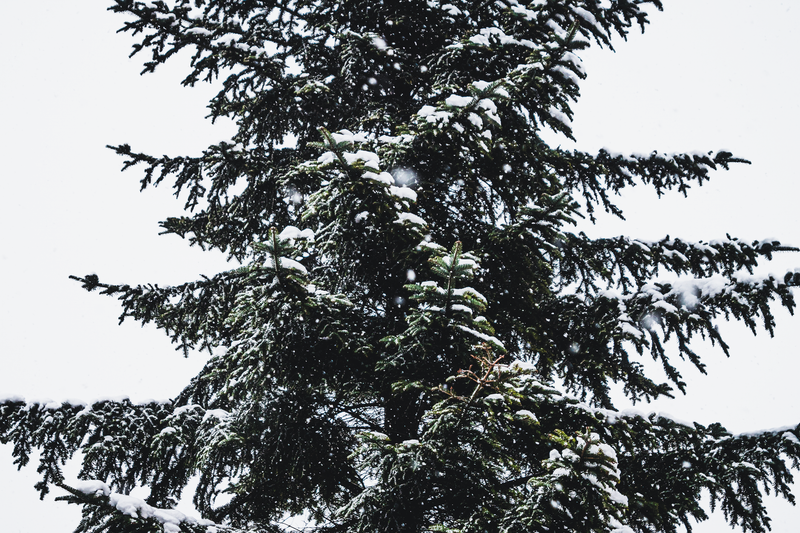
8. Canadian hemlock (Tsuga canadensis)
- Zones: 3-7
- Mature size: 40-70 ft tall, 25-35 ft wide
- Growth rate: Slow to medium, 10-20 in per year
- Best use: Shady sites, soft-textured hedge, woodland garden
- Drawback: Hemlock woolly adelgid, an invasive insect that has killed large stands in the East
Hemlock is one of the few conifers that tolerates real shade, and it takes shearing well, so it can be kept as a tall hedge. Check for the white, cottony tufts under the needle tips before you buy. If adelgid is active in your county, ask a local arborist about treatment before planting.
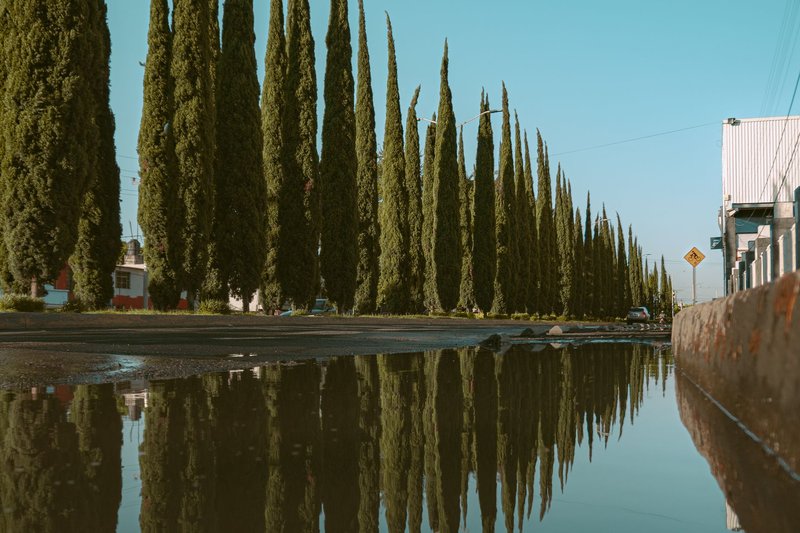
9. Italian cypress (Cupressus sempervirens)
- Zones: 7-10
- Mature size: 40-60 ft tall, 3-6 ft wide
- Growth rate: Medium to fast, 2-3 ft per year
- Best use: Narrow screen, formal accent, Mediterranean-style gardens
- Drawback: Cold-tender, and prone to canker and spider mites in humid or wet conditions
A column that fits in a 4 ft strip. This is the pick when you need height but have almost no width. In regions that swing below 10°F, plan on winter damage.
Broadleaf evergreens
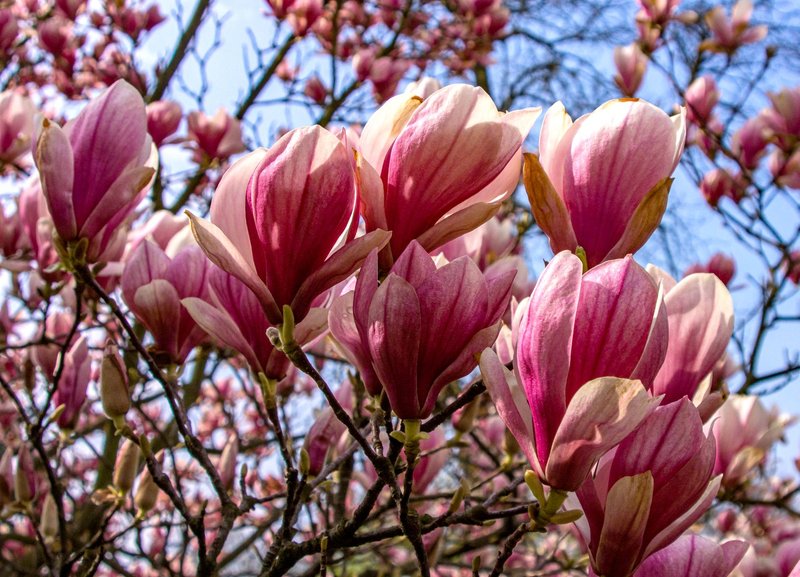
10. Southern magnolia (Magnolia grandiflora)
- Zones: 6-10
- Mature size: 60-80 ft tall, 30-40 ft wide (compact cultivars like ‘Little Gem’ stay near 20-30 ft)
- Growth rate: Slow to medium, 1-2 ft per year
- Best use: Shade tree, specimen, large-flower display
- Drawback: It drops big, leathery leaves year-round and the litter doesn’t compost quickly
The leaves are glossy green on top and rusty brown underneath, with white flowers up to 8 in across in early summer. For a small yard, a compact cultivar fits a 20 ft footprint. Big varieties will outgrow almost any suburban lot.
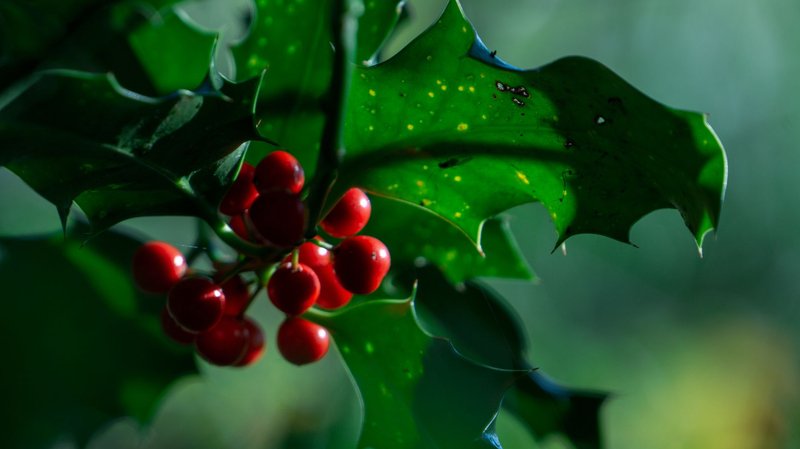
11. American holly (Ilex opaca)
- Zones: 5-9
- Mature size: 15-30 ft tall (occasionally taller), 10-20 ft wide
- Growth rate: Slow, about 1 ft per year
- Best use: Winter color, bird food, holiday greenery
- Drawback: Only female trees fruit, and they need a male nearby to produce the red berries
Holly is dioecious, so plants are either male or female. Buy a named female for berries and one male within roughly 50 ft for pollination; nurseries often tag both. The spiny leaves make it a natural deterrent hedge.
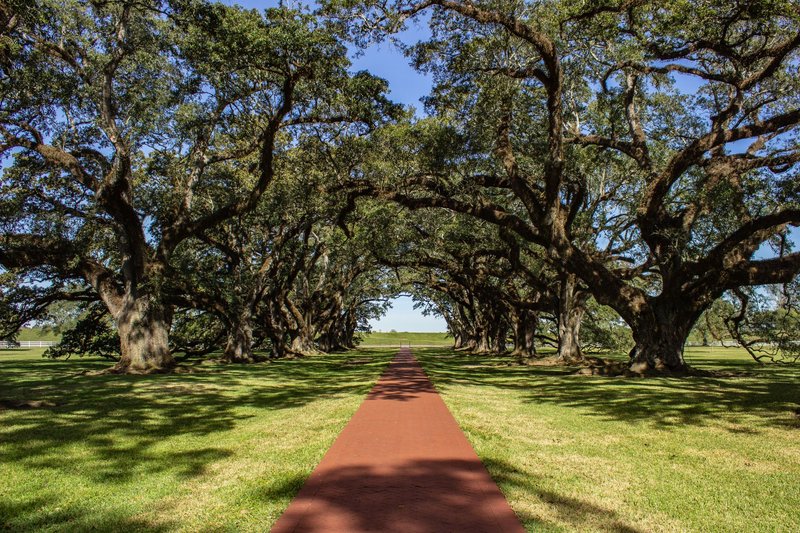
12. Live oak (Quercus virginiana)
- Zones: 8-10
- Mature size: 40-80 ft tall, 60-100 ft wide
- Growth rate: Medium to fast, 2-3 ft per year in warm climates
- Best use: Large shade tree, avenue planting, coastal landscapes
- Drawback: Enormous spread, and a leaf drop in early spring when new foliage emerges
Live oak is the evergreen that proves the “never sheds” myth wrong. It’s classed as evergreen because the old leaves drop in late winter only as new ones push out, so the tree is never bare. The horizontal limbs can cover a house lot by themselves. It tolerates salt spray, which is why it lines the Gulf and Atlantic coast.
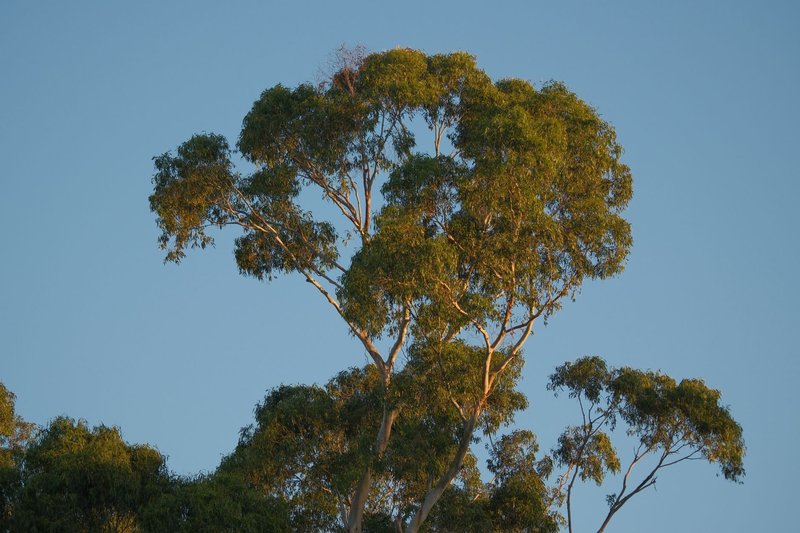
13. Cider gum (Eucalyptus gunnii)
- Zones: 7-10
- Mature size: 40-60 ft tall, 15-25 ft wide
- Growth rate: Very fast, 3 ft or more per year
- Best use: Fast shade, silver-blue foliage, cut greenery
- Drawback: Shallow roots and brittle limbs, plus oil-rich foliage that burns readily in dry regions
Cider gum is one of the hardiest eucalypts, and it handles frost that kills most of the genus. It sheds strips of bark every year, which is part of its appeal. In wildfire country, check local guidance before planting any eucalyptus near a structure.
14. Wax myrtle (Morella cerifera)
- Zones: 7-10
- Mature size: 10-20 ft tall, 8-15 ft wide
- Growth rate: Fast, 2-3 ft per year
- Best use: Privacy hedge in wet soil, small-yard screen, wildlife
- Drawback: Suckers and spreads, and cold snaps can brown the leaves
A shrub-to-small-tree native to the southeastern U.S. that tolerates wet soil, salt and deer pressure better than almost anything. The waxy, gray-blue berries were once boiled for candle wax, and the crushed leaves are strongly aromatic.
Evergreen tree comparison table
| Tree | Type | Zones | Mature height | Growth rate | Best for |
|---|---|---|---|---|---|
| Eastern white pine | Conifer | 3-8 | 50-80 ft | Fast | Large screen, windbreak |
| Colorado blue spruce | Conifer | 2-7 | 30-60 ft | Slow-medium | Specimen, cold dry sites |
| Norway spruce | Conifer | 3-7 | 40-60 ft | Fast | Windbreak |
| Fraser fir | Conifer | 4-7 | 30-40 ft | Slow-medium | Christmas tree |
| Green Giant arborvitae | Conifer | 5-9 | 40-60 ft | Very fast | Privacy screen |
| Eastern red cedar | Conifer | 2-9 | 30-65 ft | Medium | Poor soil, windbreak |
| Dwarf Alberta spruce | Conifer | 2-6 | 10-12 ft | Slow | Small yard, containers |
| Canadian hemlock | Conifer | 3-7 | 40-70 ft | Slow-medium | Shade, hedge |
| Italian cypress | Conifer | 7-10 | 40-60 ft | Medium-fast | Narrow spaces |
| Southern magnolia | Broadleaf | 6-10 | 60-80 ft (compact: 20-30) | Slow-medium | Shade, flowers |
| American holly | Broadleaf | 5-9 | 15-30 ft | Slow | Berries, winter color |
| Live oak | Broadleaf | 8-10 | 40-80 ft | Medium-fast | Large shade, coast |
| Cider gum | Broadleaf | 7-10 | 40-60 ft | Very fast | Fast shade |
| Wax myrtle | Broadleaf | 7-10 | 10-20 ft | Fast | Wet soil hedge |
How to choose an evergreen tree
Start with zone. Find yours on the USDA map, then pick species rated for it with a margin of one zone colder. Zone ratings come from winter lows, so they ignore summer heat, humidity and wind. The Missouri Botanical Garden Plant Finder lists heat and moisture tolerances species by species.
Match the mature size, not the nursery size. A 3 ft Green Giant looks like a hedge plant. In ten years it’s 25 ft tall. Measure the space and pick a tree whose mature width fits, then place the trunk at least half that width away from your property line, house and driveway.
Check sun and soil. Most evergreens want six or more hours of direct sun. Hemlock is the main exception for deep shade. Pines and red cedar tolerate lean, dry soil; wax myrtle and bald cypress handle wet feet. Dig a hole, fill it with water and time the drain. If it still holds water after 24 hours, choose a wet-soil species or build a raised planting bed.
Space for the use. For a privacy screen, plant at roughly two-thirds of the mature width, so branches meet in a few years. For a specimen tree, give it its full width. Don’t plant a row of one species if disease is common in your region; mixing two or three species keeps a pest from erasing the whole screen.
Plant at the right time. Early fall is best for most conifers in cold climates: roots grow while the soil is still warm, and the tree settles in before winter. Spring works too. Avoid planting in midsummer heat unless you can water deeply every few days. The Arbor Day Foundation tree guide and your state’s extension service publish planting dates by region.
Consider deer. Arborvitae and holly attract browsing in many regions; spruces, pines and wax myrtle usually suffer less. A hungry herd will test anything in winter, though, so wrap young trees with burlap or netting.
For deeper species data, the NC State Extension Plant Toolbox lists growth, soil and pest information for most of the trees above.
FAQ
What is the fastest growing evergreen tree?
Green Giant arborvitae and eucalyptus lead, at 3-5 ft per year in good conditions. Eastern white pine follows at 2 ft or more. Fast trees tend to have weaker wood and shorter lives, so expect ice damage and eventual replacement.
What is the best evergreen tree for a small yard?
Dwarf Alberta spruce (zones 2-6) and compact southern magnolia cultivars like ‘Little Gem’ (zones 6-10) stay under about 30 ft. Wax myrtle works in zones 7-10 and tolerates wet soil.
What is the best evergreen tree for zone 5?
Eastern white pine, Norway spruce, Colorado blue spruce, Green Giant arborvitae, Canadian hemlock and American holly are all hardy in zone 5. Fraser fir also works, provided the summers aren’t hot and humid.
Are all evergreens conifers?
No. Holly, southern magnolia, live oak and eucalyptus are broadleaf evergreens. Larch and bald cypress go the other way: they are conifers that lose every needle in fall.
Do evergreen trees lose their leaves?
Yes, in small amounts. Pines and spruces shed the oldest needles every one to four years, usually in autumn. Live oak and southern magnolia drop old leaves while new ones are growing. The tree stays green because the loss is gradual.
Do evergreen trees need to be pruned?
Most don’t need regular pruning. Prune dead or broken limbs at any time, and shear hedges like arborvitae or hemlock during the growing season. Don’t cut into old, leafless wood on pines, spruces or arborvitae, because it rarely regrows.