Belgium’s national bird is the Common Kestrel, and that says something about the country before you’ve even opened a field guide. Kestrels don’t need old-growth forest or untouched wilderness — they hover over motorway verges, farm hedgerows, and church towers, hunting voles in ground most people would call unremarkable. A small, adaptable country with a small, adaptable national bird.
Except Belgium isn’t actually that unremarkable, ornithologically speaking. Squeeze the North Sea coast, the polders, the farmland belt, and the Ardennes uplands into a country you can drive across in three hours, and you get three genuinely different habitat zones stacked on top of each other: tidal mudflats and dune scrub at the coast, hedgerow and canal country through the middle, and cold upland moor and beech forest in the south. Wikipedia’s checklist puts the country’s recorded species total at 477. Most of those are vagrants nobody’s spotting from a garden bench. This is the list of birds you’ll actually run into, organized by where you’ll find them and when it’s worth showing up.
Table of Contents
- Garden and urban birds
- Coastal and wetland birds
- Winter visitors and passage migrants
- Ardennes and High Fens specialists
- Best places to bird watch in Belgium
- A rough seasonal calendar
Garden and urban birds
These are the birds you’ll see without trying, from a kitchen window or a park bench in any Belgian town. Skip this section if you’re chasing a life list — but if you’re new to birding, this is where everyone starts, and there’s no shame in it.
European Robin — Bold, territorial, and singing through most of the year, including on gray December afternoons when almost nothing else is. Belgian robins are noticeably tamer than their British cousins; garden feeders bring them within arm’s reach.
Eurasian Blue Tit — The acrobat of the feeder, working upside-down on peanut strings that would stump a bird twice its size. Listen for the descending, si-si-si-tsee call in early spring — it’s one of the first signs winter’s actually ending.
Great Spotted Woodpecker — The drumming you hear in city parks in March isn’t a machine — it’s this bird staking a territory, and it can hit over ten strikes a second against dead branches chosen specifically for resonance.
Eurasian Magpie — Common enough to be background noise, and smart enough that you shouldn’t dismiss it. Magpies recognize individual human faces and hold grudges against people who’ve bothered their nests.
Common Wood Pigeon — Heavier and paler than the feral pigeons crowding train stations, with a soft five-note coo that’s one of the defining background sounds of a Belgian summer.
Coastal and wetland birds
The North Sea coast and its polders are the payoff zone. This is where Belgium stops being farmland-with-a-capital and starts producing birds you won’t see thirty kilometers inland.
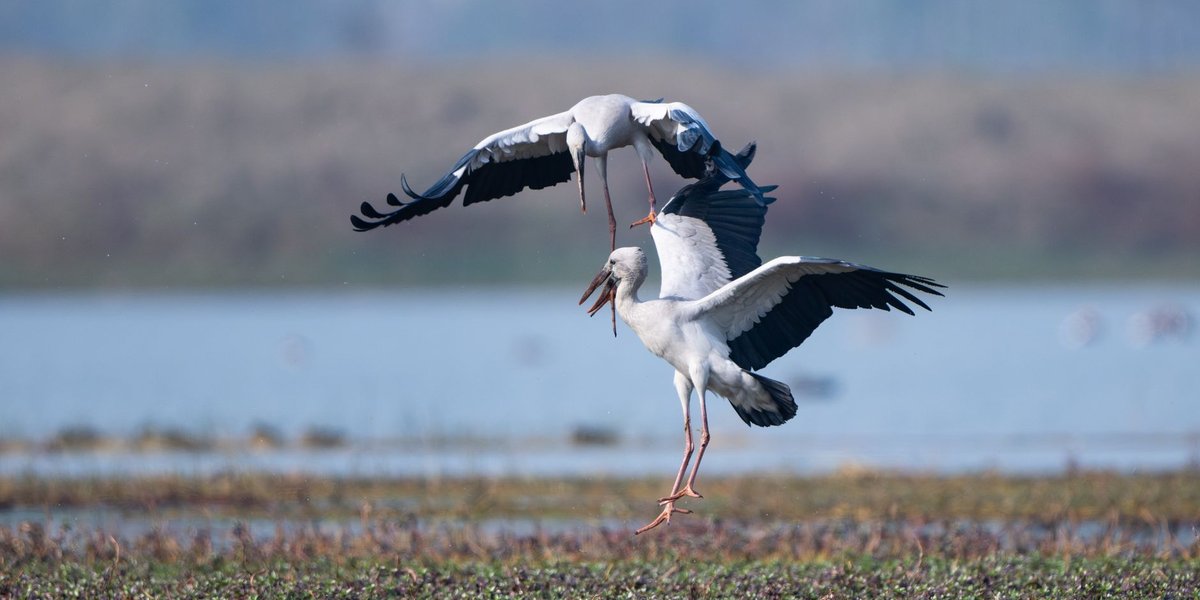
White Stork — Once nearly gone from Belgium as a breeding bird, storks have made a real comeback through reintroduction efforts, and pairs now nest on purpose-built platforms across the polders. A stork clattering its bill on a rooftop nest is one of the more theatrical sounds in Belgian birding.
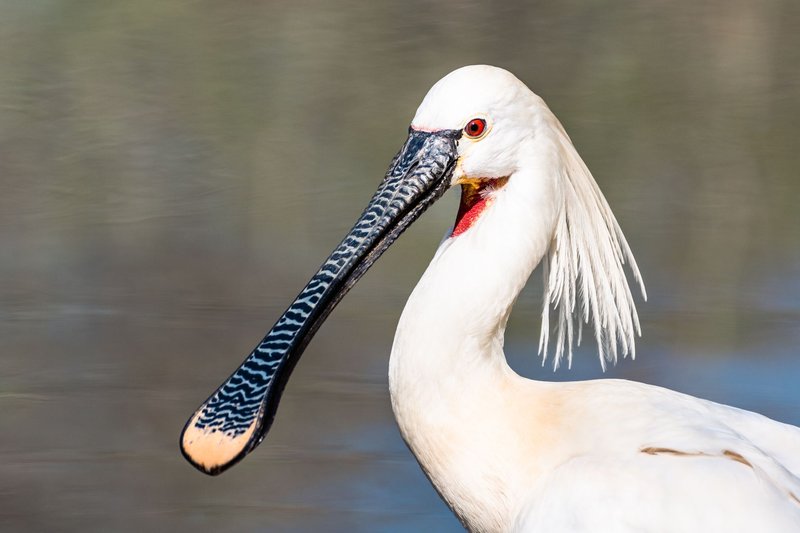
Eurasian Spoonbill — Feeds by sweeping its flattened bill side to side through shallow water, filtering out small fish and crustaceans by feel rather than sight. Numbers at coastal sites peak in late summer, before the birds head south for the winter.
Pied Avocet — Elegant, black-and-white, and impossible to mistake for anything else with that upturned bill. Avocets breed on the managed scrapes at coastal reserves, and a colony in full display is one of the better free shows in Belgian nature.
Little Egret — A slim white heron that was a genuine rarity in Belgium a few decades ago and is now an everyday wetland bird, a shift that tracks a broader northward spread across much of Western Europe.
Eurasian Oystercatcher — Loud, orange-billed, and impossible to ignore on a mudflat at low tide. The bill shape is a specialized tool — some individuals hammer mussels open, others stab and twist to sever the muscle, and they tend to specialize in one technique for life.
Winter visitors and passage migrants
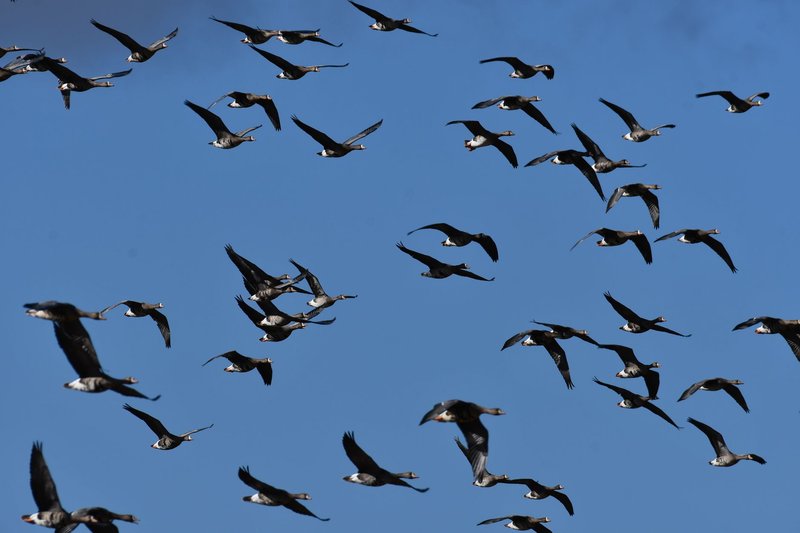
Belgium in winter looks emptier than Belgium in summer, unless you know where to point your binoculars. The coast and polders fill up with birds that spent the summer in the Arctic.
Pink-footed Goose — Breeds on Svalbard and winters on Belgian and Dutch coastal marshes and fertilized farmland, feeding by day on grass, potato leftovers, and sugar beet tops turned up by the harvest. Look for the short pink bill and pink legs against the darker geese it flocks with.
Greater White-fronted Goose — Named for the white patch at the base of the bill, these arrive from Arctic Russia in numbers through late autumn and often mix into the same feeding flocks as Pink-footed Geese, so telling the two apart is half the fun.
Common Crane — Not a breeding bird here, but a genuine autumn spectacle. Flocks pass over the High Fens on migration in a wavering V, calling with a bugling note that carries for kilometers before you ever see the birds themselves.
Dark-bellied Brent Goose — Small, dark, and gregarious, wintering in tight flocks on coastal grassland and estuary mud. Belgium is a minor stop for this population compared to the Netherlands and southeast England, but flocks are reliable at coastal sites from November through February.
Ardennes and High Fens specialists
Head south and the birding changes completely. The High Fens plateau, Belgium’s largest nature reserve, is cold, wet, upland moor bordered by beech and spruce forest — closer in feel to the Eifel than to anything on the coast. This is where you find the species that need genuine wilderness, not just green space.
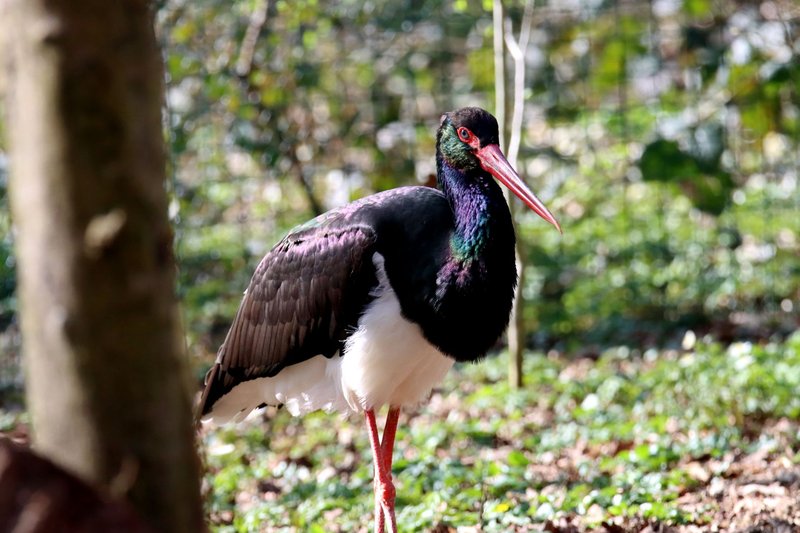
Black Stork — The White Stork’s shy, forest-dwelling relative, nesting deep in Ardennes woodland well away from people and hunting fish and amphibians in quiet streams. Villages like Bohan and Botassart, along the Semois valley, are among the more reliable spots to catch one.
Common Raven — Recolonized the Ardennes after decades of absence, and now a fixture of the forested valleys around the same Semois villages. The croaking call carries a long way, and ravens here perform the same aerial tumbling displays seen anywhere else in their range.
White-throated Dipper — A songbird that walks underwater against the current, hunting insect larvae on the stony beds of fast Ardennes streams. Watch for the white breast bobbing on a midstream rock before the bird disappears under the surface entirely.
Eurasian Goshawk — A forest hawk built for speed through trees rather than open-sky soaring, and one of the apex predators of the Ardennes woodland, capable of taking prey as large as a hare.
Red Kite — Fork-tailed, russet, and increasingly common over Ardennes farmland and forest edge, often seen riding thermals with barely a wingbeat while scanning for carrion and small prey below.
Eurasian Pygmy Owl — Europe’s smallest owl, barely bigger than a sparrow, breeding in the conifer stands of the High Fens and hunting small birds by day as often as at night — unusual for an owl.
Red-backed Shrike — A small predator with an outsized reputation: it impales prey — large insects, sometimes small lizards or rodents — on thorns and barbed wire, building a stockpile that gives the species its old nickname, “butcher bird.”
Best places to bird watch in Belgium
If you only have time for two stops, make them these.
Zwin Nature Park, near Knokke-Heist on the coast, is the country’s premier coastal reserve — tidal mudflats, salt marsh, and managed scrapes that draw storks, avocets, spoonbills, and a rotating cast of waders depending on the season. It’s also one of the more accessible reserves for anyone who isn’t hauling a scope through mud, with hides and walking trails built for casual visitors as well as serious birders.
The High Fens (Hautes Fagnes / Hohes Venn), straddling the border with Germany near Eupen, is where you go for the Ardennes specialists — raven, black stork, goshawk, and the owls and shrikes of the conifer edges. Bring layers regardless of season; the plateau generates its own weather.
Bohan and Botassart, small villages in the Semois river valley in the far south, punch well above their size for raven, black stork, and dipper, thanks to the combination of forested slopes and a fast, clean river running through the valley floor.
A rough seasonal calendar
- Winter (Dec–Feb): Pink-footed and White-fronted Geese, Brent Goose, wintering waders on the coast
- Spring (Mar–May): Breeding activity peaks — woodpeckers drumming, storks back on nest platforms, avocets displaying
- Summer (Jun–Aug): Spoonbill numbers build toward their August–September peak; Ardennes specialists are on breeding territory and most vocal early morning
- Autumn (Sep–Nov): Crane migration overhead, spoonbills departing south, geese arriving from the Arctic
Belgium won’t out-species a rainforest, and it isn’t trying to. What it offers instead is density and access — three distinct ecosystems close enough together that a coastal morning with spoonbills and avocets and an afternoon with black storks and ravens in Ardennes forest is a genuinely realistic day trip, not a fantasy one. Start with the Common Kestrel hovering over the nearest motorway verge. Everything on this list is a short drive from wherever you’re standing.