
Table of Contents
- Why Manganese Compounds Aren’t All the Same
- Oxidation States: The Thing That Explains Everything Else
- The Compounds You’ll Actually Run Into
- Where Manganese Compounds Show Up in the World
- Industrial Manganese vs. the Manganese in Your Multivitamin
- Is Manganese Dangerous? What the Data Actually Says
- The Short Version
Why Manganese Compounds Aren’t All the Same
Say “manganese compound” to a chemist and they’ll ask which one, because the answer changes everything. Manganese dioxide is a black, inert powder you’d find inside a AA battery. Potassium permanganate is a deep purple crystal that can set paper on fire if you’re careless with glycerin. Manganese sulfate is a pale pink salt farmers spray on soybean fields. Same metal, wildly different substance — the element itself is almost a footnote next to what it’s bonded to.
That range is also why manganese is hard to write about well. Most sources pick one lane: government toxicology profiles cover the health risks in dense regulatory language, encyclopedia entries list compounds without explaining why they behave so differently, and industrial pages skip the safety questions entirely. This piece connects those lanes — the chemistry that makes each compound useful, the industries that depend on it, and what the exposure data actually means for a normal person.
Oxidation States: The Thing That Explains Everything Else
Manganese’s personality trait, chemically speaking, is that it’s comfortable in an unusual number of oxidation states — the technical term for how many electrons an atom has effectively lost in a compound. Iron mostly sticks to +2 and +3. Manganese ranges from -3 to +7, and the states that show up constantly in the real world are +2, +4, and +7.
Here’s why that range matters practically: oxidation state determines color, reactivity, and solubility almost by itself. Mn(II) compounds — manganese in the +2 state — are typically pale pink or colorless and dissolve easily in water, which is why they show up in fertilizers and supplements. Mn(IV), as in manganese dioxide, is a stable black solid that doesn’t dissolve, which makes it useful as an inert electrode material. Mn(VII), the state in potassium permanganate, is a powerful oxidizer — it wants those extra electrons back badly enough to rip them from organic material, which is exactly why it’s used to disinfect water and treat certain skin conditions.

Once you know a compound’s oxidation state, you can usually predict what it’s used for before you even look it up.
The Compounds You’ll Actually Run Into
Manganese forms dozens of compounds, but a handful account for nearly everything you’d encounter outside a specialized lab. Here’s the shortlist, organized by the state that defines them:
| Compound | Formula | Oxidation State | Appearance | Primary Use |
|---|---|---|---|---|
| Manganese(II) chloride | MnCl₂ | +2 | Pink, water-soluble crystals | Feed additive, catalyst precursor |
| Manganese(II) sulfate | MnSO₄ | +2 | Pale pink powder | Fertilizer, dietary supplements |
| Manganese(II) carbonate | MnCO₃ | +2 | Off-white/pink solid | Precursor for other Mn compounds, pigment base |
| Manganese dioxide | MnO₂ | +4 | Black, insoluble powder | Battery cathodes, glass decolorizing, oxidation catalyst |
| Potassium permanganate | KMnO₄ | +7 | Dark purple crystals | Water treatment, disinfectant, organic oxidations |
| Methylcyclopentadienyl manganese tricarbonyl | MMT | 0 (organometallic) | Amber liquid | Gasoline anti-knock additive |
A pattern worth noticing: the low oxidation states (+2) tend to be soluble, biologically relevant, and relatively mild. The high ones (+4 and +7) tend to be solid or reactive, and industrially rather than nutritionally important. That split roughly maps onto the two audiences searching for this topic — the +2 compounds are what shows up in nutrition and agriculture, the +4 and +7 compounds are what shows up in manufacturing and water treatment.
Where Manganese Compounds Show Up in the World
Manganese appears in multiple industrial applications, but one dominates by far.
Steel, overwhelmingly. This is the one people underestimate. Steelmaking consumes 85 to 90 percent of manganese demand in the United States, according to USGS mineral commodity data — manganese acts as both a purifying agent that strips sulfur and oxygen from molten iron and an alloying element that adds hardness and wear resistance. Every ton of steel uses roughly 6 to 9 kilograms of it. There’s no substitute at that scale; without manganese, modern steel production doesn’t work.
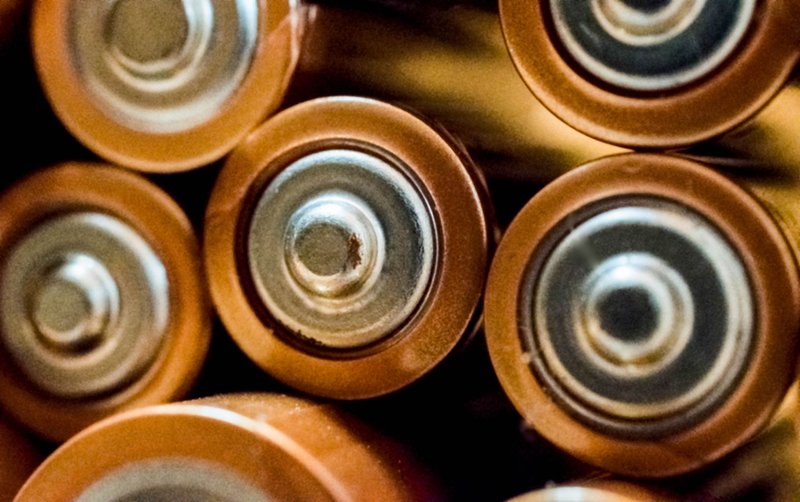
Batteries — old and new. Manganese dioxide has been in the cathode of alkaline and zinc-carbon batteries for decades because it’s cheap, stable, and electrochemically active. The newer story is lithium-ion. In NMC (nickel-manganese-cobalt) cathodes, the manganese component doesn’t do much for energy density on its own — nickel handles that — but it stabilizes the crystal structure and improves thermal safety, which matters a lot in an EV pack that needs to not catch fire. Manufacturers tune the nickel-manganese-cobalt ratio depending on whether they’re optimizing for range or for safety and cost, and manganese-rich formulations are gaining ground specifically because cobalt is expensive and ethically fraught to source.
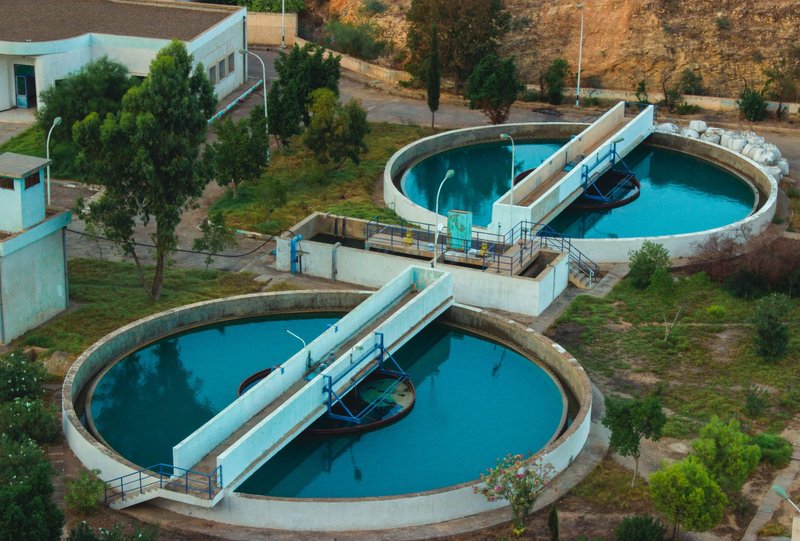
Water treatment. Potassium permanganate’s aggressive oxidizing power is exactly what water treatment plants want — it breaks down organic contaminants, controls taste and odor issues, and removes dissolved iron and manganese from the water supply itself (a nice bit of irony). It’s also a longtime staple of aquarium and pond treatment for the same oxidizing reason.
Pigments and glass. Manganese oxides have colored glazes and glass since antiquity — Roman glassmakers used manganese compounds to counteract the greenish tint that iron impurities gave their glass, a trick still used today. Depending on concentration and firing conditions, manganese pigments swing from violet to brown to black.
Agriculture. Manganese is an essential micronutrient for plants — it’s a cofactor in photosynthesis — and manganese-deficient soil shows up as yellowing between leaf veins. Manganese sulfate is the standard correction, applied as a soil amendment or foliar spray on crops like soybeans and citrus that are especially prone to deficiency.
Industrial Manganese vs. the Manganese in Your Multivitamin
Worth separating clearly, because the two get conflated constantly: manganese is also an essential dietary trace mineral, and the compound doing that job — manganese sulfate or manganese gluconate, both Mn(II) — has nothing chemically in common with the manganese dioxide in a battery casing or the permanganate in a pool treatment chemical.
Your body needs small amounts of manganese for bone formation, wound healing, and enzyme function, and you get it from whole grains, nuts, leafy greens, and tea. A typical adult multivitamin contains somewhere around 1 to 2 milligrams. That’s a fundamentally different exposure category from industrial or occupational manganese contact, which is where the toxicology concerns below actually apply. Confusing “manganese is an essential nutrient” with “manganese is safe in any form and any amount” is the single most common misunderstanding about this element.
Is Manganese Dangerous? What the Data Actually Says
Short answer: yes, at the exposure levels found in some occupational and industrial settings — not at the levels a normal person encounters through diet, supplements, or drinking water.
The concern is neurological. Chronic, high-level manganese exposure — mainly through inhaling dust or fumes, historically documented in miners, welders, and battery and ferroalloy plant workers — has been linked to a Parkinson’s-like condition sometimes called manganism, involving tremor, rigidity, and slowed movement. According to the CDC’s ATSDR ToxFAQs on manganese, these effects show up with sustained inhalation exposure, not incidental contact.
Regulators have set numbers around this. OSHA’s workplace ceiling limit is 5 mg/m³ in air. The EPA has set a lifetime drinking water guideline of 0.3 mg/L for manganese, well above what’s typically found in municipal water. For context, dietary intake from food alone runs about 2 to 5 milligrams a day for most adults, and the tolerable upper intake level set by the Institute of Medicine is 11 mg/day — the ATSDR’s own oral exposure guidance is built around that figure.
There’s also a narrower, more technical concern worth knowing about if you follow battery news: manganese dissolving out of lithium-ion cathode material over repeated charge cycles is a documented driver of capacity fade in those batteries, an electrochemistry problem rather than a human health one, but it’s part of why battery manufacturers are so focused on coatings and electrolyte additives that keep manganese locked in the cathode structure.
None of this means treat manganese compounds casually — potassium permanganate in particular is corrosive and a fire hazard in concentrated form, and industrial manganese dust exposure is a genuine occupational health issue with real regulatory oversight. It does mean the dietary and consumer-product exposure most people actually have is not the same risk category as the one covered in the regulatory literature.
The Short Version
Manganese compounds span an unusually wide range for one element — pale pink nutritional salts at one end, deep purple industrial oxidizers at the other, with a black battery-grade oxide in between. The oxidation state is the variable that predicts almost everything: reactivity, color, solubility, and use case. Steel consumes the overwhelming majority of manganese produced worldwide, batteries are the fastest-growing use case as EV demand climbs, and the health risks that show up in toxicology profiles are almost entirely tied to occupational inhalation exposure rather than the trace amounts in food, water, or supplements. Knowing which compound and which oxidation state you’re dealing with tells you which of those stories actually applies.