Table of Contents
- TLDR
- Manganese: The Mineral Gabon Is Built On
- Iron Ore: The Next Bet
- Gold and Diamonds: Old Deposits, New Interest
- Niobium, Rare Earths, and Uranium at Mabounié
- Gabon’s Minerals at a Glance
- Why Gabon Is About to Stop Exporting Raw Manganese
- Mining’s Growing Slice of the Economy
TLDR
Gabon sits on roughly a quarter of the world’s manganese reserves and is the planet’s second-largest producer, mostly from a single mine at Moanda. Beyond manganese, the country has 2+ billion tonnes of iron ore in development, 40+ tonnes of proven gold, and one of the world’s more significant untapped niobium and rare earth deposits at Mabounié. Mining still trails oil in Gabon’s economy, contributing around 6% of GDP, but the government wants that above 25% by 2030 — and starting in 2029, it plans to stop letting raw manganese ore leave the country at all.
Manganese: The Mineral Gabon Is Built On
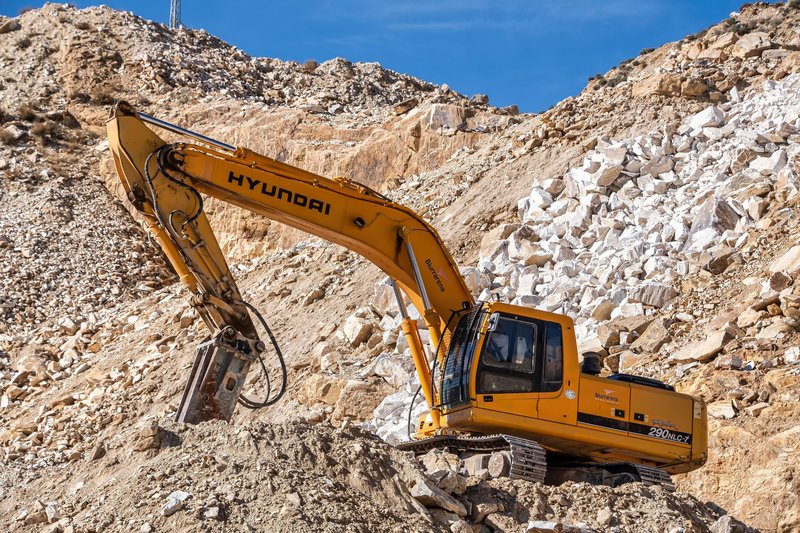
Gabon produced 4.6 million metric tons of manganese in 2024, making it the world’s second-largest producer behind South Africa. That single figure understates how concentrated the industry is: nearly all of it comes out of the Moanda mine in Haut-Ogooué province, run by Comilog, a subsidiary of the French mining group Eramet. Moanda isn’t just Gabon’s biggest mine — it’s the largest manganese-producing mine on Earth.
The reserve numbers explain why manganese dominates every conversation about Gabon’s economy. The country holds something like a quarter of global manganese reserves, a scale most manganese-producing nations can’t touch outside of South Africa. That matters more now than it did a decade ago, because manganese isn’t just a steel-hardening additive anymore. It’s become a battery metal: manganese-rich lithium-ion cathodes and sodium-ion chemistries are emerging as alternatives to cobalt- and nickel-heavy designs, and the International Energy Agency’s 2025 critical minerals outlook warns that announced high-purity manganese sulfate projects will cover only about 55% of expected 2035 demand. Gabon’s ore is sitting directly in the path of that gap.
Iron Ore: The Next Bet
If manganese is the mineral Gabon already has, iron ore is the one it’s trying to build. The country’s iron ore reserves run past 2 billion tonnes, most of it still in the ground rather than in a mine. The project furthest along is Baniaka, in southeastern Gabon, developed through a partnership between Australia’s Genmin and China’s Sinohydro. Baniaka is targeting an initial 5 million tonnes of annual output, with plans to double that to 10 million tonnes as infrastructure — rail and port capacity, mainly — catches up.
That infrastructure gap is the real story with Gabonese iron ore. The deposits are large and reasonably well understood; what’s missing is the logistics to move ore from inland provinces to a port at a competitive cost. Every iron ore project in Gabon is, in some sense, also a railway project.
Gold and Diamonds: Old Deposits, New Interest
Gold has been mined in Gabon for decades, mostly on a small, alluvial scale rather than through large industrial operations. Proven reserves sit above 40 tonnes, concentrated in the northeast near the Ivindo region, and production has stayed modest compared to manganese or the iron ore pipeline — output was around 2 metric tons in 2021, most of it artisanal or small-scale rather than corporate.
Diamonds tell a similar story: present, documented, but never developed into a major export category. Stones have turned up in the Makongonio area in the south and, less frequently, around Mitzic in the north. Neither gold nor diamonds anchor Gabon’s mining identity the way manganese does, but both sit on the list of reasons international mining investors keep looking at the country.
Niobium, Rare Earths, and Uranium at Mabounié
The most underrated deposit in Gabon isn’t manganese — it’s Mabounié, a polymetallic site in Moyen-Ogooué province that hasn’t been mined yet but could reshape the country’s mineral profile once it is. Certified resources there include roughly 2.3 million tonnes of niobium oxide at 1.2% grade and about 2 million tonnes of rare earth oxides at 1% grade, alongside smaller concentrations of tantalum and uranium.
If Mabounié gets built out as planned, projected annual output of around 14,500 tonnes of niobium and 14,300 tonnes of rare earth elements would put Gabon in position to become the world’s second-largest niobium producer after Brazil, and one of the largest rare earth sources outside China. Gabon also carries roughly 61,000 tonnes of rare earth reserves overall — about 4% of the global total, small next to China’s dominance but meaningful given how few alternative suppliers exist. None of this is running yet. It’s the deposit worth watching, not the one currently generating revenue.
Gabon’s Minerals at a Glance
| Mineral | Reserve Size | Status | Key Site/Operator |
|---|---|---|---|
| Manganese | ~25% of world reserves | Producing (4.6M tonnes, 2024) | Moanda mine, Comilog/Eramet |
| Iron ore | 2B+ tonnes | Early development | Baniaka, Genmin/Sinohydro |
| Gold | 40+ tonnes proven | Small-scale/artisanal | Ivindo region |
| Niobium | 2.3M tonnes Nb₂O₅ | Undeveloped | Mabounié deposit |
| Rare earths | ~61,000 tonnes (4% global) | Undeveloped | Mabounié deposit |
| Diamonds | Undocumented at scale | Sporadic/artisanal | Makongonio, Mitzic |
| Uranium | Present, low-grade (0.03%) | Undeveloped | Mabounié deposit |
Why Gabon Is About to Stop Exporting Raw Manganese
In late May 2025, Gabon’s government announced it will ban exports of raw, unprocessed manganese ore starting January 1, 2029. The logic is straightforward: Gabon currently ships most of its manganese out as raw ore, letting other countries capture the processing margin, the jobs, and the tax revenue that come from turning ore into refined manganese products. Under the new policy, mining companies get roughly three years to build local processing capacity or lose access to export markets for unprocessed material. A public-private fund is planned to help finance that transition.
The stakes for Eramet, which runs Moanda through Comilog, are high enough that the company’s shares dropped as much as 5.7% on the announcement, before it stated it would work with the government on the transition. It’s a bet that fits a pattern playing out across resource-rich African nations — Indonesia did something similar with nickel — but Gabon is making the wager with a mineral where it already controls a quarter of world reserves and roughly a fifth of world supply, which gives it more leverage than most.
Mining’s Growing Slice of the Economy
Oil still runs Gabon’s economy, but it’s aging out. Oil production is projected to decline through 2025 and 2026 as fields mature, while mining — largely manganese, with iron ore and Mabounié as the medium-term upside — is one of the few sectors expected to keep growing. The IMF puts Gabon’s real GDP growth at roughly 2.5% for 2025, with non-oil growth leaning on mining, timber, palm oil, and construction to offset the drop in petroleum output.
Mining currently contributes around 6% of Gabon’s GDP. The government’s stated target is to push that above 25% by 2030, and beyond 30% by the mid-2030s — an aggressive climb that depends on Baniaka reaching full iron ore output, Mabounié actually breaking ground, and the manganese processing buildout succeeding on schedule. None of those are guaranteed. But the direction is clear: Gabon is trying to stop being an oil country with a manganese mine attached, and become a diversified minerals economy where manganese is just the anchor tenant. Detailed reserve and production data for the country is tracked by the USGS National Minerals Information Center, which remains the most current public source for anyone tracking the numbers past this snapshot.