Search for scientists born in Papua New Guinea and you get a mess. Wikipedia lists maybe three or four names in a thin category page. A “Pacific Islander scientists” roundup buries the PNG entries among Samoans, Fijians, and Hawaiians. Nobody has put the country’s own researchers in one place.
So here they are. These are people who were born in Papua New Guinea — not researchers who flew in to study its birds or its languages, but Papua New Guineans who became scientists. Several of them are the first person from the country to do what they do. A few work on problems you can only really understand if you grew up there: a turtle that exists in one river system, a cancer that kills more PNG women than any other, a swamp that rewrote the history of farming.
Table of Contents
- The research landscape in PNG
- Biology and conservation
- Paul Igag — ornithology
- Yolarnie Amepou — turtle conservation
- Jane Mogina — ethnobiology
- Medicine and health research
- Pamela Toliman — cervical cancer research
- Chemistry
- Yalinu Poya — catalysis
- Archaeology
- Herman Mandui — Kuk Swamp
- Food science
- Joel Waramboi — food technology
- Why this list is short — and getting longer
The research landscape in PNG
Papua New Guinea is one of the most biologically and culturally diverse countries on Earth — somewhere around 850 languages, and species turning up that science hasn’t catalogued yet. It is also a country where, for most of the twentieth century, the people doing the research were foreigners. The University of Papua New Guinea didn’t open until 1965. Building a homegrown scientific community from there meant doing it in one generation.
That history shapes who’s on this list. A lot of these researchers trained partly abroad — Australia, the UK, New Zealand — then came back to work on questions that matter at home. Many run the institutions that didn’t exist when they were students: the PNG Institute of Medical Research, the Research and Conservation Foundation, the National Museum. They are scientists, and they are also founders.
Biology and conservation
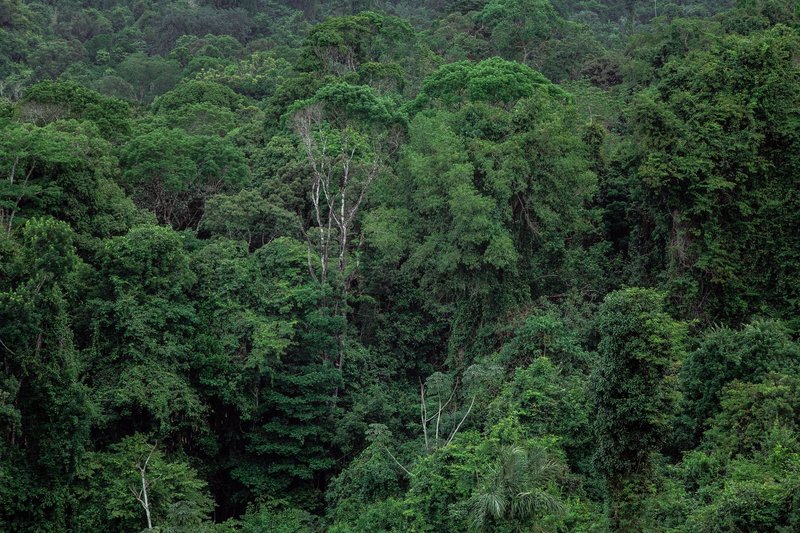
Given what PNG is — a hotspot of birds, reptiles, plants, and insects found nowhere else — it makes sense that the country’s strongest scientific bench is in field biology. That endemism doesn’t stop at the border, either: PNG shares the island of New Guinea with Indonesia, whose western half holds much of the same evolutionary story, alongside a wider archipelago full of animals found nowhere else on Earth.
Paul Igag — ornithology
Paul Igag is one of PNG’s leading homegrown bird scientists. His doctoral work, done through the Australian National University, focused on the large parrots and hornbills of the country’s lowland forests — the Pesquet’s parrot, the Eclectus, the Papuan hornbill. These are birds people hunt for feathers and for food, which makes their breeding biology a conservation question, not just an academic one.
What sets his work apart is that it answered a basic, unglamorous question almost nobody had: how often do these birds actually breed, and how many young survive? You can’t write a hunting management plan without those numbers, and before his fieldwork in the forests of Central Province, they didn’t exist. He has spent much of his career with PNG’s Research and Conservation Foundation, the kind of national institution that puts local scientists in charge of local ecosystems.
Yolarnie Amepou — turtle conservation
Yolarnie Amepou runs the Piku Biodiversity Network, built around one animal: the pig-nosed turtle, called piku in the Kikori region where it lives. It’s a strange creature — the only freshwater turtle with flippers instead of webbed feet — and its eggs are harvested heavily for food along the Kikori River in Gulf Province.
Amepou’s approach is the interesting part. Rather than fencing communities out of a resource they’ve used forever, the network works with riverside villages to monitor nests and manage the harvest so the turtle survives. She has talked openly about being a woman leading conservation science in a field, and a country, where that was not the default. The project has become a model for community-run conservation in PNG precisely because it’s run by someone from the place, not parachuted in.
Jane Mogina — ethnobiology
Jane Mogina works at the seam between botany and culture — ethnobiology, the study of how people use and understand the plants around them. In a country with 850 languages, that’s not a niche specialty. It’s a way of capturing knowledge that lives in those languages and nowhere else, and that disappears when the last speaker does.
Her research has looked at plant use in PNG communities and the ecological knowledge embedded in everyday practice — which plants treat which ailments, which are planted, which are left wild. She has also been a prominent voice for PNG science in regional and conservation circles, the kind of scientist who ends up on advisory boards because she can speak for both the lab and the village.
Medicine and health research
PNG carries a heavy disease burden — malaria, tuberculosis, and one of the highest rates of cervical cancer in the world. The PNG Institute of Medical Research, founded in 1968, is where a lot of the country’s medical scientists have made their names.
Pamela Toliman — cervical cancer research
Pamela Toliman is a medical researcher whose work targets the disease that kills more women in PNG than any other cancer: cervical cancer, driven by human papillomavirus. The problem in PNG isn’t only the virus. It’s that standard screening — a Pap smear read by a pathologist, with the patient coming back for results — barely functions when there are few labs, few specialists, and patients who travel a day to reach a clinic.
Toliman’s research, much of it through the PNG Institute of Medical Research and the University of New South Wales, tested a different model: self-collected samples, point-of-care testing for HPV, and treatment in the same visit. Screen and treat in one trip, because a second trip often never happens. That’s not a tweak to a Western protocol — it’s a screening strategy designed around how PNG actually works, and it’s the kind of research that changes how many women survive.
Chemistry
Yalinu Poya — catalysis
Yalinu Poya became something of a national figure as one of the first Papua New Guineans to earn a PhD in chemistry. She did it at the University of Glasgow, working on catalysis — specifically catalysts for ammonia synthesis, the chemistry behind the fertilizer that feeds a large share of the world’s population.
Her win in a national science image competition in the UK put her in the news back home, and she leaned into it, becoming a vocal advocate for getting more PNG students — especially girls — into the hard sciences. That advocacy matters in context: when the brief for “first female scientist from Papua New Guinea” is still a live search query, visible role models do real work. Poya is one of them, and she has been clear that she wants her degree to be the first of many, not a one-off.
Archaeology
Herman Mandui — Kuk Swamp
Herman Mandui is a Papua New Guinean archaeologist long associated with the country’s National Museum and Art Gallery, and his name is tied to one of the most important sites in the human story: Kuk Swamp, in the Western Highlands.
Kuk matters because of what was found in the mud there — drainage ditches and planting beds showing that people in the PNG highlands were farming around 7,000 to 10,000 years ago. That makes it one of the few places on the planet where agriculture was invented independently, alongside the Middle East and Mesoamerica. Mandui co-authored research on the site and helped steward its recognition as a UNESCO World Heritage site in 2008. The significance is worth sitting with: bananas and taro were domesticated in the highlands of his country before much of the world had figured out farming at all.
Food science
Joel Waramboi — food technology
Joel Waramboi works on the science of the foods PNG actually eats. His research has centered on sweet potato — kaukau, the staple carbohydrate across much of the highlands — and on cooking bananas, looking at the starch chemistry, processing, and flour potential of crops that feed millions but get little lab attention.
It’s a deeply practical kind of science. PNG grows enormous quantities of sweet potato and loses a lot of it to spoilage and a lack of processing options. Turning a perishable root into a stable flour is the difference between a crop that rots after harvest and one a family can store or sell. Waramboi’s doctoral work, done through Queensland University of Technology, put rigorous food chemistry behind crops that the global research machine mostly ignores because they aren’t wheat, rice, or maize.
Why this list is short — and getting longer
Eight names isn’t many for a country of over ten million people, and that’s the honest takeaway. The pipeline is young. A national scientific community that started essentially from zero in the 1960s is still in its early generations, and the people above are, in a real sense, the founders of it.
But notice the pattern. Almost everyone here works on something that is specifically, unavoidably Papua New Guinean — a turtle in one river, a swamp that rewrote prehistory, a cancer screening method built for a country with few clinics, a root crop the rest of the world overlooks. That’s the argument for why PNG needs its own scientists and not just visiting ones. The questions that matter most here are the ones you have to live with to see clearly. The next list will be longer, and a lot of the people on it are in a classroom in Port Moresby or Goroka right now.