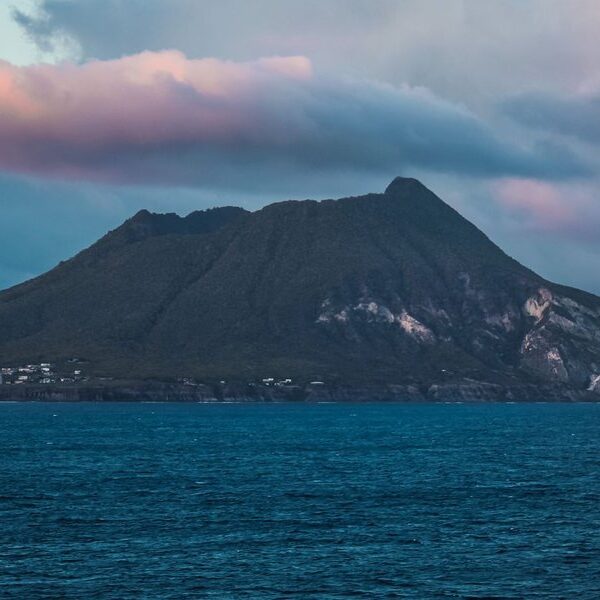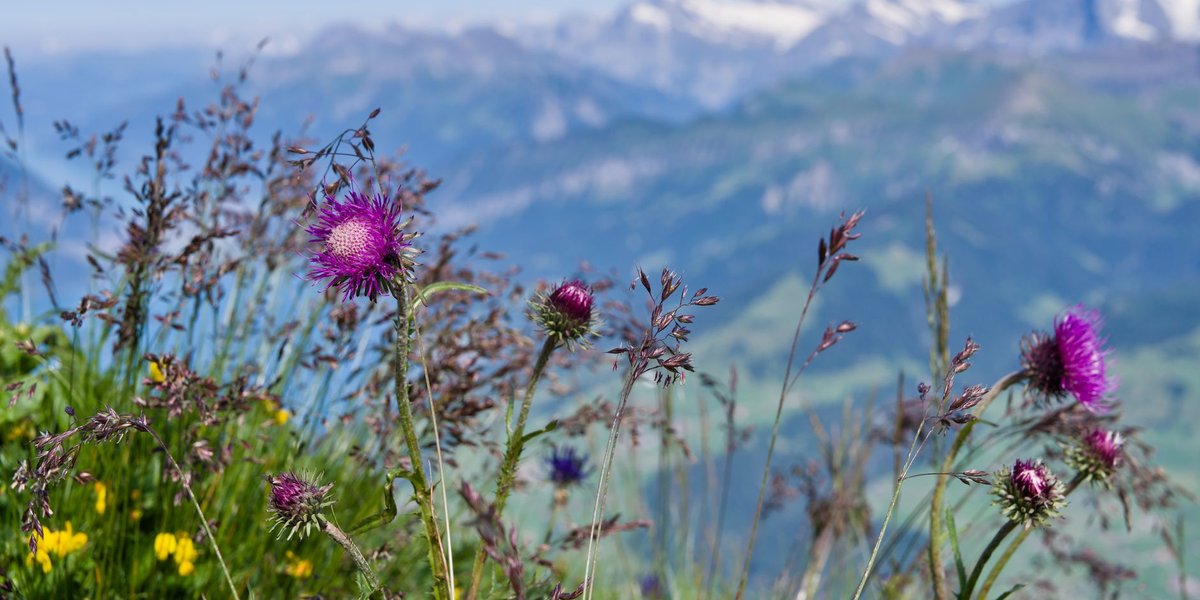
Iraq holds 174 plant taxa that grow nowhere else on Earth — 153 of them full species, the rest subspecies and varieties. That’s roughly 5.3% of the country’s entire flora, and almost all of it is packed into one corner: the folded limestone mountains of Iraqi Kurdistan, where the Zagros range climbs toward the Turkish and Iranian borders.
Most writing on the subject lives in journal PDFs and reference catalogs, dense with family counts and elevation tables. The plants themselves — irises the color of bruised wine, tulips that open above the snowline — barely get a photograph. This is the version with the photographs, the numbers, and the reason a handful of these species may not survive the century.
Table of Contents
- What “endemic” actually means here
- Why Kurdistan is the hotspot
- The numbers: families and totals
- Six flagship endemic species
- What’s putting them at risk
- Where to see them
What “endemic” actually means here
An endemic species is one whose entire natural range sits inside a single defined area — in this case, the political borders of Iraq. Not “rare in Iraq.” Not “mostly found in Iraq.” Found only in Iraq, full stop. If a plant grows on both sides of the Iran–Iraq border, it’s a regional endemic of the Zagros, but it doesn’t make Iraq’s national list.
That distinction matters because Iraq sits at a botanical crossroads. Its flora pulls from three biogeographic regions: the Irano-Turanian highlands, the Mediterranean basin, and the Saharo-Arabian deserts. Plenty of Iraqi plants are shared with Iran, Turkey, or Syria. The genuinely endemic ones are the taxa that got isolated long enough — on a single mountain massif, in one river gorge — to diverge into something distinct and then stay put.
So when a casual plant-ID site lists “common plants of Iraq,” it’s usually cataloging widespread weeds and crops. True endemics are a much smaller, much choosier club.
Why Kurdistan is the hotspot
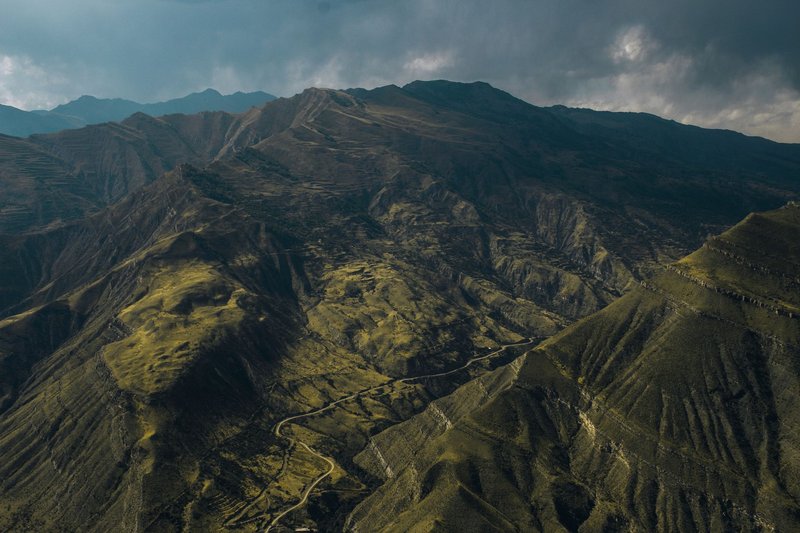
Look at a distribution map of Iraqi endemics and they cluster like iron filings around the northeast. The Zagros mountains of Iraqi Kurdistan — running through Amadiyah, Rowanduz, Sulaymaniyah, and the Jebel Avroman ridge along the Iranian frontier — concentrate nearly the whole endemic flora in a fraction of the country’s area.
Three things make a mountain range an endemism engine, and Kurdistan has all three.
Topographic variety. Within a few horizontal kilometers you can climb from oak woodland at 1,000 meters to alpine meadow above 2,500. Each band is its own climate, and isolated pockets — a north-facing cliff, a single high valley — act like islands where populations evolve in private.
A deep climatic history. During Pleistocene glacial cycles, the high Zagros served as a refuge where cold-adapted plants rode out the swings. Lineages survived here that vanished from flatter ground, and some of them speciated in place.
Limestone and gypsum bedrock. Calcareous and gypsum soils are chemically demanding, and a number of Iraqi endemics are specialists that tolerate exactly those substrates and little else. Narrow the soil, narrow the range.
The result is a flora where the most botanically interesting elevation band sits between roughly 1,000 and 1,700 meters — high enough to escape the lowland heat, low enough to hold real plant diversity.
The numbers: families and totals
The endemics aren’t spread evenly across the plant kingdom. A few families dominate the list, and they’re the same families that tend to radiate across Irano-Turanian mountains everywhere.
| Family | Why it dominates here |
|---|---|
| Asteraceae (daisies) | The largest contributor; cushion and rosette forms thrive on exposed slopes |
| Papilionaceae / Fabaceae (legumes) | Spiny Astragalus shrubs are a signature of dry Zagros hillsides |
| Boraginaceae (borages) | Rocky, calcareous niches suit them; many are tight local specialists |
| Apiaceae (carrots/umbellifers) | Deep-rooted perennials adapted to seasonal drought |
Astragalus alone — the milkvetch genus, those low thorny mounds you see studding the slopes — accounts for a striking share of the legume endemics. It’s one of the largest plant genera on the planet, and arid Asian mountains are its headquarters.
Set against neighbors, Iraq’s 5.3% endemicity is modest: Iran and Turkey both run far higher, because they own more of the Zagros and Anatolian highlands. But the figure is real and concentrated, and for a country dominated by desert and floodplain, having 174 unique taxa in one mountain corner is no small thing. The IUCN Red List has assessed only a fraction of them, which is part of the problem — you can’t protect what you haven’t evaluated.
Six flagship endemic species
Numbers don’t make you care. These do. Six species that exist on Earth only because a particular Iraqi mountain exists.
Iris zetterlundii
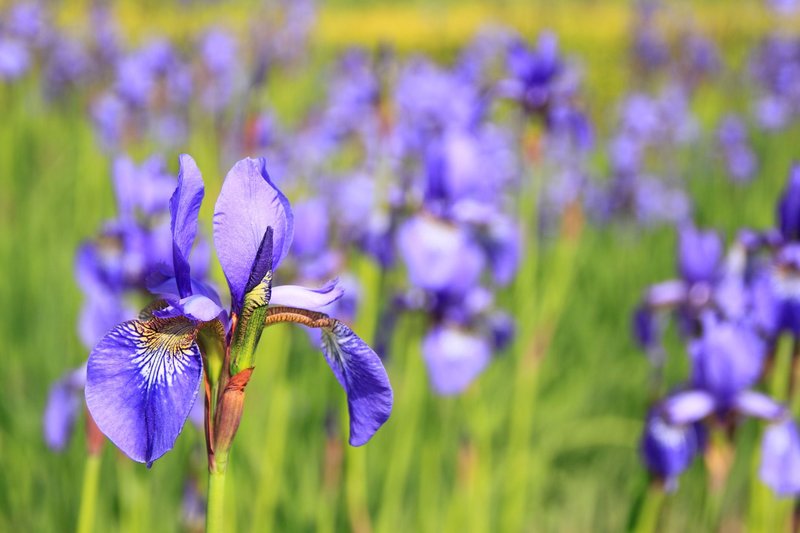
A bulbous iris from the Kurdistan highlands, named for the Swedish bulb specialist Arnold Zetterlund. Like its Juno relatives it sends up channelled leaves and short-stemmed flowers early in the season, surviving the long dry summer underground as a dormant bulb. It’s the kind of plant known to a handful of botanists and almost no one else — which is exactly why a single bad grazing year in its valley is a real threat.
Tulipa kurdica
The wild Kurdish tulip, and probably the most photogenic name on this list. It flowers red-to-scarlet on short stems in mountain grassland and rocky slopes as the snow pulls back in spring. Wild tulips like this one are the ancestral stock behind the garden tulip trade, which makes the wild populations both scientifically and horticulturally valuable — and vulnerable to collectors who dig bulbs straight out of the hillside.
Allium notabile
A wild onion endemic to the Iraqi mountains. Ornamental Allium species — the ones that throw up those purple drumstick flowerheads — are a major Irano-Turanian specialty, and Iraq has its own contributions to the genus. A. notabile occupies the same rocky calcareous ground as much of the endemic flora, flowering in early summer once the tulips and irises have finished.
Salvia ali-askaryi
A sage named for the Iraqi botanist Ali Al-Askary, part of the long tradition of local researchers documenting their own mountains. Like other Zagros sages it’s a tough perennial of dry, sunny slopes, aromatic and adapted to heat and stony soil. Mediterranean and Irano-Turanian Salvia species are a botanical specialty of the whole region, and the Iraqi endemics are a distinct slice of that diversity.
Euphorbia shehbaziana
A spurge described from Iraqi Kurdistan and named for botanist Shahina Ghazanfar’s collaborator Sherwan Sheikh. Euphorbia is another genus that radiates hard across arid mountains, and the endemic Iraqi species are typically modest perennials with the family’s signature milky latex and reduced, cup-like flower structures. Easy to walk past, impossible to replace.
Vitex iraquensis
The Iraqi chaste tree, a shrubby member of a genus better known from the Mediterranean. Its presence on the endemic list shows that not every Iraqi endemic is a high-alpine cushion plant — some are woody shrubs of warmer, lower ground, broadening the range of habitats the country’s unique flora occupies.
What’s putting them at risk
A plant with a one-mountain range has no margin. Lose that population and you lose the species globally. Several pressures are converging on exactly the valleys where Iraq’s endemics live.
Overgrazing. Free-ranging sheep and goat herds are the single biggest day-to-day pressure on Zagros slopes. Heavy grazing strips palatable perennials, compacts soil, and gives spiny unpalatable shrubs the advantage — which is one reason thorny Astragalus does relatively well while softer endemics retreat.
Climate change. Iraq is warming and drying faster than the global average, and mountain plants have nowhere to go but up. When your habitat is already near the summit, an upward shift in the climate band means your range shrinks to nothing. The UN Environment Programme flags Iraq as one of the most climate-vulnerable countries in the Middle East.
Conflict and access gaps. Decades of instability in northern Iraq slowed field botany, left land mines on some slopes, and made systematic conservation surveys hard to run. You can’t write a recovery plan for a species you can’t safely visit.
Bulb and seed collection. Charismatic geophytes — wild tulips, irises, alliums — are targets for ornamental collectors. Digging a few bulbs from a small population can do outsized damage.
The honest summary: most of these 174 taxa have never been formally assessed for extinction risk. The data gap is a threat, because unassessed species rarely make it into protected-area planning.
Where to see them
If you want to witness this flora rather than read about it, time and place are everything. The window is short.
When. Late March through May. The geophytes — tulips, irises, alliums — flower as the snow retreats, and the show moves uphill as spring climbs the mountains. By high summer most of the lowland color is gone and the action is confined to the upper slopes.
Where. The reliable districts are the ones the endemics map flags: the mountains around Amadiyah and Rowanduz, the Sulaymaniyah highlands, and Jebel Avroman along the Iranian border. Iraq’s flagship protected area, the Halgurd-Sakran National Park region near the Iranian frontier, covers some of the highest and most botanically rich ground in the country.
How to do it right. Photograph, don’t collect. Stay on existing tracks — and take local advice seriously in border zones, where access and safety still vary. A local guide isn’t just courtesy; in much of this terrain it’s the difference between a good day and a dangerous one.
These plants survived ice ages, droughts, and a couple of empires by hiding in mountains nobody could farm. Whether they survive the next hundred years depends largely on whether anyone bothers to count them, map them, and leave them alone — and on visitors who treat a wild Kurdish tulip as something to find, not something to take.