Table of Contents
- What “Symbiotic” Actually Means
- The Four Types of Symbiosis, In Plants
- Classic Pairings That Actually Work
- The Underground Network Nobody Talks About
- Beyond the Garden: Symbiosis in the Wild
- Compatibility Chart
- What NOT to Plant Together
- The Short Version
Corn doesn’t ask beans for help. It just happens to grow a stalk that’s exactly the trellis a pole bean needs, and the bean happens to fix nitrogen the corn is quietly starving for. Neither plant plans this. It’s a few million years of trial and error, condensed into a garden bed that works better than either plant alone.
That’s symbiosis: a close, sustained relationship between two different species where at least one of them benefits. Sometimes it’s a fair trade. Sometimes it’s a heist.
What “Symbiotic” Actually Means
Biologists split symbiosis into four categories, and gardeners usually only care about two of them — but knowing all four explains why some plant pairings help and others quietly sabotage each other.
Mutualism: both species benefit. Legumes and nitrogen-fixing bacteria, most flowering plants and their pollinators, corn and beans in the arrangement above.
Parasitism: one species benefits at direct cost to the other. Dodder, a leafless orange vine, wraps around a host plant and drains its sugars through modified roots called haustoria.
Commensalism: one species benefits, the other is unaffected. Epiphytic orchids growing on a tree’s bark aren’t stealing nutrients from the tree — they’re just using it as real estate.
Endosymbiosis: one organism lives inside the cells of another, permanently. This one is ancient and foundational — chloroplasts, the structures that let plants photosynthesize, were once free-living cyanobacteria that got absorbed into a host cell around 1.5 billion years ago and never left.
Companion planting guides almost always mean mutualism, but knowing the differences between symbiosis and parasitism matters — dodder and dwarf mistletoe are technically “symbiotic” too, and you don’t want them anywhere near your beds.
Classic Pairings That Actually Work
The Three Sisters
The oldest documented companion-planting system in North America, developed by Indigenous agricultural communities including the Haudenosaunee, plants corn, pole beans, and squash together in the same mound.
Corn goes in first and gets a head start on height. Once it’s about six inches tall, beans go in at its base and climb the stalk instead of needing a separate trellis. Squash goes around the perimeter, its broad leaves shading out weeds and its prickly stems discouraging raccoons and other climbers looking for a corn snack. The beans, meanwhile, host nitrogen-fixing bacteria in their root nodules that convert atmospheric nitrogen into a form corn can actually use — corn is a notoriously heavy nitrogen feeder, and this is basically a built-in fertilizer subscription.
Legumes and Nitrogen
The Three Sisters’ nitrogen trick isn’t unique to beans. Clover, peas, vetch, and alfalfa all host Rhizobium bacteria in nodules along their roots. The bacteria pull nitrogen gas straight from the air — something almost no other organism on Earth can do — and trade it to the plant for sugars produced through photosynthesis. Farmers have used legume cover crops for this exact reason for centuries, planting a field of clover specifically to till it under before the next season’s crop.
Pest-Deterrent Combos
Marigolds release compounds from their roots that suppress root-knot nematodes in the surrounding soil, which is why they show up so often planted around tomatoes. Basil’s scent confuses the smell-based navigation that hornworms and aphids use to find tomato plants. Nasturtiums work as a “trap crop” — aphids prefer them so strongly that they’ll colonize the nasturtium and largely leave your beans alone.
The Underground Network Nobody Talks About
Most companion-planting articles stop at the visible layer. The more interesting symbiosis happens underground, and it’s arguably the most important plant relationship on the planet.
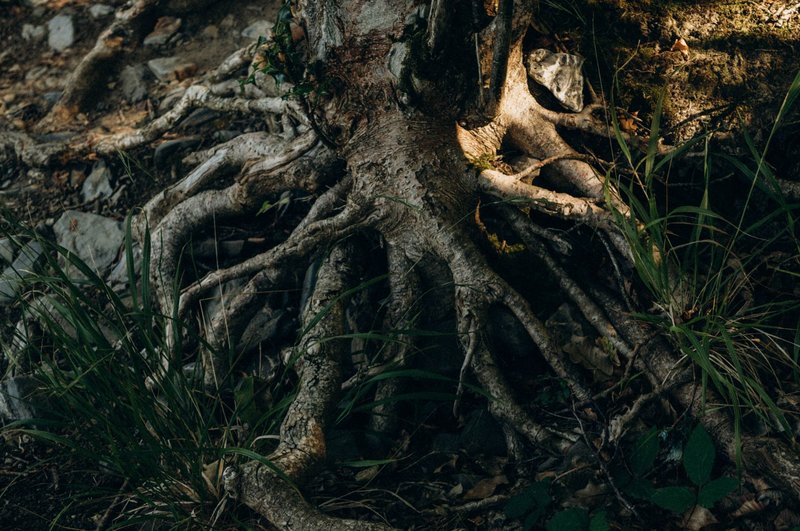
Around 90% of land plant species form relationships with mycorrhizal fungi — threadlike networks that colonize plant roots and extend far beyond them into the soil. The fungus can access phosphorus and water in soil pockets a root could never reach on its own, and it trades those minerals to the plant for sugars. In forests, mycorrhizal networks connect multiple trees of different species into what researchers have nicknamed the “wood wide web” — a shared underground system that can move carbon and warning signals about insect attacks between trees.
For gardeners, this has a practical downside worth knowing: heavy tilling and high-phosphorus fertilizer both disrupt mycorrhizal networks. A soil that’s had one wrecked will actually make plants work harder for nutrients they’d otherwise get for free.
Beyond the Garden: Symbiosis in the Wild
Two relationships worth knowing, because they show how far mutualism can go once evolution has had enough time to work on it.
Ant-acacia mutualism: certain acacia species in Central America and Africa grow hollow thorns and produce sugar-rich nectar specifically to house and feed a resident ant colony. In return, the ants attack anything that touches the tree — herbivorous insects, browsing mammals, even encroaching vines from competing plants. Remove the ants experimentally, as researchers have done, and the tree gets stripped by herbivores within months. Neither species can easily survive without the other anymore.
Lichen: not a single organism at all, but a fungus and an alga (or cyanobacterium) living so intertwined that they were classified as one species for over a century. The fungus provides structure and protection from drying out; the photosynthetic partner provides food. Lichens can survive in places almost nothing else can — bare rock, Arctic tundra, the tops of active volcanoes — because the partnership covers each organism’s individual weakness.
Compatibility Chart
| Pairing | Type | What It Does |
|---|---|---|
| Corn + Pole Beans | Mutualism | Beans fix nitrogen; corn provides a trellis |
| Beans/Clover + Rhizobium bacteria | Mutualism | Bacteria fix atmospheric nitrogen into the soil |
| Tomatoes + Marigolds | Protective | Marigold root compounds suppress nematodes |
| Tomatoes + Basil | Protective | Scent disrupts pest navigation |
| Beans + Nasturtiums | Trap cropping | Aphids prefer nasturtiums, sparing beans |
| Most plants + Mycorrhizal fungi | Mutualism | Fungi extend root reach for water/phosphorus; plant supplies sugar |
| Acacia + Acacia ants | Mutualism | Tree houses/feeds ants; ants defend tree |
| Fungus + Algae (lichen) | Mutualism | Structure/protection traded for food |
What NOT to Plant Together
Almost every companion-planting list tells you what to combine. Fewer explain what actively fights.
Beans and onions (or any allium): onions, garlic, leeks, and chives release sulfur compounds into the soil that suppress the same Rhizobium bacteria beans depend on for nitrogen fixation. Plant them close together and you can measurably reduce bean yield.
Tomatoes and corn: both are hosts for the corn earworm, also known as the tomato fruitworm depending on which plant it’s currently eating. Planting them adjacent gives the pest a highway between two food sources instead of forcing it to choose.
Fennel and almost everything: fennel releases allelopathic compounds from its roots that inhibit the growth of most garden vegetables, including tomatoes, beans, and peppers. Most experienced gardeners give it its own isolated bed.
Walnut trees and nightshades: black walnut roots secrete a compound called juglone that’s toxic to tomatoes, peppers, eggplant, and potatoes. This isn’t a minor competition issue — juglone will actively kill sensitive plants within its root zone, which can extend 50 to 80 feet from a mature tree.
Potatoes and tomatoes: both are nightshades susceptible to the same strains of blight, and planting them close together lets a single infection jump between crops fast enough to wipe out both in one bad season.
The Short Version
Symbiosis isn’t a garden trick — it’s the default operating condition of most life on Earth, and companion planting is just gardeners borrowing a few million years of evolved partnerships for their own beds. Corn and beans, legumes and bacteria, roots and fungi: none of it was designed for a vegetable patch, but all of it works there anyway. Pay as much attention to what you keep apart — onions away from beans, walnuts away from nightshades — as to what you put together, and the pairings that took evolution millennia to perfect will do a lot of the hard work for you.