Table of Contents
- A country built on a rift, not a reserve
- Lake Assal: the salt that built an economy
- Gold at the Afar project
- The industrial minerals nobody talks about
- The critical minerals bet: lithium and potassium from brine
- Why so little of this is actually mined
- Djibouti’s minerals at a glance
- Where this goes next
Djibouti doesn’t have oil, and it doesn’t have the kind of headline gold reserves that put a country on a mining-conference agenda. What it has is geology that’s still being made — active rifting, geothermal fields, and one of the saltiest lakes on Earth — plus a location that matters more than almost anything in its ground. Roughly 20 million tonnes of shipping traffic pass through the Bab-el-Mandeb strait every year, and Djibouti sits right on top of it. That combination — young, mineral-rich crust and a port everyone needs — is the actual story here, more than any single ore body.
A country built on a rift, not a reserve
Djibouti occupies the northern tip of the East African Rift, the spot where three tectonic plates — Nubian, Somali, and Arabian — are pulling apart at roughly the same slow pace fingernails grow. That’s not trivia; it’s the reason the country’s mineral profile looks the way it does. Instead of the deep, ancient ore bodies you find in places like South Africa or the DRC, Djibouti’s resources are surface-level and geothermally driven: salt basins, hot brines, volcanic glass, and evaporite deposits formed by an active, still-moving landscape.
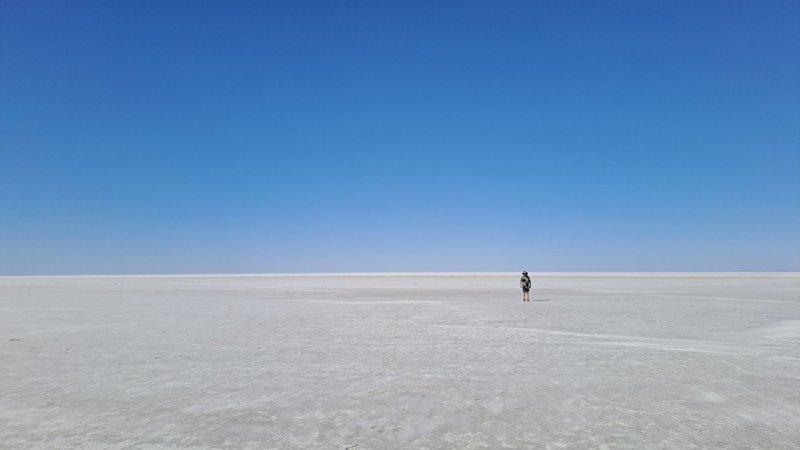
This geology is also why the country’s mining sector reads so differently from its neighbors. Ethiopia and Eritrea, right next door, have hard-rock gold and base-metal deposits tied to older Precambrian shield rock. Djibouti’s Danakil Depression, by contrast, sits below sea level and is one of the hottest, most geologically active places on the planet — which is exactly why it produces salt, gypsum, and geothermal brine rather than classic vein-hosted metal deposits.
Lake Assal: the salt that built an economy
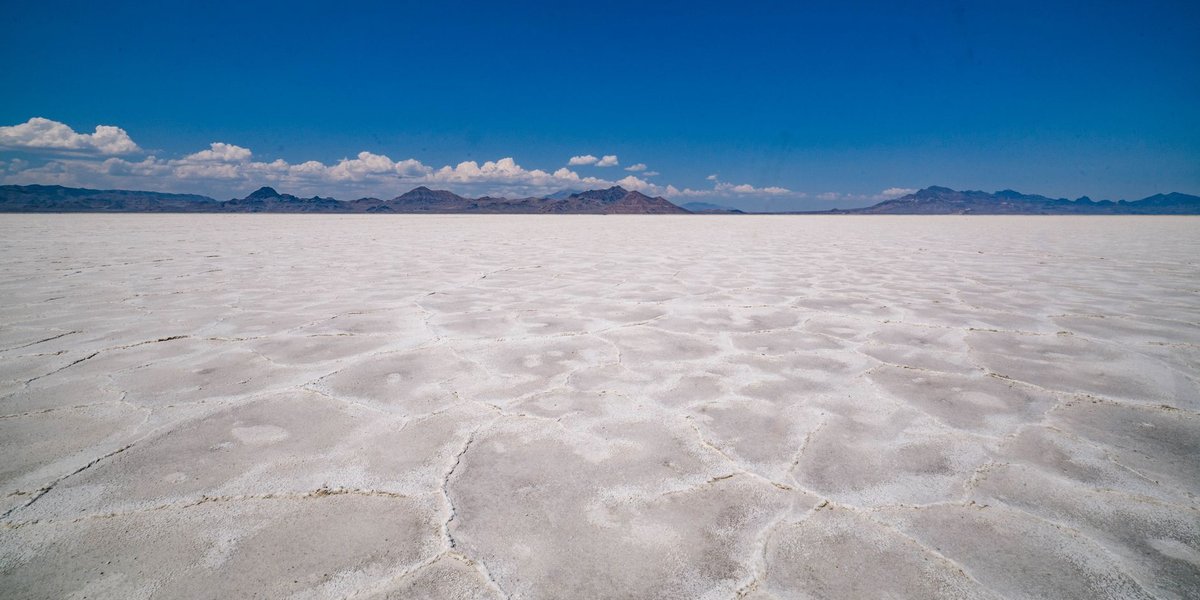
Lake Assal is Djibouti’s actual mining industry, in the sense that it’s the one operation that’s been running continuously and profitably for decades. At 155 meters below sea level, it’s the lowest point in Africa and one of the saltiest bodies of water on Earth — more saline than the Dead Sea, with salinity levels around 34.8%. The lake has no outlet; water flows in from hot springs and seawater seepage, evaporates in the brutal Danakil heat, and leaves behind salt crusts thick enough to walk on.
Local operators have harvested that salt by hand for generations, and it remains one of Djibouti’s few actual export commodities, moving by truck and camel caravan to Ethiopian markets as well as through the port of Djibouti. Estimates of the total salt reserve at Lake Assal run into the billions of tonnes, though annual extraction is modest — a few hundred thousand tonnes in a typical year — because infrastructure, not geology, is the limiting factor. There’s been talk for years of a larger industrial salt operation to supply regional demand at scale, but capital and logistics have kept it from moving past the feasibility stage.
Gold at the Afar project
The closest thing Djibouti has to a conventional metal mine is in the Afar region, where Stratex International (later absorbed into Thani Stratex Resources) has spent over a decade advancing gold exploration. The project sits in the Adola Belt geological trend that also hosts gold deposits in southern Ethiopia, and drilling has returned encouraging intercepts at targets including Dama Ali and Deferini.
It’s still an exploration story, not a producing mine — Djibouti has no operating industrial gold mine as of this writing. But it’s the project most cited by anyone tracking the country’s mining potential, partly because gold exploration attracts capital that salt and gypsum never will, and partly because a confirmed, mineable deposit would be the first hard evidence that Djibouti’s rift-zone geology holds more than evaporites.
The industrial minerals nobody talks about
Past salt and gold, Djibouti has a quieter list of industrial minerals that rarely make the investor pitch decks but do show up in construction and export statistics: gypsum, used domestically and exported for cement production; clay deposits suitable for brick-making; limestone, quarried for construction aggregate; marble, found in several locations though not extracted at industrial scale; diatomite, a volcanic sediment with uses in filtration and insulation; and pumice, a byproduct of the region’s volcanic history that gets used in lightweight concrete and abrasives.
None of these individually move the needle on GDP — mining as a whole contributes a small single-digit percentage to Djibouti’s economy, dwarfed by port and logistics revenue. But collectively they represent the low-hanging fruit of a mineral sector that’s barely been surveyed, let alone developed.
The critical minerals bet: lithium and potassium from brine
This is the part of Djibouti’s mineral story that almost nobody outside a handful of geologists has connected to the country yet, and it’s the most interesting one. The Danakil Depression’s geothermal brines — the same hot, hyper-saline fluids that feed Lake Assal — carry dissolved lithium, potassium, and other elements that matter enormously to battery and fertilizer supply chains. Ethiopia’s side of the Danakil has already drawn exploration interest for potash, and the same brine chemistry extends into Djiboutian territory.
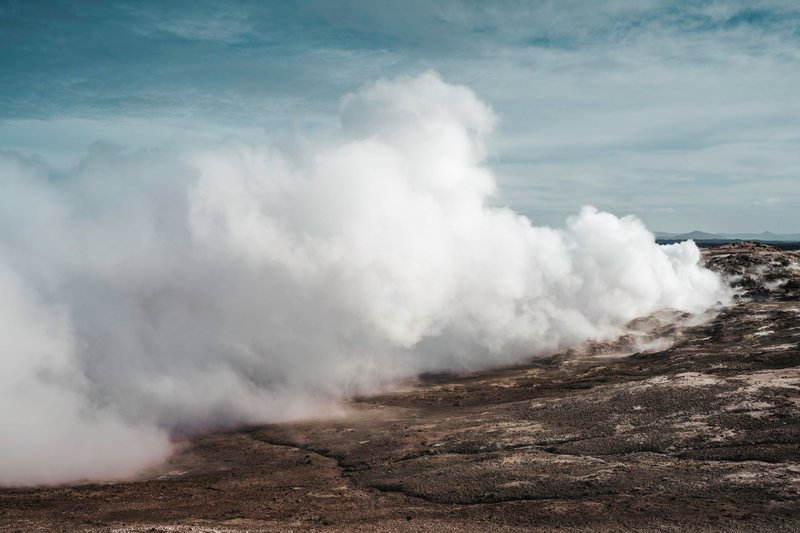
Djibouti has been developing geothermal power at Lake Assal’s Fiale Caldera for electricity generation, backed by international development financing, and the same wells that produce steam for power also bring up mineral-laden brine. Direct lithium extraction technology — which pulls lithium out of brine without the giant evaporation ponds used in South America — has matured fast over the past few years, and it’s exactly the kind of technology that could make Djibouti’s small, geothermally active brine fields commercially interesting even though they’d never support a conventional hard-rock lithium mine. Nobody has announced a commercial lithium project in Djibouti yet. But the geology, the existing geothermal infrastructure, and the global scramble for lithium and potash sources outside China and the traditional South American “lithium triangle” line up in a way that’s hard to ignore.
Why so little of this is actually mined
The honest answer is that Djibouti’s mineral wealth has run into three walls that geology alone can’t solve.
Infrastructure is the first. Outside the capital and the port corridor, road access is thin, water is scarce, and the Danakil’s heat — regularly among the highest average temperatures recorded anywhere on Earth — makes fieldwork and hauling equipment genuinely brutal. Second is investment: Djibouti’s government has prioritized port, rail, and logistics infrastructure tied to its role as a shipping and military-basing hub, and mining hasn’t competed well for the same capital or policy attention. Third is regulatory clarity — Djibouti’s mining code and licensing framework are less mature than those of established mining jurisdictions, which makes multinational mining companies cautious about committing exploration budgets to a country better known for its ports than its pits.
None of that means the minerals aren’t there. It means the country has bet its economic identity on logistics rather than extraction, and so far that bet has paid off better than mining would have.
Djibouti’s minerals at a glance
| Mineral | Location | Primary Use | Current Status |
|---|---|---|---|
| Salt | Lake Assal, Danakil Depression | Food, industrial, export | Actively harvested, small-scale |
| Gold | Afar region (Dama Ali, Deferini) | Investment, jewelry | Exploration stage, no operating mine |
| Gypsum | Multiple sites, Danakil area | Cement production | Extracted, exported in modest volumes |
| Clay | Various inland deposits | Brick-making | Local-scale extraction |
| Limestone | Coastal and inland quarries | Construction aggregate | Quarried domestically |
| Marble | Scattered deposits | Construction, decorative stone | Identified, not industrially developed |
| Diatomite | Danakil region | Filtration, insulation | Identified, undeveloped |
| Pumice | Volcanic zones | Lightweight concrete, abrasives | Identified, undeveloped |
| Lithium/potassium (brine) | Danakil geothermal fields | Batteries, fertilizer | Geologically promising, unexplored commercially |
Where this goes next
Djibouti’s mineral future probably won’t look like a traditional mining boom — there’s no evidence of a giant, easily mined ore body waiting to be found. What’s more likely is a slow build-out around what already works: more salt processing capacity at Lake Assal, a decision one way or another on the Afar gold project, and — the one to watch — whether anyone puts serious exploration money into the lithium and potash potential of the Danakil’s geothermal brines. Given how much global demand for those exact minerals has grown, and how few new sources exist outside a handful of countries, Djibouti’s geothermal fields are a more interesting prospect in 2026 than they were even five years ago. The Red Sea location that makes Djibouti valuable for shipping is a coincidence of geography. The rift-zone chemistry that gave it Lake Assal, and might yet give it lithium, is the same geology working twice.