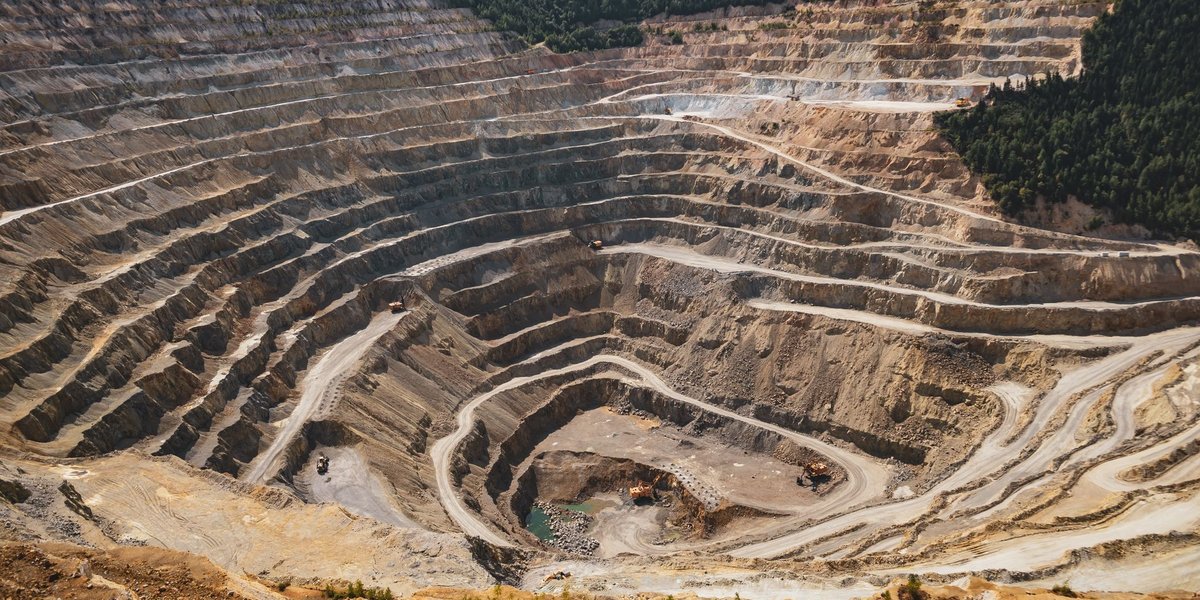
Nauru is the story of a country that sold its own ground. For most of the 20th century, this eight-square-mile speck in the Central Pacific sat on one of the richest deposits of phosphate rock on Earth, and it mined nearly all of it. What’s left today is a hollowed-out interior, a small population that imports most of its food, and an economy that runs on fishing licenses and foreign aid rather than the mineral that once made Nauruans among the wealthiest people on the planet per capita.
So when someone asks what natural resources Nauru has, the honest answer comes in two parts: what it had, and what it has now. They’re very different lists.
Table of Contents
- The short version
- Phosphate rock: the resource that defined Nauru
- Marine fisheries and tuna
- Arable land, coconuts, and bananas
- Freshwater: the resource Nauru never had enough of
- Deep-sea minerals: the next gamble
- Resource summary table
- Frequently asked questions
The short version {#the-short-version}
Nauru’s natural resources, ranked by how much they actually matter to the country today:
- Marine fisheries (tuna) — the country’s most valuable ongoing natural asset, monetized mostly through fishing-license fees paid by foreign fleets.
- Phosphate rock — historically the entire economy, now largely depleted; only lower-grade secondary reserves remain.
- Coconuts and limited agriculture — subsistence-level, confined to the narrow coastal fringe.
- Deep-sea polymetallic nodules — an unproven but heavily promoted future prospect in Nauru’s ocean territory.
- Freshwater — chronically scarce, not a resource Nauru can rely on.
The headline: the mineral wealth is mostly gone, and the fish are now the point.
Phosphate rock: the resource that defined Nauru {#phosphate-rock}
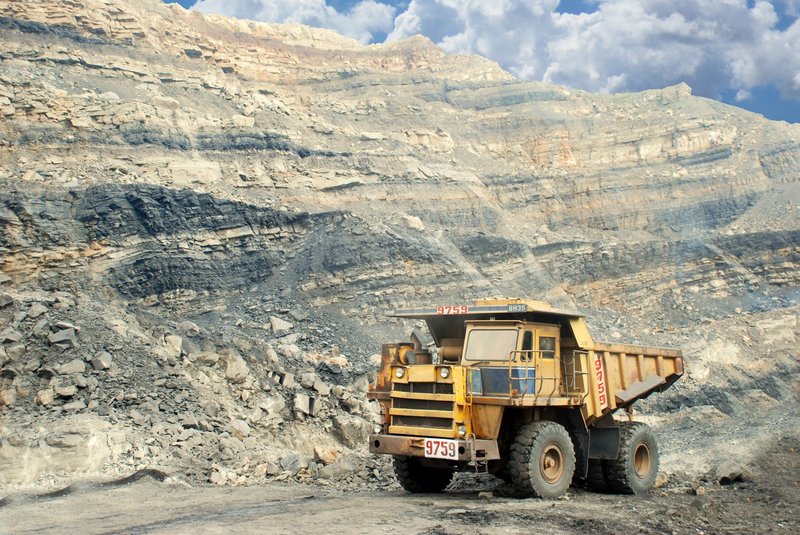
Phosphate is why anyone outside the Pacific has ever heard of Nauru. The deposit formed over hundreds of thousands of years from seabird droppings — guano — accumulating on the coral limestone that makes up the island’s raised interior. Chemical reactions between that guano and the coral produced high-grade phosphate rock, the kind agriculture depends on for fertilizer.
A prospector confirmed the deposit in 1900, reportedly after a chunk of the rock had been sitting in an office being used as a doorstop. Commercial mining began a few years later under a British-German company, and control passed through German, then Australian-British-New Zealand administration across the two world wars. Mining ran essentially nonstop for most of the century.
The scale of extraction is the part people underestimate. To reach the phosphate, miners stripped away the topsoil and vegetation and dug out the rock from between coral limestone pinnacles, leaving behind a landscape of jagged coral spires up to 15 meters tall. By the time the primary reserves ran down in the late 1990s, roughly 80 percent of the island had been mined into this “moonscape” — an interior so rugged and barren it’s uninhabitable and unfarmable. Nauruans call the mined-out center “Topside,” and almost the entire population lives on the thin coastal ring instead.
For a brief window in the 1970s and 80s, phosphate royalties gave Nauru one of the highest per-capita incomes in the world. The money was famously mismanaged — bad investments, a national airline that lost fortunes, and a West End London musical about Leonardo da Vinci that flopped. When the phosphate wound down, the wealth went with it. The country cycled through financial crises and, at various points, hosted an Australian offshore immigration detention center as a source of revenue.
There’s still phosphate on Nauru, but it’s the harder stuff: secondary phosphate, the lower-grade material found deeper, between and beneath the coral pinnacles the primary mining left behind. A rehabilitation and secondary-mining effort has aimed to both extract this remaining rock and, eventually, flatten and restore parts of Topside so it can be lived on again. Progress has been slow and the economics marginal. The era of phosphate as Nauru’s meal ticket is over.
If you want the fuller cautionary tale of how single-resource extraction gutted the island, the Global Landscapes Forum’s ThinkLandscape has a good long-read on it.
Marine fisheries and tuna {#marine-fisheries}
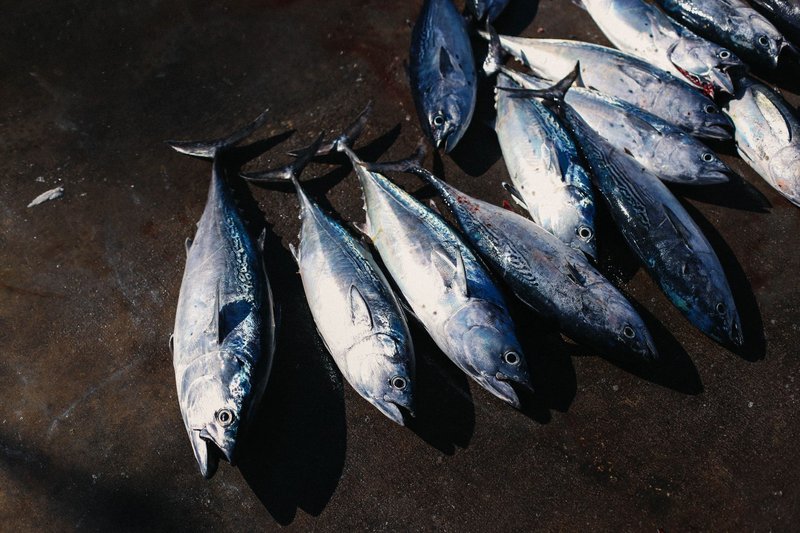
Here’s the resource that actually pays the bills now. Nauru is tiny on land but controls an Exclusive Economic Zone of roughly 300,000 square kilometers of ocean — an area more than ten thousand times the size of the island itself. Those waters sit in the western and central Pacific, the most productive tuna fishing grounds on Earth, home to skipjack, yellowfin, and bigeye tuna.
Nauru doesn’t have a large domestic fishing fleet to exploit this itself. Instead, its main play is licensing: foreign fleets — from nations like Taiwan, Japan, South Korea, and the United States — pay for the right to fish in Nauruan waters. Fishing-license fees and related access payments are now one of the country’s most important sources of government revenue, the closest thing it has to a replacement for phosphate.
Nauru also punches above its weight diplomatically here. It’s a founding member of the Parties to the Nauru Agreement (PNA), a bloc of small Pacific island states that collectively control a huge share of the world’s skipjack tuna supply. By coordinating access rules and a “vessel day scheme” that caps and sells fishing days, the PNA countries have pushed up the price foreign fleets pay to fish these waters. For a country with almost no leverage on land, controlling a slice of the global tuna supply is real bargaining power. The Pacific Community’s tuna fisheries data tracks just how concentrated this catch is in the region.
Subsistence and small-scale fishing matters too. Nauruans fish the reef and nearshore waters for food, and Nauru has a traditional practice of catching and raising ibija (juvenile milkfish) in the island’s one brackish inland body of water, Buada Lagoon.
Arable land, coconuts, and bananas {#arable-land}
Agriculture on Nauru is constrained by a brutal fact: most of the island is mined-out coral rock with the topsoil scraped off, and what isn’t mined is a narrow coastal strip. The CIA and standard resource references list Nauru’s natural resources as “phosphates, fish” and little else, and the agricultural picture explains why nobody bothers adding more.
What grows here is confined to the fertile coastal fringe and the rim around Buada Lagoon:
- Coconuts — the most established crop, historically the one real cash and food crop besides phosphate, yielding copra and coconut for local use.
- Bananas and pandanus — grown in small quantities near the lagoon and settlements.
- Some vegetables — cultivated in limited home-garden fashion.
That’s about it. Nauru has essentially no commercial agriculture and imports the overwhelming majority of its food. This import dependence is a direct legacy of the mining: the land that might have fed the country was dug up and shipped abroad as fertilizer to help other countries grow food. The resulting reliance on imported, processed food is also tied to Nauru’s severe public-health problems — the country has among the world’s highest rates of obesity and type 2 diabetes, a fact bodies like the World Health Organization have flagged in Pacific health reporting.
Freshwater: the resource Nauru never had enough of {#freshwater}
Freshwater belongs on this list precisely because Nauru is so short of it. The island has no rivers, no streams, and no natural surface freshwater to speak of. Buada Lagoon is brackish. Groundwater is limited and often too saline or contaminated to rely on.
That leaves rainfall — which is erratic, with periodic severe droughts — and desalination. Nauru depends heavily on desalinated seawater and collected rainwater, and water supply has been a recurring crisis, especially during dry periods when the population’s per-person freshwater availability drops to very low levels. In a resource inventory, freshwater is less an asset Nauru holds than a constraint it lives under.
Deep-sea minerals: the next gamble {#deep-sea-minerals}
If phosphate was the 20th-century resource, Nauru is betting part of its future on a 21st-century one: polymetallic nodules on the deep ocean floor. These potato-sized lumps, scattered across the seabed of the Pacific’s Clarion-Clipperton Zone, are rich in nickel, cobalt, copper, and manganese — metals in demand for batteries and electronics.
Nauru has positioned itself as a sponsoring state for deep-sea mining under the International Seabed Authority, effectively lending its national sponsorship to a mining company’s claim in international waters. In 2021 it triggered a controversial legal clause that pressured the ISA to finalize mining rules on a deadline, accelerating a global debate. Environmental scientists and many other nations argue the deep-sea ecosystem is too poorly understood — and too slow to recover — to mine safely, and the IUCN has called for a moratorium.
For Nauru, the logic is grimly familiar: a small country with few resources reaching for the one big mineral payday available to it. The rest of the world is watching to see whether it repeats history or manages the resource more carefully this time.
Resource summary table {#resource-summary}
| Resource | Status today | Economic role |
|---|---|---|
| Phosphate rock | Primary reserves depleted (~late 1990s); low-grade secondary reserves remain | Historically the entire economy; now marginal |
| Marine fisheries / tuna | Abundant in a ~300,000 km² EEZ | Top ongoing revenue via foreign fishing licenses |
| Coconuts / arable land | Very limited, coastal fringe only | Subsistence; most food imported |
| Freshwater | Scarce; no rivers or streams | A constraint, met by desalination and rainwater |
| Deep-sea nodules | Unmined; sponsored claim in Pacific seabed | Speculative future prospect |
Frequently asked questions {#faq}
What are the main natural resources of Nauru? Officially, phosphates and fish. Phosphate rock built the country’s wealth but is now largely mined out, so marine fisheries — especially tuna, monetized through fishing licenses — are the most important ongoing natural resource. Coconuts and very limited agriculture round out the list.
Why did Nauru run out of phosphate? Because it mined it, hard, for roughly a century. The deposit was finite, formed slowly from ancient seabird guano over the island’s coral base, and continuous extraction exhausted the high-grade primary reserves by the late 1990s. About 80 percent of the island was stripped in the process.
Does Nauru still mine phosphate? Yes, but at a much smaller scale. The primary high-grade rock is gone; what’s left is lower-grade secondary phosphate found deeper between the coral pinnacles. Recovering it is tied to slow land-rehabilitation efforts and the economics are marginal.
How does Nauru make money now? Mainly from fishing-license fees paid by foreign fleets for access to its tuna-rich waters, plus foreign aid (notably from Australia), revenue from hosting an Australian offshore processing arrangement at various times, and prospective deep-sea mining ventures.
What is deep-sea mining and why is Nauru involved? Deep-sea mining collects metal-rich polymetallic nodules from the ocean floor. Nauru sponsors a company’s claim in the international seabed of the Pacific, hoping the nickel, cobalt, and copper in those nodules can become a new resource income. It’s controversial because the environmental risks are poorly understood.