Mauritius is a volcanic island with almost no metal in its rock. That sounds like the end of the story, and for most of the encyclopedia entries out there, it is — a paragraph about crushed stone and a 2006 production figure, then nothing. But the interesting part of “minerals in Mauritius” isn’t on the island at all. It’s roughly 4,000 metres down, scattered across an ocean floor the size of a continent, in the form of metal-rich rocks that batteries and wind turbines are increasingly hungry for.
So this splits cleanly into two stories. What Mauritius digs up today, which is modest and mostly construction material. And what sits in its territorial waters, which is potentially enormous and entirely undeveloped.
Table of Contents
- The short version
- What Mauritius is made of
- Onshore minerals: the working list
- A quick comparison table
- Why mining is barely a rounding error in the economy
- The offshore prize: polymetallic nodules
- The catch: 4,000 metres of seawater
- The legal framework
- FAQ
The short version
If you came here for a quick answer: Mauritius has no commercially exploited metallic ore deposits. Its real, dug-today mineral economy is basalt (crushed volcanic stone for construction), lime burnt from coral and shells, sea salt from coastal evaporation pans, and sand. Mining contributes roughly 0.2% of GDP — a rounding error.
The future story is offshore. Mauritius controls one of the largest Exclusive Economic Zones in the world, about 2.3 million square kilometres, and the seabed across much of it carries polymetallic nodules rich in manganese, cobalt, nickel, and copper. None of it is being extracted yet. The technology and the economics aren’t there. But it reframes a country usually written off as resource-poor into one sitting on a serious stash of critical minerals.
What Mauritius is made of
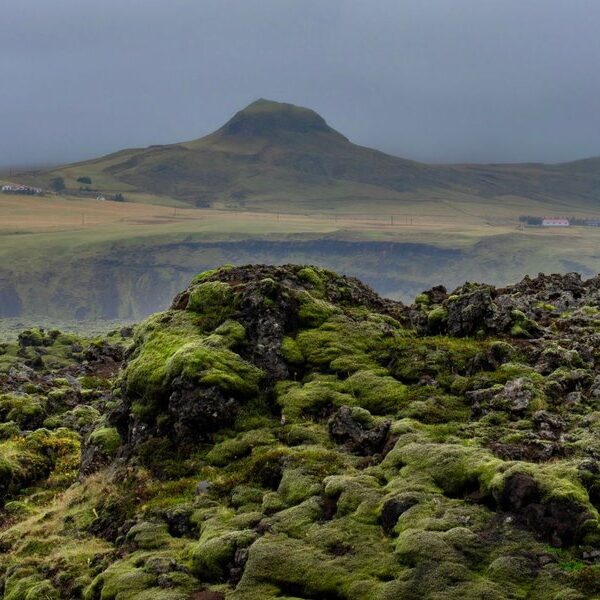
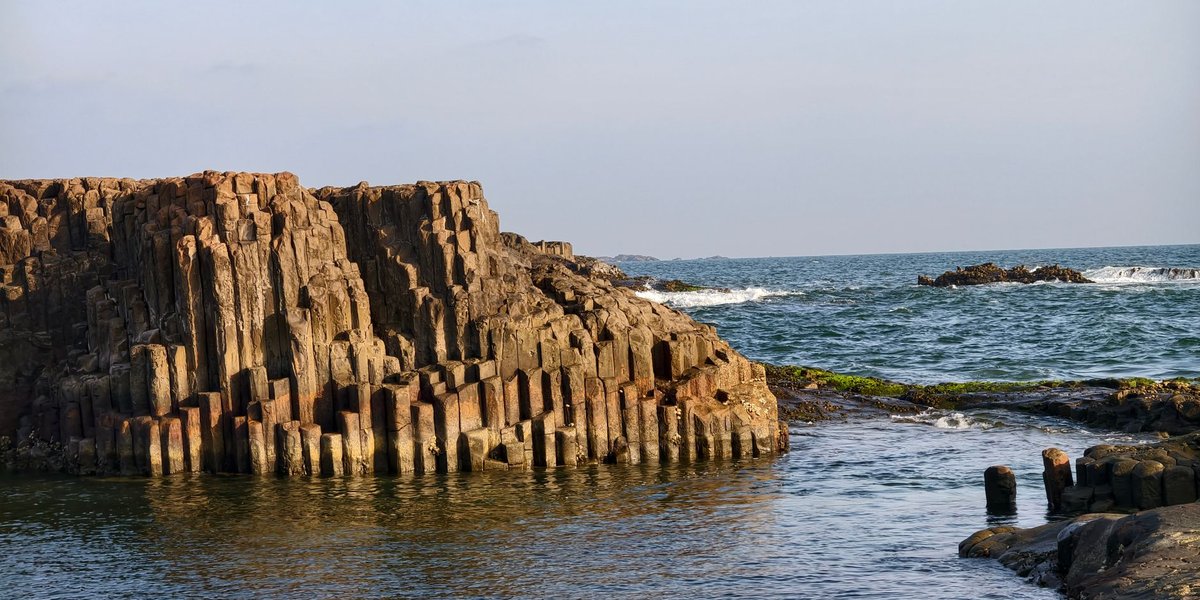
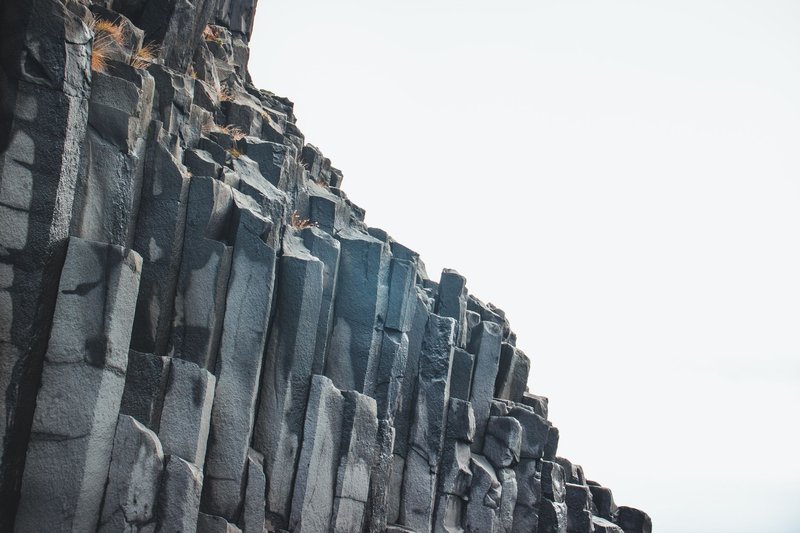
Mauritius is the eroded top of a shield volcano that pushed up from the Indian Ocean floor starting roughly 8–10 million years ago. That volcanic origin decides everything about its geology. The island is essentially layered basalt — fine-grained, dark, dense rock that cooled from lava flows — with a thin skin of weathered soil and, around the coast, coral limestone built by reefs.
What you don’t get from this kind of geology is metal. Gold, copper, iron, and the rest concentrate through processes — hydrothermal veins, ancient sedimentary basins, continental collisions — that a young oceanic volcano simply hasn’t had. There are no veins to chase, no ore bodies, no precious-metal placers in the rivers. The rock is the resource, and the rock is basalt.
This is why every honest account of Mauritian minerals is short on the island and long on the ocean around it.
Onshore minerals: the working list
Here’s what actually comes out of the ground (or the sea’s edge) on Mauritius today. Minerals are only one slice of the island’s wider resource base, which leans far more heavily on its agricultural land, fisheries, and coastal ecosystems than on anything dug from the rock.
Basalt and crushed stone
Basalt is the backbone of the domestic mineral industry. Quarried across the island, it’s crushed into aggregate for concrete, road base, and the cut-stone walls you see everywhere in older Mauritian construction. Annual crushed-stone output runs in the region of half a million tonnes. The dominant player is United Basalt Products (UBP), a long-established Mauritian company whose business literally is rock — quarrying, aggregates, blocks, and building materials. When a hotel or a highway gets built on the island, the stone underneath it was almost certainly local basalt.
There’s a nice circularity here: clearing basalt boulders off agricultural land was historically backbreaking work on the sugar estates, and those same stones became building material. The island’s geology shaped both its farming and its construction in one move.
Lime
Lime comes from burning calcium carbonate — and on a coral island, the calcium carbonate is the reef. Coral debris, shells, and coral limestone are calcined (heated) to produce lime used in construction, agriculture (to correct acidic soils), and sugar processing, where lime has long been used to clarify cane juice. It’s a small industry, and an environmentally sensitive one, since coral extraction collides directly with reef conservation. That tension has pushed regulation toward limiting live-coral mining in favour of dead coral debris and imported substitutes.
Sea salt
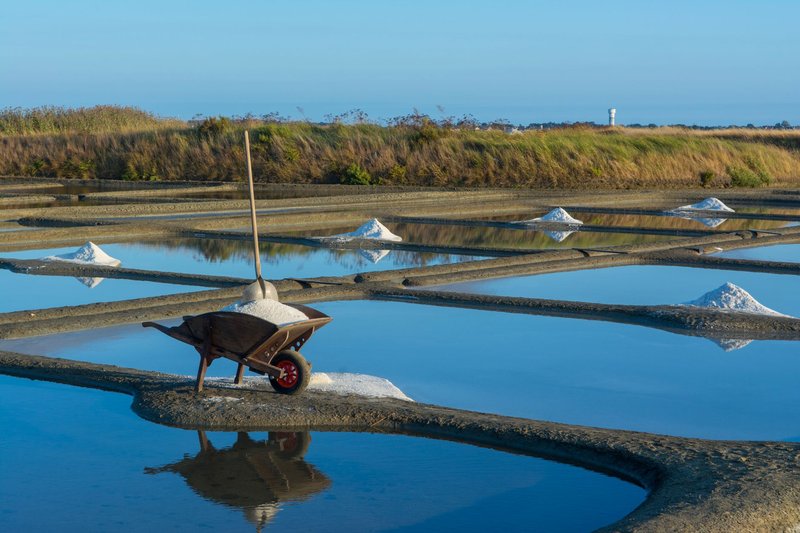
Drive along the west coast near Tamarin and you’ll see the salt pans: shallow rectangular basins where seawater is let in and left to evaporate under the sun, leaving salt behind to be raked up by hand. It’s one of the oldest continuous mineral-extraction activities on the island, low-tech and labour-intensive, producing salt for food and some industrial use. Output is small and has been declining as land near the coast gets more valuable for tourism than for salt, but the pans are still working — and have become a minor visitor attraction in their own right.
Sand and aggregates
Sand for construction has been a recurring flashpoint. Lagoon and beach sand extraction was historically common but does brutal damage to coastal ecosystems and accelerates erosion, so Mauritius banned the removal of sand from its lagoons in the early 2000s. That ban pushed the construction sector toward crushed basalt “manufactured sand” and imports. It’s a good example of a mineral being technically abundant but deliberately left in place for environmental reasons.
Semi-manufactured steel
Mauritius has no iron ore, so it doesn’t make steel from scratch. What it does have is a steel-processing operation that imports billets and rolls or draws them into bars and wire for the local construction market. It shows up in mineral-industry summaries, but it’s manufacturing built on imported metal, not domestic mining.
A quick comparison table
| Mineral / material | Main use | Rough scale | Key producers |
|---|---|---|---|
| Basalt / crushed stone | Concrete, road base, building blocks | ~500,000+ tonnes/year | United Basalt Products, Gamma-Civic |
| Lime | Construction, soil treatment, sugar processing | Small, local | Local lime kilns |
| Sea salt | Food, some industrial | Small, declining | Coastal salt-pan operators (Tamarin area) |
| Sand | Construction (now mostly manufactured/imported) | Lagoon extraction banned | Crushed-basalt substitutes |
| Semi-finished steel | Construction bars and wire | From imported billets | Local steel rolling mill |
| Polymetallic nodules (offshore) | Battery metals: Mn, Co, Ni, Cu | Undeveloped, potentially vast | None yet — EEZ unexploited |
Numbers for a small economy like this move around year to year and several published figures are badly out of date, so treat the onshore tonnages as orders of magnitude rather than gospel. The shape of the picture matters more than the decimal: a handful of construction materials, no metals, modest volumes.
Why mining is barely a rounding error
Put all of the above together and mining and quarrying come to roughly 0.2% of Mauritius’s GDP. The economy runs on tourism, financial services, textiles, and sugar — not on extraction. There’s no mining ministry building careers on royalties, no resource-export line item propping up the trade balance.
That’s worth sitting with, because it’s exactly why the offshore story is interesting. A country with a thriving onshore mining sector might treat seabed minerals as a sideshow. For Mauritius, deep-sea metals would be a genuinely new category of national wealth — if they can ever be reached.
The offshore prize: polymetallic nodules
Now the part the reference pages skip.
Mauritius’s Exclusive Economic Zone is one of the largest in the world. Through its own waters plus a jointly managed zone with Seychelles over the Mascarene Plateau, the country has rights over roughly 2.3 million square kilometres of ocean — more than a thousand times its land area. And large stretches of that seabed are carpeted with polymetallic nodules.
These are lumps of metal — typically potato-sized, blackish, lying loose on the abyssal plain — that grow over millions of years as dissolved metals precipitate out of seawater and pore water around a tiny nucleus like a shark tooth or a bit of shell. They grow agonizingly slowly, on the order of a few millimetres per million years, which is part of what makes their environmental story so fraught. Crucially, they concentrate exactly the metals the energy transition needs:
- Manganese — steel alloys and, increasingly, battery chemistries
- Cobalt — lithium-ion battery cathodes
- Nickel — battery cathodes and stainless steel
- Copper — wiring, motors, the entire electrification buildout
That’s a battery-metals shopping list sitting on the floor of Mauritian waters. As global demand for these metals climbs with electric vehicles and grid storage, the International Energy Agency projects sharp increases in critical-mineral demand under clean-energy scenarios — and that demand pressure is exactly what makes remote, hard-to-reach deposits like these worth talking about at all.
Mauritius has been positioning for this. It has done exploratory and scientific survey work on its seabed resources and treats the deep ocean as a strategic frontier — the “blue economy” framing that shows up constantly in national planning. The intent is there. What’s missing is everything that comes after a survey.
The catch: 4,000 metres of seawater
Here’s why none of those nodules have become a single battery.
They sit on the abyssal plain, commonly at depths of 4,000 to 5,000 metres. That’s deeper than most of the ocean people ever think about — crushing pressure, total darkness, near-freezing water. Collecting nodules means sending a robotic harvester down to drive across the seabed, vacuum or scrape up the nodules, and pump a slurry of rock and seawater four kilometres up to a ship. The engineering is closer to space mining than to a basalt quarry, and nobody has done it at commercial scale anywhere on Earth.
Then there’s the environmental problem, which is not a footnote. The abyssal seabed is a slow, ancient, barely understood ecosystem, and the nodules themselves are habitat — some animals live only on them. Harvesting kicks up sediment plumes that can drift for kilometres and smother life far from the mining track, and because the nodules took millions of years to form, the damage is effectively permanent on any human timescale. Scientists and conservation groups have pushed hard for caution; a growing number of countries and companies have backed a moratorium on deep-sea mining until the impacts are understood. The global rulebook for mining in international waters is still being negotiated through the International Seabed Authority, though a nation’s own EEZ falls under its national law rather than that authority.
So Mauritius is in a genuine bind, and a fairly modern one. It holds rights to a critical-minerals resource the world increasingly wants. It lacks the technology and capital to extract it alone. And the act of extraction carries environmental costs heavy enough that “leave it down there” is a defensible answer. The nodules aren’t a missed opportunity so much as an open question the whole planet is still arguing about.
The legal framework
Onshore extraction runs under the Minerals Act of 1966, the colonial-era law that still governs the right to prospect for and work minerals on the island, vesting control of mineral rights and setting out licensing. It was written for a world of basalt quarries and lime kilns, not seabed robots, and the gap between a 1966 minerals law and a 21st-century deep-sea resource is one of the quieter challenges Mauritius faces if the offshore picture ever turns real. Seabed and continental-shelf rights, by contrast, lean on Mauritius’s claims under the UN Convention on the Law of the Sea and the bilateral arrangement with Seychelles over their shared plateau.
FAQ
Does Mauritius have gold or precious metals? No commercially significant deposits. The island is young oceanic basalt, which doesn’t host the geological processes that concentrate gold, silver, or other precious metals. There’s no metal-mining industry on land.
What is the main mineral mined in Mauritius? Basalt — crushed volcanic stone used for construction. It’s the foundation of the small domestic mineral industry, alongside lime, sea salt, and sand substitutes.
What are polymetallic nodules and why do they matter to Mauritius? They’re metal-rich lumps scattered across the deep seabed, packed with manganese, cobalt, nickel, and copper — the metals batteries and renewable-energy tech depend on. Mauritius’s vast ocean territory contains them, which is the single most interesting thing about its mineral future. None are being mined yet.
Is Mauritius doing deep-sea mining now? No. There’s been exploration and scientific survey work, but no commercial extraction. The depths involved (4,000–5,000 metres), the unproven technology, the cost, and serious environmental concerns all stand in the way.
How important is mining to the Mauritian economy? Barely. Mining and quarrying make up roughly 0.2% of GDP. The economy runs on tourism, financial services, manufacturing, and sugar — extraction is a minor activity.
Where can I see mineral extraction in Mauritius as a visitor? The sea-salt evaporation pans on the west coast near Tamarin are the most accessible — open-air, hand-worked, and genuinely photogenic. Basalt quarries are working industrial sites and not visitor attractions.