Micronesia covers more than two thousand islands scattered across an expanse of the western Pacific larger than the continental United States, yet the entire region holds only about 240 bird species. That sounds thin until you realize where the value sits: roughly 22 of those birds live nowhere else on Earth. A single forested ridge on Pohnpei can hold a lorikeet, a fantail, and a white-eye that exist on that one island and no other.
That density of endemics is what makes the place a quiet legend among serious birders, and a genuine surprise for travelers who came for the diving. Most guides to the region give you either a dry taxonomic checklist or a thumbnail gallery with no sense of where anything actually lives. This is the curated middle: the 18 birds worth crossing an ocean for, what they look like, and the islands and seasons that put them in front of you.
Table of Contents
- Quick context: how Micronesia’s birdlife works
- The 18 birds worth the trip
- Best islands for birding
- Habitats to target
- When to go
- A note on conservation
Quick context: how Micronesia’s birdlife works
Micronesia isn’t one place. It’s five main island groups in the Federated States of Micronesia (Yap, Chuuk, Pohnpei, Kosrae), plus Palau to the west and the Mariana Islands to the north. Each group sat in isolation long enough for its birds to drift into separate species, which is why you get a “Pohnpei this” and a “Chuuk that” on island after island. The same isolation produced a whole roster of endemic species across Micronesia — reptiles, snails and plants alongside the birds — but it’s the landbirds that reward a dedicated trip.
The status tags used in the formal checklists are worth knowing before you go. The Wikipedia checklist for the Federated States of Micronesia marks species as endemic (E), introduced (I), accidental (A), or extirpated/extinct (Ex). The ones that matter for a trip are the endemics and the regional specialties. Everything else, including the seabirds, you can find more easily elsewhere in the Pacific.
A practical note on names: many of these birds carry an island in their common name, so “where it lives” is often baked right into what you call it. The Pohnpei Lorikeet is on Pohnpei. The Yap Monarch is on Yap. It makes trip planning unusually literal.
The 18 birds worth the trip
These are ranked loosely by a mix of how striking they are and how badly birders want them. Conservation status follows the IUCN Red List, which tracks every species here.
1. Micronesian Kingfisher
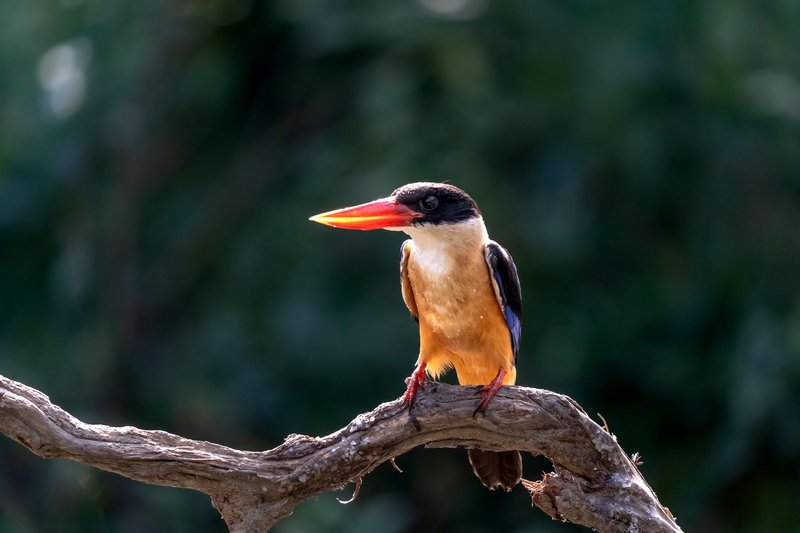
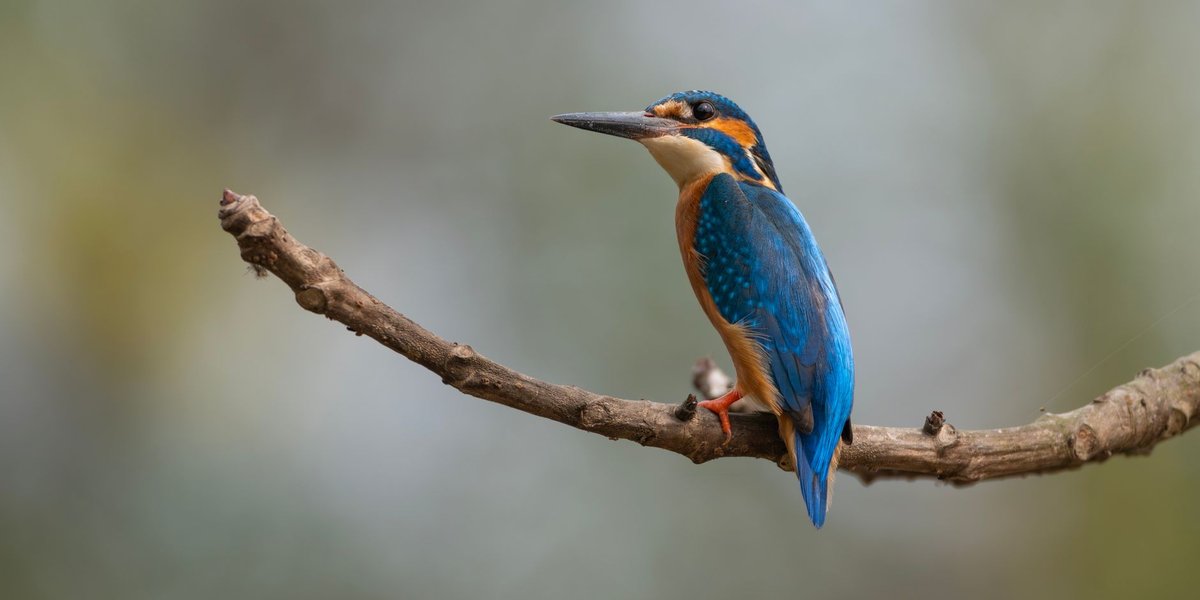
The signature bird of the region, and a conservation story most birders know even if they’ve never been to the Pacific. The cinnamon-headed, blue-backed Guam subspecies went extinct in the wild after the brown tree snake gutted Guam’s forests; it survives only in captive-breeding programs. The Pohnpei and Palau populations, treated by many authorities as their own species, are still out there in the forest. Compact, dagger-billed, and far more often heard than seen, calling a dry rattle from a mid-canopy perch.
2. Pohnpei Lorikeet
A small parrot in absurd colors: green body, red cheeks and belly, a blue crown, an orange bill. It moves in noisy pairs and small flocks through Pohnpei’s flowering trees, and you’ll usually hear the screeching before you pin down the blur of green. Endemic to Pohnpei, common enough within its range that a half-day in the right forest almost guarantees it.
3. Nightingale Reed-warbler
A large, plain-looking warbler with an outsized voice, found in the Marianas and historically across several islands where it’s now gone. Drab olive-brown above, pale below, with a long bill and a song that carries across the reedbeds and tangled scrub it favors. Critically endangered on several islands. The kind of bird whose plumage you’ll forget and whose song you won’t.
4. Chuuk Monarch
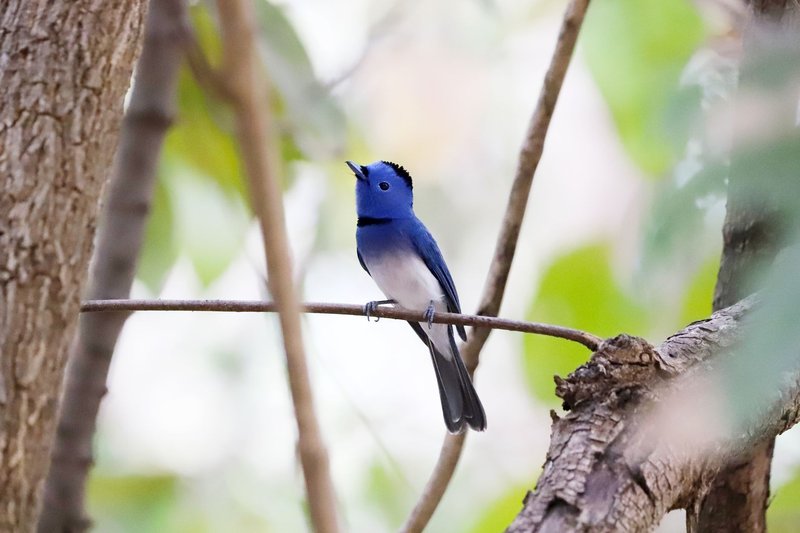
Also called the Truk Monarch. A clean two-tone flycatcher, the male a crisp slate-and-white, working the understory of Chuuk’s forested islands with the twitchy, tail-flicking restlessness monarchs are known for. Endemic to the Chuuk group and the main reason a birder books that particular lagoon over a diver’s wreck trip.
5. Yap Monarch
Yap’s own version, olive and buff rather than black-and-white, foraging actively through the lower forest. Endemic to Yap. Less flashy than its Chuuk cousin but no less restricted, and a near-certain pickup for anyone spending a day in the island’s interior woodland.
6. Palau Fruit Dove
A jewel of a pigeon: green body, a lavender-grey crown, a yellow-tipped tail, and a wash of orange and red below. Like most fruit doves it sits dead still in the canopy, swallowing figs whole, which makes a bird this colorful maddeningly hard to spot. Endemic to Palau. Listen for the deep, owl-like cooing and trace it upward.
7. Palau Ground Dove
A shy, terrestrial dove that walks the forest floor of Palau’s Rock Islands and rarely flushes far. Subtle in plumage, rich purplish-brown with a paler face, and genuinely uncommon, which makes it one of the harder Palau endemics to actually clap eyes on. Endemic to Palau.
8. Giant White-eye
The largest white-eye in the world lives on Palau, and “giant” is relative, but next to ordinary white-eyes it’s a heavyweight, with a heavy bill and a loud, ringing call. Olive-green and active in the canopy. Endemic to Palau, and one of three white-eyes you can rack up on a single island there.
9. Palau Bush Warbler
Heard far more than seen, this skulker stays buried in dense Palau undergrowth and delivers a rich, bubbling song that’s one of the signature sounds of the island’s interior. Plain warm brown, unremarkable to look at, a prize to record. Endemic to Palau.
10. Caroline Islands White-eye
A small, restless white-eye spread across Pohnpei, Chuuk and nearby islands, moving in chattering flocks through the canopy. Plain olive-yellow with the family’s namesake eye-ring. Endemic to the region and easy enough to find that it becomes background noise once you’re tuned in.
11. Pohnpei Fantail
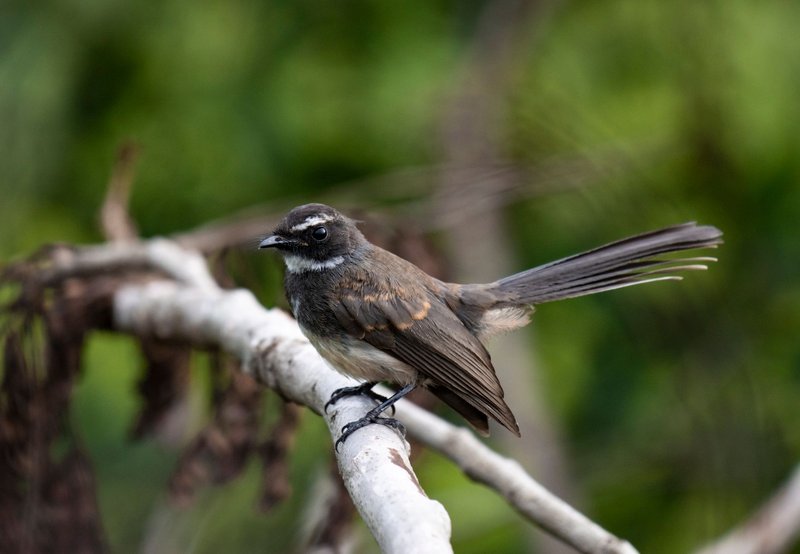
A tiny, hyperactive flycatcher that fans its tail and pirouettes through the understory, snapping at insects it kicks up. Warm brown with pale markings. Endemic to Pohnpei and one of the more charming birds on the island, the sort that approaches you rather than the reverse.
12. Pohnpei Flycatcher
Another Pohnpei endemic, a monarch-family bird with the males and females in noticeably different plumage, working mid-level forest. Restricted entirely to Pohnpei and a reliable target on any forest walk above the coastal strip.
13. Kosrae White-eye
Kosrae is the smallest and least-visited of the four FSM states, and it has its own white-eye for the trouble. Plain, active, canopy-loving. Endemic to Kosrae alone, which means the only way to add it to a list is to actually go to Kosrae, an island most itineraries skip entirely.
14. Mariana Swiftlet
A small, sooty swiftlet that nests in caves and navigates the dark by echolocation, clicking audibly as it flies, one of very few swiftlets that do. It feeds on the wing over forest and open country in the Marianas. Endangered, with cave colonies vulnerable to disturbance. Watch for the clicking flocks pouring out of a cave mouth at dusk.
15. Micronesian Myzomela
A small honeyeater, the male a striking red-and-black, hitting flowering trees for nectar across Pohnpei, Chuuk and other islands. Quick, aggressive at a good flower source, and the closest thing the region has to a sunbird in habit. Endemic to Micronesia.
16. Purple-capped Fruit Dove
A widespread Micronesian fruit dove, green with a deep purple crown and a yellow-and-orange belly. Found across multiple island groups including Pohnpei and Chuuk. Like its relatives it’s a canopy statue, betrayed mostly by its cooing and the rain of dropped fig skins beneath a fruiting tree.
17. White-throated Ground Dove
A handsome ground dove of the Marianas and surrounding islands, the male pale-headed and clean-throated above a grey body. It forages on the forest floor and in low fruiting shrubs, less skittish than the Palau ground dove. A regional specialty rather than a single-island endemic.
18. Micronesian Megapode
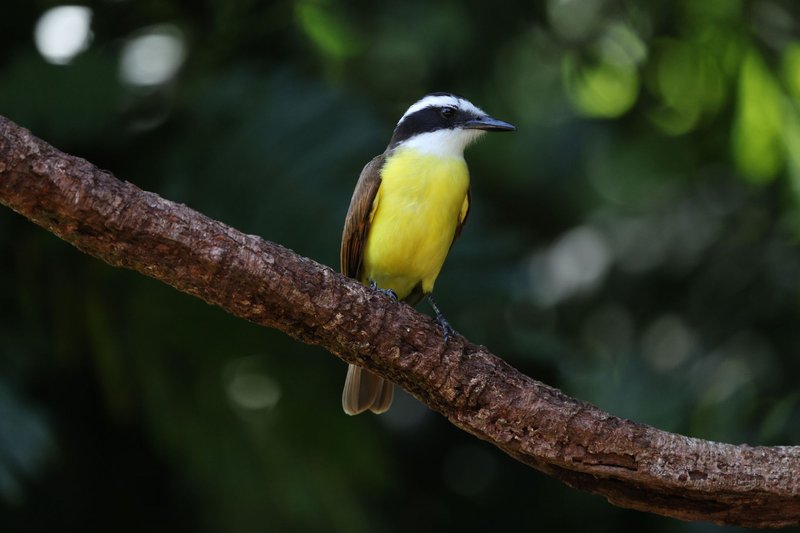
The strangest bird on this list. A chicken-sized, dark, ground-dwelling fowl that buries its eggs in warm volcanic soil or sun-heated mounds and lets the heat do the incubating, then walks away. The chicks dig themselves out fully feathered and ready to fly. Found on scattered islands across the Marianas and beyond, endangered and wary. Hearing one is realistic; seeing one well is a genuine achievement.
Best islands for birding
If you only have time for one stop, the choice comes down to what you’re after.
Palau is the deepest single-island haul. The Giant White-eye, Palau Fruit Dove, Palau Bush Warbler, Palau Ground Dove and Palau Fantail are all reachable, and the forest is accessible from Koror with a guide. It’s also the easiest of these places to fly into, and its endemic life runs well beyond the birds — worth a look if you want the full picture of what the island shelters. For a first trip, this is the highest return on effort.
Pohnpei is the runner-up and arguably the more atmospheric. The Pohnpei Lorikeet, Fantail, Flycatcher and the local kingfisher all live in the lush, near-constantly wet interior forest. Pohnpei is one of the rainiest places on the planet, so the green is real and so is the drizzle.
Chuuk is for the Chuuk Monarch above all, layered onto the world-class wreck diving the lagoon is famous for. Yap delivers the Yap Monarch and a culture trip unlike anywhere else in the Pacific. Kosrae is the completist’s island, quiet, beautiful, and the only place on Earth for the Kosrae White-eye.
Habitats to target
Native forest is where the endemics live, full stop. The lorikeets, monarchs, fantails, fruit doves and white-eyes are all forest-interior birds, so your time is best spent on inland trails and forested ridges rather than the resort coastline.
Mangroves and their edges are productive for kingfishers and reed-warblers, and they’re often easier to scan than closed canopy. The mangrove fringes around Pohnpei and Palau are a reliable bet for the Micronesian Kingfisher.
The reefs, lagoons and open water are the seabird and shorebird zone, terns, noddies, boobies and migrant waders. They’re a pleasant bycatch on any boat transfer, but they aren’t why you came, and most of them range widely across the Pacific.
When to go
Aim for the dry season, roughly December through April. The endemic landbirds are present year-round, so you’re not timing a migration, you’re timing the weather. Drier months mean more workable forest trails, less of the heavy rain that keeps birds quiet and tucked in, and far more comfortable hours on foot under the canopy.
Pohnpei and Kosrae are wet enough that “dry season” is a relative term, expect rain regardless and pack for it. Palau and the Marianas sit drier and give you the most dependable conditions. Early morning is the only serious birding window anywhere in the tropics here: be on the trail at first light, because by mid-morning the forest goes quiet and the heat takes over.
A note on conservation
A lot of these birds are running out of room. The Guam population of the Micronesian Kingfisher already vanished from the wild, taken out by the introduced brown tree snake, and the cautionary tale hangs over the whole region: an island endemic with a total range of one forest has nowhere to retreat to. The Nightingale Reed-warbler, Mariana Swiftlet and Micronesian Megapode all carry threatened ratings, pressured by habitat loss, invasive predators and the simple math of tiny populations.
That fragility is also the argument for going thoughtfully. Stick to trails, keep your distance from swiftlet caves and megapode mounds, and hire local guides, who know exactly where the birds are and have every reason to keep them there. Seeing a Pohnpei Lorikeet streak across a wet green ridge is the kind of thing you carry home. It’s worth making sure the next traveler gets to see it too.