If you want the short version: the United States produces roughly two-thirds of the world’s beryllium, and almost all of it comes out of a single mine in Utah. China is a distant second. After that, the numbers get small fast.
That answer surprises people who expect a critical mineral to be spread across a dozen countries the way copper or iron ore is. Beryllium isn’t like that. It’s a niche element with a niche supply chain, and a handful of countries do nearly all of it.
Contents
- The short answer
- Beryllium production by country
- Why the United States dominates
- China, the only real competitor
- The smaller producers
- Mining vs. processing: the part everyone skips
- Reserves vs. production
- Is beryllium a critical mineral?
- FAQ
The short answer {#tldr}
- The United States is the largest producer by a wide margin, mining roughly 150–210 metric tons per year — somewhere around 60–65% of the global total.
- China is second, producing on the order of 70 tons annually.
- Madagascar, Brazil, Nigeria, Mozambique, Russia, and Kazakhstan round out the rest, each contributing small or sporadic amounts.
- Only three countries — the US, China, and Kazakhstan — actually process beryllium ore into usable metal and alloys. Everyone else just mines the rock.
Global mine production sits around 250–300 metric tons of beryllium content per year. For perspective, the world mines more gold than beryllium by weight. This is a tiny market.
Beryllium production by country {#production-table}
Figures below are estimated beryllium content in metric tons per year, drawn from the U.S. Geological Survey’s Mineral Commodity Summaries. The USGS withholds the exact US figure in some years to protect proprietary company data, so the American number is a reported estimate.
| Rank | Country | Approx. annual production (t) | Share |
|---|---|---|---|
| 1 | United States | 150–210 | ~60–65% |
| 2 | China | ~70 | ~25% |
| 3 | Madagascar | a few tons | <2% |
| 4 | Brazil | a few tons | <2% |
| 5 | Nigeria | a few tons | <2% |
| 6 | Mozambique | small / sporadic | <1% |
| 7 | Russia | small | <1% |
| 8 | Kazakhstan | small (mine output) | <1% |
A few things stand out immediately. The top two countries account for nearly 90% of mined beryllium. The rest is a long tail of countries where beryllium comes out as a byproduct of mining for other gemstones and minerals, often in small artisanal operations. Those tons barely register.
Why the United States dominates {#united-states}
The reason the US wins isn’t geology in the usual sense. Beryllium is scattered all over the planet in trace amounts — it’s the 47th most abundant element in the Earth’s crust. The reason is one deposit and one company.
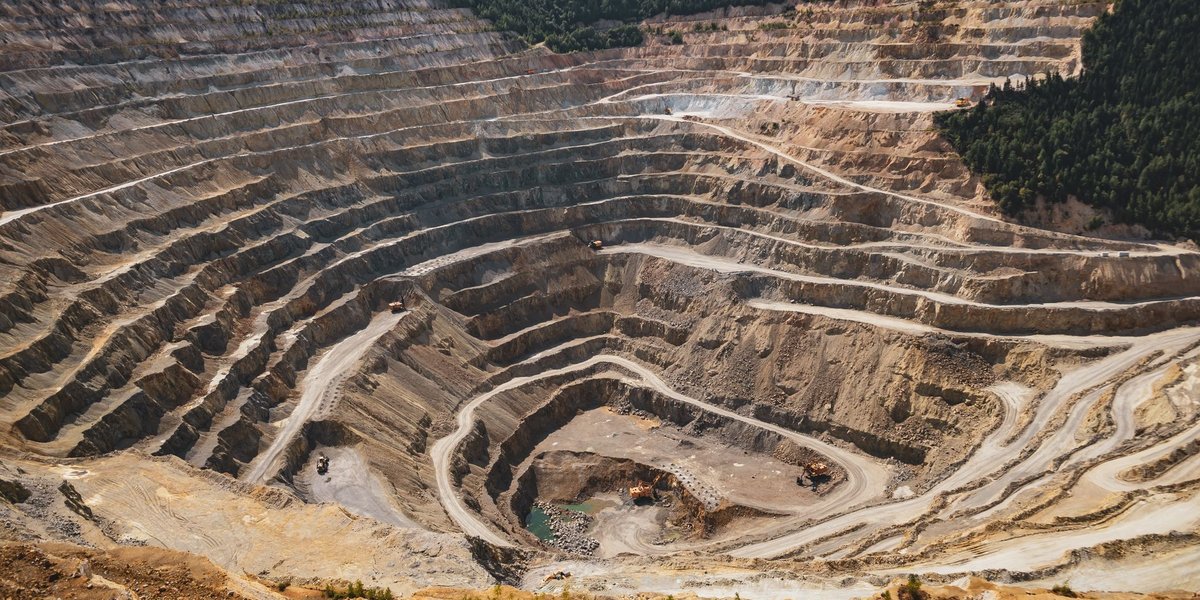
The deposit is at Spor Mountain in Juab County, Utah, and the company is Materion Corporation (formerly Brush Wellman). Spor Mountain holds the world’s richest known deposit of bertrandite, a beryllium ore that, while low-grade, sits in soft volcanic tuff that’s cheap to mine in a large open pit. Most of the rest of the world’s beryllium is locked up in beryl, a harder, more concentrated mineral that’s far more expensive to extract and process.
What makes the US position durable isn’t just the mine. Materion runs an integrated operation: it mines the bertrandite, blends it with imported beryl, and processes the whole lot into beryllium hydroxide, pure metal, and copper-beryllium alloys at facilities in Utah and Ohio. One company controls the chain from rock to finished alloy. That vertical integration is the moat, and it’s why no one has seriously challenged American dominance in decades.
China, the only real competitor {#china}
China is the world’s number two producer and, more importantly, the second country with real processing capacity. Chinese production draws mostly on beryl deposits, and the country has built out refining and alloy-making to serve its own electronics and defense industries.
China’s beryllium sector is harder to pin down with precise numbers because reporting is opaque, but the consensus estimate puts mine output around 70 tons a year. For a country that dominates so many other critical minerals — rare earths, gallium, germanium, tungsten — beryllium is one where it plays second fiddle to the US rather than the other way around.
The smaller producers {#smaller-producers}
Below China, beryllium production fragments into a scatter of countries where it’s essentially a side effect.
- Madagascar and Brazil both produce beryl, often pulled from pegmatite deposits that are mined primarily for gem-quality emeralds, aquamarine, and other beryl varieties. The industrial beryllium is a byproduct.
- Nigeria and Mozambique contribute small amounts from artisanal and small-scale mining of pegmatites.
- Russia has known beryllium deposits and some Soviet-era processing legacy, but current output is modest.
- Kazakhstan is the interesting outlier here: its mine output is small, but it’s the third country on Earth with the capacity to process beryllium, thanks to the Ulba Metallurgical Plant, a holdover from Soviet nuclear infrastructure that handles beryllium alongside uranium and tantalum.
That last point matters more than the production figures suggest, which brings us to the distinction most articles on this topic skip entirely.
Mining vs. processing: the part everyone skips {#mining-vs-processing}
Here’s the thing that confuses most rankings of “beryllium producing countries”: mining beryllium ore and producing beryllium products are two different industries, and most countries only do the first one.
Digging beryl out of a pegmatite is straightforward — you find it alongside emeralds and aquamarine, and small-scale miners do it in a dozen countries. But turning that ore into pure beryllium metal or copper-beryllium alloy is genuinely difficult and dangerous. Beryllium dust causes chronic beryllium disease, an incurable lung condition, so processing demands tight containment, specialized engineering, and heavy regulatory oversight. The CDC’s NIOSH program tracks worker exposure precisely because the hazard is so serious.
The result: only three countries process beryllium into finished product — the United States, China, and Kazakhstan. Madagascar and Brazil can mine the ore, but they ship it to one of those three to be turned into anything useful. When people worry about beryllium supply security, this is the real chokepoint. It’s not how many countries can dig up the rock. It’s how few can finish it.
Reserves vs. production {#reserves}
Production tells you who’s mining now. Reserves tell you who could mine in the future, and the picture shifts a little.
The US holds the largest identified reserves, again thanks to Spor Mountain. But significant beryllium resources also sit in countries that barely produce today — Brazil, China, and several African nations with pegmatite belts have substantial beryl resources that simply aren’t economical to exploit while Materion’s cheap bertrandite keeps prices where they are.
The USGS notes that world beryllium resources are estimated at more than 100,000 tons, the bulk of it in the US. So scarcity isn’t really a geology problem. There’s plenty of beryllium in the ground worldwide. The bottleneck is that mining and processing it competitively is hard, and one company figured out how to do it cheaply.
Is beryllium a critical mineral? {#critical-mineral}
Yes. Beryllium appears on the U.S. critical minerals list maintained by the USGS, and on the European Union’s equivalent.
It earns the label for reasons that have little to do with how much exists and everything to do with where it’s used and who controls supply:
- Defense and aerospace. Beryllium is lighter than aluminum but stiffer than steel, and it’s transparent to X-rays. That makes it irreplaceable in missile guidance systems, satellite structures, and the mirrors of telescopes like the James Webb Space Telescope, which used 18 beryllium mirror segments.
- Electronics and telecom. Copper-beryllium alloys make the springy, conductive contacts in connectors and relays that fatigue-resistant copper alone can’t match.
- Nuclear. Beryllium reflects and moderates neutrons, so it’s used in reactors and, historically, weapons.
There’s no good substitute for most of these uses, and the supply chain runs through very few hands. That combination — essential, hard to replace, concentrated supply — is the textbook definition of a critical mineral.
FAQ {#faq}
Which country produces the most beryllium? The United States, by a wide margin. It mines roughly 60–65% of the world’s beryllium, almost all of it from the Spor Mountain bertrandite deposit in Utah operated by Materion.
How many countries process beryllium? Only three: the United States, China, and Kazakhstan. Other countries mine beryl ore but ship it elsewhere for refining into metal and alloys.
Where is beryllium found in the ground? In two main ores. Bertrandite is a low-grade ore found in volcanic deposits, mined mainly in Utah. Beryl is a harder, more concentrated mineral found in pegmatites worldwide — it’s the same mineral family as emerald and aquamarine.
How much beryllium does the world produce each year? Roughly 250–300 metric tons of beryllium content annually. It’s one of the smaller mineral markets by volume — the world mines more gold by weight.
Why isn’t beryllium mined in more countries? The ore is common, but processing it is expensive, technically demanding, and hazardous to workers. With one US operation producing it cheaply, most countries have no economic reason to build the costly processing infrastructure required to compete.
Production figures are estimates based on USGS Mineral Commodity Summaries (2024). The US figure is partly withheld by the USGS to protect proprietary company data, so reported totals are approximate.