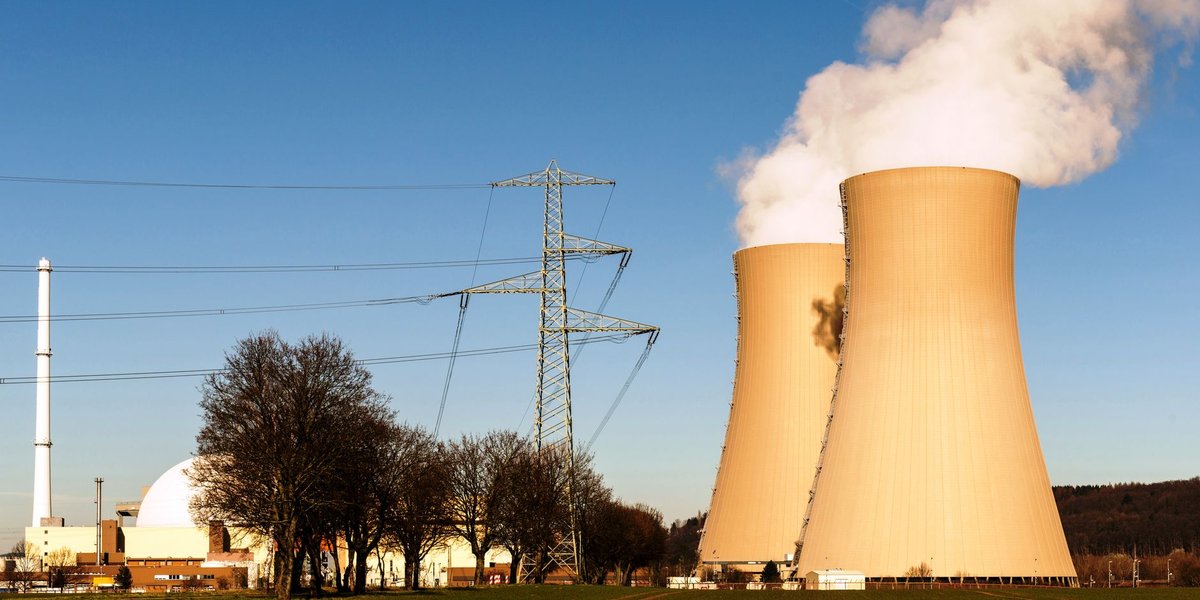
Ontario runs on nuclear. Not partly, not as a backup — roughly 60% of the province’s electricity comes from three stations and their 18 operating reactors. That’s one of the highest shares of any jurisdiction in North America, and it’s why Ontario’s grid is among the cleanest on the continent without leaning hard on hydro or imports.
The fast answer: there are three operating nuclear stations in Ontario — Bruce, Pickering, and Darlington — running CANDU reactors with a combined capacity of around 11,400 megawatts. Bruce is the biggest. Darlington is the newest and the one everyone’s watching for small reactors. Pickering is the old guard, refurbished and now headed for a second life nobody expected a few years ago.
Below is each station broken down, a comparison table so you can see them side by side, and the part the reference pages keep getting stale on: what’s actually happening next.
Table of Contents
- The quick comparison
- Bruce Nuclear Generating Station
- Darlington Nuclear Generating Station
- Pickering Nuclear Generating Station
- What’s CANDU, and why does Ontario use it?
- Nuclear’s role in the Ontario grid
- What’s next: refurbishments, SMRs, and new builds
- Common questions
The quick comparison
| Station | Location | Operator | Reactors | Capacity | First unit online | Status |
|---|---|---|---|---|---|---|
| Bruce | Tiverton (Kincardine), Lake Huron | Bruce Power | 8 | ~6,550 MW | 1977 | Operating, mid-refurbishment |
| Darlington | Clarington, Lake Ontario | Ontario Power Generation | 4 | ~3,500 MW | 1990 | Operating, refurbishment nearly done |
| Pickering | Pickering, Lake Ontario | Ontario Power Generation | 6 (units B + restart of A) | ~3,100 MW | 1971 | Operating, refurbishment planned |
Capacity figures shift slightly as units come offline for refurbishment and back on, so treat them as net nameplate, not what’s flowing on any given afternoon.
Bruce Nuclear Generating Station
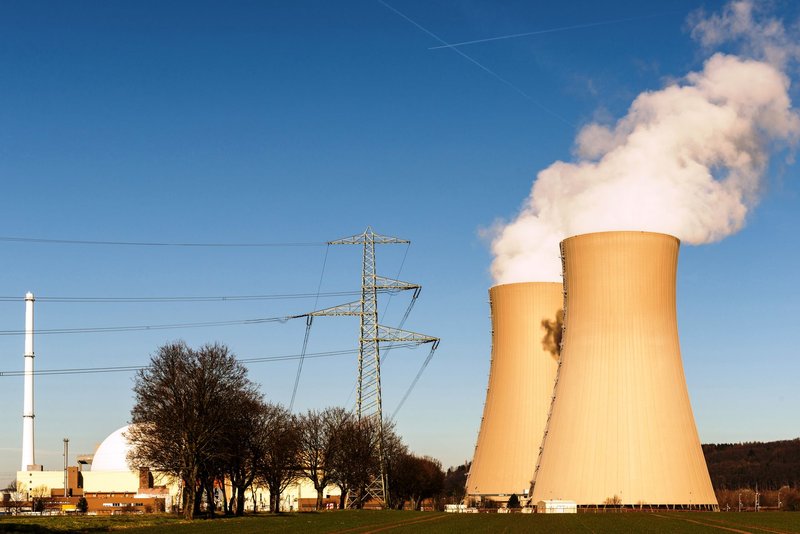
Bruce sits on the shore of Lake Huron near Tiverton, about three hours northwest of Toronto, and it is — by a wide margin — the largest operating nuclear plant in the world by total output. Eight CANDU reactors, roughly 6,550 megawatts. For scale: Bruce alone produces about 30% of Ontario’s electricity from a single site.
It’s run by Bruce Power, which is unusual — it’s a private consortium that leases the site from Ontario Power Generation, rather than a Crown corporation operating it directly. That structure dates to 2001, when the province leased the station out after the financial mess of the late 1990s, when several units sat shut down.
Bruce is in the middle of a Major Component Replacement program, a decade-long, multi-billion-dollar overhaul that swaps out the reactor cores’ aging guts — pressure tubes, calandria tubes, steam generators — one unit at a time so the rest keep generating. The goal is to push the station’s operating life into the 2060s. When the refurbishment wraps and a planned uprate is added, Bruce Power expects total site output to climb past 7,000 MW.
There’s also talk of Bruce C, a proposed new build on adjacent land that could add up to 4,800 MW. It’s early — the federal impact assessment is underway — but if it proceeds, it would be the first large-scale new nuclear build in Ontario since Darlington came online.
Darlington Nuclear Generating Station
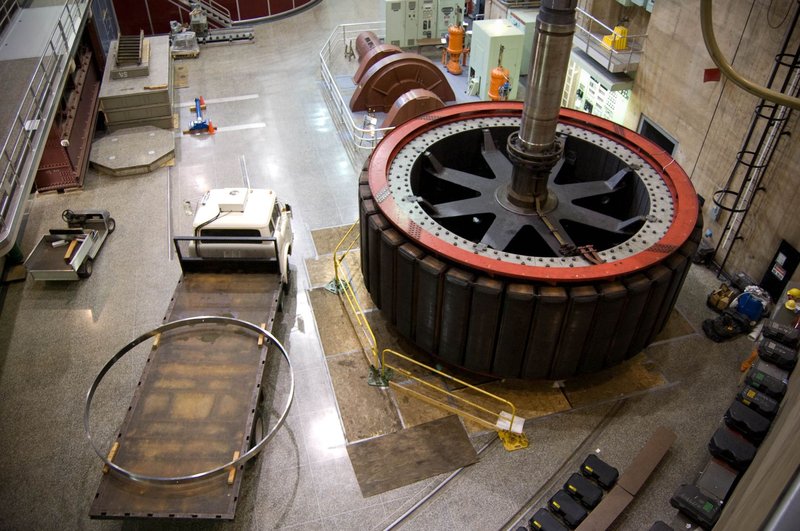
Darlington is the newest of the three, with four reactors near Clarington on Lake Ontario, just east of the GTA. Its units came online between 1990 and 1993, and it generates roughly 3,500 MW — about 20% of Ontario’s power.
Operated by Ontario Power Generation, Darlington has been the poster child for doing nuclear refurbishment on time and on budget, which is not a sentence you get to write often in this industry. OPG’s mid-life overhaul of all four units, launched in 2016, has tracked close to its schedule and roughly $12.8 billion budget. Unit 2 came back first; the program is in its final stretch.
What makes Darlington genuinely worth watching is the small modular reactor (SMR) project on the same site. OPG is building the first grid-scale SMR in the G7, a GE Hitachi BWRX-300 rated at about 300 MW, with construction approved and underway. The plan calls for up to four of them, which would add roughly 1,200 MW. If the first unit performs and the cost holds, Darlington becomes the template every other province and a chunk of the U.S. is watching.
Pickering Nuclear Generating Station
Pickering is the elder of the family — its first unit fired up in 1971 — and for years the story was simply when it would close. It sits right on Lake Ontario in the city of Pickering, closer to a major population center than almost any other nuclear plant in North America, which has always made it a lightning rod.
The station has eight units total, but two of the oldest (Units 2 and 3) were shut down and defueled years ago. The remaining units kept running on a series of life extensions, and the provincial plan as recently as 2021 was full retirement around 2025.
That plan reversed. Facing rising demand and a tightening supply outlook, Ontario decided in 2024 to pursue a full refurbishment of the four Pickering B units, a project the province expects to keep running into the 2060s. It’s a significant bet — refurbishing reactors of Pickering’s vintage is harder than the newer Darlington fleet — but it keeps roughly 2,000+ MW of clean baseload in service rather than scrambling to replace it. The older Pickering A units are slated for decommissioning rather than refurbishment.
What’s CANDU, and why does Ontario use it?
Every reactor in Ontario is a CANDU — CANada Deuterium Uranium — a Canadian-designed pressurized heavy-water reactor. Two things make CANDU distinct from the light-water reactors common in the U.S. and France.
First, it uses heavy water (deuterium oxide) as both moderator and coolant, which is a more efficient neutron moderator than ordinary water. That efficiency means CANDU can run on natural, unenriched uranium — no enrichment plants required, which mattered a lot to a country with uranium mines but no enrichment industry.
Second, CANDU reactors are refueled while running. Instead of shutting down for weeks to swap fuel like most reactors, fueling machines load and remove fuel bundles on the fly through horizontal pressure tubes. That’s a big part of why CANDU stations post such high capacity factors.
The trade-off is those pressure tubes degrade over decades, which is exactly what the Bruce, Darlington, and Pickering refurbishments are replacing. It’s expensive surgery, but it’s cheaper than building from scratch — and it’s why these 40- and 50-year-old stations are getting another 30 years.
Nuclear’s role in the Ontario grid
Here’s the part that surprises people: Ontario doesn’t use nuclear as a swing source. It uses it as the baseload floor — the steady, always-on output the entire grid is built around. Nuclear runs flat out around the clock, hydro and gas flex to follow demand, and wind and solar fill in.
That mix is why Ontario’s electricity is over 90% emissions-free in a typical year, according to grid data from the system operator, IESO. When Ontario phased out coal entirely by 2014 — the largest single climate action in North America at the time — it was nuclear and refurbished hydro that absorbed the load. Take the three nuclear stations offline and you’d have to replace about 60% of the province’s generation overnight, almost certainly with natural gas. That’s the lever these plants quietly hold.
Just three stations carrying that much of a province’s load runs against the usual picture of how grids are built — most jurisdictions spread generation across a far larger fleet of smaller power plants, where no single site comes close to Bruce’s footprint. The catch is timing. Several units across all three stations come offline for refurbishment in overlapping windows through the 2020s and 2030s, which tightens supply right as electrification — EVs, heat pumps, data centers — pushes demand up. That collision is the real reason the Pickering refurbishment got resurrected and Bruce C and the SMRs are on the table.
What’s next: refurbishments, SMRs, and new builds
The current status, station by station, since this is where the reference pages go stale fastest:
- Bruce — Major Component Replacement ongoing through the early 2030s, unit by unit. Planned uprate to push site output past 7,000 MW. Bruce C new build (up to 4,800 MW) in federal impact assessment.
- Darlington — Four-unit refurbishment in its final stretch. First G7 grid-scale SMR under construction, with up to four BWRX-300 units planned (~1,200 MW total).
- Pickering — Refurbishment of the four B units approved in 2024, reversing the earlier retirement plan, to keep the station running into the 2060s. Older A units headed for decommissioning.
- Wesleyville — A long-dormant, never-finished nuclear site near Port Hope that the province has flagged as a candidate for future large-scale nuclear. Nothing’s committed, but it’s back in the conversation.
The through-line: a decade ago the narrative was managed decline — refurbish what’s economical, retire the rest. Now it’s expansion, driven by demand forecasts that didn’t exist in 2021.
Common questions
Is nuclear power in Ontario safe? Ontario’s reactors are regulated by the Canadian Nuclear Safety Commission, an independent federal body, and the fleet has operated for over 50 years without a major radiological release. CANDU’s design includes multiple independent shutdown systems and containment. Like any industrial facility it carries risk, but the operating record is strong.
What happens to the nuclear waste? Spent CANDU fuel is stored on-site, first in water-filled bays, then in dry storage casks. Canada’s Nuclear Waste Management Organization has selected a site in northwestern Ontario for a deep geological repository — the long-term plan to bury the fuel permanently — with construction targeted for the 2030s.
How much of Ontario’s electricity is nuclear? Roughly 60% in a typical year, though it varies with how many units are offline for refurbishment at any given time.
Are any new nuclear plants being built in Ontario? Yes. OPG is building grid-scale SMRs at Darlington, and Bruce Power is in the early federal review stage for the large Bruce C project. These would be the first new nuclear builds in the province since Darlington opened in 1990.