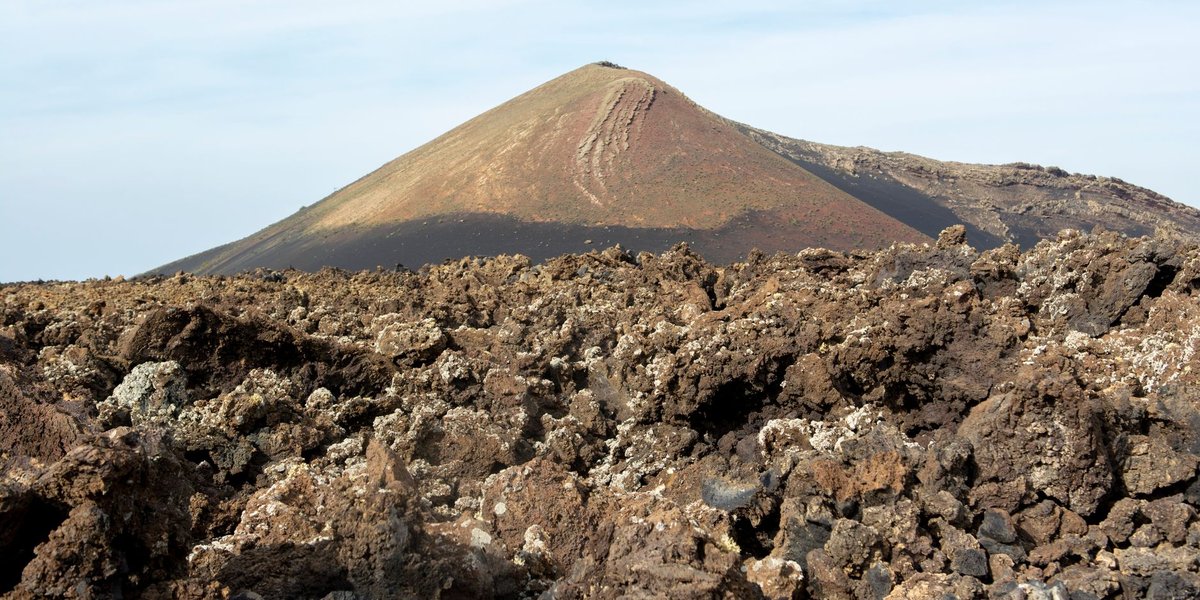
Cabo Verde sits 570 kilometers off the West African coast, ten dry volcanic islands that rose from the Atlantic and were never connected to the mainland. That isolation did what isolation always does to life: it let a small founding cast of birds, lizards, snails, and plants drift into forms found nowhere else on Earth. Some of those forms are spectacular. One of them — a cone snail radiation off a single set of bays — is among the most concentrated bursts of endemism in the marine world.
The problem with most “wildlife of Cape Verde” pages is that they blur the line. The green monkey on Santiago? Introduced. The famous dragon tree? Native to the wider Macaronesian region, not a Cabo Verde original. This guide draws that line hard. Everything below is endemic — meaning it evolved here and lives only here — organized by group, with scientific names, island ranges, and conservation status where it’s known.
Table of Contents
- The numbers at a glance
- Endemic birds
- Endemic reptiles: skinks and geckos
- The cone snail hotspot
- Spiders, insects, and the overlooked invertebrates
- Endemic plants
- Where to actually see them
The numbers at a glance
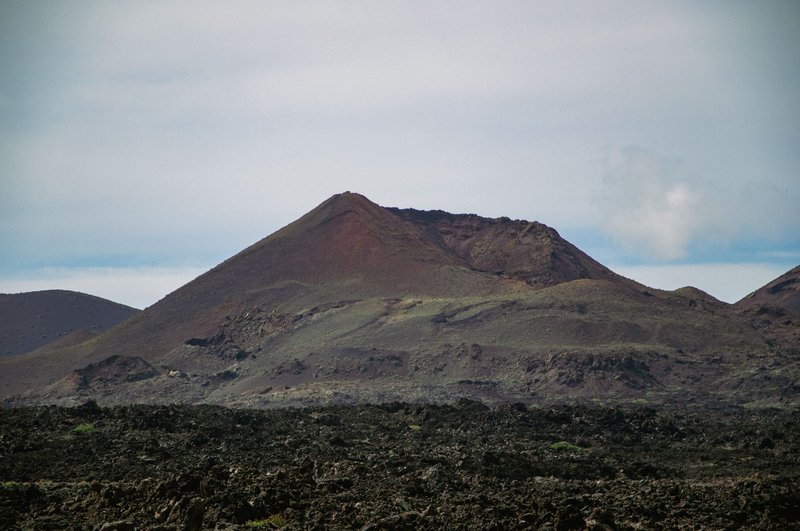
Endemism in Cabo Verde is wildly uneven across groups. The birds are few but iconic. The reptiles are a tidy, well-studied radiation. The cone snails are off the charts. Here’s how the headline groups compare.
| Group | Approx. endemic species | Standout example |
|---|---|---|
| Birds | 4 full species (plus several endemic subspecies) | Raso lark |
| Reptiles | ~30 (skinks + geckos) | Chioninia skinks, Cape Verde giant gecko |
| Cone snails (Africonus) | ~50–95, depending on taxonomy | Single-bay micro-endemics |
| Land snails & other molluscs | dozens | island-restricted radiations |
| Plants | ~80 vascular species | Echium species, Cape Verde aloe |
Two patterns jump out. First, the invertebrates carry the real diversity — the showy vertebrates are a small slice. Second, several of these species live on a single island, or in the cone snails’ case, sometimes a single bay, which makes them extraordinarily vulnerable.
Endemic birds
Cabo Verde’s bird endemism is thin compared to, say, the Galápagos, but what’s here matters out of all proportion to the count.
Raso lark (Alauda razae) — The headliner, and one of the rarest birds on the planet. The entire global population lives on Raso, an uninhabited islet of about 7 square kilometers in the Barlavento group. The number swings hard with rainfall: it has dropped below 100 individuals in drought years and rebounded past 1,500 in wet ones. The IUCN lists it as Critically Endangered, and conservationists have begun establishing a second population on nearby Santa Luzia as insurance against a single bad drought or an accidental rat introduction wiping out the lot. Males have noticeably longer bills than females, an unusual sexual dimorphism tied to how each sex digs for food.
Cape Verde warbler (Acrocephalus brevipennis) — A reed warbler that, oddly for the genus, lives in well-vegetated valleys and gardens rather than reedbeds. Found on Santiago, Fogo, and São Nicolau. It vanished from Brava and was thought lost on São Nicolau before being rediscovered there.
Cape Verde swift (Apus alexandri) — A small, sooty swift seen wheeling over most of the islands, often near cliffs and villages. Less glamorous than the lark, but a true endemic and the swift you’ll most reliably tick off.
Iago sparrow (Passer iagoensis), also called the Cape Verde sparrow, rounds out the list as a widespread endemic across the archipelago.
Beyond the full species, several seabirds and raptors are represented by endemic subspecies — including the local form of the red kite and the Cape Verde shearwater (Calonectris edwardsii), which some authorities elevate to full species and which breeds on the islets in internationally important numbers.
Endemic reptiles: skinks and geckos
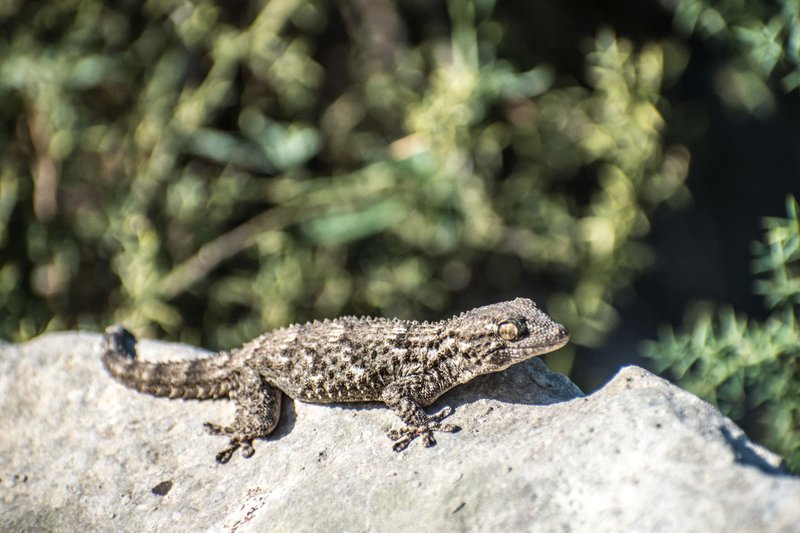
This is where Cabo Verde gets genuinely interesting for anyone who likes a clean evolutionary story. The reptiles are an in-house radiation: a handful of colonists that diversified into roughly thirty species, almost all of them endemic, split mainly between the skink genus Chioninia and the geckos Tarentola and Hemidactylus.
The Chioninia skinks are the stars. These are lizards that adapted to one of the harshest environments imaginable — bare, sun-blasted volcanic rock with almost no fresh water. Chioninia stangeri, C. delalandii, C. spinalis, and their relatives partition the islands between them, each population shaped by its particular rock and rainfall.
The Cape Verde giant skink (Chioninia coctei) is the cautionary tale. Once living on Branco and Raso, it grew to over 30 centimeters and was hunted, used to make a leather-like product and crushed for medicinal oil, while goats stripped its habitat. It hasn’t been reliably seen since the early 20th century and is now listed as Extinct by the IUCN — Cabo Verde’s clearest example of endemism lost rather than protected.
The geckos are equally local. The Cape Verde giant gecko (Tarentola gigas) survives only on Branco and Raso, a hefty nocturnal gecko that, like the lark, depends entirely on keeping those islets free of rats and cats. Smaller Tarentola and the leaf-toed Hemidactylus fill nearly every island with their own endemic forms.
The takeaway: if you find a lizard on a Cabo Verde island, the odds are very high it lives only on Cabo Verde, and decent that it lives only on the island you’re standing on.
The cone snail hotspot
Here’s the fact that should be on every postcard but isn’t. The shallow rocky bays of Cabo Verde host one of the densest concentrations of endemic cone snails anywhere on Earth — a radiation of the genus Africonus (long lumped into Conus) that runs to dozens of species, with counts cited from around 50 up toward 95 depending on whose taxonomy you follow.
What makes it remarkable isn’t just the number, it’s the scale of the endemism. Many of these cone snails are micro-endemics restricted to a single island, and some to a single bay or stretch of coast a few kilometers long. They have non-planktonic larvae — the young don’t drift out to sea and disperse — so each isolated bay became its own evolutionary laboratory. Populations a short boat ride apart diverged into separate species.
That same trait makes them fragile. A cone snail confined to one bay can be wiped out by a single pollution event, a harbor expansion, or overcollection by shell traders. Several Africonus species carry threatened or data-deficient status precisely because their entire world is so small. For the eco-tourist, the lesson is simple: admire them in the tide pools, photograph the shells, and leave them where they are.
Spiders, insects, and the overlooked invertebrates
The vertebrates and cone snails get the attention, but the bulk of Cabo Verde’s endemic diversity hides in the small stuff. Endemic land snails have radiated across the islands much as the cone snails did in the sea, each massif and valley producing its own restricted forms. Spiders, beetles, grasshoppers, and other arthropods include numerous single-island endemics that are still being described — and some, surely, that have gone extinct before anyone named them.
These groups are undersampled, which means the official endemic count for Cabo Verde is almost certainly an underestimate. Every serious invertebrate survey of a poorly studied islet tends to turn up something new.
Endemic plants
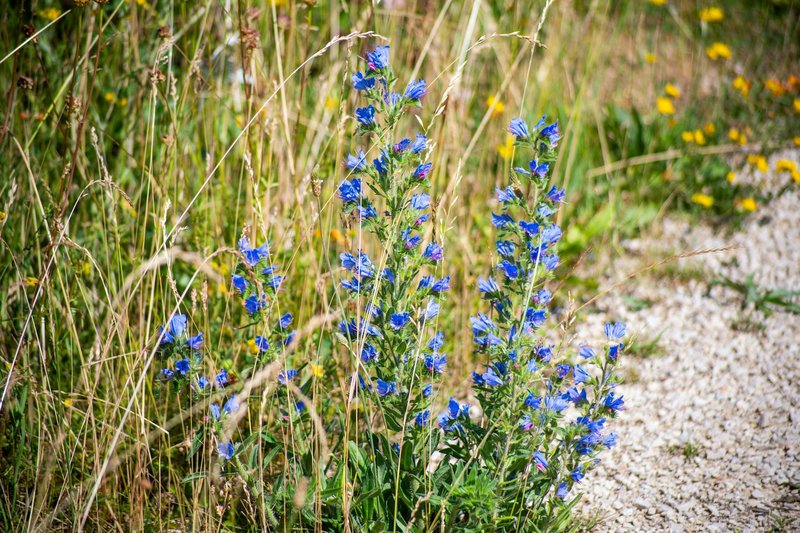
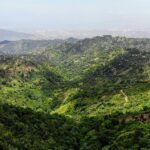
Cabo Verde has roughly 80 endemic vascular plants, clinging to a landscape that is mostly dry lowland and steep volcanic highland. The endemic flora concentrates in the cooler, moister mountain zones of the higher islands — Santo Antão, Fogo, Santiago, São Nicolau — where altitude squeezes a little reliable moisture out of the trade winds.
The genus to know is Echium. These shrubby borage relatives, cousins to the giant Echium towers of the Canaries, have produced several Cabo Verde endemics with dense spikes of blue and violet flowers. There’s also an endemic Cape Verde aloe and a scatter of endemic spurges, grasses, and figworts adapted to thin volcanic soils.
A clarification worth making, since the tourism guides muddle it: the famous dragon tree (Dracaena draco) you’ll see photographed is part of the broader Macaronesian flora shared with the Canaries and Madeira, not a Cabo Verde endemic. It’s a wonderful tree and worth seeking out. It just isn’t only yours. The same caution applies to most of the crop and ornamental plants around the villages — beautiful, but introduced.
For the global picture of how oceanic-island floras assemble and why they’re so prone to endemism, the Royal Botanic Gardens, Kew is the reference worth bookmarking.
Where to actually see them
Endemism this concentrated has a frustrating side: a lot of it lives on protected, hard-to-reach islets. Here’s the realistic breakdown.
- The Raso lark and the giant gecko live on Raso and Branco, uninhabited reserves. You reach them only on organized conservation or specialist birding boat trips out of São Vicente or São Nicolau, and landings are restricted to protect the species. This is the right way to see them.
- Endemic skinks and geckos are easy almost everywhere — check rock walls and old buildings at dusk on any island and you’ll find local Tarentola or Chioninia.
- Cone snails turn up in the rocky intertidal zones of most islands at low tide. Look, photograph, don’t collect.
- Endemic plants and Echium reward a hike into the highlands of Santo Antão or up Fogo’s caldera, where the moist upper slopes hold the bulk of the endemic flora.
If you want to support the conservation work keeping these species alive — particularly the lark and the gecko on their rat-free islets — the local NGO Project Biodiversity runs the field programs and is the obvious place to start.
Cabo Verde won’t overwhelm you with a thousand endemic vertebrates the way a continental hotspot might. What it offers is sharper and stranger: a critically endangered lark on a single uninhabited rock, a skink that already went extinct as a warning, and a hidden empire of cone snails where the next bay over holds a different species. That’s the real story of these islands — not how much lives here, but how singular it is.