From tidal flats and coral reefs to backyard ponds, coastal and freshwater habitats host a wide array of shelled and soft-bodied creatures that influence water clarity, nutrient cycling, and food chains. Observing them gives insight into ecosystem health and species interactions.
There are 64 Mollusks, ranging from Apple snail to Zebra mussel. For each entry you’ll find below Scientific name, Class, Size (cm), laid out so you can scan taxonomic identity, broad grouping, and typical size at a glance.
How are the species organized and identified in this list?
Each entry uses the scientific name to avoid confusion, followed by the taxonomic class and a typical size in centimeters; that structure makes it easy to compare related species and confirm identifications using the scientific name.
Does the list indicate which species are invasive or where they live, for cases like the Zebra mussel?
The table focuses on names, class, and size, so invasive status and detailed habitat notes aren’t included by default; use the scientific names provided to look up range, ecological impact, or management info in primary sources and regional databases.
Mollusks
| Name | Scientific name | Class | Size (cm) |
|---|---|---|---|
| Garden snail | Cornu aspersum | Gastropoda | 4 |
| Giant African land snail | Achatina fulica | Gastropoda | 20 |
| Common periwinkle | Littorina littorea | Gastropoda | 3 |
| Roman snail (Burgundy snail) | Helix pomatia | Gastropoda | 4 |
| Red abalone | Haliotis rufescens | Gastropoda | 20 |
| Limpet | Patella vulgata | Gastropoda | 5 |
| Geography cone | Conus geographus | Gastropoda | 6 |
| Moon snail | Neverita duplicata | Gastropoda | 7 |
| Sea hare | Aplysia californica | Gastropoda | 50 |
| Spanish dancer (nudibranch) | Hexabranchus sanguineus | Gastropoda | 30 |
| Blue sea slug (blue dragon) | Glaucus atlanticus | Gastropoda | 3 |
| Common whelk | Buccinum undatum | Gastropoda | 6 |
| Tiger cowrie | Cypraea tigris | Gastropoda | 11 |
| Olive snail | Oliva sayana | Gastropoda | 6 |
| Sea butterfly (pteropod) | Limacina helicina | Gastropoda | 1 |
| Nerite | Nerita peloronta | Gastropoda | 3 |
| Black slug | Arion ater | Gastropoda | 10 |
| Chromodoris nudibranch | Chromodoris willani | Gastropoda | 5 |
| Horse conch | Triplofusus papillosus | Gastropoda | 90 |
| Triton’s trumpet | Charonia tritonis | Gastropoda | 60 |
| Wentletrap | Epitonium scalare | Gastropoda | 3 |
| Tower shell | Turritella communis | Gastropoda | 6 |
| Slipper limpet | Crepidula fornicata | Gastropoda | 5 |
| New Zealand giant snail | Powelliphanta sp. | Gastropoda | 9 |
| Apple snail | Pomacea canaliculata | Gastropoda | 10 |
| Nerite (mangrove) | Nerita albicilla | Gastropoda | 4 |
| Slipper snail (flat oyster predator) | Bulla gouldiana | Gastropoda | 7 |
| Periwinkle (rock dweller) | Littorina saxatilis | Gastropoda | 2 |
| Freshwater nerite | Theodoxus fluviatilis | Gastropoda | 1 |
| Freshwater apple snail (golden) | Pomacea maculata | Gastropoda | 12 |
| Marine top shell | Trochus niloticus | Gastropoda | 10 |
| Common periwinkle (rock) | Littorina obtusata | Gastropoda | 2 |
| Banded tulip | Fasciolaria hunteria | Gastropoda | 20 |
| Giant clam | Tridacna gigas | Bivalvia | 120 |
| Geoduck | Panopea generosa | Bivalvia | 30 |
| Blue mussel | Mytilus edulis | Bivalvia | 6 |
| Pacific oyster | Crassostrea gigas | Bivalvia | 25 |
| Scallop | Pecten maximus | Bivalvia | 15 |
| Razor clam | Ensis directus | Bivalvia | 20 |
| Cockle | Cerastoderma edule | Bivalvia | 6 |
| Shipworm | Teredo navalis | Bivalvia | 100 |
| Freshwater mussel | Lampsilis siliquoidea | Bivalvia | 12 |
| Pearl oyster | Pinctada maxima | Bivalvia | 30 |
| Hard clam (quahog) | Mercenaria mercenaria | Bivalvia | 10 |
| Zebra mussel | Dreissena polymorpha | Bivalvia | 4 |
| Piddock | Pholas dactylus | Bivalvia | 6 |
| Ark clam | Anadara granosa | Bivalvia | 8 |
| Humboldt squid | Dosidicus gigas | Cephalopoda | 300 |
| Giant squid | Architeuthis dux | Cephalopoda | 1,300 |
| Colossal squid | Mesonychoteuthis hamiltoni | Cephalopoda | 1,200 |
| Common octopus | Octopus vulgaris | Cephalopoda | 100 |
| Giant Pacific octopus | Enteroctopus dofleini | Cephalopoda | 400 |
| Cuttlefish | Sepia officinalis | Cephalopoda | 45 |
| Vampire squid | Vampyroteuthis infernalis | Cephalopoda | 30 |
| Humboldt squid (jumbo) | Dosidicus gigas | Cephalopoda | 300 |
| Chambered nautilus | Nautilus pompilius | Cephalopoda | 25 |
| Atlantic brief squid | Lolliguncula brevis | Cephalopoda | 15 |
| Gumboot chiton | Cryptochiton stelleri | Polyplacophora | 30 |
| Pink-footed chiton | Mopalia muscosa | Polyplacophora | 10 |
| West Indian fuzzy chiton | Acanthopleura granulata | Polyplacophora | 10 |
| Common chiton | Chiton tuberculatus | Polyplacophora | 8 |
| Common tusk shell | Antalis entalis | Scaphopoda | 6 |
| Elephant tusk shell | Dentalium elephantinum | Scaphopoda | 8 |
| Funnel tusk shell | Fustiaria rubescens | Scaphopoda | 3 |
Images and Descriptions
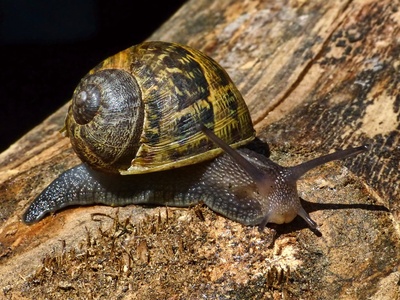
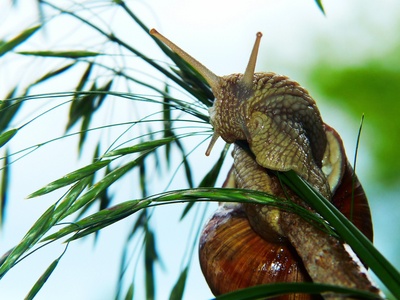
Garden snail
Common garden snail found across Europe and introduced worldwide in gardens and hedgerows; shell about 4 cm. Notable for hermaphroditism and slow movement. Cornu aspersum means “rough horn,” referring to its textured, brown banded shell.
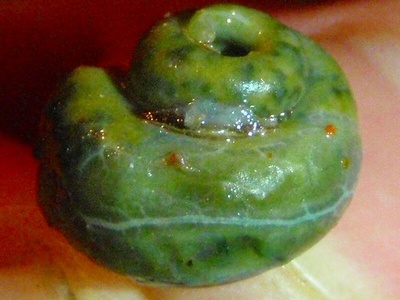
Giant African land snail
Large tropical land snail native to East Africa, now invasive across many warm regions; shell up to 20 cm. Known for rapid reproduction and agricultural damage. The genus name Achatina alludes to polished shells valued historically.
Common periwinkle
Small intertidal snail common on rocky shores of the North Atlantic; shell about 3 cm. Grazes algae and tolerates strong waves, often studied for tide-zone ecology. Littorina means “shore-dweller” in Latin.
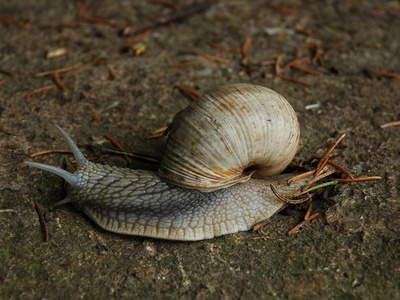
Roman snail (Burgundy snail)
Large terrestrial snail native to Europe, famous as the culinary escargot; shell around 4 cm. Lives in gardens and woodlands. Helix means “spiral,” referencing its rounded shell shape and slow lifestyle.
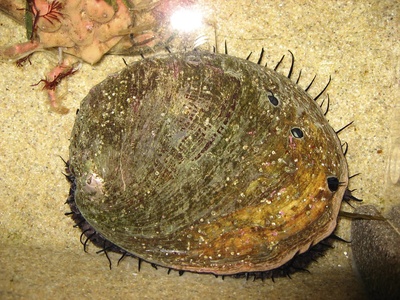
Red abalone
Marine gastropod from California coasts; flattened ear-shaped shell to about 20 cm. Harvested for food and mother-of-pearl; Haliotis means “sea ear” due to shell shape, and rufescens refers to reddish hues.
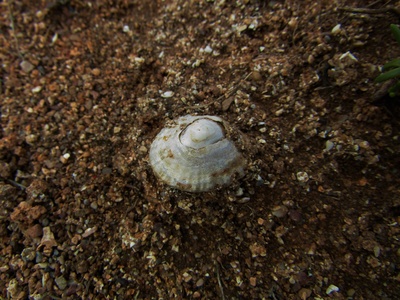
Limpet
Common rocky shore limpets of the North Atlantic with conical shells about 5 cm. Clings tightly to rocks, grazing algae with a rasping radula. Patella means “small pan,” describing the shell’s shape.

Geography cone
A striking tropical cone snail with patterned 6 cm shell; lives on Indo-Pacific reefs and sandy bottoms. A venomous predator capable of human-harmful stings. “Geographus” refers to its map-like shell markings.
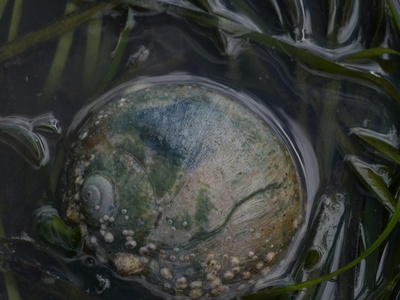
Moon snail
Burrowing predator of sandy shores in the Atlantic; shell about 7 cm. Notable for drilling neat holes in other mollusks’ shells. The name Neverita suggests its rounded, moon-like shell.
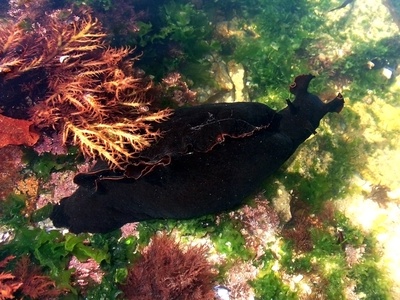
Sea hare
Large coastal sea slug found along Pacific shores; can reach 50 cm. Feeds on algae and expels ink-like secretions when disturbed. Aplysia is Greek for “no shell,” reflecting its reduced internal shell.
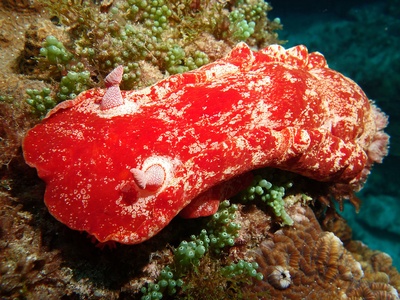
Spanish dancer (nudibranch)
Colorful large nudibranch found on Indo-Pacific reefs, up to 30 cm. Flamboyant red swimming display gives its common name. Hexabranchus means “six gills,” describing its distinctive anatomy.
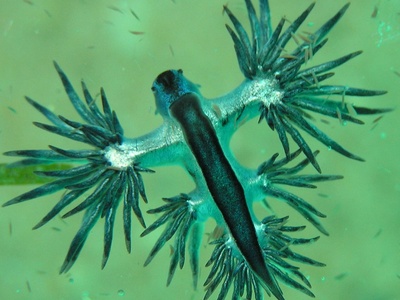
Blue sea slug (blue dragon)
Pelagic blue nudibranch drifting on ocean surface in warm seas; about 3 cm long. Feeds on venomous siphonophores and concentrates their stings for defense. Glaucus means “bluish-green” in Greek.
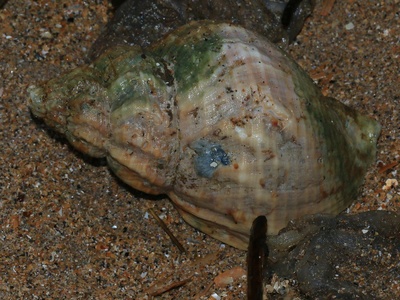
Common whelk
Cold-water predatory sea snail of North Atlantic coasts; shell around 6 cm. Feeds on bivalves and carrion. Buccinum means “trumpet,” alluding to the shell’s shape used historically as a horn.
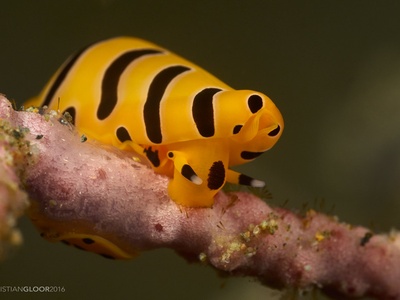
Tiger cowrie
Large glossy cowrie from tropical Indo-Pacific reefs, shell about 11 cm. Valued by collectors and historically used as currency; mantle can cover the shell. “Tigris” refers to its bold spotted pattern.
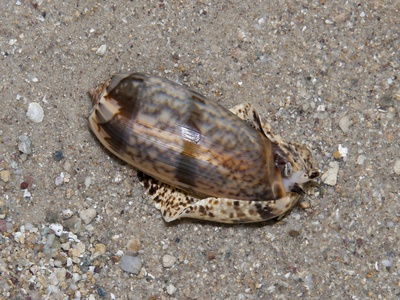
Olive snail
Smooth, elongated marine snail from western Atlantic sands; shell about 6 cm. Active burrower and nocturnal predator. Genus name Oliva refers to the olive-like glossy shell shape.
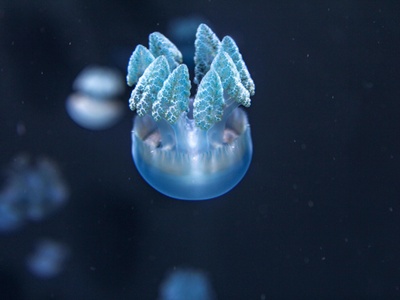
Sea butterfly (pteropod)
Tiny planktonic snail found in polar and temperate seas, about 1 cm. Important in marine food webs and sensitive to ocean acidification; “helicina” means small spiral, describing the shell.

Nerite
Intertidal and mangrove snail in tropical Atlantic and Caribbean, shell about 3 cm. Strong operculum protects against desiccation and predators. Nerita derives from Greek sea-nymph Nereid names.
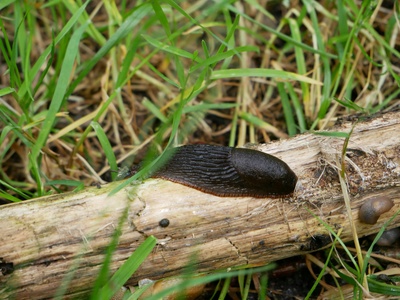
Black slug
Widespread European terrestrial slug found in gardens and woodlands; length to 10 cm. Lacks a visible shell and secretes mucus for locomotion. Arion refers to a classic slug genus in Europe.
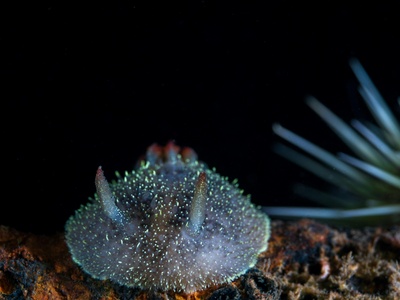
Chromodoris nudibranch
Brightly colored reef nudibranch from Indo-Pacific waters, about 5 cm. Feeds on sponges, often aposematic (warning) colored due to toxins. Chromodoris means “colorful skin,” reflecting vivid patterns.
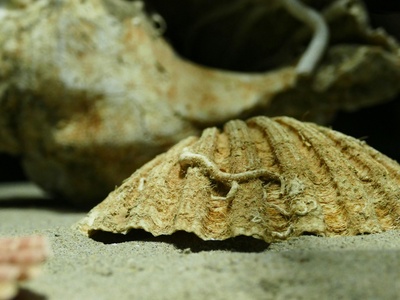
Horse conch
Very large Atlantic gastropod with shell up to 90 cm; found on sandy bottoms from North Carolina to Florida. Predator of other mollusks and crabs. Common name refers to its horse-sized appearance.
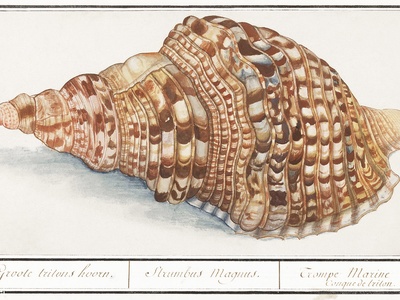
Triton’s trumpet
Large tropical predatory snail on coral reefs with shell up to 60 cm. Famous for preying on crown-of-thorns starfish. Named after Triton, sea god who blew a conch horn.
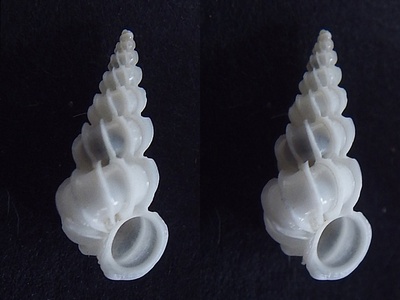
Wentletrap
Small white spiral shell common on continental shelves in warm seas, about 3 cm. Feeds on sea anemones and corals, often with intricate ribbing. “Wentletrap” derives from Dutch for winding staircase.
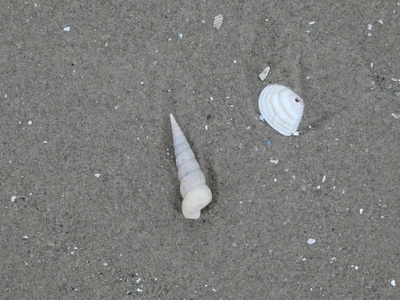
Tower shell
High-spired marine snail on sandy bottoms of the Northeast Atlantic, about 6 cm. Forms dense beds and filters particles while burrowing. Turritella means “little tower” for its turreted shell.
Slipper limpet
Intertidal to shallow subtidal limpets with slipper-like shells up to 5 cm; native to North America, invasive elsewhere. Forms stacks of individuals and exhibits interesting sex-change behavior.
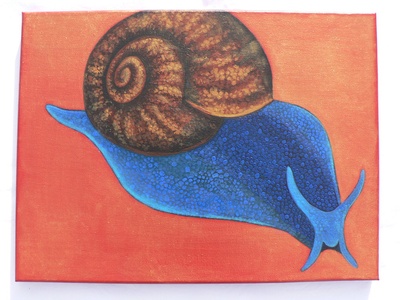
New Zealand giant snail
Carnivorous terrestrial snail endemic to New Zealand forests; up to 9 cm in diameter. Feeds on earthworms and is prized for its colorful shell. Powelliphanta honors malacologist Arthur Powell.
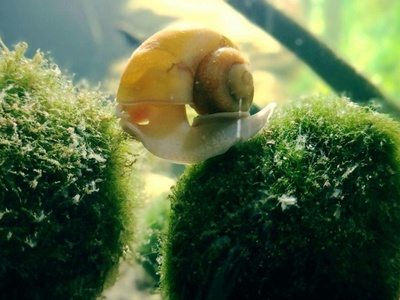
Apple snail
Freshwater South American snail established in Asia as invasive pest; shell around 10 cm. Eats aquatic plants and reduces rice yields. Common name relates to rounded, apple-like shell.
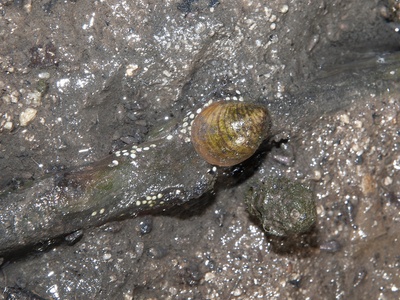
Nerite (mangrove)
Intertidal snail inhabiting mangroves and rocky shores across Indo-Pacific, about 4 cm. Strongly adhesive with patterned shell; resists desiccation. “Albicilla” means “white tail” in Latin, referencing shell markings.
Slipper snail (flat oyster predator)
Smooth-shelled marine snail found in shallow Pacific waters, roughly 7 cm. Nocturnal grazer on algae and detritus, often buried in sand. Genus Bulla means “bubble,” for its inflated shell form.
Periwinkle (rock dweller)
Small rocky-shore snail throughout North Atlantic; shell about 2 cm. Strongly adapted to high intertidal zones with varied shell forms. Saxatilis means “rock-dwelling,” reflecting its habitat.
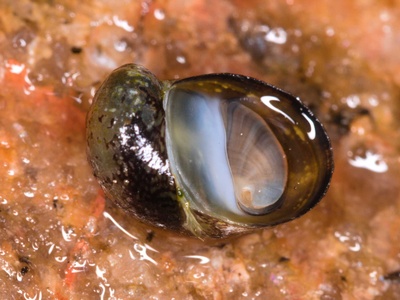
Freshwater nerite
Small freshwater snail in European rivers and brackish zones, about 1 cm. Grazes biofilm on stones and tolerates variable salinity. Theodoxus means “gift of God” in Greek.
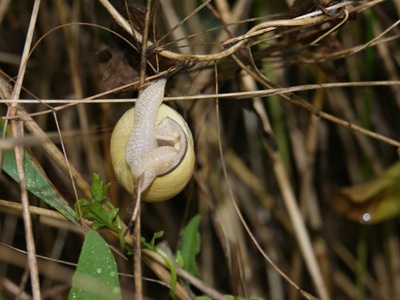
Freshwater apple snail (golden)
Large freshwater snail native to South America, now invasive in North America and Asia; shell to 12 cm. Eats aquatic plants aggressively; named for spotted shell patterns.
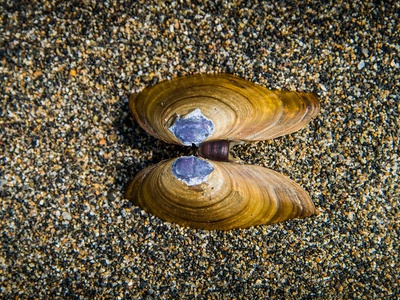
Marine top shell
Large conical shell found on Indo-Pacific coral reefs, around 10 cm. Harvested for mother-of-pearl and as food. Trochus means “wheel,” referring to its rounded coiling.
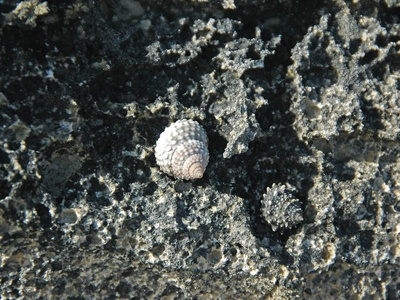
Common periwinkle (rock)
Small periwinkle in cold Atlantic tide pools, roughly 2 cm. Tolerant of variable salinity and temperature; important grazer of microalgae. Obtusata hints at its blunt shell shape.
Banded tulip
Warm-water predatory snail in western Atlantic seagrass and sand habitats; shell to 20 cm. Hunts bivalves and worms. “Fasciolaria” refers to banded patterns on the shell.
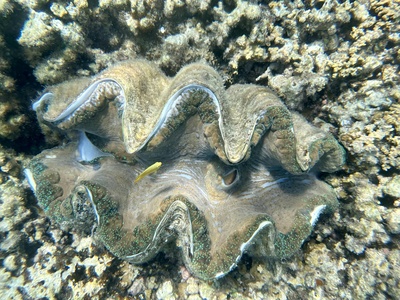
Giant clam
Enormous reef-dwelling bivalve of the Indo-Pacific, shells up to 120 cm. Hosts symbiotic algae that photosynthesize, supplying nutrition. Tridacna means “three-toothed,” referring to shell hinge features.
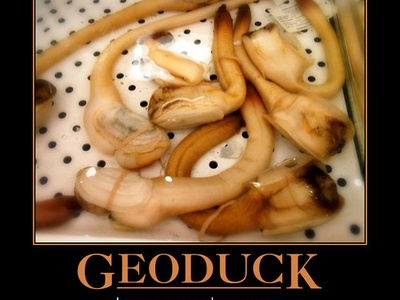
Geoduck
Large burrowing clam of Pacific Northwest mudflats; siphons and body can reach 30 cm. Valued as a seafood delicacy and long-lived species. “Geoduck” derives from a Native American word meaning “dig deep.”
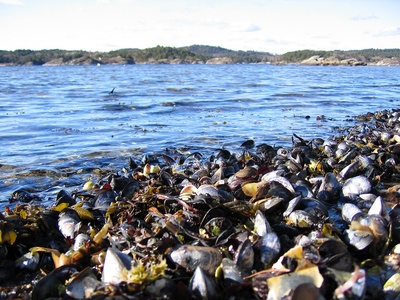
Blue mussel
Common intertidal and subtidal mussel across North Atlantic coasts; shell about 6 cm. Forms dense beds, filters water, and supports ecosystems. Mytilus means “mussel” in Latin.
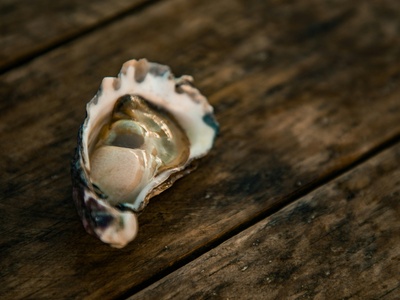
Pacific oyster
Widespread farmed oyster native to Asia, introduced globally; shells up to 25 cm. Important aquaculture species and reef former. “Gigas” means giant, for its relative size.
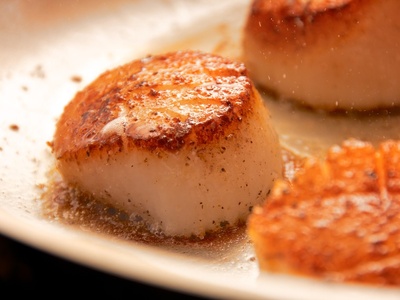
Scallop
Commercially important scallop from Northeast Atlantic with fan-shaped shells to 15 cm. Capable of short swimming by clapping shells. Pecten refers to comb-like ribs on the shell.
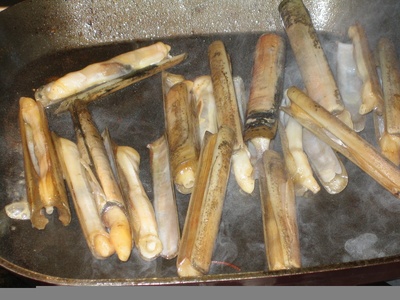
Razor clam
Long burrowing clam in sandy beaches of Atlantic coasts, up to 20 cm. Rapid burrower that escapes predation by digging. Ensis means “sword,” reflecting the shell’s elongated shape.
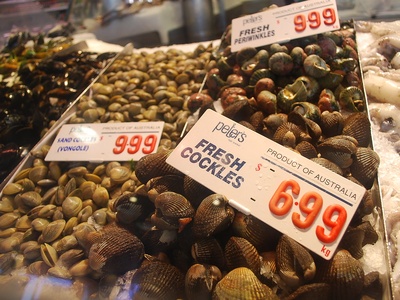
Cockle
Shallow sandy and muddy shore bivalve common in Europe; shell about 6 cm. Important food item and ecosystem engineer. The name Cerastoderma combines Greek for “horn” and “skin,” reflecting shell texture.
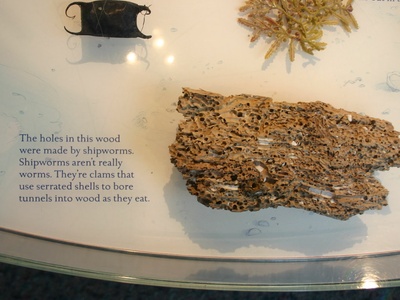
Shipworm
Wood-boring bivalve that tunnels into timber in marine waters; body and borings can extend up to 100 cm. Economically notorious for damaging wooden ships and piers. “Teredo” means borer.
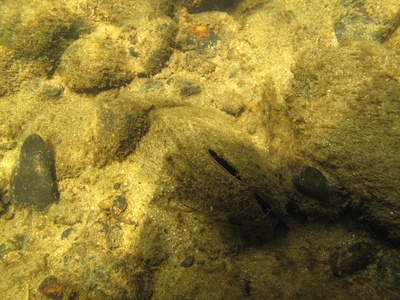
Freshwater mussel
Unionid mussel in North American rivers with shell to 12 cm. Filter-feeding life stages rely on fish hosts for larval development. Lampsilis refers to its lamp-like shell form.
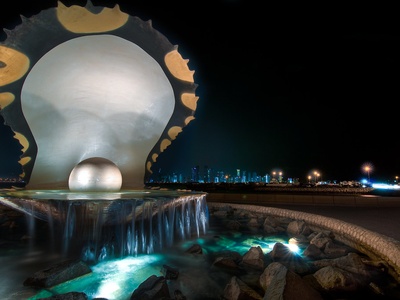
Pearl oyster
Large tropical oyster producing South Sea pearls; shells to 30 cm. Cultivated widely for pearls and mother-of-pearl. Pinctada is associated with pearl production in many cultures.
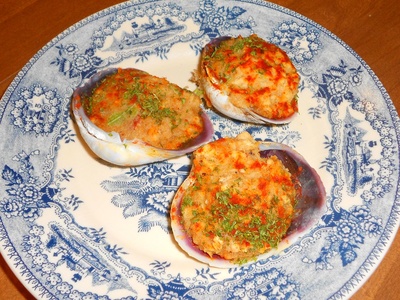
Hard clam (quahog)
Atlantic bivalve found in sandy estuaries, shell around 10 cm. Long-lived species harvested for food; name “quahog” is of Algonquian origin.
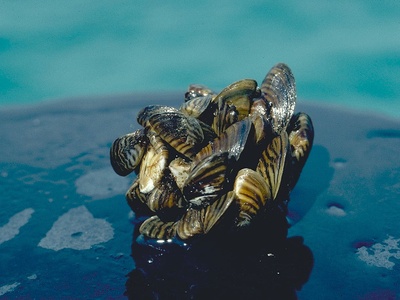
Zebra mussel
Small invasive freshwater mussel from Eurasia, about 4 cm. Forms dense colonies clogging infrastructure and altering ecosystems. “Zebra” refers to banded shell pattern.
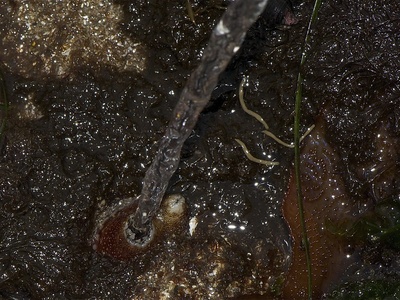
Piddock
Rock-boring bivalve living in holes it excavates in stone and wood on temperate coasts; shell about 6 cm. Uses acidic secretions and rasping shell to bore. Pholas relates to a marine borer genus.
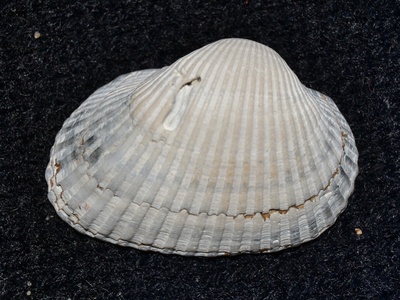
Ark clam
Tropical mangrove and intertidal bivalve to 8 cm eaten regionally as seafood. Thick ribbed shell and burrowing habit; “Anadara” designates ark-like shell shape.
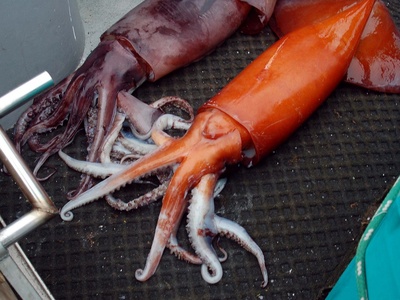
Humboldt squid
Fast-swimming pelagic squid of the eastern Pacific, up to 300 cm including tentacles. Known for large schools and aggressive feeding; “gigas” denotes large size.
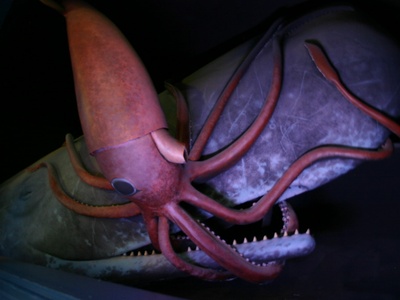
Giant squid
Deep-sea giant reaching estimated lengths around 1,300 cm; rarely seen alive. Famous for long feeding tentacles and giant eyes. Architeuthis means “chief squid,” reflecting legendary status.
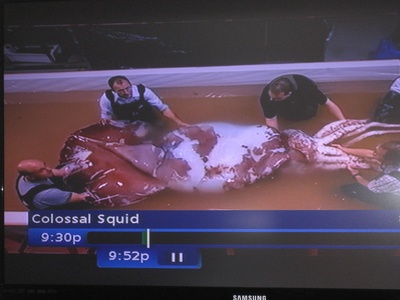
Colossal squid
Huge Antarctic deep-water squid up to roughly 1,200 cm, extremely heavy and muscular. Noted for large hooks on tentacles and massive beak. Genus name refers to whale-like teeth.
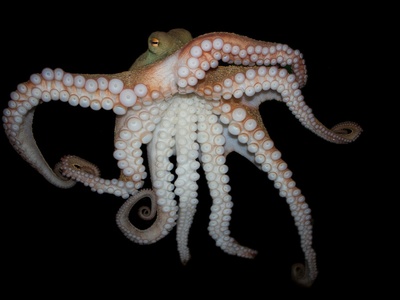
Common octopus
Widespread shallow-water octopus with arm span near 100 cm; found in temperate and tropical seas. Intelligent predator using camouflage and problem-solving. “Vulgaris” means common in Latin.
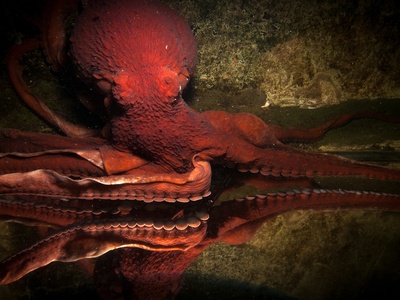
Giant Pacific octopus
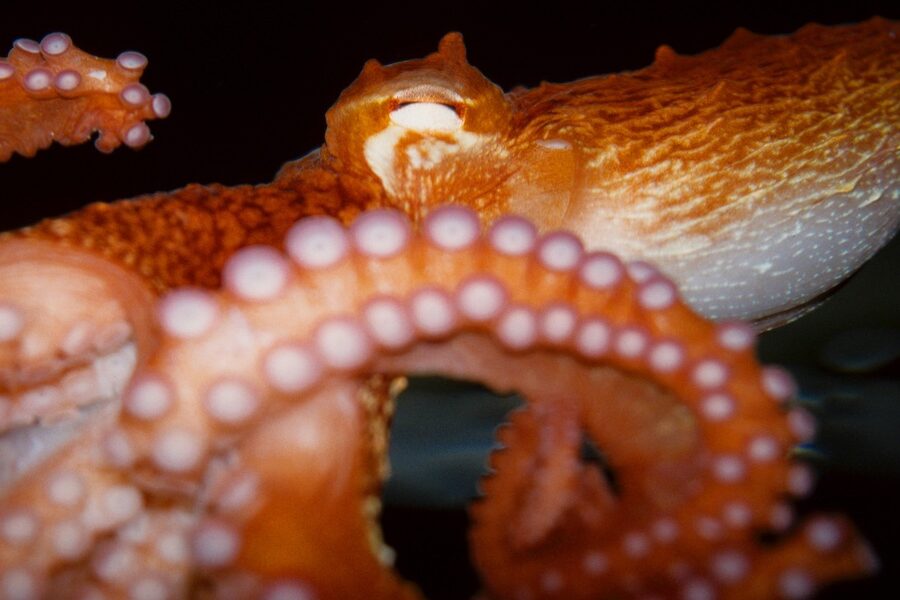
Large octopus of North Pacific coastal waters with arm span up to 400 cm. Noted for size, strength, and intelligence. Enteroctopus refers to its internal body and octopus form.
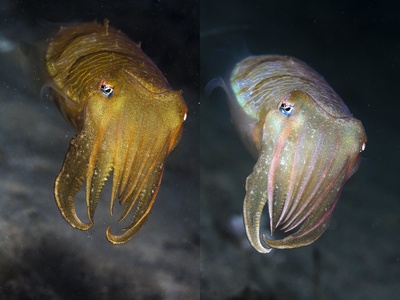
Cuttlefish
Temperate-water cephalopod with broad internal cuttlebone, body up to 45 cm. Renowned for rapid color change and complex behavior. Sepia is Greek for “cuttlefish” and ink historically used as dye.
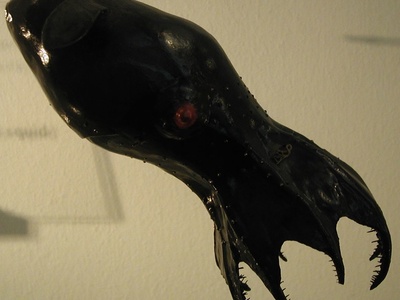
Vampire squid
Small deep-sea cephalopod with cloak-like webbing and bioluminescent organs; about 30 cm. Lives in oxygen-poor midwaters, feeding on marine snow. Name means “vampire squid from the inferno.”
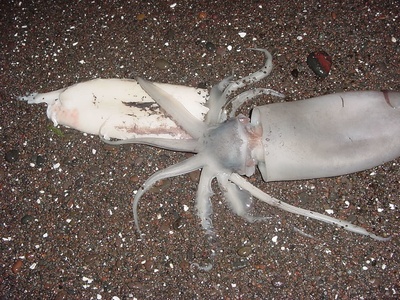
Humboldt squid (jumbo)
(Duplicate avoided) See above for Humboldt squid; large schooling predator of eastern Pacific reaching 300 cm, important in fisheries and ecosystem dynamics.
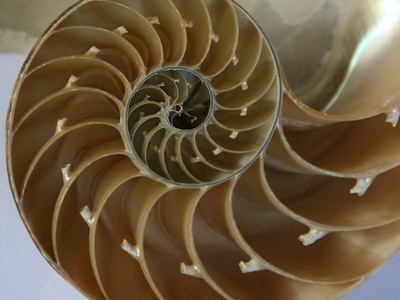
Chambered nautilus
Iconic external-shelled cephalopod from Indo-Pacific slope waters; shell about 25 cm with internal chambers used for buoyancy. Considered a “living fossil”; Nautilus evokes ancient Greek sailors’ name.
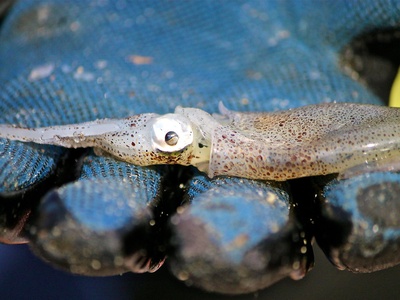
Atlantic brief squid
Small coastal squid in western Atlantic estuaries, around 15 cm. Tolerates low salinity and preys on small fish and crustaceans. Lolliguncula denotes a small squid genus.
Gumboot chiton
Huge North Pacific chiton with leathery girdle up to 30 cm, often called the largest chiton. Clings to rocky intertidal zones and feeds by grazing algae. Cryptochiton means “hidden chiton.”
Pink-footed chiton
Rocky-shore chiton from Pacific Northwest with oval plates and fuzzy girdle patches; about 10 cm. Grazes algae and tolerates wave-swept habitats. Mopalia references its genus features.
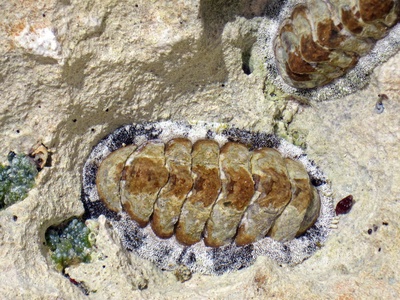
West Indian fuzzy chiton
Tropical Caribbean chiton up to 10 cm with spiny girdle and strong adhesion to rocks. Grazes algal films and exhibits striking shell plate texture. Acanthopleura means “spiny side.”
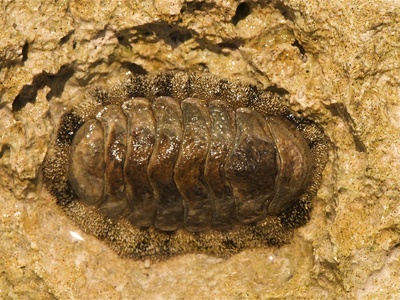
Common chiton
Intertidal to shallow subtidal chiton in tropical Atlantic; about 8 cm. Has eight armored plates and scrapes algae with a rasping radula. Genus name chiton is Greek for armor-like garment.
Common tusk shell
Small tusk-shaped scaphopod living in sandy bottoms of European coasts, around 6 cm. Burrows head-down and feeds on foraminiferans with sticky captacula. Antalis suggests a ring or bracelet shape.
Elephant tusk shell
Elongated tusk-shell from shallow tropical sands about 8 cm; shells were used as ornaments historically. Feeds on microscopic organisms using tentacular threads. Dentalium refers to tooth-like shape.
Funnel tusk shell
Small slender tusk shell inhabiting sandy substrates in temperate seas; roughly 3 cm. Uses captacula to capture tiny prey and lives buried in sediment. Fustiaria hints at a spindle-like shape.