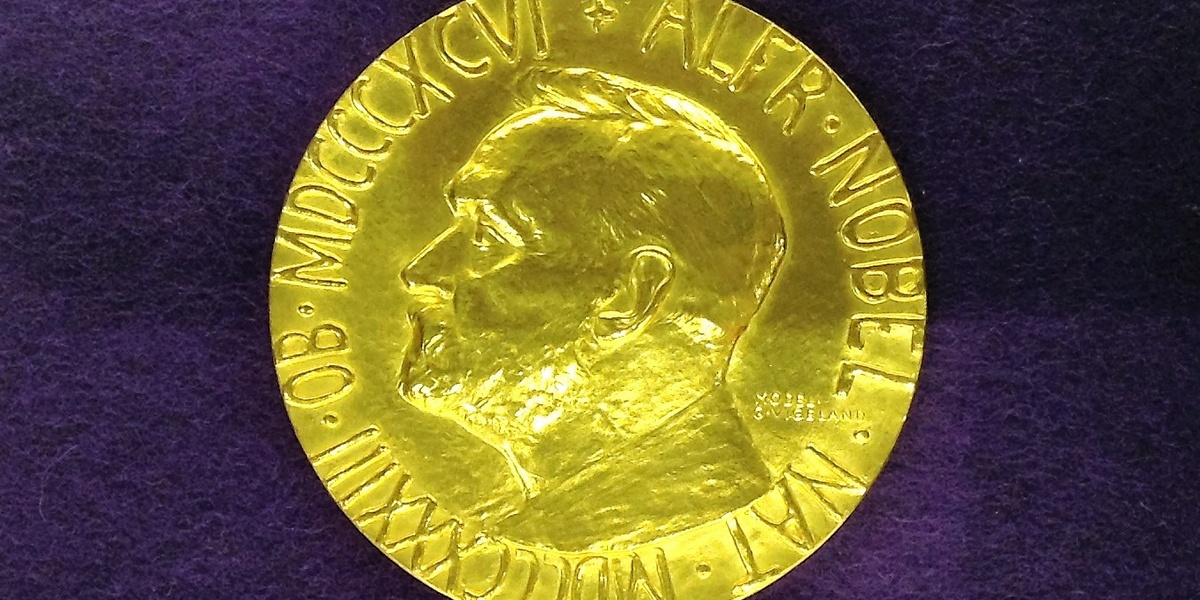
A look back at the early 1950s shows how scientific breakthroughs, literary voices and peace efforts were honored across borders; the laureates from that year reflect a global moment of rebuilding and discovery.
There are 7 1951 Nobel Prize Winners, ranging from Edwin McMillan to Pär Lagerkvist; for each, the entries are organized as Category, Country, Official citation — you’ll find below.
1951 Nobel Prize Winners
| Name | Category | Country | Official citation |
|---|---|---|---|
| John Cockcroft | Physics | United Kingdom | For pioneer work on nuclear transmutation using artificially accelerated particles |
| Ernest Walton | Physics | Ireland | For pioneer work on nuclear transmutation using artificially accelerated particles |
| Edwin McMillan | Chemistry | United States of America | For discoveries in the chemistry of the transuranium elements |
| Glenn Seaborg | Chemistry | United States of America | For discoveries in the chemistry of the transuranium elements |
| Max Theiler | Physiology or Medicine | United States of America | For discoveries concerning yellow fever and vaccine development |
| Pär Lagerkvist | Literature | Sweden | For artistic vigour and independence in addressing eternal human questions |
| Léon Jouhaux | Peace | France | For his long-standing work in trade unionism and peace |
Images and Descriptions
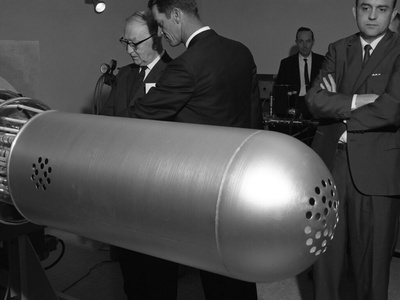
John Cockcroft
Shared the 1951 Physics Prize with Ernest Walton for pioneering accelerator experiments that split atomic nuclei, confirming theoretical predictions. Their methods launched experimental nuclear physics, enabled controlled nuclear reactions, and advanced particle-acceleration techniques used in research and technology.
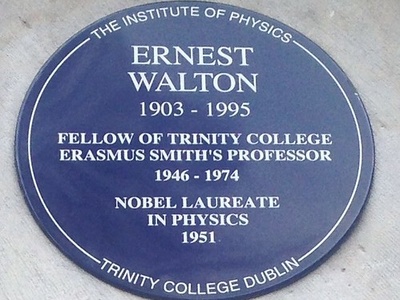
Ernest Walton
Shared the 1951 Physics Prize with John Cockcroft for building and using early particle accelerators to transmute atomic nuclei. Walton’s work provided experimental proof of nuclear disintegration, shaping modern nuclear physics and accelerator-based research.
Edwin McMillan
Shared the 1951 Chemistry Prize with Glenn Seaborg for identifying and studying elements beyond uranium. McMillan’s work helped expand the periodic table, characterize new transuranium elements, and develop techniques central to nuclear chemistry and later research applications.

Glenn Seaborg
Shared the 1951 Chemistry Prize with Edwin McMillan for discovering multiple transuranium elements and developing the actinide concept. Seaborg’s research reorganized the periodic table and enabled advances in nuclear medicine, energy, and elemental chemistry.
Max Theiler
Awarded for developing the live attenuated 17D yellow fever vaccine, which dramatically reduced deaths and outbreaks. Theiler’s work became a cornerstone of public health in endemic regions and saved countless lives by providing safe, effective immunization.
Pär Lagerkvist
Swedish poet and novelist honored for powerful, existential writing that probes the human condition, faith, and morality. Lagerkvist’s spare, symbolic prose and poetry—including works like The Dwarf and Barabbas—explore identity, good and evil, and modern anxieties.
Léon Jouhaux
French trade union leader recognized for lifelong commitment to workers’ rights, international labor cooperation, and peaceful social reform. Jouhaux’s leadership promoted social justice and contributed to postwar reconstruction and European labor policy aimed at reducing conflict.