Carbon has three natural isotopes. So does oxygen, magnesium, and potassium. Every element on the periodic table does — atoms of the same element that carry a different number of neutrons, which changes their mass without changing what element they are. Some of those isotopes sit quietly in your body right now. Others power a nuclear reactor, date a fossil, or sit inside the smoke detector on your ceiling.
This is a working reference: what an isotope actually is, how chemists write them down, and a real list of examples across more than two dozen elements — with the proton and neutron counts, whether each one is stable or radioactive, and what it’s used for.
In This Article
- What Makes Two Atoms Isotopes of the Same Element
- Isotope Notation: Dash Form vs. Superscript Form
- Stable vs. Radioactive Isotopes, Explained by Half-Life
- Isotope Examples Across the Periodic Table
- Four Isotope Families Worth Knowing in Detail
- How Isotopes Show Up in Daily Life
- How Scientists Identify Isotopes
- FAQ
Quick Answer
An isotope is a version of an element with a different number of neutrons than the standard atom — same protons, same chemistry, different mass. Familiar examples: carbon-12 and carbon-14 (one stable, one radioactive and used for dating), uranium-235 and uranium-238 (both radioactive, one fuels reactors), and hydrogen’s three forms — protium, deuterium, and tritium. Some isotopes are stable forever. Others decay on a schedule called a half-life, ranging from minutes (fluorine-18) to billions of years (uranium-238).
What Makes Two Atoms Isotopes of the Same Element
An atom’s identity is set by its protons. Six protons, and it’s carbon, full stop — add or remove one and you’ve made a different element entirely. Neutrons are a different story. They add mass and stability without changing what the atom chemically is, and an element can carry several different neutron counts across its natural population.
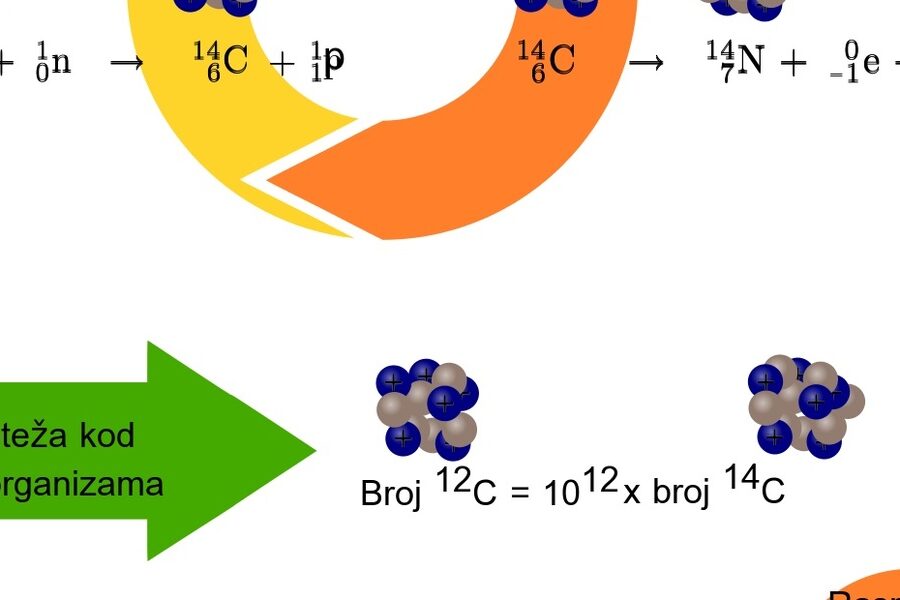
Take carbon. Every carbon atom has 6 protons. But natural carbon shows up as carbon-12 (6 neutrons), carbon-13 (7 neutrons), and carbon-14 (8 neutrons). All three react the same way in a chemical equation — a carbon-14 atom in a sugar molecule behaves exactly like a carbon-12 atom would. The difference only matters when you’re weighing the atom or watching it decay.
That’s the whole definition: same protons, different neutrons, same element. The National Isotope Development Center puts the natural count at roughly 339 isotopes across the naturally occurring elements, with about 250 of those stable and the rest radioactive.
Isotope Notation: Dash Form vs. Superscript Form
You’ll see isotopes written two ways, and both mean the same thing.
Dash notation writes the element name (or symbol) followed by the mass number: carbon-14, or C-14. This is the form you’ll see in news articles, textbooks aimed at a general reader, and most of this guide.
Superscript notation puts the mass number above and to the left of the element symbol: ¹⁴C. Sometimes the atomic number appears below it too: ₆¹⁴C. This is the form used in formal chemistry and physics notation, where the equation needs both numbers visible.
The mass number in either form is protons plus neutrons combined — for carbon-14, that’s 6 protons and 8 neutrons, giving a mass number of 14. Drop the mass number and just write “carbon” or “C,” and you’re talking about the element in general, not a specific isotope.
Stable vs. Radioactive Isotopes, Explained by Half-Life
A stable isotope’s nucleus stays intact indefinitely. Carbon-12 that formed in a star billions of years ago is still carbon-12 today, and will be carbon-12 long after everything currently alive is gone.
A radioactive isotope’s nucleus is unstable — it has an unfavorable ratio of protons to neutrons, and it sheds energy over time to reach a more stable configuration, usually by emitting particles or gamma radiation. That process is decay, and it happens on a predictable timetable called a half-life: the time it takes for half of a given sample to decay.
Half-lives span an enormous range. Fluorine-18 has a half-life of about 110 minutes — by the next morning, essentially none is left, which is exactly why it works as a same-day PET scan tracer. Uranium-238 has a half-life of about 4.5 billion years, close to the age of the Earth itself, which is why it’s still around in the ground in meaningful quantities. Neither half-life makes the isotope “more” or “less” radioactive — it just sets the pace.
Per the CDC’s overview of radioactive isotopes, roughly 35 of the naturally occurring isotopes are radioactive with half-lives long enough to still exist from Earth’s formation, and more than 3,000 additional radioactive isotopes have been created artificially in reactors and particle accelerators — most of those built for medicine, research, or industry rather than found in nature.
Isotope Examples Across the Periodic Table
Most lists stop at carbon, hydrogen, and uranium. Here’s a wider set — protons, neutrons, whether each one is stable or radioactive, and what it actually does.
| Element | Isotope | Protons | Neutrons | Type | Notable Use |
|---|---|---|---|---|---|
| Hydrogen | Hydrogen-1 (protium) | 1 | 0 | Stable | The hydrogen in water and every organic molecule |
| Hydrogen | Hydrogen-2 (deuterium) | 1 | 1 | Stable | “Heavy water” in nuclear reactor moderators |
| Hydrogen | Hydrogen-3 (tritium) | 1 | 2 | Radioactive | Self-powered exit signs, fusion research |
| Carbon | Carbon-12 | 6 | 6 | Stable | Defines the atomic mass unit itself |
| Carbon | Carbon-13 | 6 | 7 | Stable | Tracer in metabolic and NMR studies |
| Carbon | Carbon-14 | 6 | 8 | Radioactive | Radiocarbon dating of organic remains |
| Nitrogen | Nitrogen-14 | 7 | 7 | Stable | Most abundant form in the atmosphere |
| Nitrogen | Nitrogen-15 | 7 | 8 | Stable | Tracing nitrogen movement through soil and crops |
| Oxygen | Oxygen-16 | 8 | 8 | Stable | 99.8% of natural oxygen |
| Oxygen | Oxygen-17 | 8 | 9 | Stable | Metabolic and MRI tracer studies |
| Oxygen | Oxygen-18 | 8 | 10 | Stable | Paleoclimate reconstruction from ice cores |
| Fluorine | Fluorine-18 | 9 | 9 | Radioactive | PET scan imaging tracer (FDG) |
| Sodium | Sodium-23 | 11 | 12 | Stable | Sodium’s only natural isotope |
| Sodium | Sodium-24 | 11 | 13 | Radioactive | Tracing leaks in industrial pipelines |
| Silicon | Silicon-28 | 14 | 14 | Stable | Reference mass standard in metrology |
| Phosphorus | Phosphorus-31 | 15 | 16 | Stable | Phosphorus’s only natural isotope |
| Phosphorus | Phosphorus-32 | 15 | 17 | Radioactive | DNA/RNA labeling in molecular biology |
| Chlorine | Chlorine-35 | 17 | 18 | Stable | 76% of natural chlorine |
| Chlorine | Chlorine-37 | 17 | 20 | Stable | Remaining 24% of natural chlorine |
| Chlorine | Chlorine-36 | 17 | 19 | Radioactive | Dating old groundwater |
| Argon | Argon-40 | 18 | 22 | Stable | Product of potassium-40 decay; used to date rock |
| Potassium | Potassium-39 | 19 | 20 | Stable | Most common potassium isotope |
| Potassium | Potassium-40 | 19 | 21 | Radioactive | Potassium-argon dating of volcanic rock |
| Potassium | Potassium-41 | 19 | 22 | Stable | Minor natural isotope |
| Calcium | Calcium-40 | 20 | 20 | Stable | Most abundant natural calcium |
| Calcium | Calcium-41 | 20 | 21 | Radioactive | Bone-loss and archaeological studies |
| Chromium | Chromium-51 | 24 | 27 | Radioactive | Labeling red blood cells for medical tests |
| Cobalt | Cobalt-59 | 27 | 32 | Stable | Cobalt’s only natural isotope |
| Cobalt | Cobalt-60 | 27 | 33 | Radioactive | Cancer radiotherapy, food and equipment sterilization |
| Nickel | Nickel-63 | 28 | 35 | Radioactive | Power source in electron-capture detectors |
| Strontium | Strontium-90 | 38 | 52 | Radioactive | Nuclear fallout marker; historic RTG power source |
| Molybdenum | Molybdenum-99 | 42 | 57 | Radioactive | Decays into technetium-99m for hospital use |
| Technetium | Technetium-99m | 43 | 56 | Radioactive | The most widely used medical imaging isotope |
| Iodine | Iodine-127 | 53 | 74 | Stable | Iodine’s only natural isotope |
| Iodine | Iodine-131 | 53 | 78 | Radioactive | Thyroid diagnosis and treatment |
| Cesium | Cesium-133 | 55 | 78 | Stable | Defines the length of a second in atomic clocks |
| Cesium | Cesium-137 | 55 | 82 | Radioactive | Industrial thickness gauges; Chernobyl fallout marker |
| Gold | Gold-197 | 79 | 118 | Stable | Gold’s only natural isotope |
| Gold | Gold-198 | 79 | 119 | Radioactive | Localized cancer brachytherapy |
| Radon | Radon-222 | 86 | 136 | Radioactive | Natural radioactive gas; indoor air quality hazard |
| Americium | Americium-241 | 95 | 146 | Radioactive | The alpha source in household smoke detectors |
| Plutonium | Plutonium-238 | 94 | 144 | Radioactive | Power source for deep-space probes (Voyager, Curiosity) |
| Plutonium | Plutonium-239 | 94 | 145 | Radioactive | Fissile fuel and weapons material |
| Uranium | Uranium-235 | 92 | 143 | Radioactive | Fissile fuel for reactors and weapons |
| Uranium | Uranium-238 | 92 | 146 | Radioactive | 99% of natural uranium; breeds into plutonium-239 |
That’s more than 40 isotopes spanning 27 elements — hydrogen to plutonium — and it still leaves out thousands of artificially made ones.
Four Isotope Families Worth Knowing in Detail
The table covers breadth. These four deserve a closer look, because they show up constantly outside a chemistry classroom.
Hydrogen’s three forms are the cleanest illustration of what an isotope even is, because the mass difference is proportionally huge — tritium weighs three times what protium does. Protium is ordinary hydrogen, no neutron at all. Deuterium, with one neutron, makes up about 1 in every 6,400 hydrogen atoms in seawater and gets used in “heavy water” reactors. Tritium, with two neutrons, is radioactive with a 12.3-year half-life and gets manufactured for use in fusion research and glow-in-the-dark instrument dials.
Carbon’s dating pair is carbon-12 and carbon-14. Living things constantly exchange carbon with the atmosphere, keeping a fixed ratio of the two isotopes in their tissue. Once an organism dies, that exchange stops, and carbon-14 — with its 5,730-year half-life — decays at a known rate while carbon-12 stays put. Measure the ratio left in a bone or a piece of charcoal, and you get an age. The method works well out to roughly 50,000 years before the remaining carbon-14 gets too sparse to measure reliably.
Uranium’s fuel pair is uranium-235 and uranium-238. Natural uranium is about 99.3% U-238 and 0.7% U-235, and that 0.7% is the part that matters — U-235 is fissile, meaning a slow neutron can split its nucleus and release energy plus more neutrons, sustaining a chain reaction. Reactor fuel gets enriched to raise that U-235 fraction; weapons-grade material is enriched much further. U-238 isn’t fissile the same way, but it absorbs neutrons and transforms into plutonium-239, which is how reactors produce plutonium as a byproduct.
Cobalt’s medical pair is cobalt-59 and cobalt-60. Cobalt-59 is the stable, everyday isotope in steel alloys and vitamin B12. Cobalt-60 gets made deliberately by bombarding cobalt-59 with neutrons in a reactor, and it decays by emitting gamma rays strong enough to kill cancer cells, sterilize surgical equipment, and irradiate food to knock out bacteria — all from a 5.27-year half-life that’s long enough to be practical and short enough that the source gets swapped out periodically.
How Isotopes Show Up in Daily Life
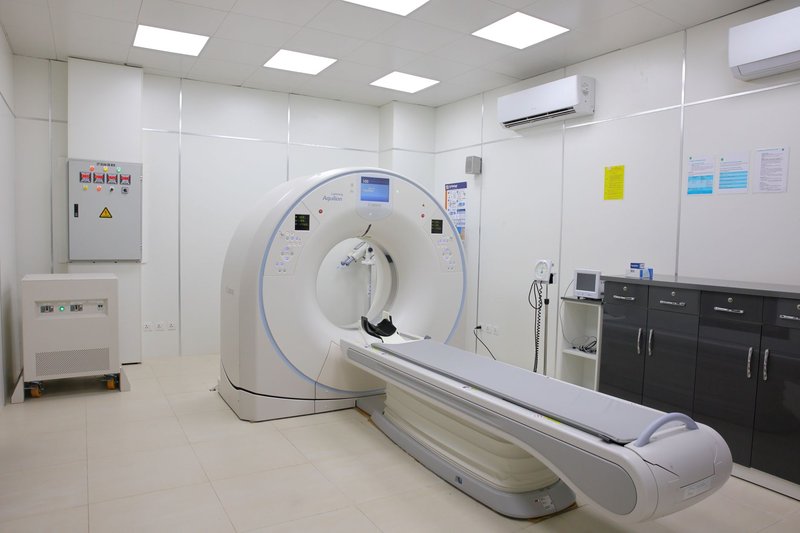
Medicine. Technetium-99m alone shows up in tens of millions of scans a year worldwide — bone, heart, lung, and kidney imaging all lean on it because its 6-hour half-life clears the body fast after the scan is done. Iodine-131 treats thyroid conditions because the thyroid gland concentrates iodine on its own, no extra targeting required. Cobalt-60 and gold-198 handle localized radiation therapy.
Dating and forensics. Carbon-14 dates anything that was once alive. Potassium-40’s decay into argon-40 dates volcanic rock layers millions of years old — useful where carbon dating runs out of range entirely, which is how paleontologists date the rock surrounding dinosaur fossils rather than the fossils themselves.
Energy. Uranium-235 fuels the world’s nuclear power plants. Plutonium-238 isn’t used for power grids at all — its steady heat output runs the radioisotope thermoelectric generators aboard NASA’s Voyager probes and the Curiosity and Perseverance rovers, keeping them powered in places too far from the sun for solar panels to work.
Around the house. Americium-241 sits inside most ionization smoke detectors, generating a tiny steady alpha particle stream that smoke interrupts, tripping the alarm. It’s a small enough quantity to be safe sealed inside the unit, and it’s also why old smoke detectors get disposed of through specific recycling channels rather than the regular trash.
Industry. Cesium-137 sits inside gauges that measure material thickness on manufacturing lines without touching the product. Chromium-51 labels red blood cells so doctors can track blood volume and cell lifespan in a lab setting.
How Scientists Identify Isotopes
Two tools do most of the work. Mass spectrometry ionizes a sample, then sorts the ions by mass using a magnetic or electric field — since isotopes of the same element differ only in mass, this is the direct way to tell carbon-12 from carbon-13 from carbon-14 in a given sample, and it’s how labs measure the isotope ratios used in dating and tracer studies.
For radioactive isotopes specifically, half-life measurement is the identifying signature. Every radioactive isotope decays at its own fixed rate regardless of temperature, pressure, or chemical state, so measuring how fast a sample’s radioactivity drops off — or comparing it against known decay rates — tells you exactly which isotope you’re looking at, even in a mixed sample. The Department of Energy’s isotope explainer covers how national labs produce and separate isotopes for both research and medical supply.
FAQ
What’s the difference between an isotope and an element? An element is defined by its proton count — hydrogen always has 1 proton, carbon always has 6. An isotope is a specific version of that element with a particular neutron count. Carbon is the element; carbon-12, carbon-13, and carbon-14 are its isotopes.
How do you write isotope notation? Two accepted forms: dash notation (carbon-14, or C-14) and superscript notation (¹⁴C, with the mass number raised and placed before the symbol). Both represent the same isotope — the mass number is always protons plus neutrons.
What’s the difference between stable and radioactive isotopes? A stable isotope’s nucleus never decays on its own. A radioactive isotope’s nucleus is unstable and decays over time, releasing radiation, at a rate described by its half-life — the time for half of any sample to decay.
What are the isotopes of oxygen, chlorine, and potassium? Oxygen has three stable isotopes: oxygen-16 (the vast majority), oxygen-17, and oxygen-18. Chlorine has two stable isotopes, chlorine-35 and chlorine-37, plus the radioactive chlorine-36. Potassium has three: potassium-39 and potassium-41 are stable, and potassium-40 is radioactive with a 1.25-billion-year half-life, making it the basis for potassium-argon dating.
How are isotopes used in daily life? Americium-241 powers household smoke detectors. Technetium-99m and iodine-131 handle the bulk of medical diagnostic imaging and thyroid treatment. Carbon-14 dates archaeological finds. Cobalt-60 sterilizes food and medical equipment. Uranium-235 generates a meaningful share of the world’s electricity.
How do scientists tell isotopes apart? Mass spectrometry separates isotopes by mass directly. For radioactive ones, measuring the decay rate — the half-life — identifies which isotope is present, since each one decays at its own fixed, characteristic rate.