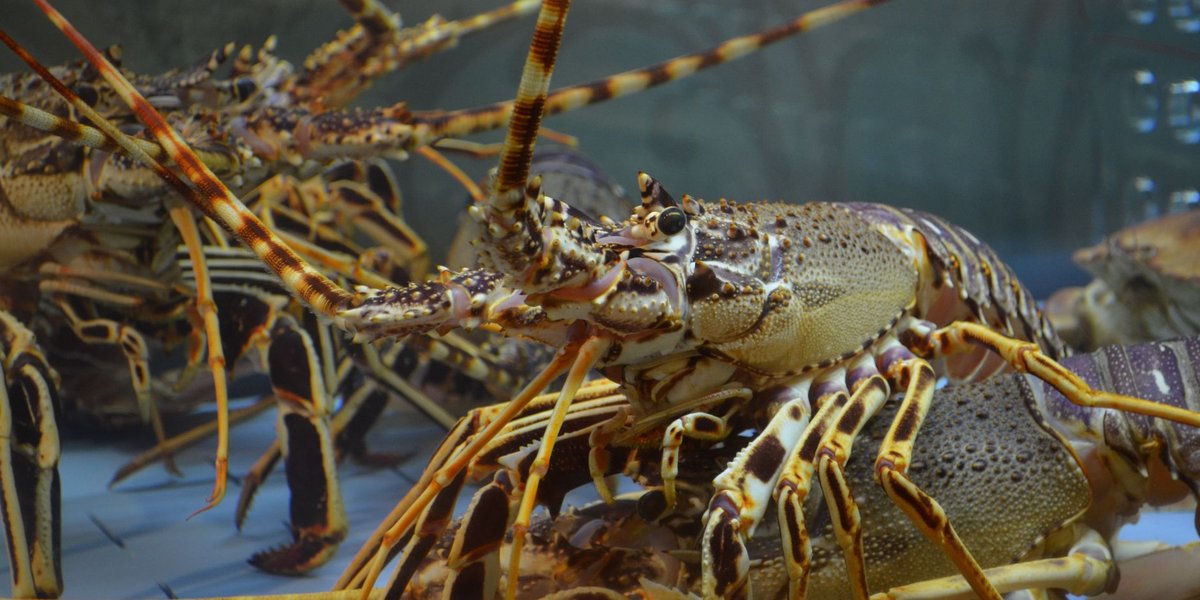
Lobsters have been crawling the ocean floor for over 100 million years, and in that time, they’ve branched into some wildly different forms. The “lobster” most people picture — red on the plate, two enormous claws in front — is actually just one branch of a much larger group. There are spiny lobsters with no claws at all, slipper lobsters that look like someone sat on them, and species that live everywhere from Norwegian fjords to Australian coral reefs.
Here’s a clear-eyed look at the main lobster types, what makes each one distinct, and why any of it matters beyond the menu.
Table of Contents
- What Makes Something a “True” Lobster?
- Clawed Lobsters
- American Lobster
- European Lobster
- Cape Lobster
- Spiny Lobsters (Rock Lobsters)
- Caribbean Spiny Lobster
- California Spiny Lobster
- Southern Rock Lobster
- Ornate Spiny Lobster
- Slipper Lobsters
- Moreton Bay Bug
- Balmain Bug
- Spanish Slipper Lobster
- Conservation Notes
- Quick Reference Table
What Makes Something a “True” Lobster? {#what-makes-something-a-true-lobster}
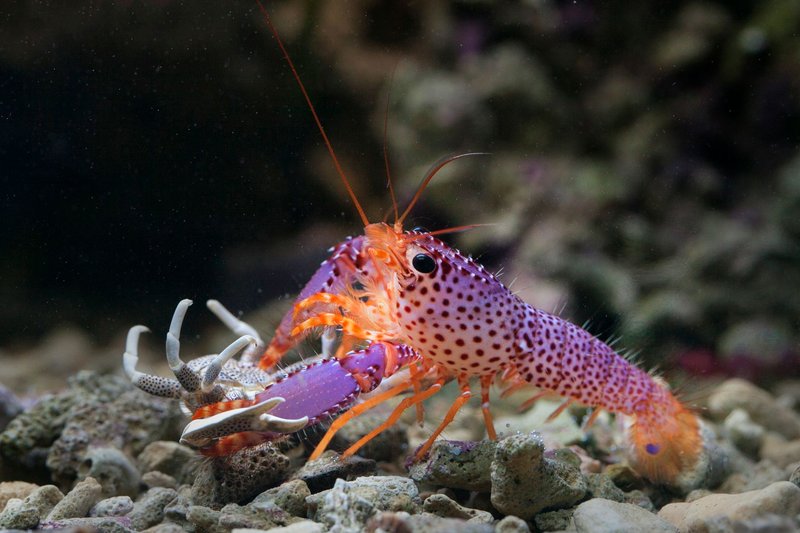
“Lobster” isn’t a strict scientific rank — it’s a loose common name applied to large, bottom-dwelling crustaceans across several families. The three main groups you’ll encounter are:
- Clawed lobsters (family Nephropidae): the ones with the big crusher and pincher claws, found in cold Atlantic and some Pacific waters
- Spiny lobsters (family Palinuridae): no claws, relying on long antennae and spiny shells for defense, spread across tropical and warm-temperate oceans worldwide
- Slipper lobsters (family Scyllaridae): flattened, shovel-headed animals with short antennae converted into broad plates — genuinely strange-looking, and often overlooked
All three groups share the same basic plan: ten legs, a segmented body, and a hard exoskeleton they molt periodically to grow. Like all invertebrates, they lack a backbone entirely — their structural support comes entirely from that external shell. But claws vs. no claws is a meaningful biological divide — and it’s where the flavor and culinary difference starts.
Cold water slows metabolism and produces denser, firmer muscle. That’s why clawed North Atlantic lobster has that characteristic snap when you bite the tail, and why its claw meat is distinctly sweeter than the tail. Warm-water spiny lobsters grow faster, have softer muscle fibers, and carry almost all their edible meat in the tail.
Clawed Lobsters {#clawed-lobsters}
American Lobster {#american-lobster}
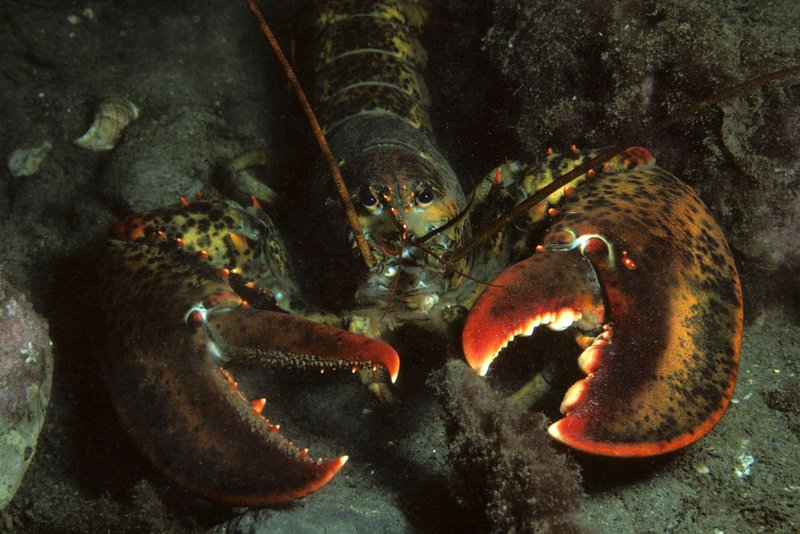
Homarus americanus is the heavyweight of the lobster world. Found from Labrador down to North Carolina, it’s the most commercially fished lobster species on the planet — the US and Canada harvest roughly 200 million pounds combined each year.
A mature American lobster can live over 100 years and weigh more than 40 pounds, though most caught commercially are 1–2 pounds and between 5–7 years old. The distinctive dark blue-green color (the red only appears after cooking, when a heat-stable pigment called astaxanthin breaks free from its protein complex) and the two asymmetric claws are the giveaways: a larger crusher claw for breaking shells, a narrower cutter claw for tearing.
The meat is dense, sweet, and briny in a way that makes sense for an animal living in 40°F water off Maine.
European Lobster {#european-lobster}
Homarus gammarus is the American lobster’s closest relative — same genus, same claw arrangement, similar biology — but notably different in one key way: it’s blue. A deep, cobalt blue that makes it look almost artificial in a tank. It turns red when cooked, just like its American cousin.
It’s found along Europe’s Atlantic coasts from Norway to the Canary Islands, and throughout the Mediterranean. Most commercial catches come from the UK, Norway, and Ireland. European lobsters grow more slowly than American ones and are generally smaller at market weight, which keeps prices high. Many chefs consider the flavor slightly more intense and complex than H. americanus, though blind taste tests suggest the gap is small.
Cape Lobster {#cape-lobster}
Homarus capensis is the third species in the Homarus genus and by far the least known. It’s a small, clawed lobster found only off the western cape of South Africa — genuinely rare, rarely eaten commercially, and of mostly scientific interest. Its existence confirms that the clawed lobster lineage colonized the southern hemisphere, which is useful for understanding how the group spread through evolutionary time.
Spiny Lobsters (Rock Lobsters) {#spiny-lobsters-rock-lobsters}
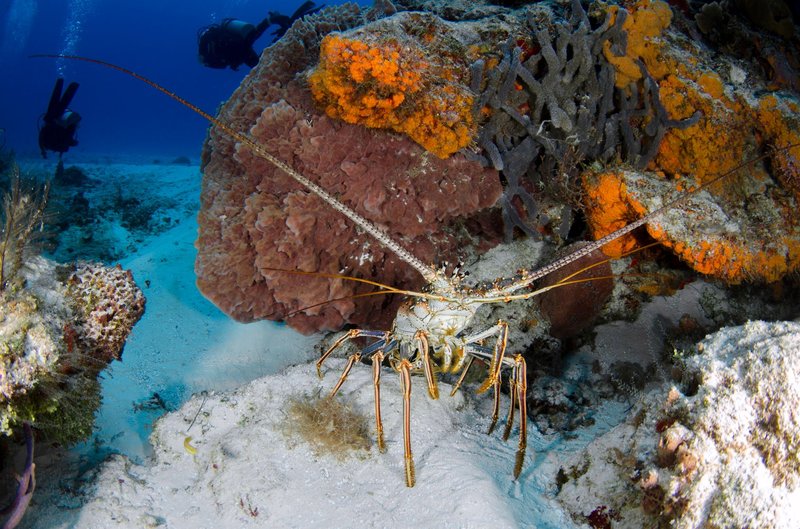
No claws. That’s the immediate visual difference. Spiny lobsters defend themselves with a forest of sharp spines along their carapace and a pair of very long antennae they can rasp together to produce a hissing sound that confuses predators. They migrate in long single-file lines across the seafloor in autumn — one of the more striking animal behaviors in the ocean.
Caribbean Spiny Lobster {#caribbean-spiny-lobster}
Panulirus argus is the dominant commercial species in the western Atlantic tropics. It lives in coral reefs, seagrass beds, and rocky rubble from North Carolina down through Brazil, with the heaviest concentrations in Florida, the Bahamas, and Cuba.
Fishermen catch tens of millions of pounds annually from Florida’s commercial and recreational fishery alone. The meat is almost entirely in the tail — sweet, firm, slightly less rich than cold-water clawed lobster, which makes it work well in lighter preparations: grilled with butter, in tacos, or in ceviche.
The IUCN currently lists Panulirus argus as Least Concern, but regional populations in parts of the Caribbean face pressure from overfishing and coral reef degradation.
California Spiny Lobster {#california-spiny-lobster}
Panulirus interruptus ranges from Monterey Bay to Baja California, living in rocky kelp forest habitats. It’s the only warm-water spiny lobster with a significant cold-water overlap — the California Current chills its northern range considerably, which gives its meat a slightly firmer texture than Caribbean cousins.
California’s commercial and recreational seasons are tightly regulated, running from October through March. The recreational “Bug Season” opener in October is a notable annual event among California divers, who free-dive and free-hand catch them at night when the lobsters come out to forage.
Southern Rock Lobster {#southern-rock-lobster}
Jasus edwardsii dominates Australian and New Zealand waters. Found from southern Australia across to New Zealand’s South Island, it’s sometimes called “crayfish” in New Zealand (Kiwis use “crayfish” for what everyone else calls spiny lobster). The coloration is distinctive: a dark reddish-orange even before cooking, with long white antennae.
It’s the primary species in Australia’s lucrative southern rock lobster export fishery, most of which goes to China and Hong Kong. Australian regulators have generally maintained sustainable catch levels, and the fishery holds Marine Stewardship Council certification.
Ornate Spiny Lobster {#ornate-spiny-lobster}
Panulirus ornatus deserves mention not just for its appearance — bands of cream and blue-green running across the carapace and legs — but for its range. It spans the Indo-Pacific from the Red Sea and East Africa through the Indian Ocean to Australia and Japan. It’s one of the largest spiny lobster species and a significant food source across Southeast Asia.
The ornate spiny lobster is also notable for undertaking some of the longest migrations of any spiny lobster species, with Gulf of Carpentaria populations moving up to 500 kilometers on seasonal breeding migrations.
Slipper Lobsters {#slipper-lobsters}
This is the group most people have never heard of, which is partly why they’re worth knowing about. Slipper lobsters (family Scyllaridae) don’t look like anything you’d expect: flattened body, short flattened antennae instead of long whips, shovel-like front plates. They’re bottom-dwellers that bulldoze through sand and rubble rather than perching on rocks. Their rigid outer shell is a prime example of an exoskeleton at work — providing protection and structural support without any internal skeleton.
The edible meat is in the tail, and in most species there’s less of it than in spiny or clawed lobsters of comparable body size. That limits commercial value — but the species that are fished are often considered a delicacy.
Moreton Bay Bug {#moreton-bay-bug}
Thenus australiensis (formerly T. orientalis) is a slipper lobster fished commercially off Australia’s Queensland coast. “Bug” is the Australian term for slipper lobster — entirely normal usage there, no relationship to insects. Moreton Bay bugs are smaller than most spiny lobsters, typically 150–300 grams, with most of the meat in the split tail. Grilled split-tail is the standard preparation.
Balmain Bug {#balmain-bug}
Ibacus peronii is Australia’s other commercially significant slipper lobster, named after a suburb of Sydney. It has a noticeably rounder, wider body than the Moreton Bay bug, and its eyes are positioned toward the front of the carapace. Both species are caught as bycatch in prawn trawl fisheries and as targeted catch.
Balmain bugs have a slightly sweeter flavor than Moreton Bay bugs — a distinction that shows up frequently in Australian seafood discussions, though the difference is subtle enough to get lost in the seasoning.
Spanish Slipper Lobster {#spanish-slipper-lobster}
Scyllarides latus is the largest slipper lobster in the Mediterranean and northeastern Atlantic, reaching up to 45 cm. It was once commercially fished throughout the Mediterranean but has become scarce in most areas due to overfishing and habitat loss. The IUCN lists it as a species of concern in European waters.
It’s still encountered by divers in less-pressured areas — the Canary Islands, parts of the eastern Mediterranean — and retains some commercial value in Greece and Turkey. Its decline is a useful example of how slow-reproducing crustaceans can collapse quietly under fishing pressure before anyone notices the trend.
Conservation Notes {#conservation-notes}
Most commercially important lobster species aren’t technically endangered, but several face significant pressure:
- American lobster populations in the Gulf of Maine have boomed due to warming water that’s reduced their predators — but that warming also brings long-term uncertainty. NOAA’s ongoing stock assessments track this carefully.
- Caribbean spiny lobster faces regional depletion in parts of the Caribbean despite healthy overall population numbers.
- Spanish slipper lobster (Scyllarides latus) is locally depleted across much of the Mediterranean.
- Southern rock lobster is one of the better-managed commercial species globally, with active catch limits and MSC certification.
The aquaculture picture for lobsters is still limited. Lobster larvae are notoriously difficult to raise in captivity — most commercial supply still depends entirely on wild catch.
Quick Reference Table {#quick-reference-table}
| Species | Family | Claws | Range | Key Trait |
|---|---|---|---|---|
| American Lobster | Nephropidae | Yes | NW Atlantic | Largest commercial; asymmetric claws |
| European Lobster | Nephropidae | Yes | NE Atlantic, Med | Cobalt blue; intense flavor |
| Cape Lobster | Nephropidae | Yes | S. Africa coast | Rare; smallest clawed lobster |
| Caribbean Spiny Lobster | Palinuridae | No | Tropical W. Atlantic | Most fished spiny lobster |
| California Spiny Lobster | Palinuridae | No | CA–Baja Pacific | Cold-water overlap; firm meat |
| Southern Rock Lobster | Palinuridae | No | S. Australia, NZ | MSC-certified; major export species |
| Ornate Spiny Lobster | Palinuridae | No | Indo-Pacific | Colorful; long migration |
| Moreton Bay Bug | Scyllaridae | No | Queensland, Australia | Flat; tail meat; “bug” in Australian |
| Balmain Bug | Scyllaridae | No | SE Australia | Rounder body; sweet flavor |
| Spanish Slipper Lobster | Scyllaridae | No | Mediterranean, Atlantic | Declining; overfished |
The diversity here points to something easy to miss when lobster is just a menu item: these are genuinely different animals with different ecologies, evolutionary histories, and population pressures. A Maine lobsterman, a Queensland bug trawler, and a Caribbean spiny lobster diver are all harvesting creatures that share a name and a basic body plan but have been going their separate evolutionary ways for millions of years. The claws alone mark a divide that happened before humans existed.