Slovenia is a country of two million people wedged between the Alps and the Adriatic. It has produced one Fields Medal winner, one Nobel laureate, the physicist whose name is on a fundamental law of thermal radiation, and the man who theorized rotating space stations a decade before anyone built a rocket that could reach orbit. For a nation that small, the scientific output is extraordinary.
Here are 12 scientists born in Slovenia worth knowing.
Table of Contents
- Jožef Stefan — The Law That Governs All Radiation
- Friderik Pregl — Nobel Prize in Chemistry, 1923
- Herman Potočnik — The Man Who Designed Space Stations in 1928
- Jurij Vega — The Logarithm Tables That Navies Trusted for a Century
- Franc Hočevar — Quiet Giant of 19th-Century Mathematics
- Friedrich Hasenöhrl — The Physicist Who Almost Beat Einstein
- Janez Vajkard Valvasor — The First Slovenian to Explain a Natural Phenomenon
- Žiga Zois — The Baron Who Funded Slovenian Science
- Fran Saleški Finžgar — Science Through the Literary Lens
- Bojan Mohar — Graph Theory at the Frontier
- Andrej Bauer — Foundations of Computational Mathematics
- Miran Černe — Advancing Complex Analysis
Jožef Stefan — The Law That Governs All Radiation {#jožef-stefan}
Born in Klagenfurt in 1835 to Slovenian parents, Jožef Stefan grew up speaking Slovenian at home and went on to become one of the most consequential physicists of the 19th century. His central achievement is the Stefan-Boltzmann law: the total energy radiated by a blackbody is proportional to the fourth power of its absolute temperature. Every thermal imaging system, every astrophysical calculation of a star’s luminosity, every industrial furnace temperature model traces back to this relationship.
Stefan derived the law empirically from experimental data in 1879. His student Ludwig Boltzmann later provided the theoretical derivation — and the law carries both names. But Stefan got there first, from observation.
He also made early estimates of the Sun’s surface temperature using his own law, arriving at a figure around 5,430°C — remarkably close to the modern accepted value of 5,505°C.
Friderik Pregl — Nobel Prize in Chemistry, 1923 {#friderik-pregl}

Friderik Pregl was born in Ljubljana in 1869. He won the Nobel Prize in Chemistry in 1923 for developing microanalysis — techniques for analyzing organic compounds using samples so small that previous methods couldn’t detect them. Before Pregl, you needed several hundred milligrams of a substance to determine its composition. After Pregl, you needed less than five.
This was not a marginal improvement. It transformed how chemists study biological compounds, where precious little material is often all that’s available. His balance, accurate to micrograms, became standard equipment in chemistry labs across Europe.
He worked for decades at the University of Graz, trained dozens of students in his methods, and reportedly refused to patent any of his instruments so that other researchers could use them freely. Pregl remains Slovenia’s only Nobel Prize winner born on its soil — a distinction that makes his contributions all the more remarkable in the context of the country’s scientific history.
Herman Potočnik — The Man Who Designed Space Stations in 1928 {#herman-potočnik}
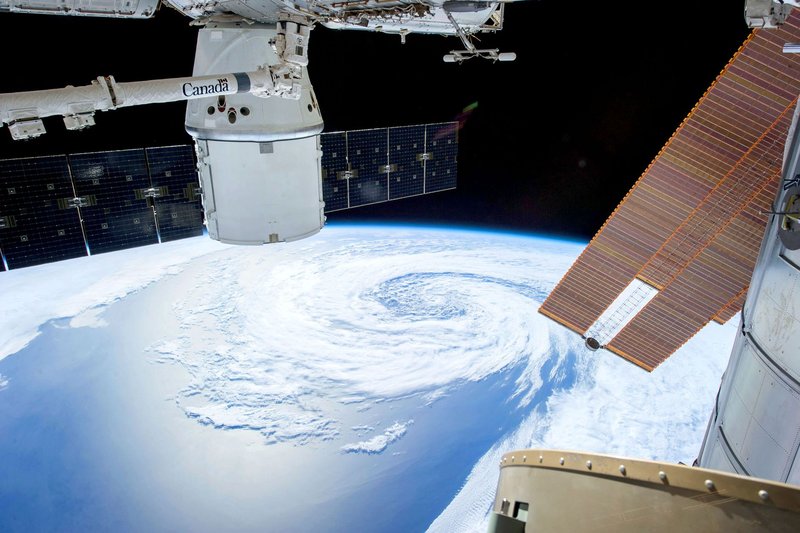
Herman Potočnik was born in Pula in 1892 (present-day Croatia, then part of the Austro-Hungarian Empire, to a Slovenian family) and died in Vienna in 1929, mostly unknown. He published exactly one book — Das Problem der Befahrung des Weltraums (“The Problem of Space Travel”) — under the pen name Hermann Noordung, and it contained designs for a rotating space station positioned at a geostationary orbit.
The wheel-shaped station, which would use rotation to simulate gravity, appeared in his book 30 years before Sputnik. NASA engineers cited Potočnik’s work when designing early space station concepts in the 1950s and 60s. The rotating station concept remains in active discussion for long-duration space missions.
He died of pneumonia at 36, a year after publishing his only major work.
Jurij Vega — The Logarithm Tables That Navies Trusted for a Century {#jurij-vega}
Born near Zagorje ob Savi in 1754, Jurij Vega became a mathematician and artillery officer in the Habsburg military. His logarithm and trigonometric tables, published in 1783 as Logarische, trigonometrische und andere zum Gebrauch der Mathematik eingerichtete Tafeln und Formeln, were more accurate than anything previously available. The British Navy used them for celestial navigation. They remained in wide use for over 100 years.
He also calculated π to 140 decimal places — the most precise computation at the time — and held that record for over 50 years. He did this by hand.
Vega was ennobled by Emperor Franz II in 1800 for his contributions to science and was killed by an unknown assailant in Vienna in 1802 under circumstances that were never resolved.
Franc Hočevar — Quiet Giant of 19th-Century Mathematics {#franc-hočevar}
Franc Hočevar was born in Ljubljana in 1853 and spent most of his career as a professor at the University of Graz, where he worked in algebra, number theory, and the theory of determinants. He’s not widely known outside mathematical history circles, but his work on the reduction of algebraic equations and combinatorial analysis was cited by contemporaries in Germany and Austria as rigorous and original.
He represents a pattern you see across Slovenian scientific history: researchers doing solid, substantive work at Austro-Hungarian and later Central European institutions, often writing in German, whose contributions get absorbed into the broader European scientific tradition without national attribution.
Friedrich Hasenöhrl — The Physicist Who Almost Beat Einstein {#friedrich-hasenöhrl}
Friedrich Hasenöhrl was born in Vienna in 1874 to a Slovenian mother and grew up bilingual. He worked on the relationship between electromagnetic radiation and mass, publishing papers in 1904 and 1905 that expressed a form of mass-energy equivalence — one year before Einstein’s E = mc² paper.
Hasenöhrl’s formulation contained an error (a factor of 8/3 instead of 1), and his derivation was constrained to the radiation-in-a-cavity problem rather than a general statement about mass and energy. But the proximity of the work prompted debate among physicists for decades about priority. He died in 1915 during World War I, killed in combat on the Italian front.
Janez Vajkard Valvasor — The First Slovenian to Explain a Natural Phenomenon {#janez-vajkard-valvasor}
Janez Vajkard Valvasor was born in Ljubljana in 1641 and is best known for his encyclopedic work Die Ehre des Herzogthums Crain (1689), a four-volume history and natural description of Carniola (the historical region covering modern Slovenia). It runs to about 3,500 pages.
In 1689, Valvasor sent a paper to the Royal Society of London explaining the intermittent behavior of Lake Cerknica — a karst lake that fills and drains seasonally, causing locals to believe it was magical. His explanation, based on subterranean water channels and karst hydrology, was accurate. He was elected a Fellow of the Royal Society the same year. It is the first recorded scientific paper by a Slovenian-born author to receive recognition from a major European scientific institution.
Žiga Zois — The Baron Who Funded Slovenian Science {#žiga-zois}
Žiga Zois was born in Ljubljana in 1747 to a wealthy merchant family and became both a practicing mineralogist and the most important patron of science and literature in 18th-century Slovenia. He discovered a new mineral in 1805 that was later named zoisite in his honor — a calcium aluminum silicate with a distinctive blue-to-gray color that remains a collector’s mineral to this day.
More broadly, Zois ran an intellectual salon in Ljubljana for decades, funded researchers, linguists, and naturalists, and corresponded with European scientists. He is credited with single-handedly accelerating Slovenian scientific and cultural development during a period when the region had little institutional infrastructure.
Fran Saleški Finžgar — Science Through the Literary Lens {#fran-saleški-finžgar}
This entry is slightly different. Finžgar (born 1871 in Doslovče) was primarily a writer, but he had a secondary career as a naturalist and educator who wrote extensively about the natural world for a general Slovenian audience. He sits in a tradition of priest-naturalists common to Central European rural communities — the kind of figure who taught children about local flora and geology because no one else was.
He’s included here because the boundary between science communication and science contribution is worth acknowledging. Finžgar’s natural history writing shaped how a generation of Slovenians understood the landscape they lived in.
Bojan Mohar — Graph Theory at the Frontier {#bojan-mohar}
Born in Ljubljana in 1956, Bojan Mohar is one of the most cited mathematicians in combinatorics and graph theory. He is best known for the Mohar theorem, a result about the embeddability of graphs on surfaces that settled a long-standing open problem in topological graph theory, and for his work on algebraic graph theory, including the spectral properties of graphs.
He has held positions at Simon Fraser University in Canada and the University of Ljubljana. His textbook Graphs on Surfaces, co-authored with Carsten Thomassen, is a standard graduate reference in the field.
Andrej Bauer — Foundations of Computational Mathematics {#andrej-bauer}
Andrej Bauer was born in Ljubljana in 1972 and works at the intersection of mathematics, logic, and computer science. His research focuses on constructive mathematics, type theory, and the theoretical underpinnings of proof assistants — software that formally verifies mathematical proofs.
He is one of the primary developers of HoTT (Homotopy Type Theory), a framework connecting algebraic topology and formal logic that caused significant excitement in mathematical foundations circles when the book Homotopy Type Theory was published in 2013. He also created the programming language Andromeda for reasoning about type theories.
His work is technical enough that its implications won’t show up in popular science for another decade — which is often how foundational mathematics goes.
Miran Černe — Advancing Complex Analysis {#miran-černe}
Miran Černe (born 1966 in Ljubljana) works in complex analysis and several complex variables at the University of Ljubljana. His research focuses on holomorphic functions, analytic discs, and problems in several-variable complex function theory — an area of mathematics with deep connections to quantum mechanics, fluid dynamics, and signal processing.
He is representative of the current generation of Slovenian mathematicians and scientists working at the highest international level from Ljubljana-based institutions, a situation that would have been difficult to sustain before Slovenian independence in 1991.
Slovenia’s Scientific Legacy
A country of two million producing a Nobel laureate, a man who invented the concept of the space station, and a physicist with a fundamental law named after him is not a statistical accident. It reflects a combination of the Austro-Hungarian educational tradition — which produced rigorous scientific institutions across Central Europe — and a cultural emphasis on learning that predates the modern Slovenian state.
Jožef Stefan is probably the name most people should know. The Stefan-Boltzmann law appears in everything from climate modeling to the Webb Space Telescope’s calibration. That it came from a physicist born in a small town near Klagenfurt, who spent his career in Vienna, is a reminder that scientific history tends to get nationalized after the fact — but the work itself travels everywhere.