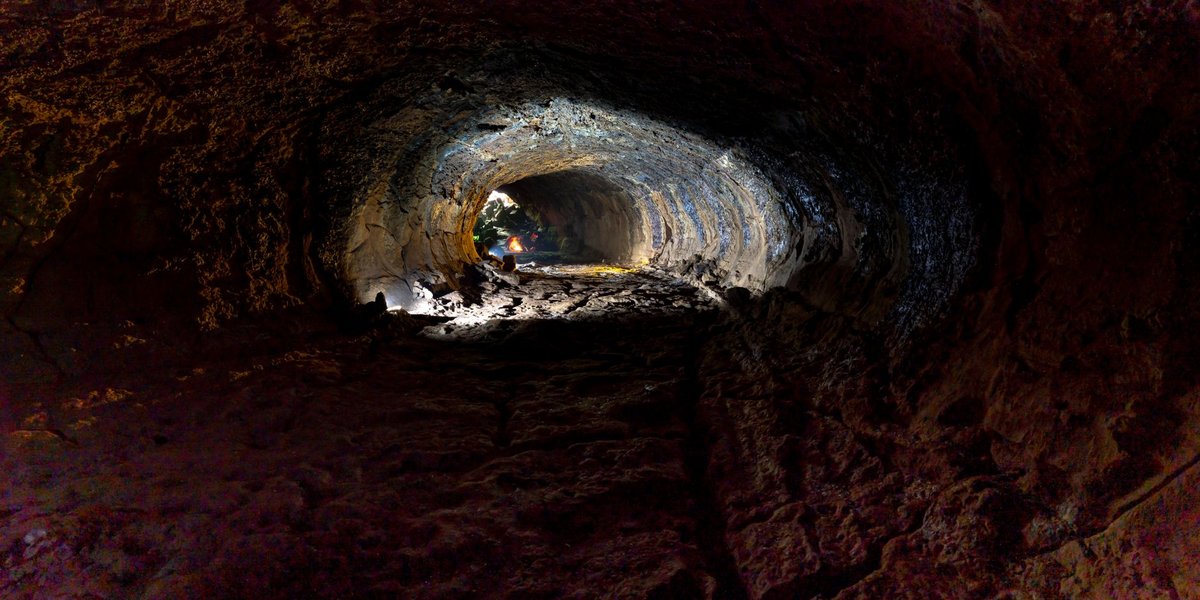
Hawaii is a volcanic archipelago sitting on one of the most active hot spots on Earth, so it’s not surprising that it’s riddled with caves. What is surprising is how varied they are — record-breaking lava tubes stretching for miles underground, sea caves carved by the Pacific into Kauai’s Na Pali cliffs, and dark chambers that Hawaiian mythology wove into stories of gods and ancestors. Most travel guides point you to the Big Island and call it done. This one doesn’t.
Here’s a statewide rundown of the caves worth knowing about, organized by island.
Table of Contents
- Why Hawaii Has So Many Caves
- Big Island Caves
- Kazumura Cave
- Kaumana Caves
- Nahuku (Thurston Lava Tube)
- Kipuka Kanohina Cave System
- Kauai Caves
- Waikapalae and Waikanaloa Wet Caves
- Na Pali Sea Caves
- Maui and Oahu
- Cultural Significance
- Comparison Table
- Tips Before You Go
Why Hawaii Has So Many Caves
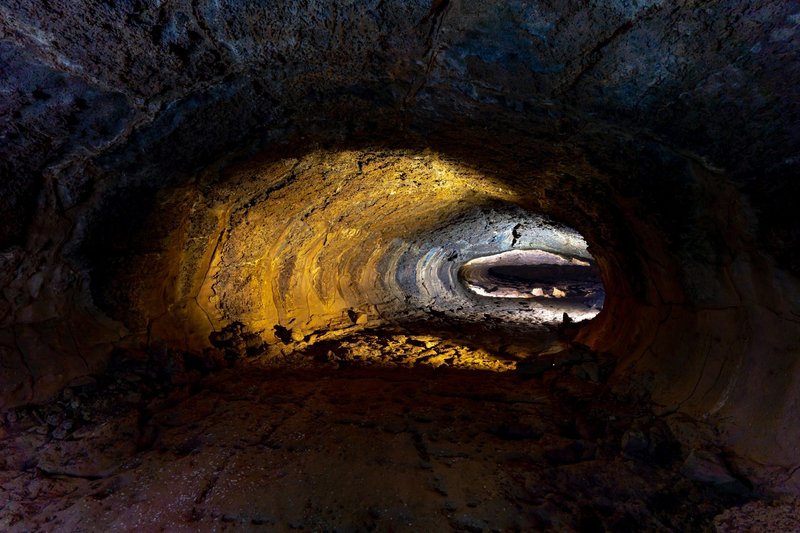
Lava tubes form during a very specific kind of volcanic event. When low-viscosity basaltic lava flows downhill, the outer surface cools and hardens into a crust while the molten rock inside keeps moving. Eventually the lava drains out, leaving behind a hollow tunnel. Hawaii’s shield volcanoes — Kilauea and Mauna Loa especially — produce exactly this kind of fluid, fast-moving lava, which is why the Big Island alone contains thousands of known lava tubes.
Sea caves are a different process entirely: wave erosion working on coastal cliffs over thousands of years, finding weak spots in the rock and carving inward. Kauai, with its heavily eroded Na Pali coastline, has some of the most dramatic examples in the state.
Both types tend to maintain a stable interior temperature around 60–65°F regardless of what’s happening outside, which made them valuable to early Hawaiians as shelters, burial sites, and sacred spaces.
Big Island Caves
The Big Island is the center of gravity for Hawaii cave exploration. Kilauea’s ongoing volcanic activity — it’s been erupting more or less continuously since 1983 — means new tubes are still being formed, while older ones run for miles beneath the landscape.
Kazumura Cave
Kazumura is the longest and deepest lava tube in the world. According to the USGS Hawaiian Volcano Observatory, it runs at least 40.7 miles from Kilauea’s east rift zone down toward the ocean, dropping more than 3,600 feet in elevation. For context, the second-longest lava tube in the world is less than half its length.
The cave is on private land on the slopes above Hilo, accessible only through guided tours. The tour operator offers multiple entry levels: a shorter 45-minute walk-through passage for general visitors and a multi-hour “wild caving” experience that takes you into sections with no developed lighting, where lava benches, lavacicles (hardened lava drips on the ceiling), and ghost shrimp adapted to cave life make for a genuinely unusual afternoon.
Best for: Serious geology nerds and anyone who wants to say they walked through the longest lava tube on Earth. Access: Guided tours only. Book through Kazumura Cave Tours in Keaau. Difficulty: Easy (standard tour) to moderate (explorer tour).
Kaumana Caves
Just outside Hilo, Kaumana Caves is the most accessible lava tube on the island — free to enter, maintained as a county park, and split into two directions from a central collapse pit. The shorter east passage is an easy flat walk you can do without gear. The west passage goes further and gets low and narrow, requiring crawling in a few spots.
The entrance is a lush bowl created by a collapsed section of the tube ceiling, overgrown with ferns and native plants — it’s photogenic in a way that feels a little improbable for a cave entrance. The cave itself formed during Mauna Loa’s 1881 eruption and is roughly 25 miles long total, though only a small section is visitor-accessible.
Bring a flashlight. The park provides no lighting inside.
Best for: Families, casual visitors, and anyone in Hilo for an afternoon. Access: Self-guided, free. Located off Kaumana Drive, about 5 miles from downtown Hilo. Difficulty: Easy (east) to moderate (west, requires crawling).
Nahuku (Thurston Lava Tube)
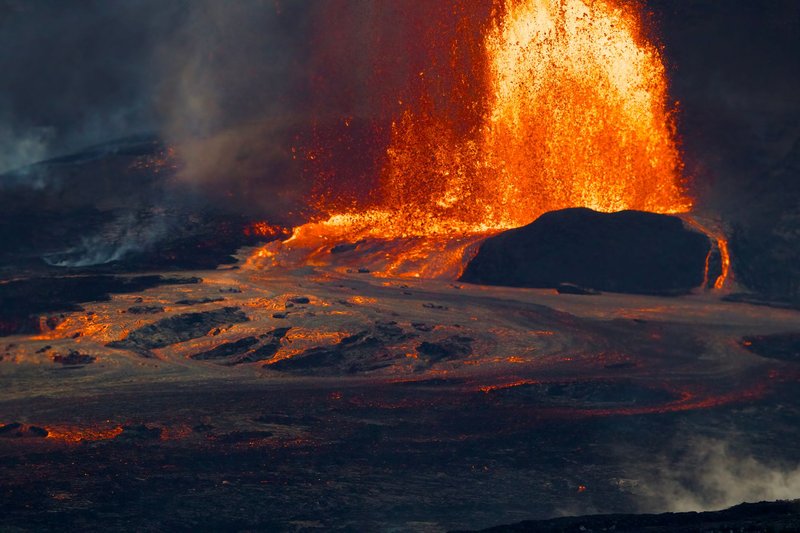
Inside Hawaii Volcanoes National Park, Nahuku — commonly still called the Thurston Lava Tube — is the most visited cave in the state. The 500-foot section open to the public is fully lit, paved, and an easy walk, making it accessible to almost everyone. The trail loops through an old-growth tree fern forest to reach the entrance, which is genuinely beautiful.
What makes it worth visiting even if you’ve done other tubes: the geology is well-interpreted, park rangers periodically lead evening tours without artificial lighting (check the park calendar), and you’re already there for the Kilauea overlook. At peak times the line can stretch outside, so go early or late in the day.
The tube formed roughly 500 years ago from lava flows that drained downslope toward the coast. Hawaii Volcanoes National Park has good information on its formation and ongoing research.
Best for: First-time visitors, families with strollers, anyone with mobility limitations (the main passage is paved and flat). Access: Self-guided within the national park. Park entry fee applies ($35/vehicle at last update). Difficulty: Easy.
Kipuka Kanohina Cave System
Less talked about than Kazumura or Nahuku, the Kipuka Kanohina cave system on the southwest side of the Big Island is one of the most biologically significant lava tube systems in Hawaii. It hosts a rare cave-adapted ecosystem — species of spiders, crickets, and beetles that have evolved in darkness over thousands of years, found nowhere else on Earth. Access is tightly restricted; the cave sits within a kipuka (an island of older land surrounded by newer lava flows) managed partly for conservation.
The Nature Conservancy has been involved in surveying and protecting the system. It’s not really a tourist destination, but it’s worth knowing about for context: Hawaii’s cave ecosystems are fragile and ecologically irreplaceable in ways that aren’t obvious from the surface.
Kauai Caves
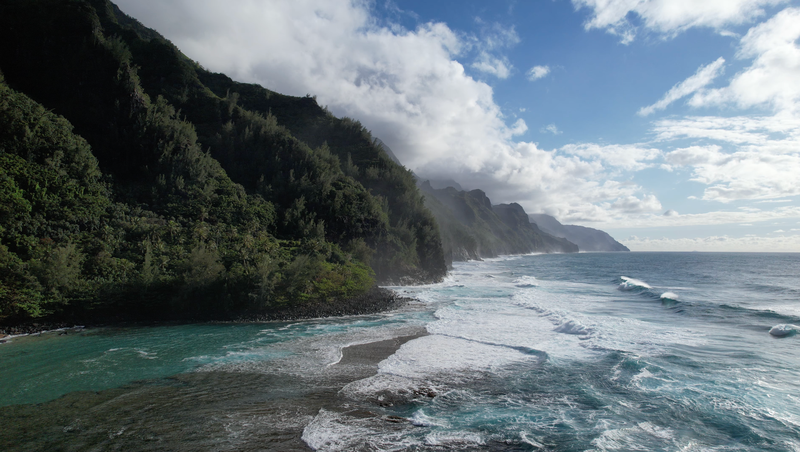
Kauai’s caves are a different experience from the Big Island’s lava tubes. The island is older and more eroded, and its most famous caves are either water-filled chambers or sea caves cut into the Na Pali cliffs.
Waikapalae and Waikanaloa Wet Caves
On the North Shore near Haena State Park, two wet caves sit just off the road near the trailhead for the Kalalau Trail. Waikapalae is the larger of the two — a cathedral-like chamber with a pool of crystal-clear water that was once used for swimming before it was closed off to protect water quality. Waikanaloa, slightly down the road, is smaller but arguably more atmospheric, with its low ceiling reflected in the still water.
Hawaiian legend says these caves were dug by Pele, the volcano goddess, as she searched for a home before settling on the Big Island. The geological reality is less mythological but still interesting: they formed through a combination of wave action and dissolution of the basalt by slightly acidic groundwater.
You can walk to the entrance of both and look in. Swimming is no longer permitted. They’re free to visit and take maybe 15 minutes, making them an easy stop on any North Shore itinerary.
Best for: Anyone hiking the Kalalau Trail or visiting Ke’e Beach. A genuine quick stop. Access: Self-guided, free. Located along Route 560 near mile marker 9. Difficulty: Easy (roadside access).
Na Pali Sea Caves
The sea caves along the Na Pali Coast are accessible only by water — either kayak (in summer months when the swells allow it) or by zodiac/catamaran boat tour operating out of Port Allen or Hanalei. The caves vary from shallow alcoves to chambers large enough for a small boat to enter, with names like Wai Koa and others that are more orientation points than formal designations.
The experience depends heavily on conditions. Calm days let tour boats idle inside the larger caves while guides narrate. Bigger swells mean you observe from outside. This is worth planning around: NOAA marine forecasts for the North Shore are your best resource before booking.
Best for: Snorkelers, kayakers, and anyone on a Na Pali boat tour. Access: Boat or kayak only. Multiple tour operators in Port Allen and Hanalei. Difficulty: Easy (boat tour) to moderate (kayak, summer only, experience recommended).
Maui and Oahu
Neither island has cave systems as developed or as well-documented as the Big Island or Kauai.
Maui has lava tubes scattered across its Hana coast and on the slopes of Haleakala, but very few are publicly accessible or documented for general visitors. Some landowners near Hana offer informal access, but there’s no equivalent of Kaumana Caves or Nahuku here.
Oahu has Makua Cave (Kaneana Cave) on the west coast, a large sea cave in limestone that holds genuine cultural weight in Hawaiian tradition — it’s associated with the demigod Maui and with Nanaue, a shark-man of Hawaiian legend. The cave is on a pullout along Farrington Highway just north of Makua Beach. It’s publicly accessible, though the interior is not lit and portions of the ceiling are unstable. Go during daylight and don’t go deep without lighting. Respect the site — it’s still considered sacred by Native Hawaiians.
Cultural Significance
Hawaii’s caves don’t exist outside of human history. For Native Hawaiians, caves were burial sites for ali’i (chiefs), shelters during times of war, and locations of religious significance. Some contained freshwater springs and were essential resources.
The concept of “kapu” (sacred prohibition) applied to many of them. Entering certain caves without the right standing or intention was a serious transgression in traditional Hawaiian culture — and for some sites, that hasn’t changed. Kaneana Cave on Oahu is one example. The wet caves at Haena are another, connected to chiefly lineages in North Shore legends.
The Bishop Museum in Honolulu maintains records and oral histories related to Hawaiian cave sites if you want to read further before visiting.
Comparison Table
| Cave | Island | Type | Accessibility | Guided/Self | Best For |
|---|---|---|---|---|---|
| Kazumura Cave | Big Island | Lava tube | Guided only | Guided | Serious explorers |
| Kaumana Caves | Big Island | Lava tube | Easy (county park) | Self | Families, casual visitors |
| Nahuku (Thurston) | Big Island | Lava tube | Easy (paved) | Self (or ranger-guided) | First-timers, mobility considerations |
| Kipuka Kanohina | Big Island | Lava tube | Restricted | Restricted | Conservation interest only |
| Waikapalae Wet Cave | Kauai | Sea/groundwater | Easy (roadside) | Self | North Shore visitors |
| Waikanaloa Wet Cave | Kauai | Sea/groundwater | Easy (roadside) | Self | North Shore visitors |
| Na Pali Sea Caves | Kauai | Sea caves | Boat/kayak only | Tour or self-guided kayak | Snorkelers, kayakers |
| Kaneana Cave | Oahu | Sea/limestone | Easy (roadside) | Self | Cultural history interest |
Tips Before You Go
A few things worth knowing before you visit any cave in Hawaii:
Bring your own light. Even at developed sites like Kaumana Caves, the park doesn’t supply flashlights. Headlamps are better than handheld — you’ll want both hands free in places.
Wear close-toed shoes. Lava rock is sharp and uneven. Sandals will destroy your feet. Sturdy sneakers at minimum, hiking boots if you’re going into unpaved sections.
Don’t collect anything. It’s illegal in national parks and state land, and lava tube ecosystems are fragile. The rare cave invertebrates in systems like Kipuka Kanohina exist nowhere else.
Check conditions before Na Pali. Kauai’s Na Pali sea caves require ocean conditions that vary dramatically by season. Summer (May–September) is generally calm on the north side. Winter swells can make the route impassable.
Respect cultural sites. Kaneana Cave on Oahu and the wet caves at Haena have active cultural significance for Native Hawaiians. Treat them accordingly.