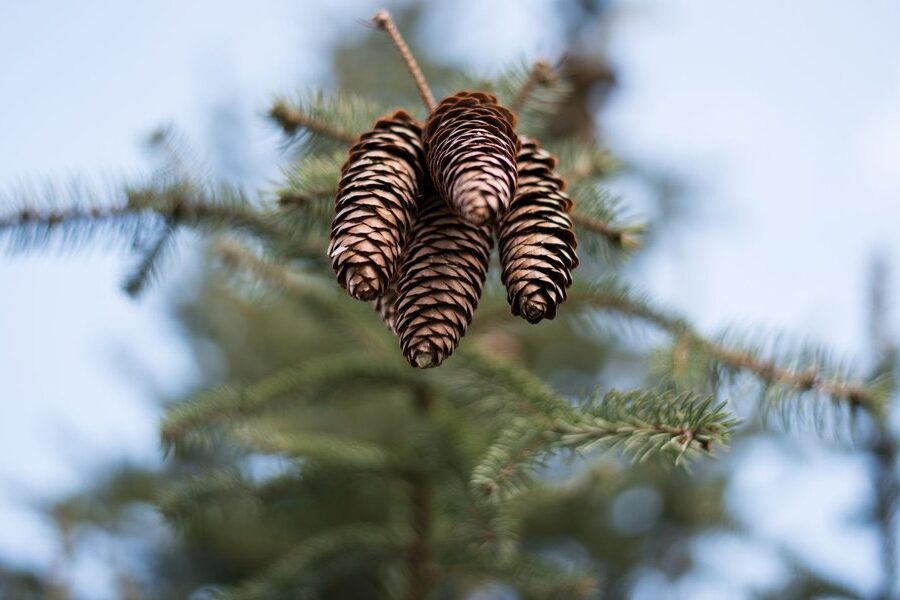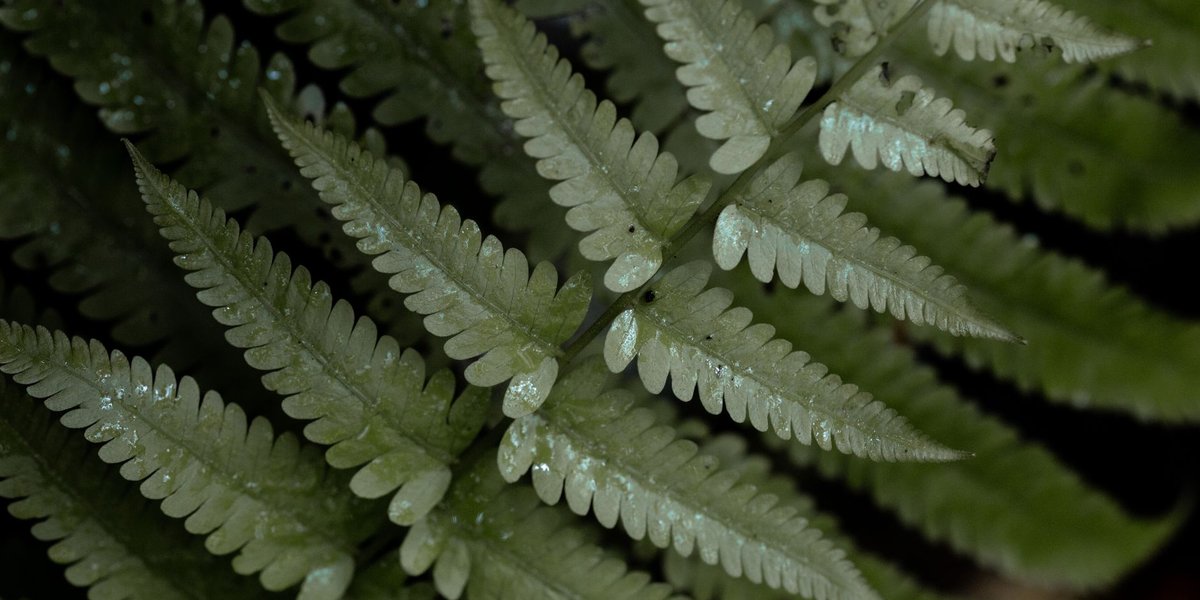
Non-flowering plants are plants that never produce flowers. They reproduce with spores or with seeds that aren’t enclosed in a fruit. That covers mosses, liverworts, hornworts, ferns, horsetails, clubmosses, conifers, cycads and ginkgo.
One caveat first: “non-flowering” is a description, not an official taxonomic group. It’s a handy label for several unrelated lineages that share one trait, the absence of flowers. A moss and a pine tree are about as distantly related as two land plants can be.
TLDR: The Four Groups at a Glance
| Group | Examples | How they reproduce | Where you see them |
|---|---|---|---|
| Bryophytes | Mosses, liverworts, hornworts | Spores | Damp walls, forest floors, bog edges |
| Ferns and horsetails | Bracken, Boston fern, Equisetum | Spores | Shaded woods, stream banks, ditches |
| Lycophytes | Clubmosses, spikemosses, quillworts | Spores | Forest floors, wetlands, rock crevices |
| Gymnosperms | Pines, spruces, cycads, ginkgo | Naked seeds, usually in cones | Forests, parks, streets |
Table of Contents
- What Makes a Plant “Non-Flowering”?
- Bryophytes: Mosses, Liverworts and Hornworts
- Ferns and Horsetails
- Lycophytes: The Clubmosses
- Gymnosperms: Plants With Naked Seeds
- Spores vs. Seeds: How the Life Cycles Differ
- Flowering vs. Non-Flowering Plants
- What Isn’t a Non-Flowering Plant
- Why They Matter
- Growing Non-Flowering Plants at Home
- FAQ
What Makes a Plant “Non-Flowering”?
Flowers belong to the angiosperms, which make up roughly 300,000 of the known plant species. Everything else in the plant kingdom gets by without them, and has done so for hundreds of millions of years. Flowers only appeared on the scene well after ferns and the first seed plants were established.
Without flowers, these plants use one of two strategies:
- Spores. Single cells, released in huge numbers, that grow into a new plant if they land somewhere damp enough. Bryophytes, ferns, horsetails and lycophytes all work this way.
- Naked seeds. A seed holds an embryo and a food supply, which is a much better start than a bare spore. In gymnosperms the seeds sit exposed on cone scales rather than inside a fruit. The word comes from the Greek for “naked seed.”
Bryophytes: Mosses, Liverworts and Hornworts
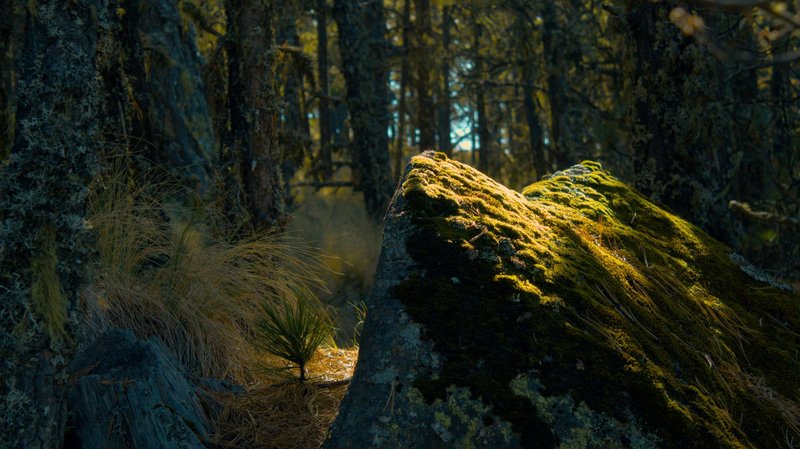
Bryophytes are the small, soft, green plants that carpet rocks, tree trunks and shaded soil. There are roughly 12,000 species of moss, about 9,000 of liverworts and a few hundred hornworts.
They have no true roots, stems or leaves in the vascular sense. Instead of roots they use hair-like rhizoids that mostly anchor the plant, while water and nutrients soak in across the whole surface. That is why they stay short and live where it’s damp. Without vascular tissue (the plumbing that moves water upward in taller plants), height is not an option.
Reproduction: Bryophytes are unusual because the green, leafy plant you see is the gametophyte, the generation that makes eggs and sperm. The sperm need a film of water to swim to the egg. After fertilization, a thin stalk topped with a spore capsule grows out of the leafy plant. That stalk is the sporophyte, and it stays dependent on its host. When the capsule opens, it releases spores.
Where you’ll spot them:
- Moss cushions on north-facing walls and in lawn corners
- Flat, lobed liverworts on damp soil in plant pots and greenhouses
- Sphagnum moss in bogs, where it builds up into peat
Liverworts and hornworts are the less famous cousins. Liverworts are often flat and ribbon-shaped, while hornworts send up thin, horn-like spore capsules.
Ferns and Horsetails
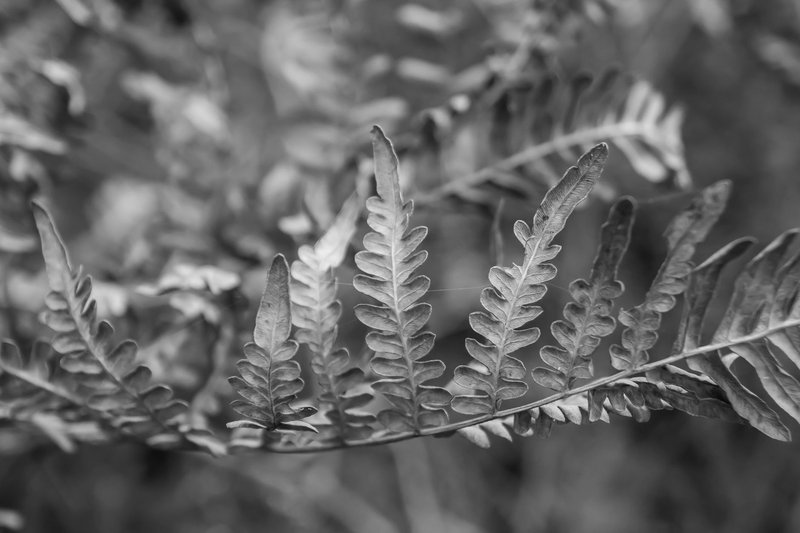
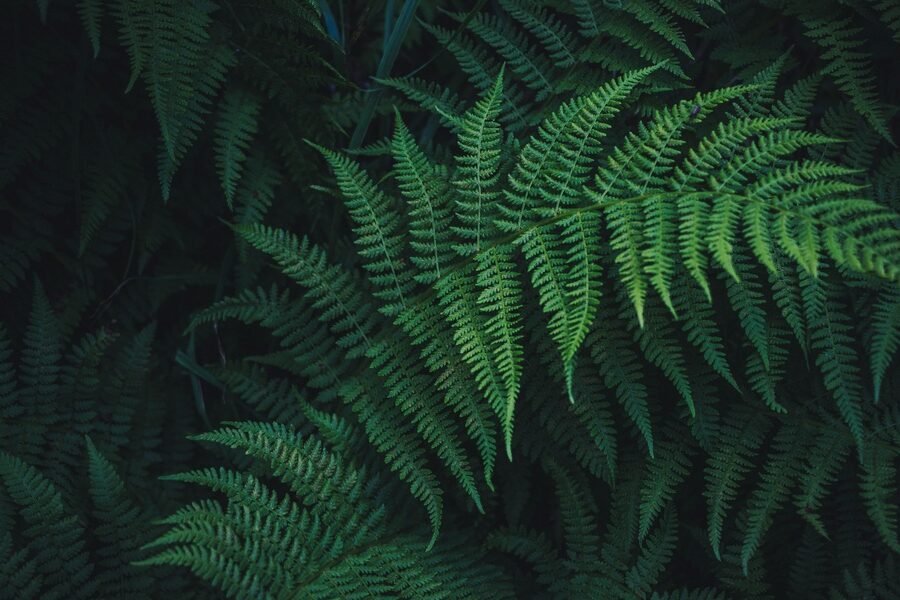
Ferns are the non-flowering plants most people picture first. There are around 10,000 species, and they’re the second-largest group of vascular plants after the angiosperms. Unlike mosses, ferns have real roots and vascular tissue, so they can grow into tall plants. Tree ferns in tropical forests reach several meters.
Reproduction: Flip a mature fern frond over and you’ll often see rows of small brown dots. Those are sori, clusters of spore-producing capsules. The spores land on moist ground and grow into a tiny, heart-shaped gametophyte, usually only a few millimeters across. That tiny plant makes the eggs and sperm, and a new fern grows from the fertilized egg. Here the big leafy fern is the sporophyte, the reverse of what happens in mosses.
Young fern leaves unroll from tight coils called fiddleheads, and the spirals are a quick way to recognize a fern in spring.
Horsetails are the odd relatives. The genus Equisetum has about 15 living species, with jointed, hollow stems and tiny scale-like leaves arranged in rings. Their stems contain silica, which makes them feel rough. People used them to scour pots for centuries, and some species still go by the name “scouring rush.” Their ancestors were huge: relatives of horsetails grew into trees in Carboniferous swamp forests.
Where you’ll spot them: woodland floors, stream banks, shady garden beds, and road ditches (for horsetails). Bracken is one of the most widespread ferns on the planet.
Lycophytes: The Clubmosses
Lycophytes are the quiet third group. They include clubmosses, spikemosses and quillworts, with around 1,300 species altogether. Despite the name, clubmosses aren’t mosses. They have vascular tissue and small, single-veined leaves arranged along the stem, so they look like tiny pine seedlings.
They reproduce with spores, borne in cone-like structures at the stem tips, or in leaf bases. Today’s lycophytes are small, but their ancestors were not. During the Carboniferous period, giant lycophyte trees such as Lepidodendron grew up to around 30 meters tall, and their buried remains became a large portion of the world’s coal.
You’ll find living clubmosses on forest floors, in wet heathland and on mountain slopes.
Gymnosperms: Plants With Naked Seeds
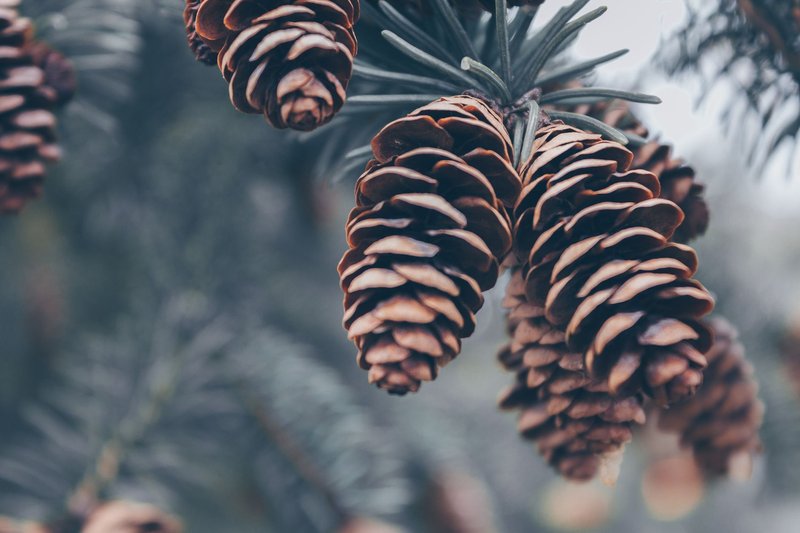
Gymnosperms are the non-flowering plants that make seeds, and they include the tallest, most massive and oldest trees on Earth. There are about 1,000 living species in four groups.
| Group | Roughly how many species | Examples |
|---|---|---|
| Conifers | 600+ | Pine, spruce, fir, cedar, redwood, juniper, yew |
| Cycads | ~350 | Sago palm (Cycas revoluta), Zamia |
| Ginkgo | 1 | Ginkgo biloba |
| Gnetophytes | ~100 | Welwitschia, Ephedra |
Conifers are the largest group and dominate cold and mountain forests across the Northern Hemisphere. The coast redwood (Sequoia sempervirens) holds the record for tallest living tree, at over 115 meters. Some bristlecone pines in California have lived for more than 4,800 years.
Conifers produce two kinds of cones. Small male cones release pollen, which the wind carries to larger female cones. After pollination, the female cone develops seeds between its scales. When the seeds are ripe, the scales open and the seeds drop or blow away.
Cycads look like palms, but they are not related to them. The sago palm in garden centers is a cycad, and all parts of it are poisonous to dogs and people. Cycads are also among the most threatened plant groups; according to the IUCN Red List, a larger share of cycad species is at risk of extinction than in most other plant groups.
Ginkgo is the sole survivor of a once-diverse lineage. The trees are either male or female. Female trees drop fleshy seeds with an outer coating that smells like rancid butter, which is why cities usually plant only males along streets.
Gnetophytes are a small group of oddballs. Welwitschia in the Namib Desert grows just two strap-like leaves for its entire life, which can span centuries.
A common mix-up: a juniper “berry” or a yew “fruit” looks like fruit, but it isn’t. The juniper berry is a cone with fused, fleshy scales. The red yew cup (the aril) is a fleshy coating that surrounds a single seed. Neither one comes from a flower, so neither is a true fruit.
Spores vs. Seeds: How the Life Cycles Differ
All land plants alternate between two generations: a gametophyte that makes eggs and sperm, and a sporophyte that makes spores. What changes between groups is which generation dominates and how the spores or seeds travel.
| Feature | Spore-bearing plants (mosses, ferns, lycophytes) | Seed plants (gymnosperms) |
|---|---|---|
| Dispersal unit | Single-celled spore | Seed with embryo and food supply |
| Dominant generation | Gametophyte in bryophytes; sporophyte in ferns and lycophytes | Sporophyte (the tree) |
| Gametophyte | Free-living, small | Tiny, lives inside the cone |
| Water needed for fertilization | Yes, sperm swim | Mostly no in conifers (pollen tube); cycads and ginkgo still have swimming sperm |
| Protection for the young plant | None | Seed coat and stored food |
In plain language: a spore is a tiny package that needs luck, moisture and time. A seed is a package with lunch included.
Flowering vs. Non-Flowering Plants
| Feature | Non-flowering plants | Flowering plants (angiosperms) |
|---|---|---|
| Reproductive structure | Spores, or cones with naked seeds | Flowers |
| Seeds | Absent (spore plants) or exposed (gymnosperms) | Enclosed inside a fruit |
| Pollination | Wind, or none (spore plants) | Wind, insects, birds, bats, water |
| Species count | Roughly 35,000 or fewer | Around 300,000 |
| Typical habitat | Shady, damp, cold or mountainous places | Nearly everywhere |
The comparison most students are asked about is gymnosperms vs. angiosperms. The short version: both make seeds, but angiosperm seeds develop inside an ovary that becomes a fruit, while gymnosperm seeds sit out in the open on cone scales.
What Isn’t a Non-Flowering Plant
Pages that rank for this topic often get this wrong, so it’s worth checking your list:
- Fungi (mushrooms, molds, yeasts) are not plants. They have their own kingdom and don’t photosynthesize.
- Algae are not plants. Seaweeds and pond scum are photosynthetic, but they lack the roots, stems, leaves and embryo protection of land plants.
- Most trees are not non-flowering. Oaks, maples, apples and eucalyptus all flower. Conifers are the main exception.
Why They Matter
Non-flowering plants are not leftovers from an earlier age. They’re doing real work today.
- Peat and carbon storage. Sphagnum peatlands cover only a few percent of the land surface but store more carbon than all the world’s forests. The IUCN highlights peatlands as a major climate asset.
- Timber and paper. Pines, spruces and firs supply most of the world’s softwood.
- Medicine. The cancer drug paclitaxel (Taxol) was first isolated from the bark of the Pacific yew. According to the National Cancer Institute, it’s used against several cancers, including ovarian and breast cancer. Today it’s mostly made semi-synthetically from compounds in the needles of related yews.
- Soil and habitat. Mosses stabilize bare ground, hold water and shelter tiny animals. Conifer forests shelter everything from owls to elk.
- Ornamental use. Ferns, conifers and mosses are staples in shade gardens, bonsai and Japanese gardens.
Growing Non-Flowering Plants at Home
These are among the easiest plants to grow for shade, and they never need deadheading.
- Ferns: Boston fern, maidenhair fern and Japanese painted fern like indirect light and consistently moist soil. Don’t let them dry out.
- Mosses: They grow in shade on acidic, compacted soil. Keep them damp and don’t fertilize.
- Conifers: Dwarf spruce, juniper and arborvitae suit containers and borders. Most prefer full sun and good drainage.
- Cycads: Sago palms tolerate dry spells but need a bright spot. Keep them away from pets.
To identify what you’ve found outdoors: tiny cushions on rocks are likely mosses; arching fronds with brown dots underneath are ferns; jointed green stems like bottle brushes are horsetails; and anything with needles and cones is almost certainly a conifer.
FAQ
What are 5 examples of non-flowering plants?
Moss, liverwort, fern, pine tree and ginkgo. Horsetails, clubmosses and cycads work too.
How do non-flowering plants reproduce?
Bryophytes, ferns, horsetails and lycophytes release spores. Gymnosperms produce seeds on cone scales or similar structures, without a flower or fruit.
Do non-flowering plants have seeds?
Some do. Gymnosperms make seeds. Mosses, ferns, horsetails and clubmosses don’t make seeds at all.
Are conifers flowering plants?
No. Conifers are gymnosperms and reproduce through cones. Their seeds are not enclosed in a fruit.
Are fungi or algae non-flowering plants?
No. Fungi belong to their own kingdom, and algae are a separate group of photosynthetic organisms. The term “non-flowering plants” applies only to land plants.
What’s the difference between gymnosperms and angiosperms?
Angiosperms produce flowers, and their seeds develop inside fruit. Gymnosperms produce cones, and their seeds are exposed on the cone scales.
Which non-flowering plants are best for a garden?
Ferns suit shade, moss suits damp shady patches, and dwarf conifers are hardy for sun. Check local conditions first, since some species are invasive in certain regions.