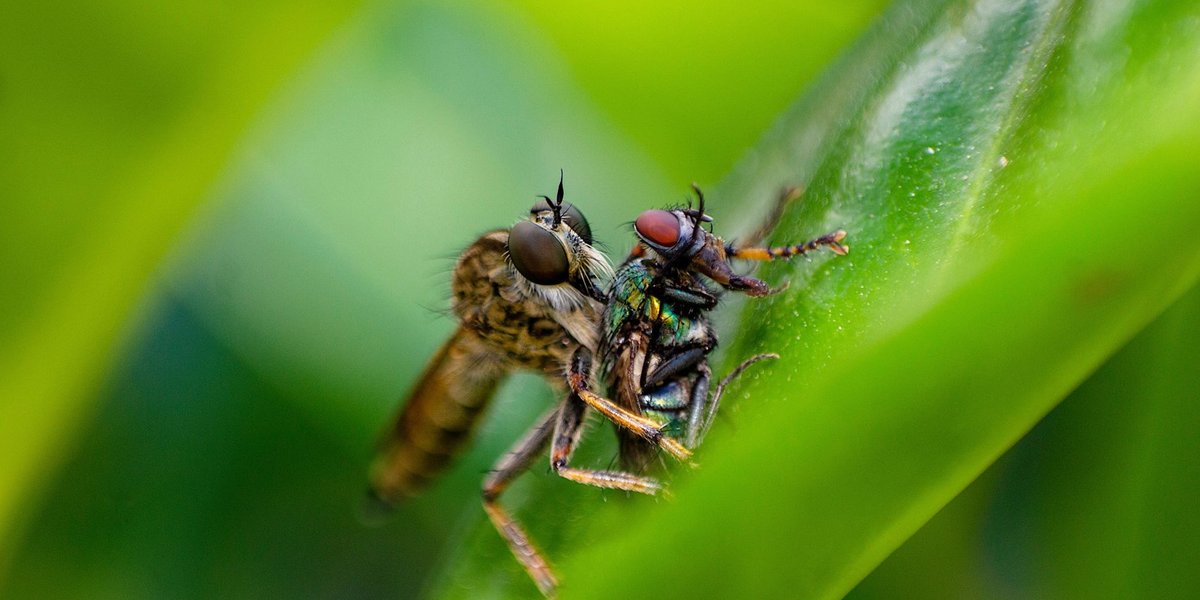
An insect is an arthropod with six legs, three body segments, and a hard outer skeleton. If the animal in front of you has those three things, it’s an insect. If it has eight legs and two body segments, it’s something else (more on that below).
That short definition covers a staggering amount of life. Roughly 925,000 insect species have been described, which is about 57 percent of all known animal species. Add the ones nobody has named yet and some estimates reach several million species.
Table of Contents
- Quick facts
- What makes an insect an insect
- How many insect species are there
- The major insect orders
- Life cycles and metamorphosis
- How insects fly
- Social insects
- Insects vs. arachnids
- Why insects matter for ecosystems
- Are insects declining?
- Insect FAQ
- Summary
Quick facts
- Legs: six, all attached to the thorax
- Body parts: head, thorax, abdomen
- Skeleton: external, made of chitin, shed during growth
- Head gear: one pair of antennae, usually compound eyes
- Wings: most adult insects have two pairs, or one pair plus modified ones (flies)
- Described species: about 925,000
- Oldest fossils: roughly 400 million years old, and insects were flying by about 350 million years ago
- Size range: fairyfly wasps under 0.2 mm long to giant wetas that can weigh as much as a small mouse
What makes an insect an insect
Every insect body is built from the same three parts.
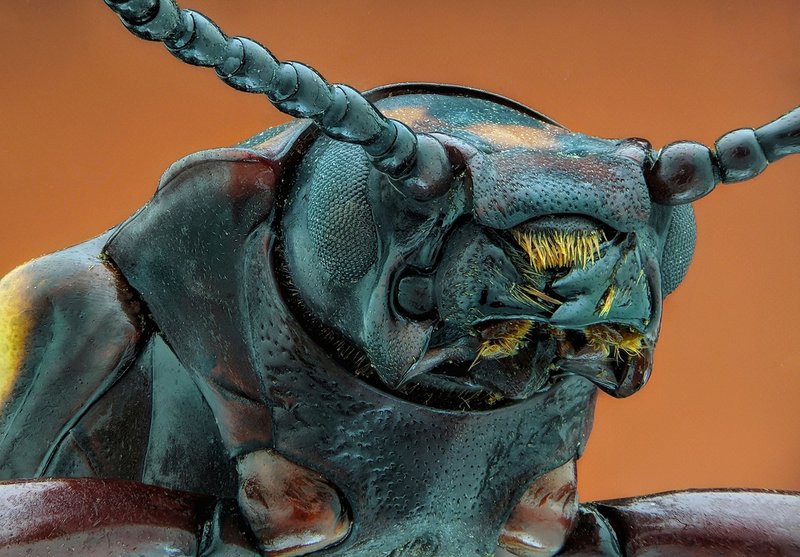
The head carries the sensory kit: a pair of antennae for smell, touch, and sometimes hearing, a pair of compound eyes made of hundreds or thousands of tiny lenses, and mouthparts. Those mouthparts are the same basic toolset modified for different jobs. A beetle chews, a mosquito pierces, a butterfly sips through a coiled tube, a housefly sponges.
The thorax is the engine room. All six legs attach here, along with the wings. It’s packed with flight muscle, which is why a wasp’s middle section looks so solid.
The abdomen holds digestion, reproduction, and most of the breathing apparatus. Insects don’t have lungs. Air enters through small openings along the abdomen and thorax called spiracles, then travels through branching tubes (tracheae) straight to the tissues. No blood-borne oxygen delivery is needed, which is one reason insects stay small. A tube network only carries air so far.
Wrapped around all of it is the exoskeleton, a stiff layer of chitin that does the work of both skin and bones. It can’t stretch, so a growing insect has to molt: split the old shell, crawl out soft, and wait for the new one to harden.
Insect blood (hemolymph) isn’t red, because it doesn’t carry oxygen. A tubular heart along the back pumps it through an open body cavity, bathing the organs directly.
How many insect species are there
About 925,000 are formally described. Nobody knows the true number, since new species keep turning up, especially in tropical canopies and soil. Published estimates run from about 2.5 million to more than 5 million insect species.
Whatever the final count, the proportions are clear. Insects outnumber every other animal group. Vertebrates, the group that includes us, make up only a few percent of described animal species.
Insects have been at it a long time. The Smithsonian points out that they’ve occupied nearly every habitat on land and in fresh water. Only the open ocean has largely escaped them. A handful of sea skaters (genus Halobates) skate on the surface far offshore, but nothing true to the deep sea.
The major insect orders
Biologists group insects into roughly 30 orders. Five of them hold the bulk of the species.
| Order | Common members | Approx. species | Wings | Metamorphosis |
|---|---|---|---|---|
| Coleoptera | Beetles, ladybugs, weevils | 400,000 | Hardened front pair (elytra) cover flight wings | Complete |
| Lepidoptera | Butterflies, moths | 160,000 | Two pairs covered in scales | Complete |
| Diptera | Flies, mosquitoes, gnats | 150,000 | One pair; second pair reduced to balance knobs | Complete |
| Hymenoptera | Ants, bees, wasps, sawflies | 150,000 | Two pairs hooked together | Complete |
| Hemiptera | True bugs, aphids, cicadas | 85,000 | Varies; many have piercing mouthparts | Incomplete |
Other orders worth knowing: Orthoptera (grasshoppers, crickets), Odonata (dragonflies, damselflies), Blattodea (cockroaches and termites), and Mantodea (mantises).
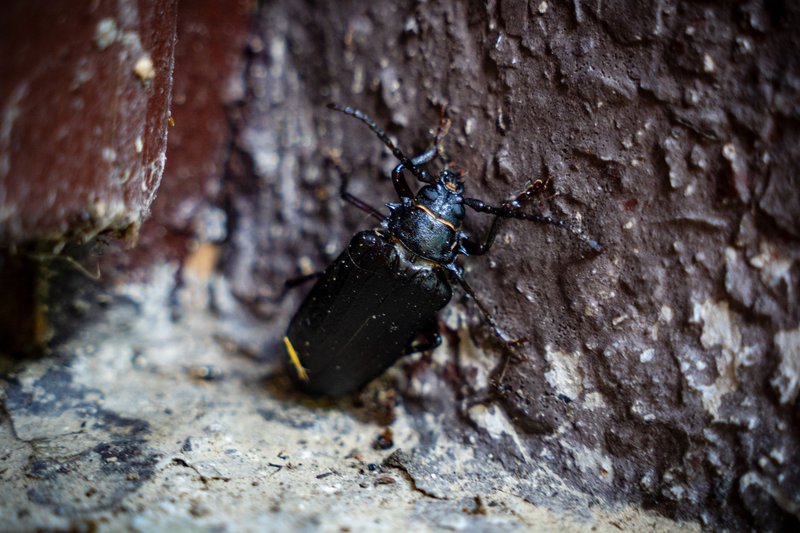
Beetles deserve their own line. About one in four described animal species is a beetle. The famous quip attributed to biologist J.B.S. Haldane, that the Creator has “an inordinate fondness for beetles,” holds up well.
Life cycles and metamorphosis
Insects reach adulthood by one of two routes.
Incomplete metamorphosis has three stages: egg, nymph, adult. A nymph looks like a small wingless version of its parents and eats the same food. Grasshoppers, dragonflies, and cicadas do this. Each molt adds size and, eventually, wings.
Complete metamorphosis has four stages: egg, larva, pupa, adult. The larva (caterpillar, grub, maggot) looks nothing like the adult and often eats something different. Inside the pupa, much of the larval body is broken down and rebuilt into the adult form.
The payoff is that larvae and adults don’t compete. A caterpillar eats leaves; the butterfly drinks nectar. Complete metamorphosis shows up in the four biggest orders by species count, and many researchers consider it a major reason those orders diversified so heavily.
Lifespans swing wildly. Adult mayflies live a day or less, mostly to mate. Some queen termites live for decades. Periodical cicadas spend 13 or 17 years underground as nymphs, then emerge for a few weeks of adult life.
How insects fly
Insects were the first animals to evolve flight, roughly 350 million years ago, and for a long stretch they had the sky to themselves.
Two designs exist. Dragonflies use direct flight muscles attached to the wing bases and can move each wing independently, which is how they hover, reverse, and snatch prey midair. Most other insects use indirect flight: muscles squeeze the thorax, and the shell’s elasticity flips the wings up and down. That setup allows very fast beats. A honeybee beats its wings about 200 times a second, and some midges manage over 1,000.
Flies took the idea further. Their second wing pair shrank into halteres, tiny club-shaped gyroscopes that sense rotation. It’s why a housefly dodges a swat so well.
Social insects
Most insects live alone. A few lineages evolved colonies, and they dominate the places they live.
Ants, termites, and many bees and wasps are eusocial: overlapping generations, cooperative brood care, and a division of labor where only some individuals reproduce. A honeybee hive can hold 30,000 to 60,000 workers served by one queen. Leafcutter ants farm fungus on leaf fragments they carry underground. Army ants form living bridges from their own bodies.
Termites are the odd ones. They’re not related to ants. They’re social cockroaches, and genetic work places them inside the cockroach order.
Insects vs. arachnids
People mix these up all the time. Spiders, scorpions, ticks, and mites are arachnids, a separate class of arthropods. Here’s how to tell them apart.
| Feature | Insects | Arachnids |
|---|---|---|
| Legs | 6 | 8 |
| Body segments | 3 (head, thorax, abdomen) | 2 (cephalothorax, abdomen) |
| Antennae | 1 pair | None |
| Wings | Often present | Never |
| Eyes | Compound eyes, often plus simple eyes | Simple eyes only |
Count the legs first. Six means insect, eight means arachnid. A daddy longlegs, a spider, and a tick are all in the eight-leg camp. Ladybugs and fireflies are insects, and so are the mosquitoes spiders tend to catch in their webs.
Why insects matter for ecosystems
Take out insects and most land ecosystems fail within a few seasons.
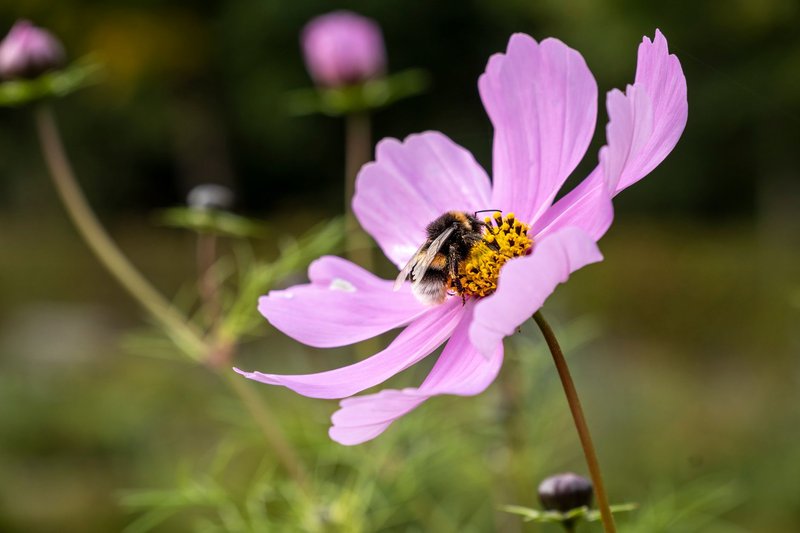
Pollination. About 75 percent of leading food crop types depend at least partly on animal pollination, and bees, flies, moths, beetles, and butterflies do most of that work. That arrangement is a mutualism: plants get their pollen moved, and insects get food. The U.S. Forest Service notes that pollinators help produce roughly one out of every three bites of food people eat.
Food webs. Insects convert plant matter into animal protein at a scale nothing else matches. Most songbirds feed insects to their chicks, even species that eat seeds as adults. Bats, frogs, lizards, fish, and many mammals eat them too.
Decomposition. Dung beetles bury animal waste, carrion beetles and fly larvae strip carcasses, and termites and wood-boring beetles break down dead trees. Without them, nutrients would stay locked up in dead matter.
Soil and pest control. Ants and termites turn over soil. Ladybugs, lacewings, and parasitoid wasps keep plant-eating insects in check, saving farmers money on pesticides.
Are insects declining?
Yes, in many regions. A widely cited 2019 review in Biological Conservation found that about 40 percent of insect species were declining and a third were threatened. The authors named habitat loss, agricultural intensification and pesticides, invasive species, and climate change as the drivers.
The trend is not uniform. Data is thick for Europe and North America and thin for the tropics, where most species live. Some groups, such as flies and certain pests, are holding steady or expanding. Pollinators, dragonflies, and dung beetles are among the groups showing the clearest losses.
For a backyard-level response, the fixes are mundane: leave some ground bare for nesting bees, plant native flowers, cut back on lawn and outdoor lighting, and skip broad-spectrum pesticides.
Insect FAQ
How many legs does an insect have? Six. All three pairs attach to the thorax.
Is a spider an insect? No. Spiders have eight legs, two body segments, and no antennae. They’re arachnids.
How many insect species exist? About 925,000 are described. The real total is probably several million.
What is the largest group of insects? Beetles, with roughly 400,000 described species.
Do insects have bones? No. They have an exoskeleton made largely of chitin, which they shed as they grow.
Do insects breathe? Yes, through spiracles on the body that lead to a network of air tubes. They don’t have lungs.
What is the difference between complete and incomplete metamorphosis? Complete metamorphosis includes a pupal stage and a larva that looks nothing like the adult. Incomplete skips the pupa, and nymphs resemble small adults.
Summary
Insects are defined by three body parts, six legs, and an exoskeleton. They make up most of the animal species we know about, run on a handful of dominant orders (beetles, moths and butterflies, flies, and the ants, bees, and wasps), and develop through either gradual or complete metamorphosis. They pollinate crops, feed everything from songbirds to frogs, and recycle dead matter. The research on declining populations is the strongest argument for paying attention to them now.