Twenty years ago, network theory was a niche corner of statistical physics. Today it underpins research on epidemics, brains, power grids and social media. Physics World’s “And now for the next 20 years” series asked physicists to predict what comes next, and the most honest answer in it is that nobody sees the biggest shifts coming.
So treat this as a map of where the pressure is building, not a prophecy. Below are seven areas of physics where real experiments, real money and real open questions overlap, each with what’s unresolved and what could change by 2035.
Table of contents
- 1. Quantum computing and quantum technologies
- 2. Dark matter and dark energy
- 3. Quantum gravity and the holographic principle
- 4. Condensed matter and new materials
- 5. Fusion energy
- 6. AI-driven and computational physics
- 7. Biophysics and medical physics
- Maturity and timeline at a glance
- What the next decade looks like
1. Quantum computing and quantum technologies {#quantum-computing}
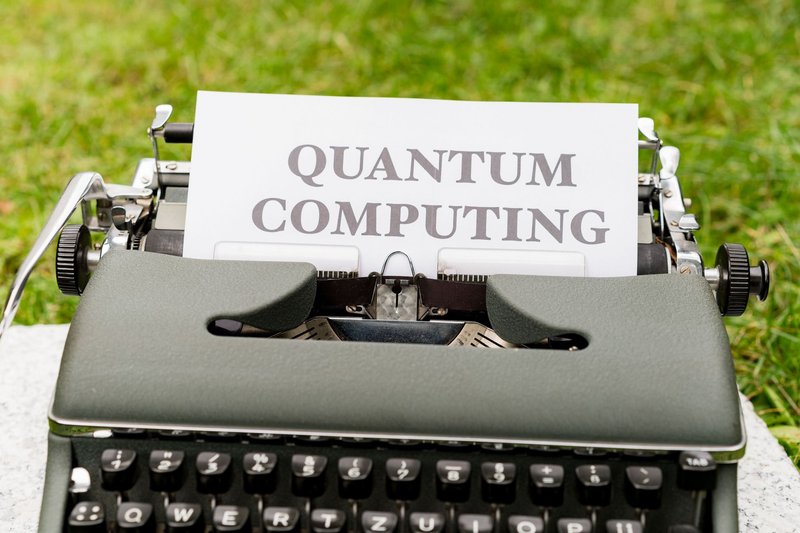
The future of quantum computing hinges on one problem: qubits are fragile, and the errors pile up faster than you can fix them. In December 2024, Google’s Willow chip showed that adding more physical qubits to an error-correcting code can reduce errors instead of increasing them, a milestone described in Nature. That’s the first real sign the approach scales.
Unresolved: a useful machine needs thousands of logical qubits, each built from many physical ones. Today’s chips have around a hundred physical qubits at the high end.
By 2035: expect error-corrected processors tackling narrow problems, mainly simulating molecules and materials. Quantum sensing (clocks, magnetometers, gravimeters) is further along and will reach commercial use first.
2. Dark matter and dark energy {#dark-matter-and-dark-energy}
About 95% of the universe’s energy budget is stuff we can’t see. Dark matter holds galaxies together; dark energy drives the expansion to accelerate. Underground detectors have hunted for dark matter particles for decades and found nothing, which has pushed theorists to reconsider what they’re looking for.
The newer surprise is dark energy. Results from the DESI survey have hinted that it may weaken over time rather than stay constant, a finding that hasn’t yet reached the confidence physicists demand. Meanwhile the ESA Euclid mission, launched in 2023, is mapping the shapes of billions of galaxies to measure both. For the broader picture of where this work is heading, see 8 Future Trends in Cosmology.
Unresolved: is dark energy a true constant, or something that evolves?
By 2035: Euclid, DESI and the Vera Rubin Observatory should either confirm the evolving signal or bury it. Larger xenon detectors will either see a dark matter particle or rule out most of the simplest candidates.
3. Quantum gravity and the holographic principle {#quantum-gravity}
General relativity describes gravity. Quantum mechanics describes everything else. They don’t fit together, and black holes are where the clash is sharpest. The holographic principle, which suggests that the information inside a volume can be encoded on its boundary, has become one of the most productive ideas in theory, tying gravity to quantum information.
Unresolved: no experiment has tested quantum gravity directly. The energies involved are far beyond any collider.
By 2035: don’t expect a confirmed theory. Expect tabletop tests of whether gravity can entangle two small masses, and quantum simulators that mimic toy models of black holes. Progress here comes in ideas, not instruments.
4. Condensed matter and new materials {#condensed-matter}
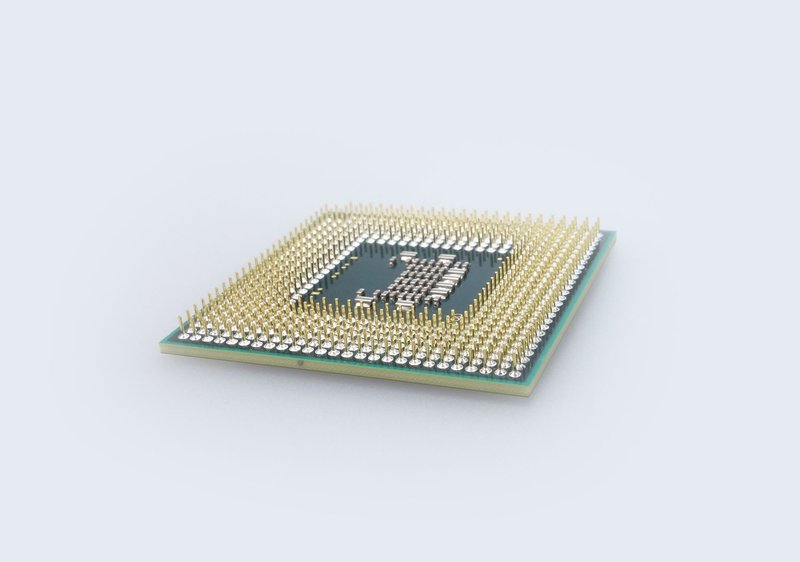
This is the field where most of the physics you use daily gets made. Transistors, lasers and LEDs all came from it. The current frontier includes twisted bilayer graphene, where rotating one atom-thick sheet a fraction of a degree against another produces superconductivity, and topological materials, whose surface electrons are protected from scattering. Many of these materials are engineered at the nanoscale, a field where the 7 Future Trends in Nanotechnology are already taking shape.
Unresolved: high-temperature superconductivity still lacks a full explanation more than 35 years after the first cuprates. A confirmed room-temperature, ambient-pressure superconductor remains unclaimed, despite several high-profile claims that failed replication.
By 2035: machine-learning-guided searches should yield better batteries, magnets and semiconductors. A practical room-temperature superconductor is a long shot, but the payoff is large enough that labs keep looking.
5. Fusion energy {#fusion-energy}
In December 2022, the National Ignition Facility in California produced more energy from a fusion reaction than the lasers delivered to the target, as reported by Lawrence Livermore National Laboratory. It was a scientific milestone, not a power plant: the lasers themselves drew far more energy from the grid than the fusion released.
Magnetic confinement is the other route. The ITER tokamak in France has been rebaselined, with research operations now planned for the mid-2030s. Private companies are building smaller machines with high-temperature superconducting magnets, betting they can move faster.
Unresolved: sustained burning plasma, materials that survive neutron bombardment, and breeding enough tritium fuel.
By 2035: realistic targets are net energy from a magnetic device and a pilot plant under construction. Grid-scale fusion power before 2040 is optimistic.
6. AI-driven and computational physics {#ai-physics}
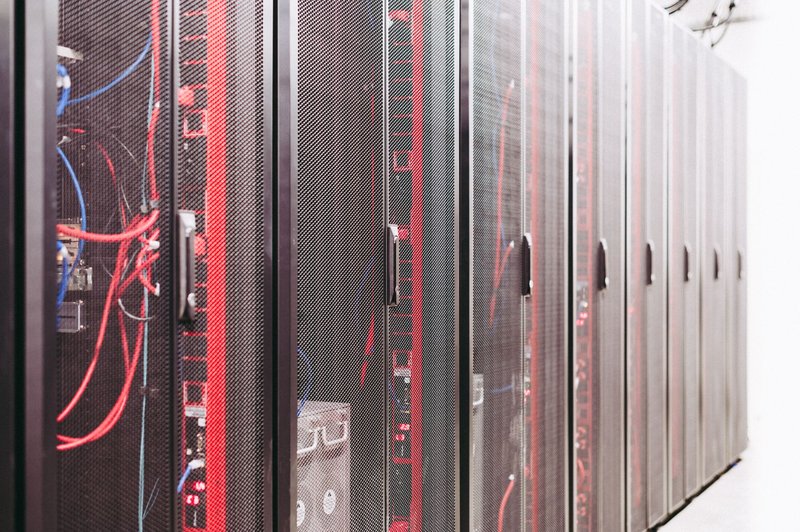
Machine learning is now a standard tool in physics labs. It sorts collider events, flags gravitational-wave signals in noisy data, predicts protein and material structures, and speeds up simulations that used to take months. Some groups use it to propose equations from data directly.
Unresolved: a neural network can predict without understanding. The open question is whether AI will produce new physical principles or only faster calculations, and how physicists verify results they can’t derive by hand.
By 2035: AI surrogates will replace many expensive simulations in plasma physics, climate and materials. Whether any of them discovers a law that humans then confirm is the question to watch.
7. Biophysics and medical physics {#biophysics}
Physics keeps moving into biology. Cryo-electron microscopy reveals molecular machines at near-atomic resolution. Optical tweezers measure forces on single molecules. Proton therapy and MRI continue to improve in cancer treatment and diagnosis, and physicists are modeling how cells sense forces and organize tissues.
Unresolved: how collective behavior (a heartbeat, a flock, a developing embryo) emerges from molecular rules. This ties directly into the bridging-scales theme that runs through modern physics.
By 2035: faster, cheaper imaging and radiotherapy, plus quantitative models of cell mechanics that doctors can use.
Maturity and timeline at a glance {#at-a-glance}
| Field | Maturity | Likely milestone by 2035 |
|---|---|---|
| Quantum computing | Early engineering | Error-corrected chips solving narrow problems |
| Dark matter and dark energy | Mature observation, unsolved theory | Evolving dark energy confirmed or ruled out |
| Quantum gravity | Pure theory | New tabletop tests; no final theory |
| Condensed matter | Mature, still productive | AI-designed materials in products |
| Fusion energy | Proof of principle | Net energy from a magnetic device |
| AI and computational physics | Rapidly expanding | AI surrogates standard in simulations |
| Biophysics and medical physics | Mature and growing | Better imaging and treatment tools |
What the next decade looks like {#summary}
The future trends in physics split into two kinds of bets. Quantum technologies, fusion, materials and medical physics are engineering races, where progress is measurable year by year. Dark energy and quantum gravity are questions about how reality works, where one measurement can rewrite a field.
Pay attention to the places where those categories meet. Quantum computers will simulate materials. AI will design experiments. Cosmology will lean on quantum sensors. If the history of network theory is any guide, the next big field probably sits at a boundary like these, and it doesn’t have a name yet.