Richard Feynman’s 1959 talk “There’s Plenty of Room at the Bottom” asked a simple, provocative question: what if matter could be controlled atom by atom? That thought experiment seeded decades of work that led from the discovery of graphene in 2004 to clinical nanomedicine approvals and handheld sequencing devices today.
By the 1990s nanoparticles moved into the clinic (Doxil, approved 1995) and the 2010s brought tools such as Oxford Nanopore’s MinION (launched 2014) for single-molecule sensing. Then 2020 accelerated public familiarity with lipid nanoparticle vaccines when Pfizer/BioNTech and Moderna gained authorizations.
You should care because nanoscale control promises faster diagnostics, longer-lasting batteries, lighter high-performance materials, and cheaper clean water. This article lays out seven specific trends — with dates, numbers, and concrete examples — that will shape products and industries over the next decade.
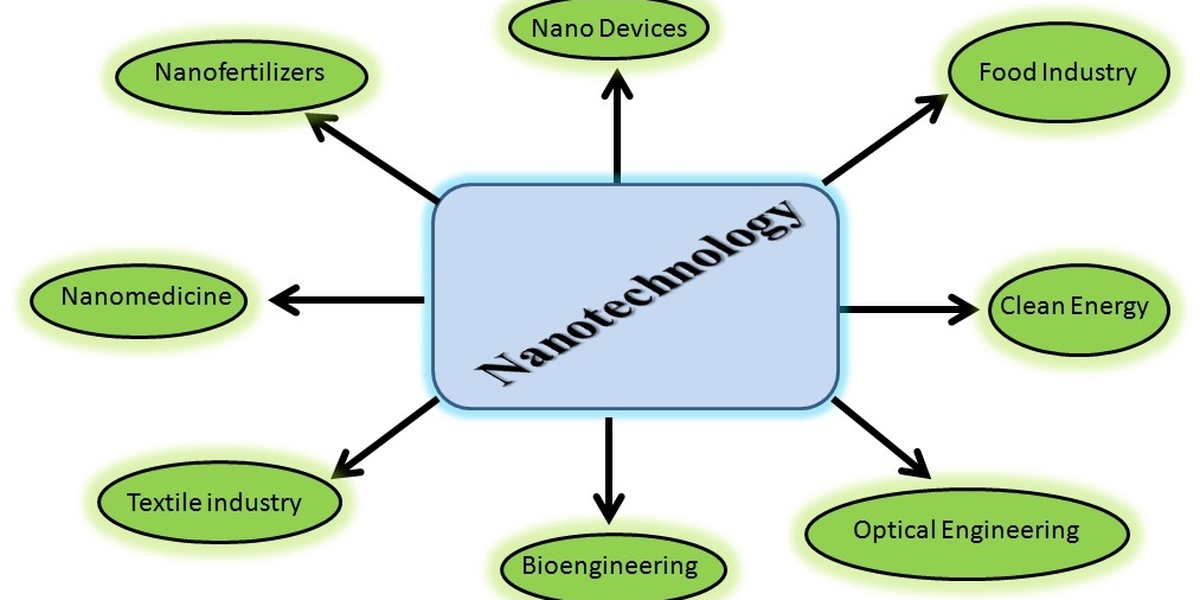
Read on for trends in medicine, energy, materials, manufacturing, and computing, plus realistic notes on regulation and scale-up. These seven future trends in nanotechnology will matter for engineers, investors, clinicians, and curious consumers alike.
Medical and Healthcare Innovations

Nanotechnology is already in the clinic, and the next decade will push it from specialty products into broader healthcare workflows. Expect more precise drugs, faster point-of-care diagnostics, and combined therapy-plus-monitoring devices, though regulation and manufacturing scale-up remain critical hurdles.
1. Targeted drug delivery and precision therapies
Nanoparticles let active compounds concentrate where they’re needed and lower systemic toxicity. The liposomal doxorubicin Doxil proved the concept with FDA approval in 1995, and lipid nanoparticle (LNP) carriers enabled the rapid 2020 deployment of mRNA vaccines from Pfizer/BioNTech and Moderna.
Real-world effects include chemotherapy regimens with fewer off-target side effects, the potential to reduce dose sizes, and formulations tailored to patient subgroups. Albumin-bound paclitaxel (Abraxane) is another oncology example of how altered formulation changes pharmacokinetics and tolerability.
Manufacturing consistent nanoparticle batches at scale is nontrivial. Companies that mastered LNP production for vaccines in 2020 demonstrated that rapid scale-up is possible, but many therapeutic nanosystems still face hurdles in reproducibility, sterility, and regulatory validation.
2. Diagnostic tools and theranostics
Nanoscale probes, quantum dots, and nanopore sensors push detection limits to single molecules or to concentrations in the picomolar range. Oxford Nanopore’s MinION (2014) brought portable, single-molecule sequencing into field labs and clinics.
Quantum dots and other nanoscale labels support highly multiplexed imaging and faster assays, while nanopore and single-molecule sensors deliver rapid turnaround for infectious-disease testing. Devices that combine targeted delivery with real-time monitoring are emerging as theranostics.
Point-of-care deployment of these sensors shortens time to treatment and enables intraoperative imaging or streaming biomarker monitoring. Regulatory pathways for diagnostic devices are maturing, but clinical adoption will hinge on robustness, cost, and clear clinical utility.
Energy and Environmental Solutions
Energizing a low-carbon future and delivering clean water at scale are two urgent needs where nanoscale engineering plays a decisive role. Precise control at the nanoscale improves conversion efficiency, storage density, and selective filtration for water and air purification.
3. Advanced energy storage and batteries
Nanostructured electrodes and engineered solid electrolytes can raise capacity, speed charging, and extend cycle life. Startups like QuantumScape target solid-state cells that replace liquid electrolytes with ceramic or nano-structured layers, aiming for higher energy density in several years.
Perovskite photovoltaics demonstrated rapid lab progress, with research cells exceeding 25 percent efficiency by 2020. Translating lab gains into stable, manufacturable modules requires tackling degradation, encapsulation, and scale-up, but the potential impact on rooftop and utility-scale solar is large.
For consumers, that means longer-range electric vehicles and faster charging phones; for grids, denser and lower-cost storage. Commercial timelines vary, but many solid-state and advanced material solutions are targeting pilot production within 3–7 years.
4. Water and air purification with nanomaterials
Nanofiltration membranes with pores on the order of 1 to 10 nanometers can remove viruses and small organic contaminants that pass through conventional filters. Research into carbon nanotube and graphene-based membranes aims for higher flux and lower energy use.
Nano-enabled catalysts accelerate pollutant breakdown and reduce energy demands in treatment plants, while aerosol filters that use engineered nanostructures can capture finer particulates. These technologies support decentralized water purification and improved urban air quality solutions.
Durability and fouling are persistent engineering challenges; companies deploying nanofiltration commercially focus on anti-fouling coatings and cleaning protocols to make maintenance predictable and costs manageable.
Manufacturing and Materials

Nanomaterials enable lighter, stronger, and multifunctional components, while advances in nanomanufacturing change how products are made. Expect broader adoption of 2D materials and maturation of scalable fabrication techniques in the coming decade.
5. Stronger, lighter materials (graphene and 2D materials)
Graphene and other two-dimensional materials offer exceptional strength-to-weight ratios and unique electrical properties. Graphene’s theoretical tensile strength is roughly 130 gigapascals, and its discovery in 2004 led to the 2010 Nobel Prize for Geim and Novoselov.
Applications already include graphene-reinforced composite prototypes for aerospace parts and high-performance sports equipment, plus thermal interface materials that improve heat dissipation in electronics. Such improvements can reduce vehicle weight and save fuel in transport applications.
Commercial hurdles remain: cost-effective production, batch-to-batch consistency, and integration into existing supply chains. Roll-to-roll techniques and improved CVD processes are closing the gap, making broader deployment increasingly likely within a decade.
6. Precision manufacturing and nanofabrication
Advances in lithography, directed self-assembly, and additive nanomanufacturing are producing reliable features below 10 nanometers. A clear milestone was commercial semiconductor production at the 5 nm node, achieved by TSMC around 2019.
Extreme ultraviolet lithography (EUV) enables top-down patterning at advanced nodes, while bottom-up methods like directed self-assembly aim to lower costs for large-area applications. These capabilities translate to faster, lower-power chips, better sensors, and finer medical-device features.
Cost trade-offs will determine which sectors move first. High-value applications such as semiconductors and specialty sensors already justify the expense, while new bottom-up methods may democratize nanoscale manufacturing for larger markets over time.
Computing, Electronics, and Sensing

Nanoscale control sustains performance scaling, enables new device physics, and creates ultra-sensitive sensors. Expect continued incremental gains alongside longer-term shifts toward quantum and spin-based devices.
7. Nanoelectronics, quantum devices, and sensors
Nanoscale device engineering is producing faster, smaller, and more energy-efficient electronics while delivering sensors sensitive enough to detect single molecules. Commercial node sizes reached 5 nanometers with TSMC’s 2019 processes, a concrete indicator of maturity in top-down fabrication.
Quantum-dot displays (QLED) are one consumer-facing application of nanoscale materials, improving color and efficiency in screens. On the sensor side, nanopore sequencing and single-molecule detectors (Oxford Nanopore platforms) are already in research and early commercial use.
Longer-term, spintronics and quantum devices could enable new computing paradigms that complement classical processors. In the near term, expect low-power edge AI hardware and always-on health and environmental sensors that bring lab-grade sensitivity into everyday devices.
Summary
Nanoscience has moved from thought experiment to measurable products: clinical approvals (Doxil, 1995), the 2004 discovery of graphene and its 2010 Nobel Prize, portable single-molecule sequencing (Oxford Nanopore MinION, 2014), commercial 5 nm semiconductor nodes (TSMC, 2019), and perovskite lab efficiencies above 25 percent by 2020 are all milestones to watch.
Across medicine, energy, materials, manufacturing, and computing, seven converging trends will determine which innovations reach everyday use. Commercialization, regulatory clarity, and manufacturing scale-up will be the gatekeepers over the next 5–10 years.
Keep an eye on therapy approvals and diagnostic rollouts, perovskite and solid-state battery pilots, reproducible graphene composites, and nanofabrication methods that lower cost for large-area production. These are the practical signals that emerging nanotechnology is delivering true market impact.
- Doxil (1995), graphene discovery (2004) and 2010 Nobel, Oxford Nanopore MinION (2014), TSMC 5 nm node (2019), perovskite >25% efficiency (2020).
- Targeted nanoparticles and mRNA-LNP vaccines show clinical viability and rapid scale-up potential.
- Nanomaterials promise meaningful gains in batteries, solar, filtration, and lightweight composites once manufacturing and durability challenges are solved.
- Watch policy, standards, and production milestones over the next 5–10 years to see which technologies move from lab to large-scale deployment.