Table of Contents
- TLDR
- Coal: The Resource That Still Runs the Country
- Oil and Natural Gas: Abundant, Just Not Abundant Enough
- Water and Hydropower: Feast in the South, Drought in the North
- Arable Land: Feeding 20% of the World on Less Than 10% of Its Farmland
- Minerals and Rare Earths: China’s Real Leverage
- Where It’s All Buried: A Regional Breakdown
- Reserves vs. Production vs. Import Reliance
- What This Actually Means
TLDR
- China sits on the world’s largest rare earth reserves, about 44 million tonnes, roughly 48% of the global total, according to the U.S. Geological Survey.
- It also holds the world’s third-largest coal reserves at 173.1 billion tonnes, behind only the US and Russia.
- Despite that, China imports around 70-74% of the crude oil it burns and most of its iron ore. Reserves and consumption don’t line up the way people assume.
- Water, not minerals, is the real bottleneck. Parts of northern China run on less than a quarter of the UN’s water-scarcity threshold.
- Rare earths, not oil or coal, are China’s actual geopolitical lever, because mining is only half the story. It refines the vast majority of the world’s supply too.
The natural resources of China are a study in contrasts: staggering abundance in some categories, structural scarcity in others, and a government that has spent three decades turning the gap into leverage.
Coal: The Resource That Still Runs the Country
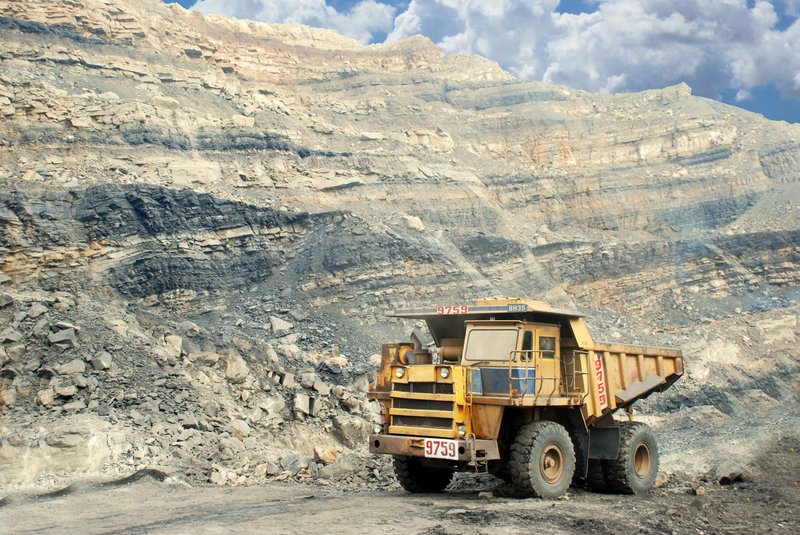
China burns more coal than the rest of the world combined, and it has the reserves to keep doing it for a long time. Proven coal reserves sit at 173.1 billion tonnes as of the most recent EIA assessment, the third-largest stockpile on the planet. Most of it sits in the north: Shanxi and Inner Mongolia together hold the bulk of it, with smaller deposits scattered through Guizhou, Yunnan, Shaanxi, and Shandong.
Production keeps climbing even as officials talk about peak coal. Output is on track to hit roughly 4.9 billion tonnes in 2025, up 2.7% over the year before, though growth cooled in the second half after safety inspections shut down mines accused of overproducing. That’s the pattern with Chinese coal: reserves are enormous, but the industry runs hot enough that even record output barely keeps pace with demand from steel mills and power plants.
Oil and Natural Gas: Abundant, Just Not Abundant Enough
Here’s the contradiction outsiders miss: China produces a lot of oil, and it’s still one of the biggest oil importers on earth. Domestic fields, concentrated around the Bohai Bay basin and Xinjiang, keep output in the multi-million-barrels-a-day range, but a manufacturing economy this size burns through it faster than wells can replace it—a constraint that affects other major industrial nations like Japan. Import dependency has hovered near 70% for years and is projected to stay there through the current five-year plan, with imports covering 74% of total oil supply in 2024 alone.
Natural gas follows a similar shape, just less extreme. Domestic production has grown steadily, particularly shale gas in Sichuan, but pipeline imports from Central Asia and Russia, plus a growing LNG fleet, still fill a real chunk of demand. None of this is a resource shortage in the geological sense. China has hydrocarbons. It just doesn’t have enough of them relative to how much the country runs on.
Water and Hydropower: Feast in the South, Drought in the North
This is the resource story that gets buried under headlines about rare earths, and it shouldn’t. China’s per capita freshwater resources run at roughly a quarter of the global average. The distribution makes it worse: close to 80% of the country’s water sits in the south, while the north, home to Beijing, Tianjin, and most of the industrial and agricultural core, gets a fraction of it.
The numbers in the north are genuinely stark. Per capita water availability across the North China Plain was measured at around 253 cubic meters as of 2020, nearly half the UN’s threshold for acute scarcity. Tianjin fares worst of all, at roughly 113 cubic meters per person, according to research published in Nature Communications on China’s regional water inequality. Rainfall explains part of the gap: the lower Yellow River basin gets 20 to 25 inches a year, while parts of the southeastern coast see more than 80.
Hydropower is where China turns geography into an asset. Installed hydropower capacity reached 436 gigawatts by the end of 2024, including 377 gigawatts of conventional hydro, making China the largest hydropower producer on earth by a wide margin, per the International Hydropower Association. More than 300 gigawatts of additional capacity, including 217.5 gigawatts of pumped storage, is already under construction. China accounted for over 40% of global hydropower capacity additions in 2025. The rivers that don’t reach the thirsty north still power the grid that runs it.
Arable Land: Feeding 20% of the World on Less Than 10% of Its Farmland
Arable land makes up just 11.5% of China’s total land area, below the global average of 14.3%, per World Bank figures. Per capita, that works out to less than 0.08 hectares of farmland per person. The often-repeated shorthand is close to accurate: China has under 10% of the world’s arable land and has to feed more than a fifth of the global population on it.
That squeeze is why China farms so intensively and why it imports so much soy, corn, and other feed grains despite being an agricultural giant in absolute terms. It’s also why land use policy in China treats farmland conversion, to housing, to industrial parks, to solar farms, as a genuinely sensitive political issue rather than a routine zoning decision.
Minerals and Rare Earths: China’s Real Leverage
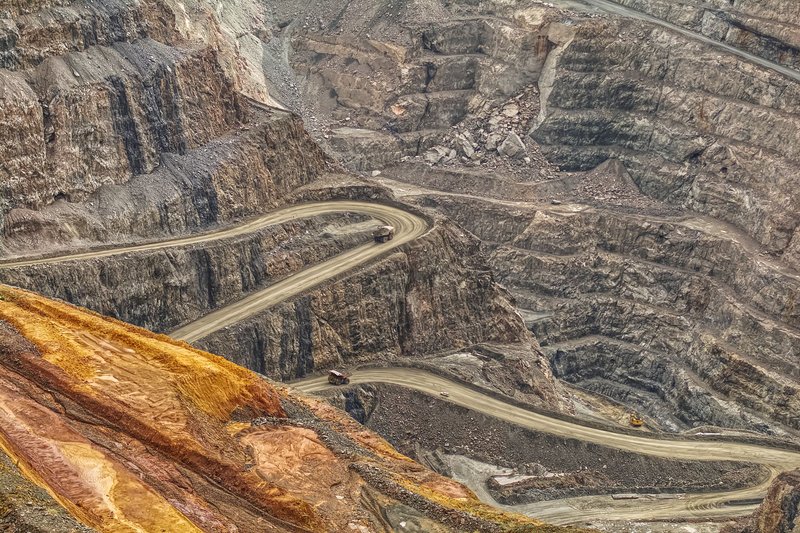
Coal and oil get the headlines, but rare earths are the resource where China’s position is closest to a monopoly. The USGS puts China’s reserves at roughly 44 million tonnes of rare earth oxide equivalent, about 48% of the 85 million tonnes confirmed worldwide. Vietnam and Brazil hold the next-largest deposits, at 22 million and 21 million tonnes respectively, but neither comes close to matching China on production or refining capacity.
That second part, refining, is the piece that actually matters. Plenty of countries have rare earth deposits sitting in the ground. Very few have built the processing infrastructure to turn raw ore into usable oxides and metals, and China spent decades building exactly that while environmental costs kept competitors out of the business. The result is a supply chain where China can mine less than half the world’s reserves and still control the large majority of what reaches manufacturers, a dynamic that’s turned rare earth export policy into a recurring flashpoint in trade negotiations.
Beyond rare earths, China also holds significant reserves of tungsten, antimony, and graphite, minerals that rarely make headlines but sit in everything from cutting tools to batteries. Iron ore is the mirror image: China mines plenty of it, but the ore is low-grade, so the country still imports the majority of what its steel industry needs, mostly from Australia and Brazil—a pattern that mirrors the mineral import profile of other manufacturing economies like Germany.
Where It’s All Buried: A Regional Breakdown
Resources in China aren’t spread evenly, they’re stacked in a handful of provinces:
- Inner Mongolia: Coal country and rare earth country at once. The Bayan Obo deposit here is the largest rare earth mine on the planet, and the province also sits on a huge share of China’s coal reserves.
- Xinjiang: The energy frontier, with major oil and natural gas basins plus growing coal development, though water scarcity limits how fast extraction can scale.
- Sichuan: A rare earth hub in its own right, centered on Liangshan, and also a hydropower powerhouse thanks to its river systems feeding the national grid.
- Shanxi: The historic coal heartland, still one of the top coal-producing provinces after decades of mining.
- Jiangxi: Home to the Ganzhou rare earth belt, particularly rich in the heavy rare earths used in high-performance magnets.
Reserves vs. Production vs. Import Reliance
| Resource | China’s global reserve standing | 2025 scale | Import reliance |
|---|---|---|---|
| Coal | 3rd largest (173.1 billion tonnes) | ~4.9 billion tonnes produced | Low overall, but imports high-grade coking coal |
| Rare earths | 1st (~44 million tonnes, ~48% global) | Dominates global mining and refining | Net exporter; global leverage point |
| Crude oil | Modest relative to consumption | Multi-million barrels/day produced domestically | ~70-74% imported |
| Iron ore | Large volume, low ore grade | Extensive domestic mining | Majority imported (mainly Australia, Brazil) |
| Arable land | Below world average (11.5% of land area) | Farmed at high intensity | Net importer of soy and feed grains |
| Freshwater | ~25% of global per capita average | Severely uneven north-south | Not import-dependent; internal scarcity crisis |
What This Actually Means
Line up all six categories and a pattern falls out that most single-resource headlines miss. China isn’t resource-poor and it isn’t resource-rich in any simple sense. It’s resource-concentrated, sitting on world-beating reserves of exactly the things, coal and rare earths, that took decades of state investment to exploit, while running short on the things that took nothing but geography to determine, water and farmland.
That’s also why rare earths keep showing up in trade disputes while coal almost never does. Coal reserves are large but not exceptional, and plenty of other countries can mine and burn their own. Rare earth refining is concentrated in one place because building the alternative takes years and nobody else has bothered to finish the job. Water and farmland don’t move the geopolitical needle the same way, but they shape everything downstream, from where new factories get built to how much soy China has to buy from Brazil in a given year. The resources under the ground get the attention. The ones falling from the sky are the ones actually setting the limits.