Table of Contents
- What “Endemic” Actually Means
- Why South America Breeds So Many One-of-a-Kind Plants
- The Atacama Desert: Life at the Edge of Impossible
- The High Andes: A Bromeliad That Waits a Lifetime to Bloom
- The Guiana Highlands: Carnivorous Plants on Lost-World Summits
- The Amazon Basin: Giants Found Nowhere Else
- The Cerrado: Brazil’s Underrated Savanna
- Chile’s Temperate Rainforests: Living Fossils in the South
- FAQ
What “Endemic” Actually Means
Every “South American plants” listicle on the internet uses the word “endemic” as a synonym for “native,” and that’s a mistake worth clearing up before anything else. Native means a plant grows there naturally, without help from humans. Endemic means it grows only there — remove that one valley, that one desert basin, that one flat-topped mountain, and the species disappears from the planet entirely.
A palm tree native to the Amazon might also grow wild in Central America. A plant endemic to the Atacama Desert exists in a specific patch of rock and fog, full stop. That distinction matters because it’s the difference between “interesting” and “irreplaceable” — and it’s the difference this article is built around, since most of what ranks for this topic skips it.
Why South America Breeds So Many One-of-a-Kind Plants
South America produces endemic species at a rate most continents can’t match. A 2017 continent-wide survey published in Nature Ecology & Evolution counted roughly 82,000 vascular plant species native to the continent — and found that around 73,500 of them, close to 90 percent, occur nowhere else on Earth. That’s not a fluke of counting. It’s geology and climate working in the same direction for millions of years.
The Andes run the length of the continent and act like a wall, splitting wet Amazonian air from bone-dry western slopes and cutting off valley after valley from its neighbors. The Atacama Desert, pinned between the Andes and the cold Humboldt Current, is the driest non-polar place on the planet, and the plants that survive there had to evolve traits found nowhere else. The Guiana Highlands scatter flat-topped sandstone mountains called tepuis across Venezuela, Guyana, and Brazil, each one a plateau isolated from the surrounding lowland by sheer cliffs — biological islands in the sky. And repeated glacial cycles pushed plant populations into isolated refugia in the south, where they diverged in place for long enough to become their own species.
Stack those four forces on top of each other and you get a continent that doesn’t just have a lot of plants. It has a lot of plants that exist in exactly one place.
The Atacama Desert: Life at the Edge of Impossible
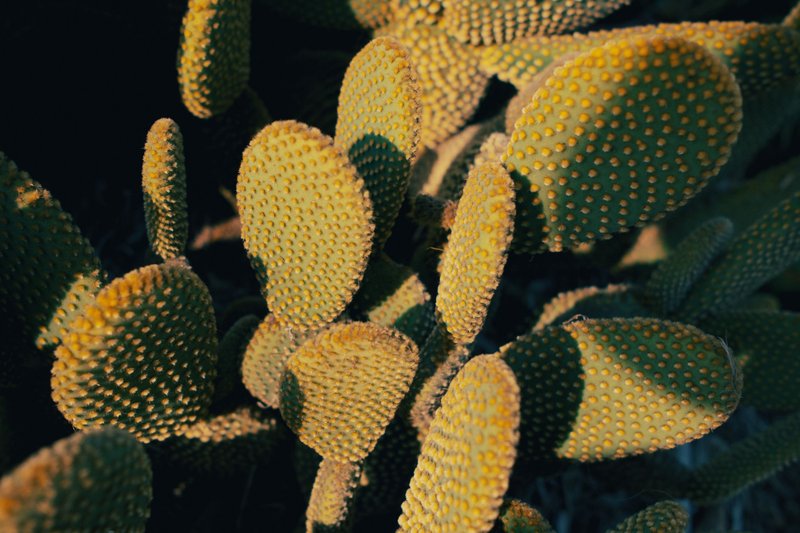
The Chilean Atacama gets less than 1mm of rain a year across most of its extent, and in some weather stations, rain hasn’t been recorded in the entire period of record. Of the roughly 1,000 native vascular plant species that manage to grow there anyway, just over half — about 54 percent — occur nowhere else on the planet.
The desert’s signature endemics are its cacti. Three genera — Eulychnia, Neoporteria, and Copiapoa — are restricted to the northern Atacama, and Copiapoa in particular has become a case study in how fast an endemic population can collapse. According to the IUCN, 82 percent of copiapoa cactus species are now at risk of extinction, up from 55 percent in 2013 — a jump driven almost entirely by illegal collection fed by social media demand for rare succulents. These are slow-growing plants that can take decades to reach maturity; a poacher can undo that in an afternoon.
Not every Atacama endemic is a cactus. Malesherbia auristipulata survives the desert’s extremes through unusual phenological timing and a close relationship with soil fungi that help it extract water and nutrients from otherwise barren ground. Bomarea ovallei, a climbing lily relative, has been reduced to scattered, genetically isolated populations — researchers studying its microsatellite markers found the kind of fragmentation that usually precedes local extinction. And in years when El Niño brings rare rainfall, the desert stages what botanists at Kew Gardens have documented as a “desierto florido” — a flowering desert event that briefly reveals species so rare they’d gone unrecorded for years. Formal protection covers less than 2 percent of Atacama land, which means most of this is happening with no legal shield at all.
The High Andes: A Bromeliad That Waits a Lifetime to Bloom
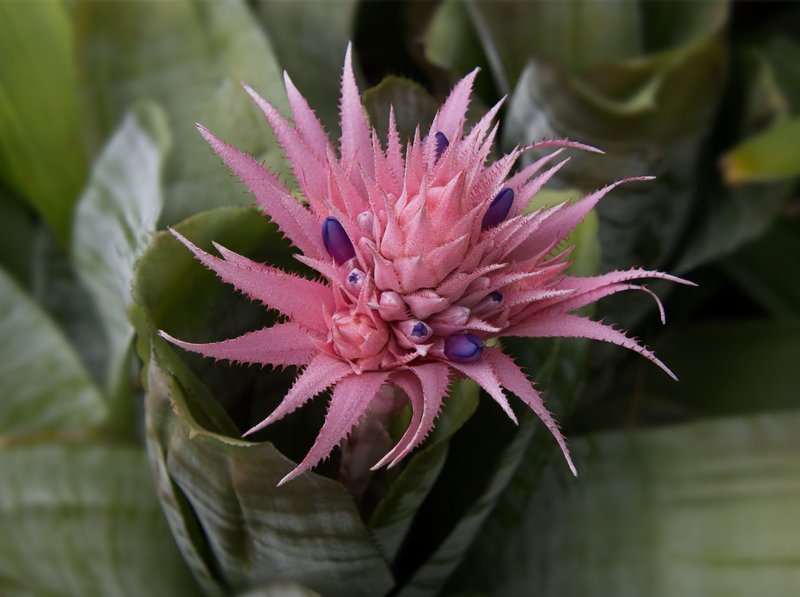
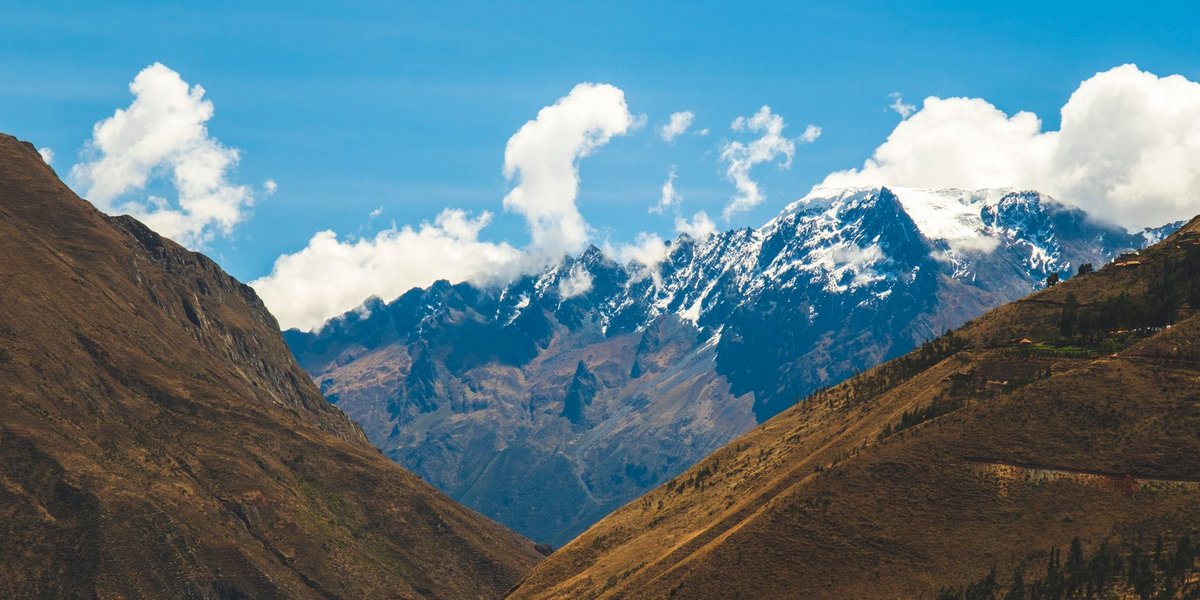
Climb to the high puna grasslands of Peru and Bolivia, around 4,000 meters, and you’ll eventually run into something that looks like it doesn’t belong on Earth: a rosette of spiked, silvery leaves several meters across, topped — once, at the very end of its life — by a flower spike that can reach 10 meters tall and carry thousands of individual blooms.
That’s Puya raimondii, the Queen of the Andes, the largest bromeliad on the planet and an endemic found only in scattered high-altitude populations in those two countries. It’s monocarpic, meaning it grows for roughly 80 to 100 years, flowers exactly once, and then dies — a reproductive strategy that leaves almost no room for error. Habitat loss from agricultural expansion, overgrazing, and uncontrolled burning has pushed it onto the IUCN Red List as Endangered, and its biology makes recovery brutally slow: a population wiped out today won’t produce a new generation of seed-bearing adults for the better part of a century.
The plant matters beyond its own rarity, too. In the sparse, wind-scoured puna, a single Puya raimondii functions as a structural anchor for the ecosystem around it — insects, birds, and small mammals use it for food and shelter in a landscape that otherwise offers little of either.
The Guiana Highlands: Carnivorous Plants on Lost-World Summits
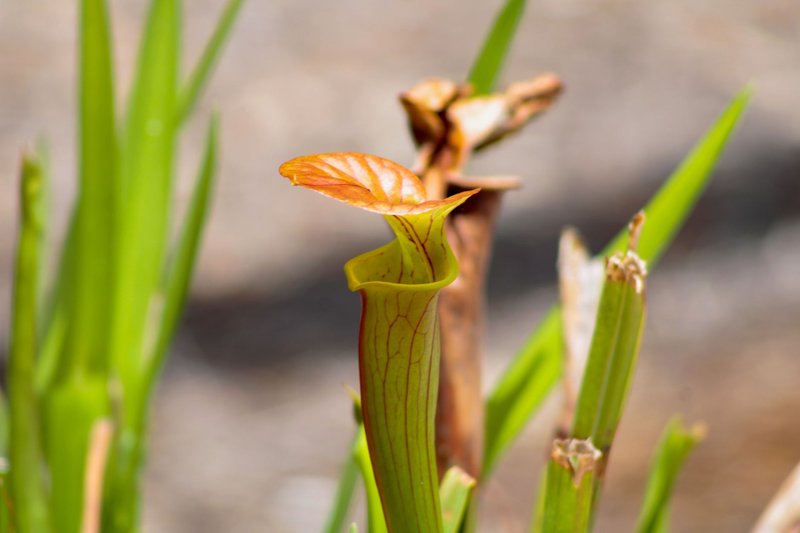
The tepuis of Venezuela, Guyana, and northern Brazil are the geological feature that inspired Arthur Conan Doyle’s The Lost World, and the comparison holds up botanically. Each flat-topped sandstone plateau rises straight out of the surrounding rainforest, isolated by cliffs hundreds of meters tall, functioning as its own evolutionary laboratory. Across the roughly 2,579 vascular plant species recorded on these summits, an estimated 34 to 40 percent are endemic or nearly endemic to the tepui region as a whole — and many of those are endemic to a single mountain.
The nutrient-starved, waterlogged sandstone soils up there have pushed plant evolution toward one particular solution: eating animals instead of waiting for nutrients that never arrive. Heliamphora, the marsh pitcher plant genus, comprises 24 species and every single one is endemic to the Guiana Highlands. Its pitchers use a nectar-lined “spoon” at the rim to lure insects into a pool of digestive liquid below. It shares the summits with endemic species of Utricularia (bladderworts), Genlisea (corkscrew plants), Drosera (sundews), and the semi-carnivorous bromeliad Brocchinia, which traps prey in water pooled at the base of its leaves. Nowhere else on the continent has convergent evolution toward carnivory happened this many times in the same place.
The Amazon Basin: Giants Found Nowhere Else
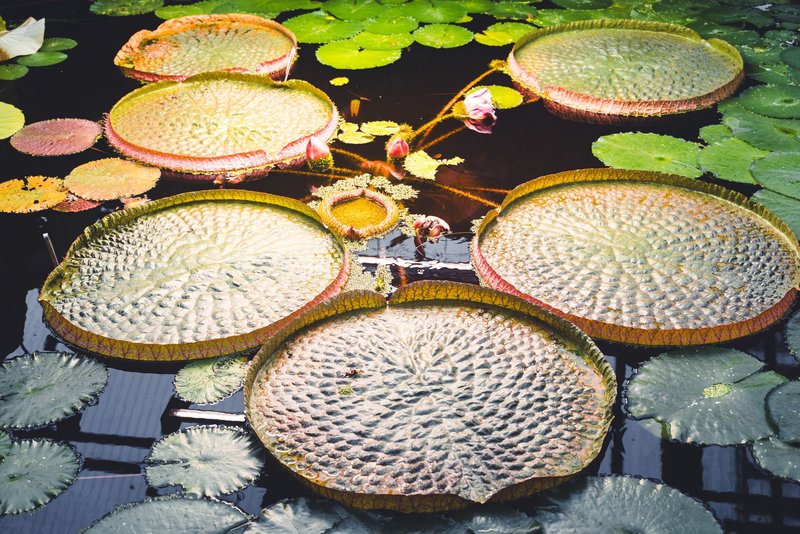
The Amazon gets treated as an endless, undifferentiated green blur in most travel and nature content, but plenty of its most famous plants are restricted to the basin and nowhere beyond it. Victoria amazonica, the giant water lily whose leaves can support the weight of a small child, grows naturally only in Amazonian floodplain lakes and slow-moving river backwaters — its rigid leaf ribs, an engineering detail that later influenced greenhouse architecture in Europe, evolved specifically to survive that flooded environment.
Bertholletia excelsa, the Brazil nut tree, is native exclusively to the Amazon basin and depends on a single genus of large-bodied bee for pollination — a relationship so specific that Brazil nut plantations outside the tree’s natural range have repeatedly failed to fruit, because the bee doesn’t live there. And Hevea brasiliensis, the original rubber tree, is native only to the Amazon; every rubber tree now growing in Southeast Asian plantations descends from seeds smuggled out of Brazil in the 1870s. The species survives worldwide today because of an act of biopiracy, not because it can grow wild outside its home basin.
South America hosts nearly half of the world’s estimated 9,000 tree species still undescribed by science, and the overwhelming majority of that undocumented diversity sits inside the Amazon — meaning some portion of what’s endemic to this region hasn’t been named yet.
The Cerrado: Brazil’s Underrated Savanna
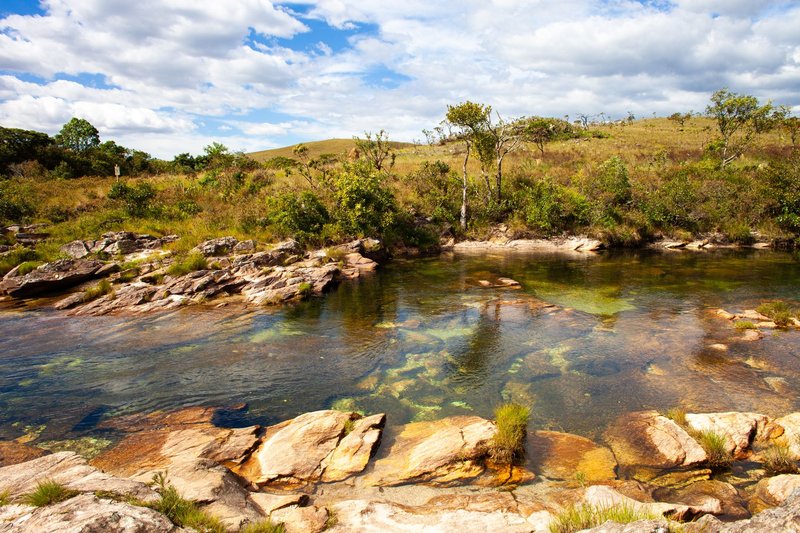
Ask someone to picture Brazilian biodiversity and they’ll picture rainforest. The Cerrado, the vast tropical savanna covering roughly a fifth of Brazil, gets ignored by comparison, and that’s a mistake — it’s one of the most botanically endemic landscapes on the continent. Of the roughly 12,000 plant species recorded there, estimates put endemism between about a third and 44 percent, depending on the survey, which means thousands of Cerrado plants exist in this one savanna ecosystem and literally nowhere else.
The Cerrado’s endemics are built for fire and drought rather than shade and humidity: thick, corky bark that survives seasonal burns, deep taproots that reach water tables far below the surface, and gnarled, twisted growth forms so distinctive that botanists call the whole biome’s look “vegetação torta” — twisted vegetation. It’s a landscape shaped by a completely different set of survival pressures than the rainforest next door, and its endemic flora reflects that.
Chile’s Temperate Rainforests: Living Fossils in the South
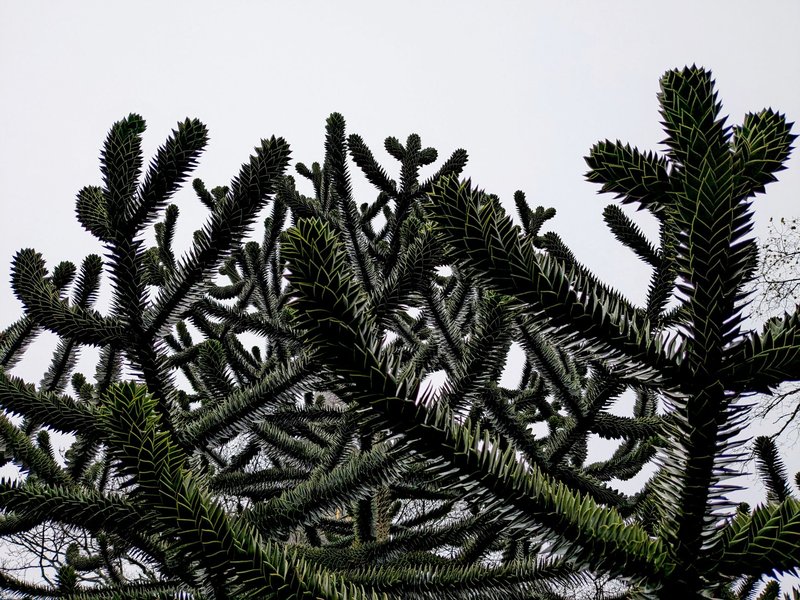
At the southern end of the continent, Chile and a sliver of Argentina hold the Valdivian temperate rainforest — the second-largest temperate rainforest on Earth and the only one in South America. Of the nearly 4,000 vascular plant species found across this hotspot, roughly half are endemic, and together they represent about three-quarters of all of Chile’s native plant species packed into just 40 percent of the country’s land area.
Two species anchor the region’s reputation. Araucaria araucana, the monkey puzzle tree, is a conifer lineage that predates the dinosaurs and is now classified as Endangered — logging pressure got severe enough that Chile declared it a national monument in 1976, banning commercial cutting outright. Fitzroya cupressoides, known locally as alerce, is the second-oldest living organism species on Earth after North America’s bristlecone pine: individual trees have been aged past 3,600 years, and mature specimens reach 60 meters tall with trunks over 5 meters across. Both species are endemic to this narrow strip of southern temperate forest and grow at rates so slow that a felled old-growth alerce represents millennia of growth no replanting effort can restore on a human timescale. Conservation groups including WWF now treat the Valdivian ecoregion as a binational priority, since the forest and its endemics straddle the Chile-Argentina border without regard for the line on the map.
FAQ
How many endemic plant species does South America have? Around 73,500, based on a 2017 continent-wide survey in Nature Ecology & Evolution that counted roughly 82,000 native vascular plant species total. That puts the continent’s endemism rate near 90 percent — meaning nearly nine in ten plants native to South America grow nowhere else on the planet.
Which country has the most endemic plants? Brazil holds the largest raw number, simply by virtue of scale: it’s the only country that spans large stretches of the Amazon, the Cerrado, and the Atlantic Forest in a single national territory, and each of those biomes contributes its own distinct set of endemics. Chile, by contrast, posts one of the highest endemism rates of any single country — over half its native flora is endemic, concentrated in the Atacama and the Valdivian forests, despite having a much smaller total species count than Brazil.
What’s the difference between a native plant and an endemic plant? Native means the species grows there without human introduction. Endemic is narrower: it means the species is restricted to that specific place and isn’t native anywhere else. Every endemic plant is native to where it grows, but most native plants aren’t endemic — plenty of Amazonian species, for instance, are native to the basin but also grow wild in Central America or the Caribbean.
Why are so many South American endemics also endangered? Endemism and extinction risk tend to travel together. A species confined to one desert basin, one mountaintop, or one narrow forest strip has nowhere to retreat if that specific habitat is logged, mined, or disrupted by drought — there’s no wider range to fall back on. That’s why groups like Chile’s Copiapoa cacti and Peru’s Puya raimondii show up on endangered-species lists despite not facing direct, deliberate destruction: their entire range is small enough that ordinary land pressure is existential.