TLDR
Azerbaijan isn’t hiding a chain of Vesuvius-style lava volcanoes. What it has is stranger: roughly 350 of the planet’s 700–800 known mud volcanoes, cold structures that burp gas, mud, and occasionally fire instead of molten rock. Most cluster around Gobustan, a 45–60 minute drive south of Baku, where you can walk right up to gurgling mud cones for a few manat and watch one hiccup a bubble the size of a dinner plate. They’re generally safe, rarely dangerous to visit, and the “healing mud” claims are mostly folklore dressed up as wellness marketing.
Table of Contents
- Wait, Volcanoes That Aren’t Actually Volcanoes
- How a Mud Volcano Actually Forms
- Why Azerbaijan Has So Many
- Notable Mud Volcanoes to Know
- Visiting Gobustan: The Practical Version
- Are Azerbaijan’s Mud Volcanoes Safe?
- The “Healing Mud” Claims, Examined
- When to Go and What to Budget
Wait, Volcanoes That Aren’t Actually Volcanoes
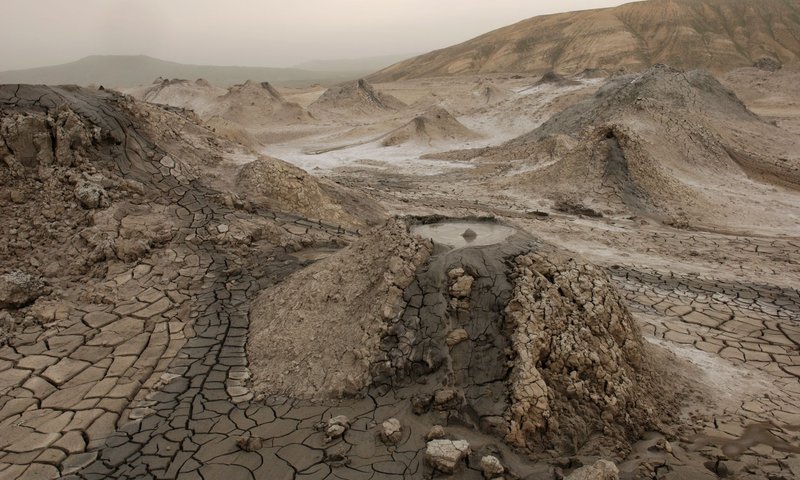
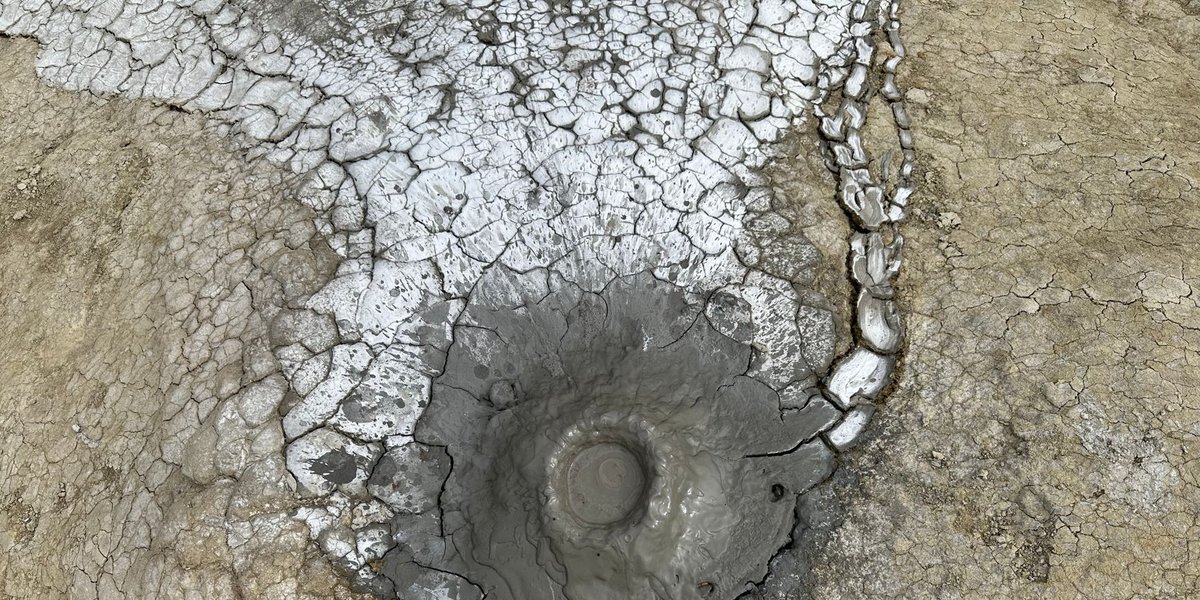
Here’s the part every search result buries under stock photos: Azerbaijan’s volcanoes aren’t erupting lava. They’re mud volcanoes, cone-shaped vents where a mix of water, clay, and gas — mostly methane — pushes up from underground and spills out cold, gray sludge instead of molten rock. Some are barely knee-high mounds that plop like a slow-motion pot of oatmeal. Others build cones 300 feet tall.
The confusion is understandable. They look like tiny volcanoes, they’re called volcanoes, and every so often one does something genuinely fiery. But the mechanism underneath has nothing to do with magma chambers — it’s pressurized gas and sediment, not molten rock, doing the work.
How a Mud Volcano Actually Forms
Deep underground, layers of fine-grained sediment get buried faster than the water trapped inside them can escape. That water stays pressurized, and where there’s also a steady supply of natural gas — Azerbaijan sits on some of the thickest hydrocarbon-bearing sediment in the world — the combination turns into a slurry that looks for any weak point in the rock above it to punch through. Where it finds one, mud volcano.
According to the USGS, mud volcanism is a distinct geologic process from magmatic volcanism, and it shows up almost anywhere sediment, gas, and pressure line up correctly — offshore Trinidad, onshore Romania, the seafloor near Barbados. Azerbaijan just happens to have the ideal recipe in abundance: the South Caspian Basin is one of the deepest, fastest-filling sedimentary basins on Earth, stacked with organic material from millions of years of river deposits.
Every so often the gas buildup outpaces the slow seep, and pressure releases all at once. That’s an eruption — flames from ignited methane, mud thrown dozens of meters into the air, new islands appearing in the Caspian Sea overnight. The 2021 eruption at Dashli Ada, a mud volcano on an islet off Azerbaijan’s coast, threw a fireball visible for miles and was documented by NASA’s Earth Observatory, which tracks these events from satellite imagery precisely because they’re rare enough to be notable.
Why Azerbaijan Has So Many
Roughly 350 of the world’s estimated 700–800 mud volcanoes sit in Azerbaijan and the surrounding Caspian seabed — call it close to half the planet’s known total in one country. The Smithsonian’s Global Volcanism Program catalogs mud volcanism as a distinct feature type precisely because concentrations like this are unusual; most countries with mud volcanoes have a handful, not hundreds.
The density comes down to geology stacking in Azerbaijan’s favor three times over: a deep, young sedimentary basin under constant pressure from the Caucasus mountain-building to the north, an enormous hydrocarbon reservoir supplying gas, and tectonic compression from the ongoing collision between the Arabian and Eurasian plates squeezing the whole system like a tube of toothpaste. Take any one of those away and you get an ordinary sedimentary basin. Keep all three and you get a landscape that bubbles.
Notable Mud Volcanoes to Know
Not all mud volcanoes are created equal, and a few have earned reputations worth knowing before you go.
Lokbatan, just outside Baku, is one of the most active and most studied on Earth — it has erupted more than 20 times since records began, with flames sometimes visible from the city. Gotur Dag is one of the tallest, its cone rising in stark contrast to the flat steppe around it, and it’s a common stop on Gobustan tours because it’s easy to reach and climb. Ayranteken sits further into the Gobustan reserve and tends to draw fewer crowds, which makes it a better pick if you want the gurgling mud pools without the tour-bus soundtrack.
Then there’s Dashli Ada, an island volcano whose 2021 eruption made international news — witnesses reported a column of flame and smoke visible from shore, followed by the usual quiet return to slow, cold seeping days later. It’s a useful reminder that even the calmest-looking mud cone sits on top of a system that occasionally reminds everyone it’s still active.
Visiting Gobustan: The Practical Version
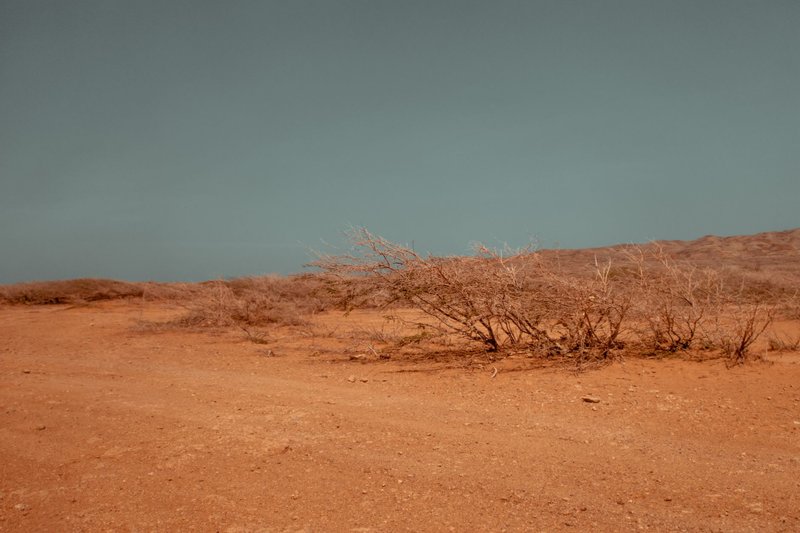
Most visitors experience Azerbaijan’s mud volcanoes at Gobustan, about 40 miles (65 km) south of Baku, where dozens of cones cluster in a semi-desert landscape that already looks like another planet before you factor in the bubbling mud.
Getting there without a rental car means either a day tour from Baku (widely available, usually bundled with the nearby Gobustan petroglyph reserve and rock art museum) or a taxi arranged for a few hours round trip, since public transit doesn’t run reliably out to the volcano field itself. Most tours combine the mud volcanoes with a 4×4 or quad-bike ride across the terrain, since regular cars struggle with the unpaved, rutted approach in wetter months.
Once there, you’re free to walk right up to individual cones — there’s no ticketed entry to the volcano field itself, though organized excursions and the nearby Mud Volcanoes Tourism Complex charge for guided access, quad rentals, and parking. Plan for two to three hours if you’re combining it with Gobustan’s petroglyphs, or a half-day if you’re doing quad tours and want unhurried time at multiple cones.
Are Azerbaijan’s Mud Volcanoes Safe?
Short answer: yes, for the overwhelming majority of visits. The mud itself is cold or lukewarm, not molten, and the steady seeping you’ll see at most cones poses no real danger — people have been walking up to these things for generations. The real risks are mundane ones: uneven, slippery ground around active vents, the smell and flammability of escaping methane near an open flame or cigarette, and the general lack of guardrails or marked paths at a site that isn’t heavily engineered for tourism.
Sudden eruptions like Dashli Ada’s are the genuine hazard, but they’re infrequent, tend to happen at specific known-active sites rather than randomly across the field, and are typically preceded by changes locals and researchers monitor. Tour operators generally know which cones have recent activity and steer visitors accordingly. Treat it the way you’d treat any geothermal site — don’t smoke near the vents, don’t lean directly over an actively bubbling crater, and follow your guide’s lead if you’re on quad bikes near looser ground.
The “Healing Mud” Claims Examined
Tourism pages and spa operators near Gobustan often market the mud as therapeutic — good for skin conditions, joint pain, general wellness. This claim shows up constantly and deserves a skeptical read. Mud and peat therapies have a long folk-medicine history across the Caucasus and Eastern Europe, and there’s legitimate research into balneotherapy (mineral bath treatments) for certain joint conditions. But that’s a different, narrower claim than “volcanic mud cures X,” and the specific mud from Azerbaijan’s cones hasn’t been the subject of rigorous, published clinical trials that would back the broader marketing language. Treat a mud bath as a genuinely fun, novel experience — not a medical treatment.
When to Go and What to Budget
Late spring through early autumn gives you the driest, most stable ground for walking or quad-biking around the cones; winter and early spring rains turn the approach roads to the volcano field into a genuine slog, and some tours pause or reroute entirely. Midday in July and August gets brutally hot with zero shade across the open steppe, so plan an early start if you’re going in peak summer.
Budget-wise, a half-day tour from Baku bundling mud volcanoes with Gobustan’s petroglyphs typically runs in the range of a modest restaurant meal per person when booked as part of a shared group tour; independent taxi hire costs more but gives you flexibility on timing. Either way, set aside a full morning or afternoon — the value here isn’t a five-minute photo stop, it’s standing at the edge of a landscape doing something genuinely strange, on the scale it deserves.