TLDR
Japan is often called resource-poor, and on land that’s true — it imports around 90% of its energy and most of its metal ores. But the country sits on some of the densest timber cover in the industrialized world, some of the richest fishing grounds on Earth, and a deep-sea rare-earth deposit near Minami-Torishima that could reshape the math entirely. Japan didn’t get wealthy by having resources. It got wealthy by importing raw materials, adding precision and engineering, and selling the result back to the world.
Table of Contents
- The paradox, answered up front
- Forests: 68% coverage, barely touched
- Fisheries: the real resource wealth
- Agriculture: small, protected, and strange in a good way
- Minerals: what’s actually in the ground
- Energy: the import dependency that shapes everything
- Self-sufficiency at a glance
- The deep-sea wild card: Minami-Torishima
- How Japan got rich without any of this
The paradox, answered up front
Japan runs the world’s fourth-largest economy from an archipelago with almost no domestic oil, gas, or metal ore worth extracting at scale. That’s not a contradiction — it’s the plot. The country imports the inputs, refines them into cars, chips, and machine tools, and exports the output at a margin no raw commodity could match. Meanwhile the resources it does have in abundance — forest, fish, and now a rare-earth mud field 1,900 kilometers southeast of Tokyo — barely register in most explanations of the “Japan miracle,” even though they’ve quietly mattered for a thousand years.
Forests: 68% coverage, barely touched
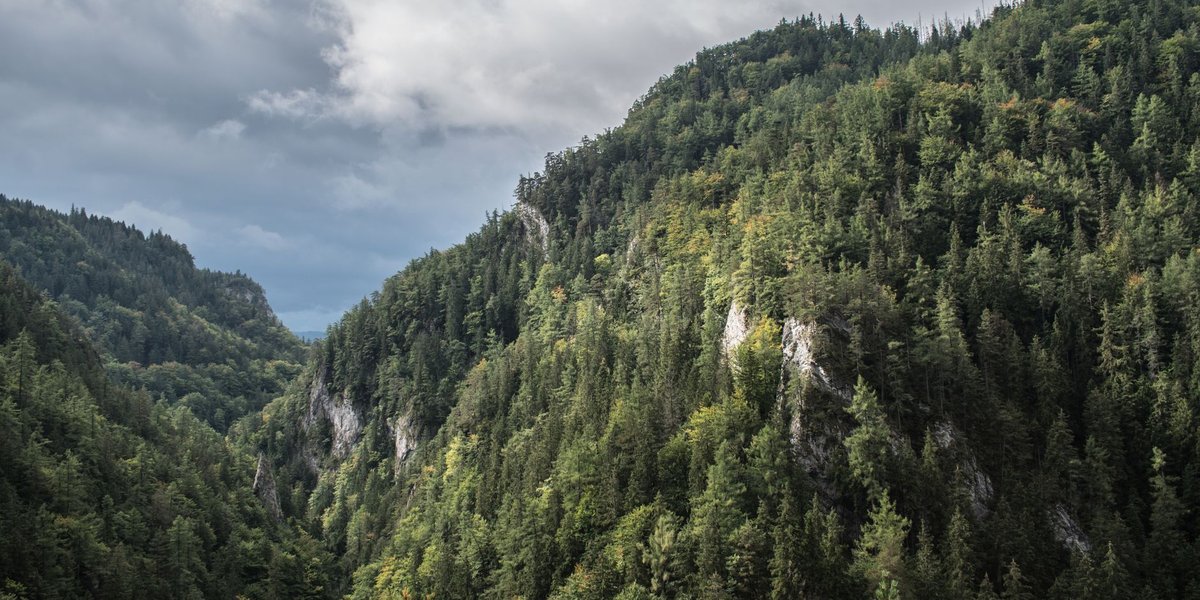
Nearly seven out of every ten hectares of Japan is forest — a coverage rate that beats Sweden and rivals Finland, and it’s mostly by accident of geography rather than policy. Steep volcanic terrain makes much of the country unsuitable for farming or logging at scale, so the trees just stayed. About 40% of that forest is planted cedar and cypress from post-war reforestation efforts, intended to rebuild a timber supply gutted by wartime demand.
Here’s the twist: Japan barely logs its own forest anymore. Domestic wood self-sufficiency dropped below 20% by the early 2000s because imported lumber from Canada, Russia, and Southeast Asia was cheaper than harvesting on Japan’s steep, road-poor slopes. It’s ticked back up toward 40% in recent years as the yen weakened and import costs climbed, but the country still sits on a timber reserve most of the industrialized world would envy and uses only a fraction of it.
Fisheries: the real resource wealth
If Japan has one genuinely dominant natural resource, it’s the ocean. The country’s exclusive economic zone is the sixth-largest on the planet, sitting at the intersection of the cold Oyashio and warm Kuroshio currents — a mixing zone that creates one of the most productive fishing grounds anywhere. Japan lands more than 3 million metric tons of seafood a year and still imports more on top of that, because domestic appetite for tuna, mackerel, and sardine outpaces even this kind of abundance.
Tsukiji’s successor market, Toyosu, moves seafood volumes that most countries would need an entire coastline to produce. Bluefin tuna auctions there have sold single fish for over $3 million, which says less about scarcity and more about how central fish is to Japanese food culture and status. Fishing communities have worked these waters since before written records, and the resource itself — not imported, not manufactured — remains one of the few places where “natural abundance” is the honest description.
Agriculture: small, protected, and strange in a good way
Only about 12% of Japan’s land is arable, thanks to all that mountainous, forested terrain. Rice is the exception that gets full institutional protection — tariffs on imported rice have run past 700% historically, and domestic rice self-sufficiency sits near 97%, a level almost no other staple crop reaches. Everything else — wheat, soybeans, animal feed — depends heavily on imports, which is part of why Japan’s overall food self-sufficiency rate hovers around 38%, one of the lowest among wealthy nations.
The strange part is how much value Japan extracts from that small arable footprint. Wagyu beef, Yubari melons that sell for hundreds of dollars a pair, and regionally branded rice varieties turn scarcity into a premium-pricing strategy rather than a shortage.
Minerals: what’s actually in the ground
This is where the “resource-poor” label earns its keep. Japan’s mining industry, once a real contributor to the economy, has been in near-total decline since the 1970s.
- Coal: Japan mined coal seriously through the 20th century, especially in Hokkaido and Kyushu, but nearly all domestic coal mines closed by the early 2000s because extraction costs couldn’t compete with Australian and Indonesian imports. Japan now imports close to 100% of the coal it burns.
- Copper: The Ashio and Besshi mines once made Japan a significant copper producer and, notoriously, the site of one of the country’s first major industrial pollution disputes in the 1880s. Domestic copper mining is essentially gone; Japan is now one of the world’s largest copper importers, feeding it into electronics and wiring manufacturing.
- Limestone: The one mineral where Japan is genuinely self-sufficient. Limestone deposits are large enough that Japan produces close to 100% of what it needs for cement and construction, making it the rare line item on the import ledger that reads “not applicable.”
- Gold: The Hishikari mine in Kagoshima is one of the highest-grade gold mines still operating anywhere in the world, producing ore with gold concentrations several times the global average. It’s a genuine bright spot, though its output is small next to Japan’s total metal consumption.
Outside limestone, the story is consistent: whatever Japan once mined, it now imports, usually because global suppliers can do it cheaper and Japan’s terrain makes large-scale extraction expensive by comparison.
Energy: the import dependency that shapes everything
Japan imports roughly 90% of its energy supply, and that single number explains a huge amount of the country’s foreign policy and industrial strategy. Before 2011, nuclear power supplied around 30% of electricity, softening the import dependency considerably. After the Fukushima Daiichi accident, Japan idled its entire nuclear fleet for safety reviews, and LNG imports surged to cover the gap — Japan remains one of the largest liquefied natural gas importers in the world, competing directly with South Korea and China for supply contracts.
Nuclear restarts have been slow and politically contentious, so LNG dependency has become semi-permanent rather than a stopgap. That’s part of why Japan has pushed so hard into renewable energy sources like offshore wind and, more speculatively, into the deep-sea mineral deposits described below — energy security, not just climate policy, is driving the search for alternatives.
Self-sufficiency at a glance
| Resource | Domestic self-sufficiency | Primary source if imported |
|---|---|---|
| Rice | ~97% | Domestic (heavily protected) |
| Limestone | ~100% | Domestic |
| Timber | ~40% | Canada, Russia, Southeast Asia |
| Fish/seafood | High landings, still net importer | Domestic + Southeast Asia, Russia |
| Coal | Near 0% | Australia, Indonesia |
| Natural gas (LNG) | Near 0% | Australia, Malaysia, Qatar, US |
| Copper ore | Near 0% | Chile, Indonesia, Peru |
| Overall food | ~38% | Global (US, Canada, Australia) |
The deep-sea wild card: Minami-Torishima
In waters around Minami-Torishima, Japan’s easternmost island, researchers have mapped mud deposits containing rare-earth elements at concentrations far above typical land-based mines — including yttrium and dysprosium used in magnets, lasers, and EV motors. Japanese survey teams estimated the deposit could hold enough rare earths to meet global demand for several centuries, though “resource” and “economically extractable reserve” are very different things at 5,000-plus meters of depth.
Test extraction efforts have moved forward through the mid-2020s, with Japan’s government treating the project as a strategic priority given how concentrated global rare-earth processing is in China. Nothing here is commercial yet — pumping metal-bearing mud from the ocean floor at that depth is still more engineering challenge than mining operation — but it’s the first genuine crack in the “Japan has no minerals” story in decades, and it’s the one part of this list that’s actually changing year over year rather than staying flat.
How Japan got rich without any of this
The honest answer is trade plus manufacturing plus a very specific kind of human capital investment, not resource luck. Post-war Japan imported iron ore and oil, ran them through a manufacturing base rebuilt with US aid and Korean War procurement contracts, and exported cars, ships, and electronics at margins no raw commodity exporter could touch. A country selling steel makes steel money; a country selling a Toyota Corolla built from that steel captures the steel’s value plus engineering, design, brand, and labor on top.
That model needed an unusually literate, disciplined workforce and a state willing to coordinate closely with industry — the keiretsu system of interlocked companies, targeted industrial policy through MITI, and an education system built around consistency rather than raw resource extraction. OECD data has long shown Japan converting relatively modest natural capital into outsized manufacturing and export value, which is the opposite pattern of resource-rich economies that sometimes underperform their endowments — a dynamic economists call the resource curse. Japan is close to a controlled experiment in the reverse: not much in the ground, plenty in the factories.
The forests, the fish, and now the seabed rare earths were never the whole story and probably never will be. What made Japan wealthy was what it did with almost nothing — and that’s a harder thing to copy than an oil field.