TLDR
Skip the Tripadvisor scroll. If you only have time for one trip, go to Chapada Diamantina in Bahia — it packs Poço Azul, Poço Encantado, and Gruta da Lapa Doce into one region, all reachable from the town of Lençóis. If you want a record-holder, Toca da Boa Vista in Bahia is the longest cave in the Southern Hemisphere, and Gruta Casa de Pedra in Mato Grosso do Sul has the largest cave entrance on Earth. Most of these require a licensed guide by law, cost between R$30 and R$150 to enter, and are best visited in the dry season (April–September) when the water is clearest.
Table of Contents
- How Brazil got so many caves
- São Paulo region
- Bahia and Chapada Diamantina
- Minas Gerais
- Mato Grosso do Sul
- Goiás
- Planning your cave trip
How Brazil got so many caves {#geology}
Brazil has more than 20,000 registered caves, and the number keeps climbing as speleologists map new systems. Most of the famous ones — the blue lakes, the cathedral-sized chambers — sit in belts of limestone laid down hundreds of millions of years ago when shallow seas covered what’s now the interior of the country. Rainwater picks up carbon dioxide as it filters through soil and turns slightly acidic; that mild acid dissolves limestone over geologic time, carving out the tunnels, sinkholes, and chambers you walk through today.
A smaller number of Brazil’s caves, including some in the Chapada Diamantina range, formed in sandstone and quartzite instead. Those form differently — through mechanical erosion and the slow collapse of weaker rock layers rather than chemical dissolution — which is part of why Chapada’s caves look and feel different from the limestone systems in Bahia’s interior or Mato Grosso do Sul. The Brazilian Society of Speleology tracks and catalogs the country’s karst regions, and their registry is the closest thing to an official map of where all this is happening underground.
São Paulo region {#sao-paulo}
1. Parque Estadual Turístico do Alto Ribeira (PETAR)
PETAR isn’t one cave — it’s a state park holding more than 300 of them, in the Vale do Ribeira about four hours south of São Paulo city. The two most-visited, Caverna de Santana and Caverna do Morro Preto, both require a registered guide, which you book through the park’s visitor centers in Núcleos Santana or Ouro Grosso. Entry runs around R$20-40 plus guide fees that scale with group size.
Santana is the deep one — walkways lead past flowstone formations the size of church organs, and the full loop takes two to three hours. Morro Preto is shorter and easier, which makes it the better call if you’re traveling with kids or anyone unsure about tight spaces. Bring a headlamp even though guides carry lighting; the backup matters more than it sounds like it would.
Good for: first-timers, families Difficulty: easy to moderate Best season: April–September (dry season keeps trails from flooding)
Bahia and Chapada Diamantina {#bahia}
This is the region to build a whole trip around. Base yourself in Lençóis or Vale do Capão and you can hit four distinct caves without more than an hour’s drive between any of them.
2. Poço Azul (Blue Well)
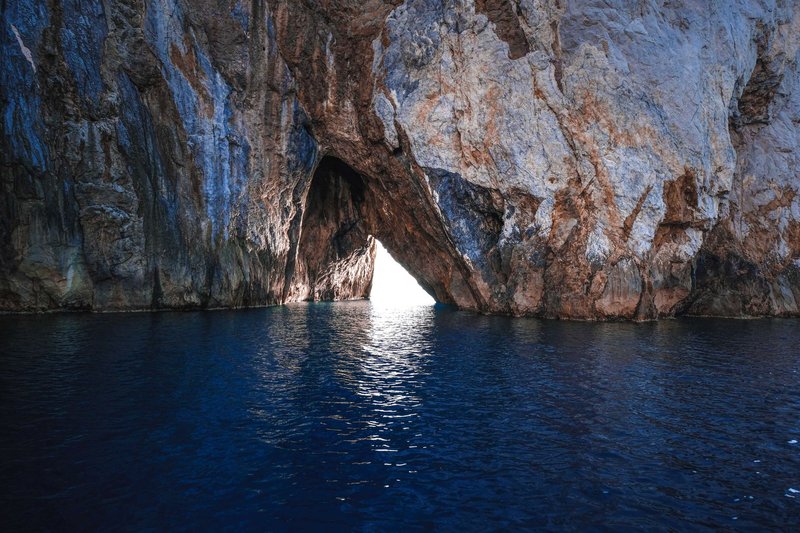
Poço Azul sits inside a private reserve near Nova Redenção, about 90 minutes from Lençóis. A short walk down wooden stairs drops you into a cavern lit by a single shaft of sunlight that hits water so mineral-clear it reads as backlit blue, even in photos taken on a phone. The water stays a near-constant temperature year-round, and swimming is only allowed during a narrow midday window when the light angle is right — arrive at the wrong hour and you’ll just see a dark pool.
Visits are capped and timed in small groups to protect the water clarity, so book ahead through a Lençóis tour operator rather than showing up and hoping.
Good for: photographers, swimmers Difficulty: easy Entry: roughly R$100-130 including transport from Lençóis Best season: dry season for the clearest light
3. Poço Encantado (Enchanted Well)
Fifteen minutes from Poço Azul, Poço Encantado does the same blue-water trick but goes deeper — the pool drops more than 60 meters, and on clear days between April and September you can see submerged tree branches and rock formations at the bottom, magnified by the water like a lens. Swimming isn’t allowed here; this one’s strictly a viewing experience, which keeps crowds smaller and the water undisturbed.
Good for: a quieter, more dramatic version of Poço Azul Difficulty: easy Best season: April–September only — outside that window visibility drops fast
4. Gruta da Lapa Doce
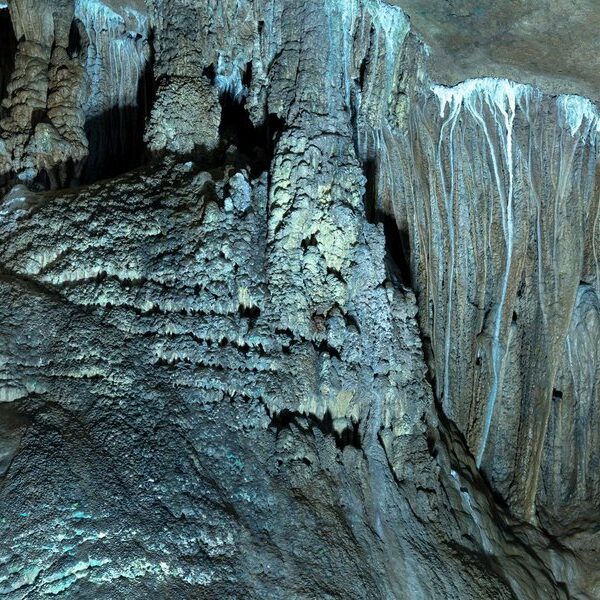
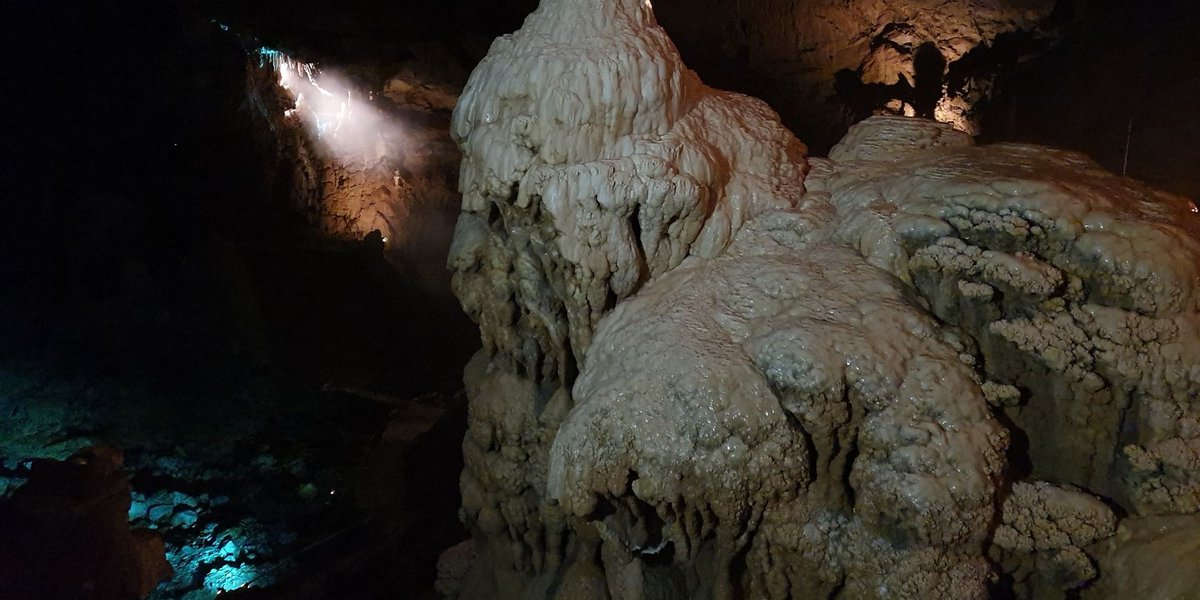
Lapa Doce is a show cave in the traditional sense: guided walkways, dramatic lighting on stalactites and stalagmites, and chambers tall enough that your voice changes register. It connects underground to the Torrinha system, and serious spelunkers sometimes combine both in a single technical tour, though the standard tourist visit only covers Lapa Doce’s accessible section.
Good for: classic cave sightseeing, less physically demanding than the wells Difficulty: easy Entry: around R$40-60
5. Toca da Boa Vista
Toca da Boa Vista, near the town of Campo Formoso in northern Bahia, is the longest cave in the Southern Hemisphere at over 100 kilometers of mapped passage — and researchers keep finding more of it. It’s also one of the richest fossil sites in South America; giant sloth and saber-toothed cat remains have turned up in its chambers, preserved by the cave’s stable, dry interior.
Access is far more restricted than the Chapada caves — this is a research site as much as a tourist one, and visits typically go through speleology groups or specialized expedition operators rather than a walk-up ticket counter. If you want to actually get inside it, plan months ahead, not days.
Good for: serious cave enthusiasts, not a casual add-on Difficulty: varies, some sections technical Best season: dry season strongly recommended given the remote access roads
Minas Gerais {#minas-gerais}
6. Gruta Rei do Mato
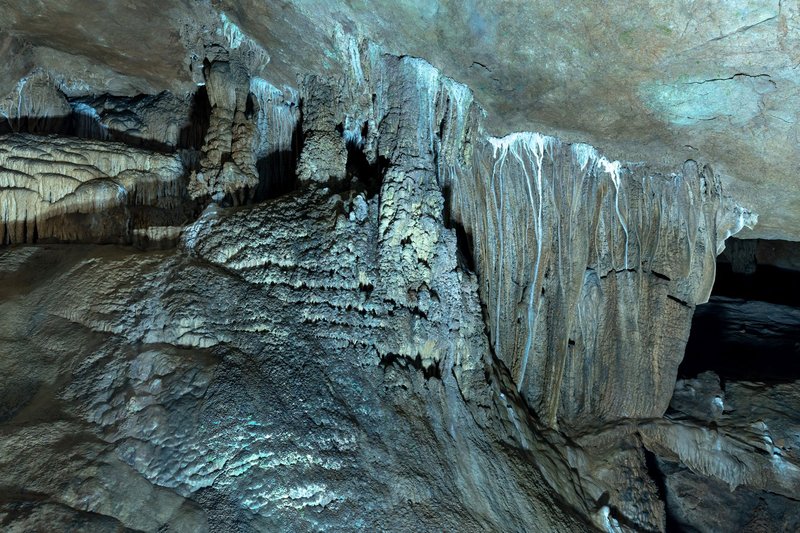
About an hour from Belo Horizonte, Gruta Rei do Mato is one of the most accessible show caves in the country — paved and lit walkways run through chambers full of columns and drapery formations, and the full circuit takes under an hour. It’s a solid choice if you’re based in Belo Horizonte and want a cave without committing a full day to getting there.
Good for: day-trippers from Belo Horizonte, families Difficulty: easy Entry: around R$30-40
7. Gruta de Maquiné
Maquiné, near the historic town of Cordisburgo, was one of the first caves in Brazil opened to organized tourism, back in the 1830s, and it still runs on lit paths through seven interconnected chambers. Novelist João Guimarães Rosa, who grew up in the area, drew on it for imagery in his writing, and local guides tend to work that history into the tour.
Good for: a cave visit paired with Brazilian literary history Difficulty: easy Best season: year-round, though the surrounding roads are better in the dry months
Mato Grosso do Sul {#mato-grosso-do-sul}
8. Gruta do Lago Azul
Near Bonito — already a magnet for snorkeling in the region’s clear rivers — Gruta do Lago Azul holds an underground lake that turns a saturated turquoise when sunlight hits it at the right angle, usually mid-morning. A steep staircase descends about 100 meters to a viewing platform; swimming isn’t permitted, but the color alone is why this cave shows up on nearly every Bonito itinerary.
Good for: pairing with a Bonito river-snorkeling trip Difficulty: moderate (steep stairs, no swimming) Entry: around R$50-70, guide mandatory
9. Gruta Casa de Pedra
Casa de Pedra, also near Bonito, holds the largest cave entrance in the world by volume — a mouth roughly 100 meters high that a small plane could plausibly fly through. You don’t go inside; the visit is a viewpoint experience from a platform overlooking the entrance from a cliff across a small canyon, which somehow doesn’t undersell the scale at all.
Good for: a quick, dramatic stop rather than a full excursion Difficulty: easy (short walk to the viewpoint)
10. Abismo Anhumas
Anhumas isn’t a walk-in cave — it’s a vertical shaft you rappel 72 meters down, landing beside an underground lake where you can snorkel or scuba dive past stalagmites rising from the water. Operators cap daily visitor numbers tightly (often under 20 people), require a short rappelling briefing beforehand, and the whole thing runs several hundred reais, well above the other entries on this list. It’s the one cave here built for people who want an adrenaline story, not just photos.
Good for: divers, rappellers, bucket-list adventurers Difficulty: hard — technical descent required Entry: roughly R$700-900 including full gear and instruction
Goiás {#goias}
11. Terra Ronca State Park
Terra Ronca, in northern Goiás near the Bahia border, holds one of the largest cave systems in Brazil by volume, including Gruta Terra Ronca I, which stretches for kilometers past underground rivers and chambers large enough to lose your group’s flashlight beams in. It’s far less touristed than Chapada Diamantina or Bonito, which means fewer crowds but also fewer amenities — plan for a rougher access road and book a guide through the park office in advance rather than expecting operators on-site.
Good for: travelers who want scale without the Chapada crowds Difficulty: moderate to hard depending on the route chosen Best season: May–September, when river levels inside the cave are lowest
Planning your cave trip {#planning}
Guides are mandatory, not optional. Nearly every cave on this list — protected areas, private reserves, and state parks alike — requires a licensed guide by law, both for conservation and safety. Budget for guide fees on top of entry tickets.
Dry season wins. April through September is when water clarity peaks in the blue-lake caves and access roads are least likely to wash out. Visit Poço Encantado or Gruta do Lago Azul in the wet season and you may find murky water instead of the postcard shot.
Bring a light layer. Cave interiors sit at a fairly constant temperature year-round, often noticeably cooler than the surface air outside — comfortable, but a light layer helps on longer visits like Lapa Doce or Terra Ronca.
Closed shoes, not sandals. Wet limestone and wooden platforms get slick. Guides at Poço Azul and Gruta do Lago Azul will generally turn away visitors in flip-flops.
Book ahead for the popular ones. Poço Azul, Poço Encantado, and Abismo Anhumas cap daily visitor numbers to protect water clarity and manage crowding underground. Same-day bookings sometimes work in the off-season; during Brazilian school holidays (December–February, July) they routinely sell out weeks ahead.