Type “famous Pakistani scientists” into a search bar and you’ll get the same five names in a different order: Abdus Salam, A.Q. Khan, and a rotating cast of Cold War-era nuclear physicists. That’s not wrong, exactly. It’s just incomplete.
Pakistan’s scientific output runs a lot wider than nuclear weapons and one Nobel Prize. There’s a MIT astrophysicist who helped detect gravitational waves. A chemist who spent decades cataloguing the country’s plant life before anyone thought to. A neuroscientist growing brain cells on silicon chips in Calgary. This list pulls together 13 scientists — organized by field, not fame ranking — with the specific thing each one actually did, not just the fact that they existed.
Table of Contents
- Physics and Nuclear Science
- Space and Astrophysics
- Medicine and Life Sciences
- Computer Science and Technology
- Earth and Climate Science
- Comparison Table
- Where Are They Now
Physics and Nuclear Science
Pakistan’s physics tradition is the country’s best-known scientific export, and for good reason — it produced a Nobel laureate and the architects of a nuclear weapons program within the same generation, often the same small circle of colleagues.
Abdus Salam
Born in Jhang in 1926, Salam won the 1979 Nobel Prize in Physics, shared with Sheldon Glashow and Steven Weinberg, for unifying the electromagnetic and weak nuclear forces into a single electroweak theory. He’s still the only Pakistani Nobel laureate in the sciences.
Why it matters: Salam did the theoretical groundwork later confirmed by the discovery of the W and Z bosons at CERN in 1983. He also founded the International Centre for Theoretical Physics in Trieste specifically to give scientists from developing countries a path into frontier research they’d otherwise be shut out of.
Abdul Qadeer Khan
A metallurgical engineer trained in Europe, Khan returned to Pakistan in 1976 and built the uranium enrichment infrastructure that led to the country’s first nuclear tests in 1998. He later admitted to running a black-market network that sold centrifuge designs to Libya, Iran, and North Korea — a scandal that defined the second half of his career as much as the enrichment program did.
Why it matters: Whatever you make of the proliferation network, Khan’s engineering work made Pakistan the first Muslim-majority nation with a nuclear arsenal, permanently changing the region’s strategic balance.
Riazuddin
Often overshadowed by Salam, Riazuddin was a theoretical physicist who worked alongside him on particle physics before turning to Pakistan’s nuclear program, where he led the theoretical physics group that designed the country’s first nuclear device.
Why it matters: He bridged pure theory and applied weapons physics, training a generation of Pakistani physicists who went on to staff the country’s national labs.
Samar Mubarakmand
A nuclear physicist who oversaw the Chagai-I test site preparations in 1998, Mubarakmand later moved into applied energy research, including thorium and coal gasification projects aimed at Pakistan’s chronic power shortages.
Why it matters: He’s one of the few nuclear-era scientists who pivoted from weapons work to civilian energy infrastructure, with mixed but genuine results on the ground.
Space and Astrophysics
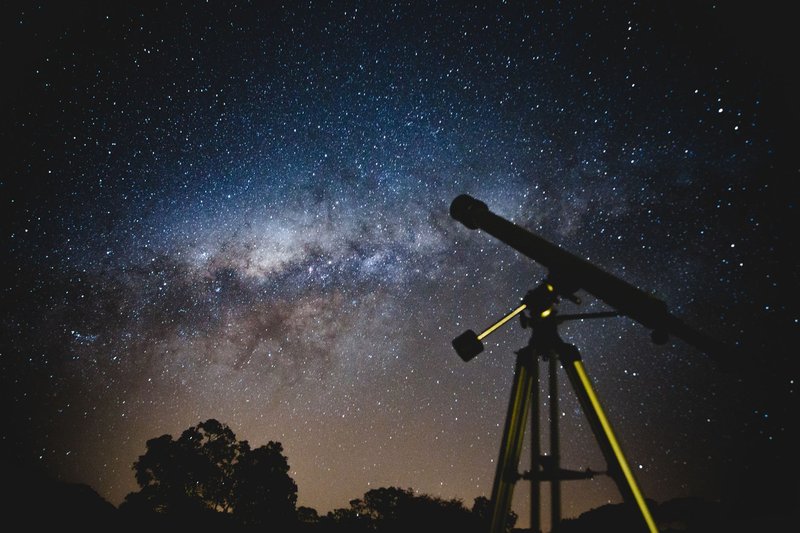
This is where the story gets less Cold War and more contemporary — and where women scientists finally get equal billing.
Nergis Mavalvala
Born in Karachi, Mavalvala is an astrophysicist at MIT, where she now serves as dean of the School of Science. She was part of the LIGO team that made the first direct detection of gravitational waves in 2015, confirming a prediction Einstein made a century earlier.
Why it matters: The LIGO detection opened an entirely new way of observing the universe — through ripples in spacetime instead of light — and Mavalvala’s work on quantum measurement techniques was central to making the instrument sensitive enough to catch them.
Tasneem Zehra Husain
Husain became the first Pakistani woman to earn a PhD in string theory, studying at Stockholm University before working as a theoretical physicist and later a science writer and educator focused on making physics legible to non-specialists.
Why it matters: She’s built a second career translating dense theoretical physics — the kind most working physicists struggle to explain — into books and public talks, closing a gap that pure research rarely addresses.
Medicine and Life Sciences
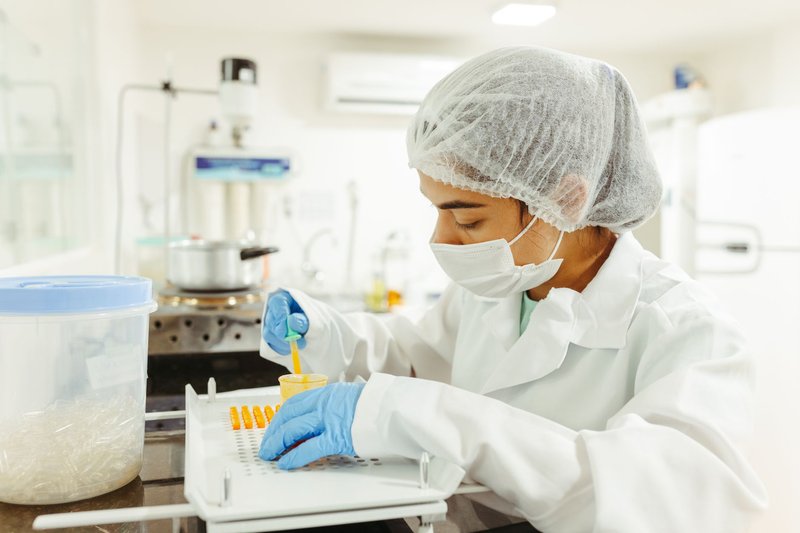
Salimuzzaman Siddiqui
A pioneering organic chemist, Siddiqui spent decades studying the neem tree and isolated dozens of its bioactive compounds, laying groundwork that later fed into research on natural pesticides and antimicrobials.
Why it matters: His neem research predates the current wave of interest in plant-derived pharmaceuticals by half a century, and several compounds he first isolated are still referenced in phytochemistry literature.
Bina Shaheen Siddiqui
The daughter of Salimuzzaman Siddiqui, Bina Shaheen carved out her own career in natural product chemistry, becoming one of the first women in Pakistan to earn a Doctor of Science degree and continuing the neem and medicinal plant research her father started.
Why it matters: She’s a rare case of a second-generation scientist extending — not just inheriting — a research program, with her own body of published work on plant-derived compounds.
Naweed Syed
Born in Karachi and now based at the University of Calgary, Syed is a neuroscientist known for growing living brain cells directly on silicon computer chips, creating a working interface between neurons and electronics.
Why it matters: His lab’s chip-neuron interface research points toward future neural prosthetics and brain-computer interfaces — the kind of work that sits at the actual intersection of biology and engineering rather than just gesturing at it.
Zabta Khan Shinwari
A botanist and ethnobotanist, Shinwari has spent his career documenting Pakistan’s plant biodiversity and traditional medicinal plant knowledge, particularly in the northern regions, while also chairing the country’s bioethics committee.
Why it matters: Large parts of Pakistan’s flora were undocumented before his fieldwork, and species knowledge like this tends to disappear fast once local plant-use traditions stop being passed down.
Computer Science and Technology
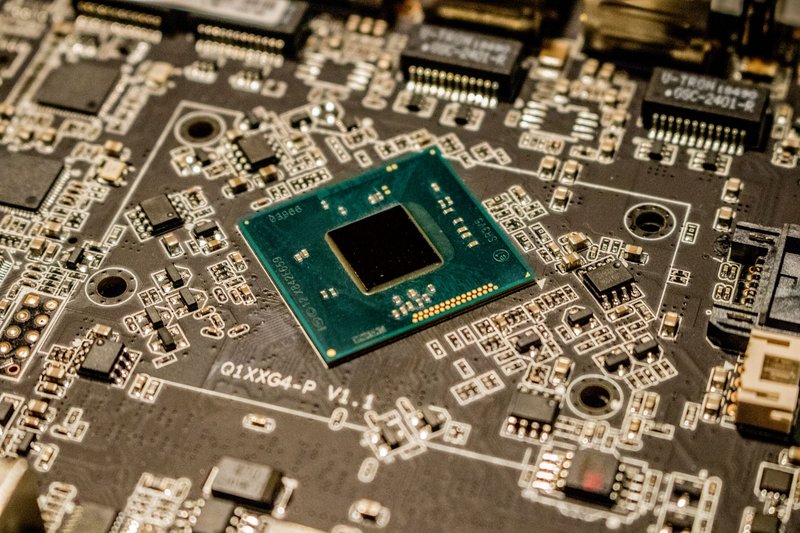
Umar Saif
A computer scientist with a PhD from Cambridge, Saif built some of Pakistan’s earliest digital government infrastructure, including e-governance systems and the country’s first free public wifi and digital ID initiatives, while also serving as Sindh’s minister of IT.
Why it matters: Most scientists on this list work in labs; Saif’s contribution was mostly civic — building the digital plumbing that let a country of over 240 million people start doing basic government services online.
Earth and Climate Science
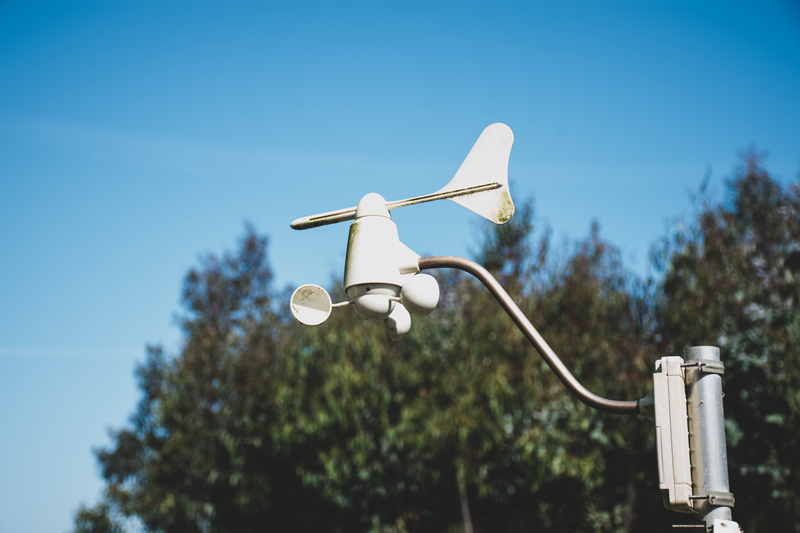
Adil Najam
An environmental policy scholar and climate scientist, Najam served as a lead author on multiple reports for the Intergovernmental Panel on Climate Change, which shared the 2007 Nobel Peace Prize, and later became vice chancellor of Lahore University of Management Sciences.
Why it matters: Najam’s work pushed climate policy discussions to account for developing-nation vulnerability specifically — Pakistan sits among the countries most exposed to climate-driven flooding and glacial melt, and his research shaped how that risk gets modeled internationally.
Muhammad Qasim Jan
A geologist who spent his career mapping the Himalayan and Karakoram mountain systems, Jan’s field surveys clarified the tectonic history of northern Pakistan, a region where three major mountain ranges collide.
Why it matters: The geology of that collision zone informs everything from earthquake risk models to mineral exploration in a part of the world that’s both seismically active and largely undermapped compared to better-funded regions.
Comparison Table
| Name | Field | Notable Achievement | Era |
|---|---|---|---|
| Abdus Salam | Theoretical physics | Nobel Prize, electroweak theory | 1960s–1996 |
| Abdul Qadeer Khan | Nuclear engineering | Built Pakistan’s uranium enrichment program | 1970s–2021 |
| Riazuddin | Theoretical physics | Led nuclear device design theory | 1960s–2013 |
| Samar Mubarakmand | Nuclear physics | Chagai-I test site, energy research | 1970s–present |
| Nergis Mavalvala | Astrophysics | LIGO gravitational wave detection | 2000s–present |
| Tasneem Zehra Husain | Theoretical physics | First Pakistani woman with a string theory PhD | 2000s–present |
| Salimuzzaman Siddiqui | Organic chemistry | Isolated neem tree compounds | 1930s–1994 |
| Bina Shaheen Siddiqui | Natural product chemistry | Extended neem and plant research | 1970s–present |
| Naweed Syed | Neuroscience | Neuron-silicon chip interfaces | 1990s–present |
| Zabta Khan Shinwari | Botany/ethnobotany | Documented Pakistan’s plant biodiversity | 1990s–present |
| Umar Saif | Computer science | Built digital government infrastructure | 2000s–present |
| Adil Najam | Climate policy | IPCC lead author, climate risk research | 1990s–present |
| Muhammad Qasim Jan | Geology | Mapped Himalayan-Karakoram tectonics | 1970s–present |
Where Are They Now
Most of the nuclear-era physicists on this list have passed away — Salam in 1996, Riazuddin in 2013, Khan in 2021 — but their institutional legacy is still standing: the national labs they built continue to run Pakistan’s nuclear program without them.
The living names here skew toward people who left. Mavalvala runs a school at MIT. Syed’s lab is in Calgary. Najam has spent much of his career at Boston University and Tufts before returning to lead LUMS. That’s not a coincidence — it’s the pattern the keyword research on this topic keeps surfacing, and it’s worth saying plainly: a large share of Pakistan’s most visible contemporary scientists built their careers abroad, in institutions with research funding and lab infrastructure that didn’t exist for them at home. The ones who stayed, like Shinwari and Saif, tend to work in applied fields — biodiversity fieldwork, government IT — where the value is tied to being physically present in the country.
Neither path is more legitimate than the other. But if you’re trying to understand Pakistani science as it actually functions today, the diaspora isn’t a footnote to the story. It’s most of the story.