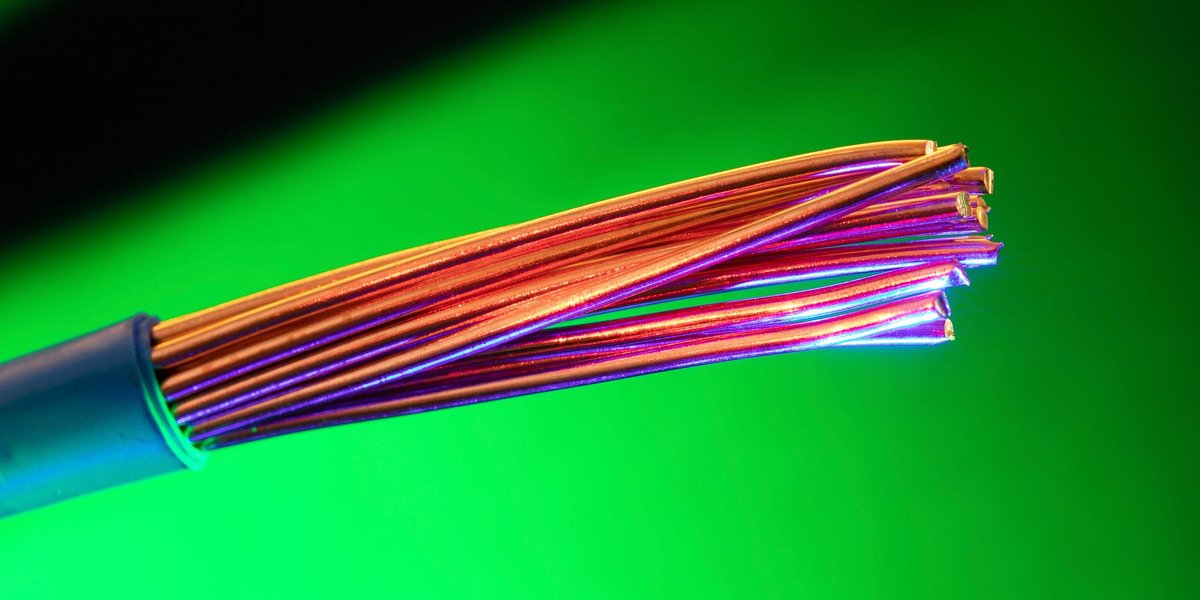
A conductor is any material that lets electric charge move through it easily. That’s the whole definition. Metals do this best, which is why the cord on your phone charger has copper inside and rubber outside — the copper carries the current, the rubber keeps it from carrying into your hand.
The reason some materials conduct and others don’t comes down to what their electrons are doing. Stick with the next few sections and the whole thing clicks into place: why silver beats copper, why your power lines are aluminum, and why a dry wooden spoon is a perfectly good way to poke at something you’re not sure is live.
Table of Contents
- The Quick Answer
- Conductors vs. Insulators
- Why Metals Conduct Electricity
- The Best Electrical Conductors, Ranked
- Everyday Examples of Conductors
- Is Copper a Conductor? (And Other Common Questions)
- A Few Things That Complicate the Picture
- Quick Self-Test
The Quick Answer
Conductors carry electricity. Insulators block it. A material lands in one camp or the other based on how freely its electrons can move.
In a conductor, some electrons aren’t tied to any single atom — they drift through the material like water through a pipe. Apply a voltage and they flow as an electric current. In an insulator, every electron is locked tight to its atom, so nothing flows no matter how hard you push.
That’s the version you can repeat at a dinner party. The rest of this is the “why,” which is where it actually gets interesting.
Conductors vs. Insulators
The cleanest way to understand a conductor is to put it next to its opposite. Most of the materials you touch all day fall neatly into one of these two buckets.
| Property | Conductors | Insulators |
|---|---|---|
| Electron movement | Free to move | Bound to atoms |
| Electrical current | Flows easily | Blocked |
| Typical materials | Metals, graphite, saltwater | Rubber, glass, plastic, dry wood |
| Resistivity | Very low | Very high |
| Common use | Wires, contacts, circuits | Cable sheathing, handles, casings |
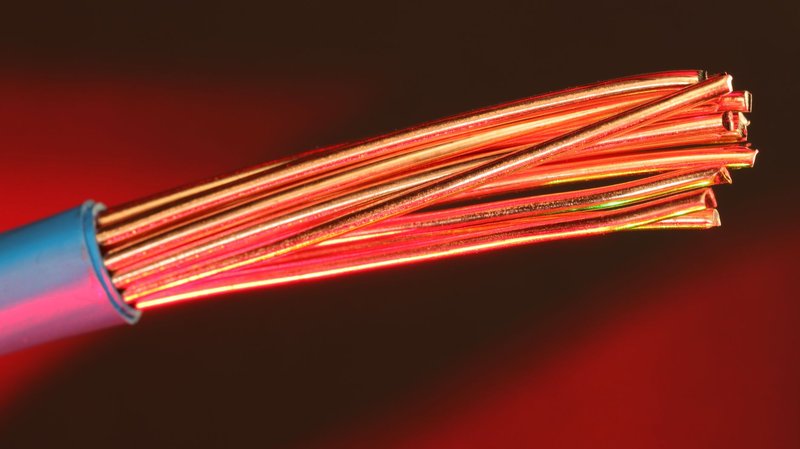
Notice that almost every wire you’ve ever seen is both. The metal core conducts; the colored plastic jacket insulates. That pairing is the entire reason you can hold a live charging cable without getting a shock — the conductor does its job on the inside, the insulator does its job on the outside.
There’s a middle category too, called semiconductors — materials like silicon that conduct only under certain conditions. They’re the reason computer chips exist, and engineering this tunable middle ground is one of the emerging trends in materials science reshaping electronics today. For now, just know the line between “conducts” and “doesn’t” isn’t always a hard wall.
Why Metals Conduct Electricity
Here’s the part the textbooks bury under math. Metals conduct because of how their atoms share electrons.
In most materials, electrons stay bound to individual atoms. In a metal, the outermost electrons break loose and form a shared pool — physicists call it a “sea of electrons,” and the picture is exactly as loose as it sounds. The atoms sit in a fixed lattice, like a grid, while a cloud of free electrons washes around them.

When you connect a metal to a battery, you create a voltage — a push. The free electrons start drifting toward the positive end. That coordinated drift is the electric current. There’s no electron handoff from atom to atom; the whole sea shifts at once, which is why electricity through a copper wire is effectively instant even though any individual electron crawls along surprisingly slowly.
This model has a name. It’s called the free-electron model, and it’s the simplest accurate way to picture what’s happening inside a wire. The more free electrons a material has and the less they bump into the atomic lattice, the better it conducts. That single idea explains the entire ranking in the next section.
The Best Electrical Conductors, Ranked
Not all conductors are equal. Silver tops the list, but it’s rarely the one in your walls, and there’s a good reason for that. Here are the most common electrical conductors, ranked by conductivity — the higher the number, the better the material moves current.
| Rank | Material | Conductivity (×10⁷ S/m) | Where you’ll find it |
|---|---|---|---|
| 1 | Silver | 6.30 | High-end contacts, specialized electronics |
| 2 | Copper | 5.96 | Household wiring, motor windings, circuit boards |
| 3 | Gold | 4.10 | Connector plating, corrosion-proof contacts |
| 4 | Aluminum | 3.77 | Power transmission lines, overhead cables |
| 5 | Iron | 1.00 | Structural parts, some heating elements |
A few things jump out of that table.
Silver wins but loses. Silver is the best conductor of electricity on the planet at room temperature, yet you won’t find it in your house wiring. It’s too expensive and it tarnishes. Copper conducts almost as well at a fraction of the cost, so copper got the job.
Gold isn’t about conductivity. Gold sits below copper on the list, so why plate connectors with it? Because gold doesn’t corrode. A copper contact develops an oxide layer that interferes with the signal; a gold contact stays clean for decades. You’re paying for reliability, not raw speed.
Aluminum wins on weight. Aluminum conducts worse than copper, but it’s about a third the weight. Hang miles of copper cable between transmission towers and the lines sag under their own mass. Aluminum carries the grid across the country because the weight math beats the conductivity math. According to the U.S. Energy Information Administration, the high-voltage lines that move power long distances are overwhelmingly aluminum for exactly this reason.
Everyday Examples of Conductors
You’re surrounded by conductors. Some are obvious, a few aren’t.
- Copper wiring — behind every wall outlet and inside nearly every appliance cord.
- The metal prongs on a plug — brass or nickel-plated, designed to carry current into the device.
- Tap water — pure water actually insulates, but the dissolved minerals in tap water turn it into a conductor. This is why electricity and bathtubs are a genuinely dangerous combination.
- Your own body — you’re mostly saltwater, which means you conduct. That’s the whole principle behind why electric shocks hurt and touchscreens respond to your finger but not a gloved one.
- The graphite in a pencil — graphite is one of the few non-metals that conducts well, which is why it shows up in electrodes and some electronic components.
- Aluminum foil — wrap it around a circuit and current flows straight through.
The saltwater point is worth sitting with. The reason you’re warned to keep hairdryers away from sinks isn’t superstition. Your body and the water both conduct, so you can become part of the circuit. The CDC’s guidance on electrical safety treats wet skin as a serious hazard precisely because moisture drops your body’s resistance and lets more current through.
Is Copper a Conductor? (And Other Common Questions)
Is copper a conductor? Yes — one of the best. Copper is the second-most conductive common metal after silver, and it’s the default choice for wiring because it balances excellent conductivity with reasonable cost and resistance to corrosion.
Is water a conductor? It depends. Pure, distilled water is actually a poor conductor. The conductivity comes from dissolved ions — the minerals and salts in tap water, seawater, and the water on your skin. So in practice, the water you encounter daily conducts, even though “water” in a chemistry-pure sense doesn’t.
Is rubber a conductor? No. Rubber is a classic insulator, which is why it sheathes cables and forms the grips on electricians’ tools. Its electrons stay locked to their atoms, so current can’t pass through.
Is gold a better conductor than copper? No, copper conducts better than gold. Gold gets used on contacts because it resists corrosion, not because it carries current more efficiently.
Are all metals conductors? Essentially yes, but they vary widely. Silver and copper are excellent; iron and steel conduct but far less efficiently. The shared “sea of electrons” structure makes metals conductive as a group, while the specifics of each metal’s atomic lattice set how good it actually is.
A Few Things That Complicate the Picture
The clean conductor-versus-insulator split holds up for everyday purposes, but two wrinkles are worth knowing.
Temperature changes everything. In most metals, conductivity drops as the material heats up. Hotter atoms vibrate more, which means more collisions for the drifting electrons and more resistance. Cool a metal down and it conducts better. That tug-of-war between thermal energy and the orderly flow of electrons is what sets a metal’s resistance at any given temperature. Push it to the extreme — within a few degrees of absolute zero for certain materials — and you hit superconductivity, where resistance vanishes entirely and current flows forever with zero loss.
Some non-metals conduct. Graphite does it, as you saw. So does saltwater, and so do certain ceramics under the right conditions. Conductivity isn’t a metals-only club; metals are just the most reliable members.
These edge cases are where the friendly free-electron model starts to strain, and physicists reach for heavier tools. For an everyday understanding of conductors, the sea-of-electrons picture gets you 95% of the way there.
Quick Self-Test
Five questions. No peeking.
- In a conductor, are the electrons bound to atoms or free to move?
- Which conducts electricity better: silver or copper?
- Why is aluminum used for power lines instead of copper?
- Is pure distilled water a good conductor?
- Name one non-metal that conducts electricity well.
Answers: (1) Free to move. (2) Silver — but copper is cheaper, so it’s used more. (3) Aluminum is much lighter, so cables don’t sag under their own weight. (4) No — it’s the dissolved minerals that make tap and sea water conduct. (5) Graphite.
Get four or five right and you understand conductors better than most people who use them every single day. The core idea never gets more complicated than this: free electrons mean flowing current, and the materials that hoard their electrons are the ones keeping you safe from the ones that don’t.