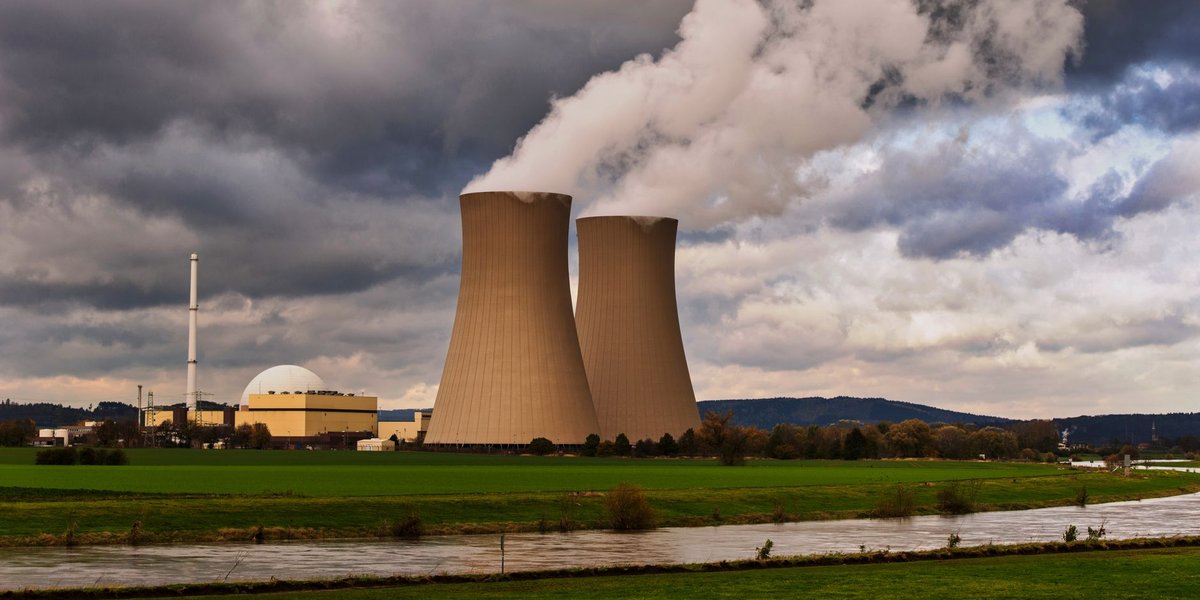
The United States runs the largest fleet of nuclear power plants on Earth. As of early 2026, that’s 57 operating plants housing 96 reactors spread across 28 states — generating about 19% of the country’s electricity and roughly a third of its carbon-free power.
That’s not a footnote. That’s the backbone of the American grid.
Table of Contents
- TLDR
- The Current Fleet: By the Numbers
- Which States Have the Most Nuclear Plants?
- How US Nuclear Reactors Actually Work
- The Newest Plant in the US
- Small Modular Reactors: The Next Generation
- Why Nuclear Is Having a Moment Again
- The Plants That Came Back
TLDR
The US has 57 nuclear power plants with 96 reactors operating in 28 states. Illinois leads with 6 plants. Almost all reactors are either pressurized water reactors (PWR) or boiling water reactors (BWR). Vogtle Unit 4 in Georgia came online in 2024 as the newest reactor. Small modular reactors (SMRs) are in development, and several previously shuttered plants are being restarted amid surging electricity demand.
The Current Fleet: By the Numbers
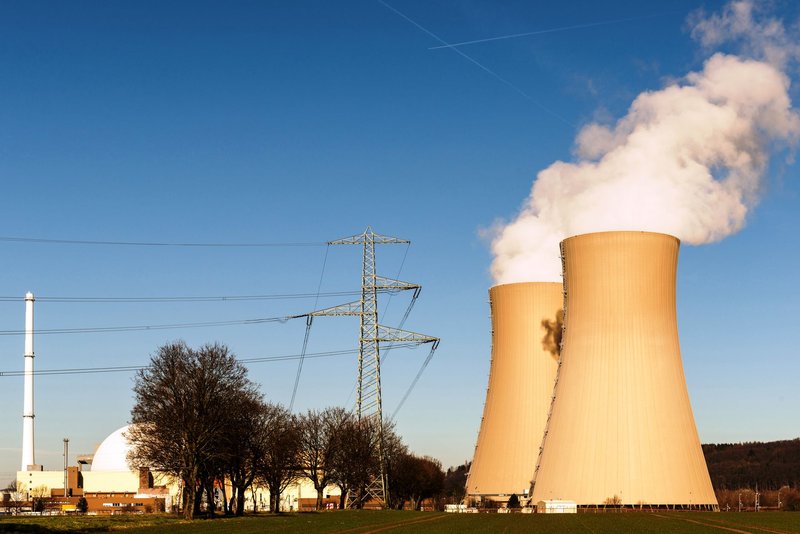
The US nuclear fleet has been shrinking since its peak in the 1990s — at one point the country had over 100 operating reactors. Closures through the 2000s and 2010s knocked the count down. But the slide appears to have stopped, and the direction may be reversing.
Current snapshot (early 2026):
- 57 commercial nuclear power plants
- 96 operating reactors
- 28 states with at least one operating plant
- ~19% of total US electricity generation from nuclear
- ~775 billion kilowatt-hours generated annually
According to the U.S. Energy Information Administration, nuclear energy consistently ranks as the single largest source of carbon-free electricity in the country — more than wind and solar combined, year after year. The US also ranks first globally when it comes to sheer plant count — a distinction explored in more depth in this breakdown of countries with the most power plants in the world.
One number worth sitting with: nuclear power plants run at roughly 93% capacity factor, far higher than any other major generation source. A wind farm might hit 35%. Solar peaks around 25%. Nuclear just runs — continuously, regardless of weather.
Which States Have the Most Nuclear Plants?
State-level distribution is uneven. The Northeast and Midwest carry the bulk of the fleet, partly due to historical grid infrastructure and energy demand density.
| State | Operating Plants | Operating Reactors |
|---|---|---|
| Illinois | 6 | 11 |
| Pennsylvania | 5 | 9 |
| South Carolina | 4 | 7 |
| North Carolina | 3 | 5 |
| New York | 3 | 4 |
| Alabama | 3 | 5 |
| Virginia | 2 | 4 |
| Michigan | 2 | 3 |
| Georgia | 2 | 4 |
| Tennessee | 3 | 7 |
| Florida | 2 | 3 |
| Texas | 2 | 4 |
| Arizona | 1 | 3 |
| Other states | various | various |
Illinois stands out. The state gets around 54% of its electricity from nuclear — the highest share of any state — making it more dependent on fission than France’s vaunted nuclear program manages nationally.
Arizona’s Palo Verde plant deserves a mention even though it’s listed as one plant: it holds three reactors and is the highest-output nuclear plant in the entire country, generating enough power for over 4 million homes annually in the middle of the desert, with no river or ocean in sight. It uses treated municipal wastewater for cooling.
How US Nuclear Reactors Actually Work
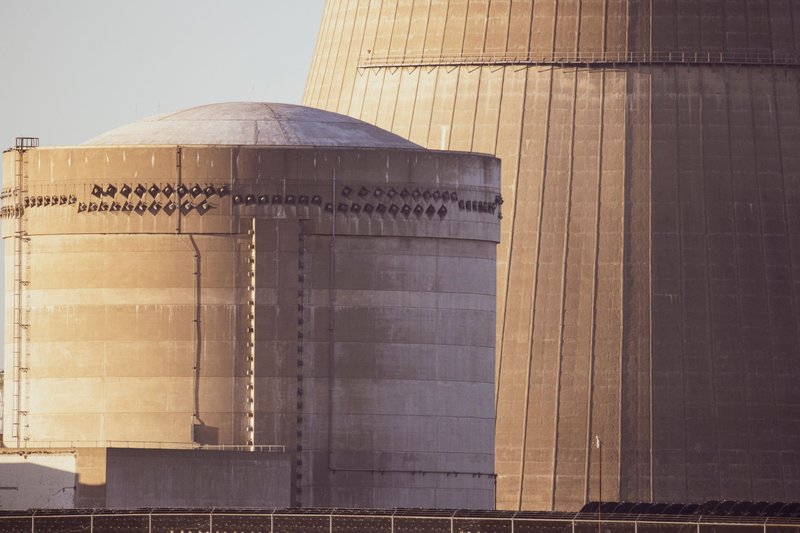
Two reactor types account for essentially the entire US fleet. Understanding the difference matters because they handle the same core physics differently.
Pressurized Water Reactors (PWR)
The majority of US reactors — about 69 of the 96 — are PWRs. The reactor core heats water under intense pressure (preventing it from boiling), which then transfers heat to a separate water loop that does boil and drives a turbine. The radioactive coolant never directly contacts the turbine system.
Boiling Water Reactors (BWR)
The remaining ~27 reactors are BWRs. In these, water boils directly in the reactor vessel and the steam drives the turbine. Simpler design, but the turbine system is technically exposed to radioactive steam, which complicates maintenance.
Both designs use enriched uranium fuel in ceramic pellets sealed inside metal fuel rods. The fission chain reaction generates heat; that heat makes steam; steam spins a turbine; turbine generates electricity. It’s a nuclear kettle, fundamentally. The complexity is in controlling the reaction and containing the radiation — both areas where US plants have extensive safety systems layered on top of each other.
The Nuclear Regulatory Commission maintains the official registry of every operating reactor unit in the country, including their type, location, and licensing status.
The Newest Plant in the US
For decades, no new nuclear plants were being built in the US. The 1979 Three Mile Island accident and the massive cost overruns of 1980s construction projects essentially froze new development for 30+ years.
That changed in Georgia. Vogtle Unit 3 came online in 2023, and Vogtle Unit 4 followed in 2024 — the first new nuclear reactors built in the US since Watts Bar Unit 2 finished in 2016. Both use the AP1000 reactor design, a Westinghouse pressurized water reactor with passive safety systems that don’t require pumps or operator action to cool down in an emergency.
The project was also a cautionary tale about modern nuclear construction: originally projected at $14 billion, it ended up costing over $35 billion and ran years behind schedule. The economics of large-scale nuclear construction in the Western world remain genuinely hard. Nobody’s pretending otherwise.
Small Modular Reactors: The Next Generation
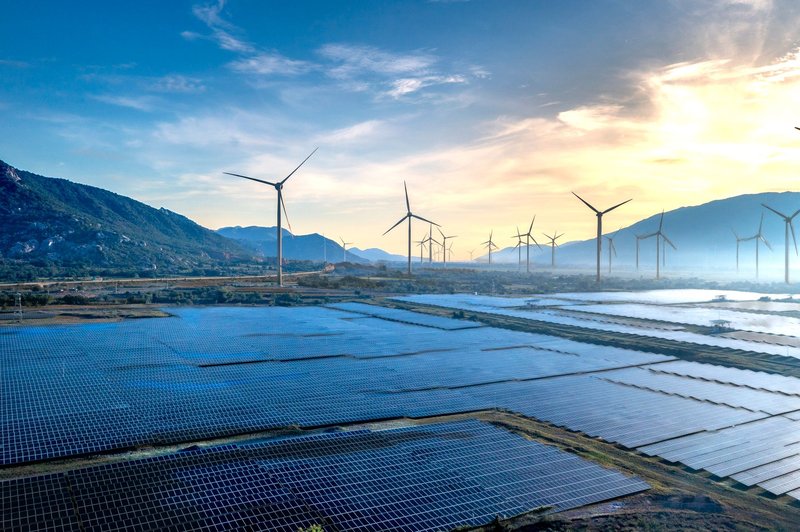
SMRs are the technology the nuclear industry is betting on to fix the cost-and-time problem. The concept: factory-built reactors in the 50–300 MW range (versus the 1,000+ MW of conventional plants) that can be assembled on-site rather than custom-built from scratch.
Several projects are in active development in the US:
- NuScale Power received the first-ever SMR design approval from the NRC, though its flagship UAMPS project was cancelled in 2023 due to cost projections. NuScale continues pursuing other customers.
- TerraPower (backed by Bill Gates) is building a Natrium reactor in Kemmerer, Wyoming — a sodium-cooled fast reactor paired with a molten salt energy storage system. Target: online by 2030.
- Kairos Power has broken ground on a fluoride salt-cooled high-temperature reactor demonstration plant in Tennessee.
- X-energy is partnering with Dow Chemical to deploy a pebble-bed reactor at an industrial facility in Texas.
The appeal for tech companies is obvious: data centers consume enormous and growing amounts of electricity, and nuclear provides the 24/7 carbon-free power that wind and solar can’t reliably deliver alone. Microsoft, Google, and Amazon have all signed nuclear power purchase agreements or invested directly in SMR developers.
Why Nuclear Is Having a Moment Again
A few years ago, the conventional wisdom was that nuclear was dying. Natural gas was cheap, solar was getting cheaper, and operating costs at aging plants were hard to justify.
That story has gotten more complicated.
The surge in AI infrastructure and data center construction has driven electricity demand projections sharply upward — the kind of demand growth the US grid hasn’t seen in decades. Utilities that were planning to retire nuclear plants are now reconsidering. Grid operators in several regions have started warning that reliability margins are getting tight.
At the policy level, the Biden administration’s Inflation Reduction Act included a production tax credit specifically designed to keep existing nuclear plants operating. Then in early 2025, executive orders pushed to accelerate nuclear permitting and streamline NRC processes for both existing plants and new designs.
According to the Nuclear Energy Institute, the US nuclear industry supports over 100,000 jobs and contributes about $60 billion annually to the US economy.
The Plants That Came Back
The most concrete sign of the nuclear comeback isn’t new construction — it’s restarts.
Palisades Nuclear Plant in Michigan was shut down in 2022 after Entergy decided the economics didn’t work. The Biden administration then offered a $1.5 billion loan to restart it. Holtec International, which had purchased the plant for decommissioning, pivoted to restart mode instead. Palisades is targeted for restart in 2025-2026, which would make it the first US nuclear plant to restart after full closure.
Three Mile Island Unit 1 (a separate reactor from the famous Unit 2 involved in the 1979 accident) was shut down in 2019. Constellation Energy reached a deal with Microsoft to restart it by 2028 to power Microsoft’s data centers under a 20-year agreement.
These aren’t hypothetical future plants. They’re existing infrastructure that was written off and is now being reconsidered because the grid math has changed.
The US nuclear fleet isn’t the same industry it was in 1990, and it’s not the same as it was in 2020 either. The aging plant count, the new reactor completions, the SMR development pipeline, and the restart projects are all happening simultaneously — which makes this a genuinely unusual moment in US energy history.
Whatever you think about nuclear power, the country is clearly not done with it.