Table of Contents
- What Makes a Tree Deciduous
- The Science of Leaf Drop
- Deciduous vs. Evergreen
- Best Deciduous Trees for Your Backyard
- Fast-Growing Options
- Small-Yard Picks
- Seasonal and Ecological Benefits
- Basic Care Tips
What Makes a Tree Deciduous
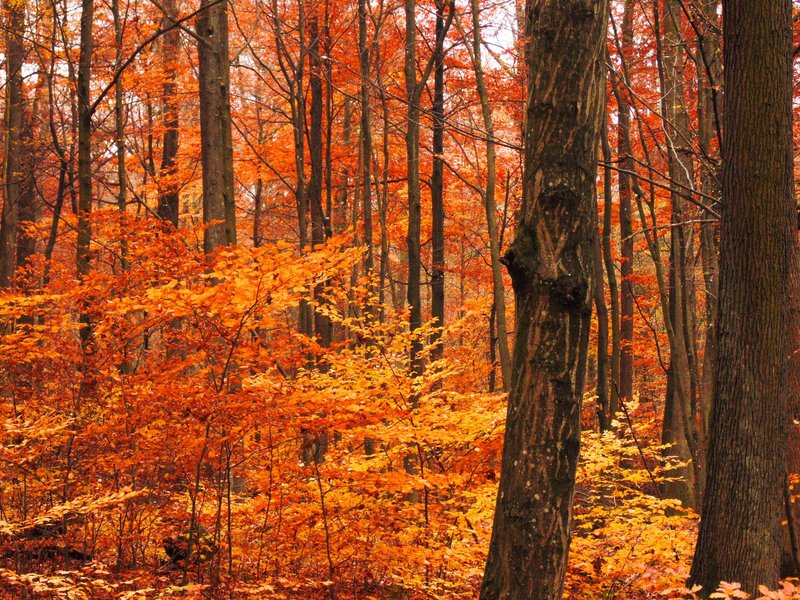
A deciduous tree is one that sheds all its leaves seasonally — typically in autumn in temperate climates — and regrows them the following spring. The word comes from the Latin decidere, meaning “to fall down.” Simple enough. But the biology behind that annual ritual is more interesting than it sounds.
The key is that leaf drop isn’t damage. It’s a controlled, deliberate process the tree initiates itself to survive cold or dry seasons. When a tree drops its leaves on schedule, it’s being smart, not dying.
Most deciduous trees are angiosperms — flowering plants — and they dominate the temperate forests of North America, Europe, and East Asia. Oaks, maples, elms, birches, ashes, beeches: all deciduous. These species are a defining presence across temperate and boreal forest biomes, where seasonal climate change drives the leaf-drop cycle. Some tropical species are also technically deciduous, shedding leaves during the dry season rather than the cold one, but when most people picture a deciduous tree, they’re thinking temperate.
The Science of Leaf Drop
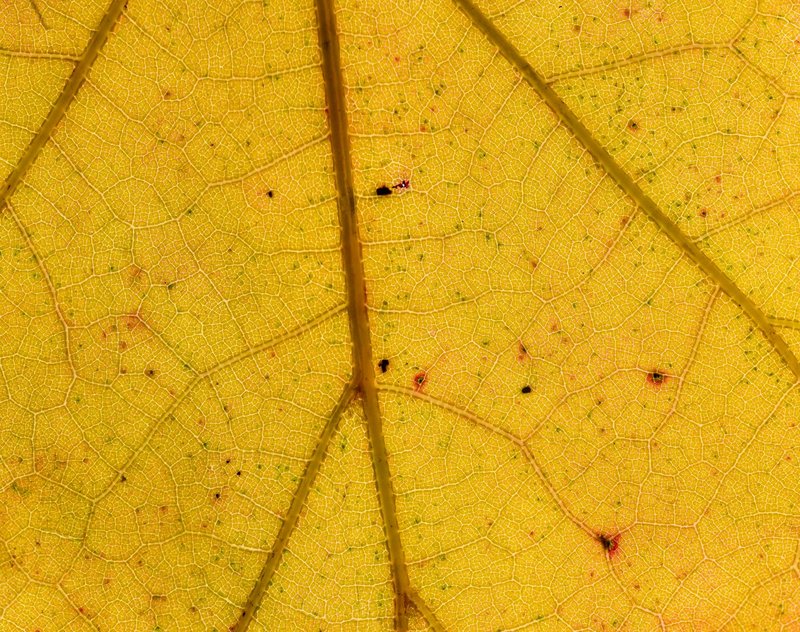
The process is called abscission, and it’s controlled by a small zone of cells at the base of each leaf stalk — the abscission zone. As days shorten and temperatures drop in late summer and early fall, the tree starts cutting off the supply of auxin, a growth hormone that normally keeps the abscission zone dormant.
Once auxin levels fall, a second hormone — ethylene — surges. Ethylene signals the abscission zone to produce enzymes that break down the cell walls holding the leaf to the branch. The leaf detaches. The tree seals the wound with a protective layer of cork cells, and the characteristic leaf scar you see on bare winter branches is the result.
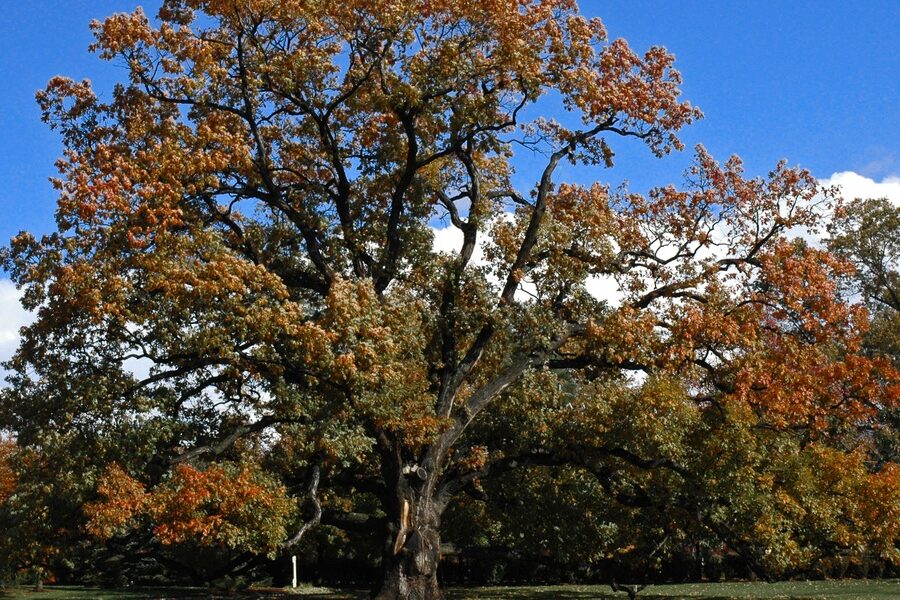
The famous fall colors aren’t the tree “turning.” The reds and oranges were always there, masked by chlorophyll green. As chlorophyll breaks down in the weeks before leaf drop, the carotenoids (yellows and oranges) and anthocyanins (reds and purples, which are actively produced during the process) become visible. Cool nights and sunny days in early fall produce the most vivid colors — which is why New England autumns hit differently than those in mild climates.
The short-day trigger matters more than temperature alone. Deciduous trees in temperate zones are remarkably sensitive to photoperiod — the ratio of light to dark in a 24-hour cycle. Controlled experiments have shown you can delay leaf drop in autumn by shining an artificial light on a tree for just a few hours each night. The tree “thinks” the days are still long and holds its leaves longer.
Deciduous vs. Evergreen
| Feature | Deciduous | Evergreen |
|---|---|---|
| Leaves | Shed annually | Retained year-round |
| Winter appearance | Bare branches | Fully leafed |
| Summer shade | Dense and broad | Varies |
| Fall color | Often vivid | Generally none |
| Maintenance | Leaf cleanup required | Lower litter overall |
| Best use in landscapes | Shade, seasonal interest | Privacy screens, windbreaks |
| Water demand | Moderate to high in growing season | Often lower, spread year-round |
Neither type is objectively better for a yard. Evergreens provide year-round privacy and windbreaks but cast permanent shade. Deciduous trees let winter sun through to warm your house or garden beds — a real energy advantage if you plant them on the south or west side of a building.
Best Deciduous Trees for Your Backyard
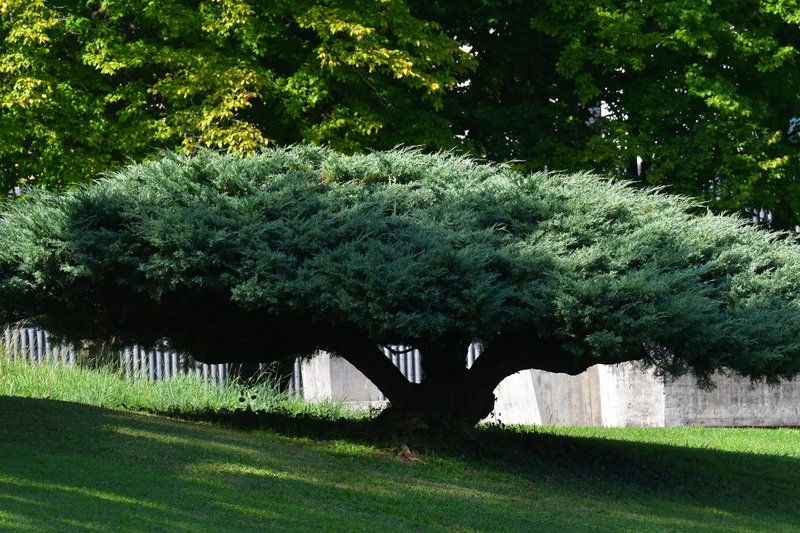
These are the species that actually perform in residential landscapes — not just survive, but look good, grow reliably, and deliver seasonal value.
Red Maple (Acer rubrum)
Hardiness zones: 3–9
Height: 40–70 ft
Fall color: Brilliant red to orange
One of the most widely planted trees in North America, and for good reason. Fast growth, adaptable to wet or dry soils, and among the first trees to go red in fall. Native to eastern North America, which means it supports local wildlife — native trees provide dramatically more insect biomass than ornamental exotics, which trickles up to birds.
Sugar Maple (Acer saccharum)
Hardiness zones: 3–8
Height: 60–75 ft
Fall color: Yellow, orange, and red simultaneously
The maple on the Canadian flag. Slower-growing than red maple but longer-lived, with arguably the best fall color of any common landscape tree. Prefers well-drained soil and doesn’t tolerate urban pollution well — better for suburban or rural yards than inner-city plantings.
White Oak (Quercus alba)
Hardiness zones: 3–9
Height: 50–80 ft
Fall color: Russet, burgundy, and brown
Long-lived (200–500 years in the wild) and one of the most ecologically valuable trees in North America — a single mature white oak can support over 500 caterpillar species. Slow to establish, but once it does, it’s essentially indestructible. Plant it where you want a legacy tree.
Flowering Dogwood (Cornus florida)
Hardiness zones: 5–9
Height: 15–30 ft
Fall color: Red leaves and red berries
The best four-season tree for a mid-size yard: white or pink spring flowers, clean green summer foliage, vivid red fall leaves, and red berries that persist into winter for birds. Tolerates partial shade, which makes it useful under taller canopy trees.
River Birch (Betula nigra)
Hardiness zones: 4–9
Height: 40–70 ft
Fall color: Yellow
Grown almost entirely for its exfoliating bark — cinnamon and cream strips that peel back to reveal new layers underneath. Thrives in wet soils where other trees struggle. If you have a low spot in your yard that floods seasonally, river birch will handle it.
American Sweetgum (Liquidambar styraciflua)
Hardiness zones: 5–9
Height: 60–75 ft
Fall color: Red, orange, purple, and yellow — often all on the same tree
Probably the most colorful deciduous tree available. The star-shaped leaves turn multiple colors simultaneously in fall, and the effect can be extraordinary. The downside: the spiky seed balls it drops in spring are genuinely annoying underfoot. Plant it away from walkways.
Tulip Poplar (Liriodendron tulipifera)
Hardiness zones: 4–9
Height: 70–90 ft
Fall color: Clear yellow
Not actually a poplar — it’s in the magnolia family. One of the tallest deciduous trees native to eastern North America, with distinctive tulip-shaped flowers in late spring that many people never notice because they bloom 40 feet up. Fast-growing, straight-trunked, and excellent for large properties that need shade quickly.
Ginkgo (Ginkgo biloba)
Hardiness zones: 3–9
Height: 50–80 ft
Fall color: Pure, uniform gold
Ginkgo is a living fossil — the only surviving species in its entire phylum, essentially unchanged for 200 million years. It turns a uniform butter yellow in fall, drops all its leaves within a day or two, then stands bare for winter. Exceptionally tolerant of urban conditions: pollution, compacted soil, drought. Plant a male cultivar — female trees produce seeds with a notoriously foul smell.
Fast-Growing Options
If you need shade sooner rather than later, these species put on significant height relatively quickly:
- Quaking Aspen (Populus tremuloides) — grows 3–5 feet per year in ideal conditions, colonies via root sprouting; best in western and northern US
- Black Locust (Robinia pseudoacacia) — 3–4 feet per year; drought-hardy; fixes nitrogen, but spreads aggressively
- Red Maple — 3–5 feet per year in good conditions; the safe fast-grower for most yards
- Silver Maple (Acer saccharinum) — among the fastest maples; weak wood means branch breakage risk in ice storms
Speed always costs something. Fast growers tend to have weaker wood, shorter lifespans, or aggressive root systems. For a yard you’ll live in for decades, the mid-speed trees (red maple, tulip poplar, river birch) give you a better long-term result than the true speed demons.
Small-Yard Picks
Standard shade trees hit 40–80 feet. If you’re working with a smaller lot, these deciduous species top out shorter and won’t eventually overwhelm the space:
- Japanese Maple (Acer palmatum) — 10–25 ft; dozens of cultivars with red or green lacy foliage; the most ornamental small deciduous tree available
- Serviceberry (Amelanchier spp.) — 15–25 ft; white spring flowers, edible blueberry-like fruit in early summer, orange-red fall color
- Redbud (Cercis canadensis) — 20–30 ft; famous for lavender-pink flowers blooming directly on bare branches before leaves emerge
- Crabapple (Malus spp.) — 15–25 ft depending on cultivar; spring flowers, persistent fruit for birds through winter
- Kousa Dogwood (Cornus kousa) — 15–30 ft; flowers two weeks after native dogwood; more disease-resistant
Seasonal and Ecological Benefits
Deciduous trees are doing more than looking good in October. A few specifics worth knowing:
Energy savings. Trees planted on the south and west sides of a building shade it in summer, cutting cooling costs. In winter, leafless branches let the low winter sun through — a passive heating benefit you’d lose with evergreens. According to the U.S. Department of Energy, well-placed trees can reduce residential energy bills by 25%.
Wildlife habitat. Native deciduous trees are disproportionately important to local food webs. Oaks alone support more caterpillar species than any other North American genus. Those caterpillars are the primary food source for nesting birds, including species like chickadees, which need to collect thousands of caterpillars to raise a single brood.
Soil health. Leaf litter from deciduous trees builds organic matter in the soil as it decomposes, improving soil structure and feeding soil organisms. Raking leaves off your lawn and bagging them is removing fertility — mulching or composting them back into the yard is strictly better.
Carbon storage. Trees sequester carbon in their wood and roots over their lifetime. Longer-lived species — oaks, beeches, tulip poplars — store more than short-lived fast growers. A mature white oak stores several tons of carbon.
Basic Care Tips
Deciduous trees don’t demand much once established, but the first two years are critical.
Water during establishment. Most deciduous trees are mesophytes — plants adapted to moderate, consistent moisture — and that shows in their watering needs during the first two growing seasons: roughly 10 gallons per inch of trunk diameter per week during dry periods. After that, most native or adapted species become largely self-sufficient.
Mulch the root zone. A 3–4 inch layer of wood chip mulch over the root zone (from the trunk out to the drip line, pulling mulch back from the bark) retains moisture, moderates soil temperature, suppresses grass competition, and slowly feeds the soil. The single most impactful thing you can do for a young tree.
Prune in late winter. Structural pruning — removing crossing branches, establishing a clear leader — is best done while the tree is dormant and bare, so you can see the branch structure clearly and the tree can seal wounds before the growing season. Avoid heavy pruning in fall; it can stimulate new growth that gets killed by frost.
Skip the fertilizer. Most established deciduous trees in a yard setting don’t need supplemental fertilizer. If a tree is yellowing or growing poorly, soil testing is a better first step than adding fertilizer — the problem is often compaction, drainage, or pH, none of which fertilizer fixes.
Deciduous trees are the most dynamic element you can add to a yard. They change with every season: bare and structural in winter, explosive in spring, full and shading in summer, and then that fall payoff — which varies wildly by species and region. Picking the right one for your space and climate is worth thinking about before you plant, because the tree that fits will still be there long after you’ve forgotten you chose it.